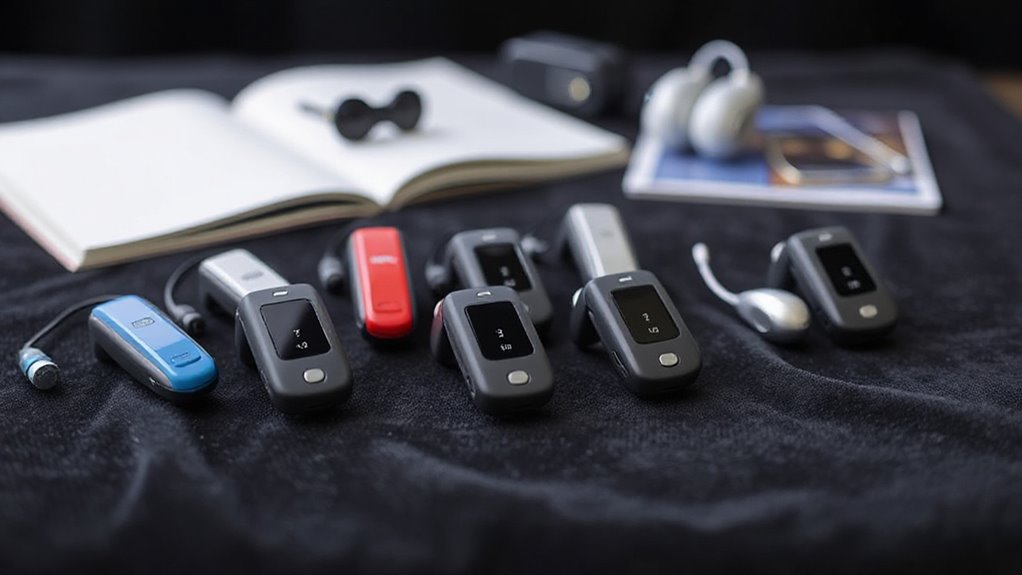
Finding the right pocket talker device for hearing loss can mean the difference between strained listening and comfortable conversation. The Williams Sound Pocketalker 2.0 stands out as the best overall choice for its balanced audio clarity and durable build, while the Reizen Loud Ear 120dB offers unmatched volume for severe hearing needs. Buyers face a key tradeoff between directional microphone precision, which isolates speech in noisy rooms, and omnidirectional sensitivity, which captures ambient sound but may pick up background noise. This guide breaks down which models excel in specific environments and who should skip certain options based on their hearing profile.

Get everyday helpers delivered free with Prime
- Fast, free delivery on millions of items
- Prime Video, Amazon Music and more included
- Member-only deals all year
Complete the kit


Key Takeaways
- Directional microphones significantly improve speech clarity in noisy restaurants compared to standard omnidirectional mics.
- Rechargeable models often sacrifice volume headroom for convenience, making them less suitable for profound hearing loss.
- The Williams Sound Pocketalker 2.0 offers the best balance of tone control and durability, avoiding the feedback issues seen in cheaper alternatives.
- Models with separate earbud and headphone options provide greater flexibility for users with varying degrees of hearing loss.
- Battery life varies drastically; devices using standard AA batteries often outlast rechargeable units in continuous high-gain settings.
| Williams Sound Pocketalker 2.0 Hearing Amplifier for Seniors |  | Best for Simple Everyday Listening | Weight: 3.1 ounces | Batteries included: 11 AAA batteries | Control type: Button | VIEW ON AMAZON | See Our Full Breakdown |
| Reizen Loud Ear 120dB Gain Personal Amplifier |  | Best for Long-Distance Sound Pickup | Audio sensitivity: 120 dB | Pickup range: Up to 100 feet | Battery life: 48 hours | VIEW ON AMAZON | See Our Full Breakdown |
| Reizen Loud Ear 110dB Gain Personal Amplifier |  | Best for Basic Portable Amplification | Sensitivity: 110 dB ±3 dB per mW | Frequency range: 20 Hz–20 kHz | Battery life: 48 hours | VIEW ON AMAZON | See Our Full Breakdown |
| Williams Sound PockeTalker Ultra DUO Sound Amplifier with Headphone & Earbud |  | Best for Adjustable, Extended Listening | Power source: 2 AAA batteries | Battery life: Up to 100 hours | Controls: External volume and tone controls | VIEW ON AMAZON | See Our Full Breakdown |
| Williams Sound Pocketalker Ultra Hearing Amplifier |  | Best for Accessory Variety | Power source: Battery powered | Fit type: Body-worn | Controls: Button control with adjustable volume and tone | VIEW ON AMAZON | See Our Full Breakdown |
| Rechargeable Hearing Amplifier with Headphone and Directional Microphone for Seniors |  | Best for Simple Daily Operation | Power information: Description says rechargeable; listed battery description says AA batteries | Control type: Manual, one-knob operation | Microphone: Directional noise-canceling microphone | VIEW ON AMAZON | See Our Full Breakdown |
| SuperEar SE5000 Hearing Amplifier for Seniors, Sound Amplifier, Headphones |  | Best for Lightweight Portability | Amplification range: Up to 50+ dB | Battery life: Up to 30 hours | Power source: One AAA battery | VIEW ON AMAZON | See Our Full Breakdown |
| Williams Sound Pocketalker 2.0 Hearing Amplifier for Seniors |  | Best for Adjustable Conversation Listening | Power: Two AAA batteries, included | Control type: Button control | Sound controls: Adjustable volume and tone | VIEW ON AMAZON | See Our Full Breakdown |
| Hearing Amplifier for Seniors with Rechargeable Battery and Microphone |  | Best Rechargeable Pick | Battery: Rechargeable | Claimed battery life: Up to 120 hours | Charging time: 1 hour | VIEW ON AMAZON | See Our Full Breakdown |
| Personal Sound Amplifier for Seniors with Voice Enhancement, 50dB Gain, Headphones & Earbud, 3 Microphone Types, 3 Tone, Volume Control | 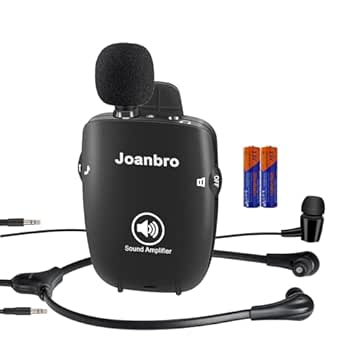 | Best for Listening Adjustments | Power source: Two AAA alkaline batteries | Microphone options: Three microphone types | Tone settings: Three | VIEW ON AMAZON | See Our Full Breakdown |
| Personal Sound Amplifier – Voice Enhancer with 50dB Gain, Up to 100 Feet Range | 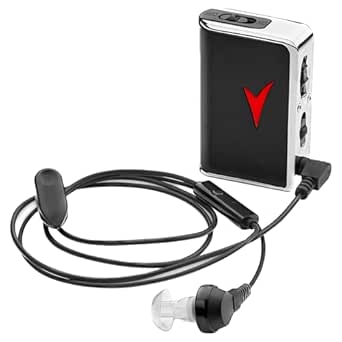 | Best for Long-Distance Listening | Sound gain: Up to 50dB | Range: Up to 100 feet | Power source: 1 AAA battery | VIEW ON AMAZON | See Our Full Breakdown |
| Hearing Amplifiers for Seniors, Personal Sound Amplifier, FDA Cleared |  | Best for Simple Mode Selection | Frequency range: 300Hz–4000Hz | Maximum sound output: ≤139dB | Harmonic distortion: <7% | VIEW ON AMAZON | See Our Full Breakdown |
| pocket talker devices for hearing loss | Power source | Weight |
|---|---|---|
| Williams Sound Pocketalker 2.0 | — | 3.1 ounces |
| Reizen Loud Ear 120dB Gain Per | Battery powered | 1.76 ounces |
| Reizen Loud Ear 110dB Gain Per | 2 AAA batteries | 2.4 ounces |
| Williams Sound PockeTalker Ult | 2 AAA batteries | — |
| Williams Sound Pocketalker Ult | Battery powered | 16 ounces |
| Rechargeable Hearing Amplifier | — | — |
| SuperEar SE5000 Hearing Amplif | One AAA battery | — |
| Williams Sound Pocketalker 2.0 | — | 25 g |
| Hearing Amplifier for Seniors | — | — |
| Personal Sound Amplifier for S | Two AAA alkaline batteries | — |
| Personal Sound Amplifier | 1 AAA battery | Lightweight |
| Hearing Amplifiers for Seniors | Disposable batteries | — |
More Details on Our Top Picks
Williams Sound Pocketalker 2.0 Hearing Amplifier for Seniors
The Pocketalker 2.0 suits listeners who want a straightforward amplifier for nearby conversation, television, or car rides. Its sound-isolation approach is a useful distinction from the Reizen Loud Ear 120dB, which lists no noise control; this may help make close speech easier to focus on, though it cannot remove every distracting sound. Simple button controls and a compact 3.1-ounce body keep operation and carrying uncomplicated. The included headphones, earphones, and stated supply of batteries also make it a more ready-to-use package than the PockeTalker Ultra DUO, whose two AAA batteries are not included. The tradeoff is the in-ear fit, which may not suit every listener, and a supply totaling 11 AAA batteries can mean ongoing battery handling. I would skip it for very noisy settings or anyone who needs an over-ear option.
Pros:- Simple button controls are approachable for users who prefer minimal setup.
- Sound isolation is intended to reduce competing background noise.
- Lightweight 3.1-ounce design is easy to carry.
- Includes headphones, earphones, and a stated year supply of batteries.
Cons:- In-ear fit may be uncomfortable or unsuitable for some listeners.
- The included supply consists of 11 AAA batteries, requiring regular replacements.
- May not make speech clear enough in very noisy environments.
Best for: Listeners seeking simple controls and a portable amplifier for one-to-one conversation, TV, and car listening.
Not ideal for: People who dislike in-ear listening, want rechargeable power, or need reliable speech separation in very noisy places.
- Weight:3.1 ounces
- Batteries included:11 AAA batteries
- Control type:Button
- Noise control:Sound isolation
- Sensitivity:40 dB
- Fit type:In-ear
- Materials:Plastic and silicone
Our verdict“Choose the Pocketalker 2.0 for uncomplicated everyday listening with included accessories, but not for noisy venues or listeners who avoid in-ear styles.”
Reizen Loud Ear 120dB Gain Personal Amplifier
The Reizen Loud Ear 120dB is the lineup’s clearest choice for users who want a stated pickup distance of up to 100 feet and strong amplification. That reach sets it apart from the Williams Sound Pocketalker 2.0, which is described more around close conversation and background-noise reduction. A built-in microphone, belt clip, and included earphone make the Reizen portable for small-group listening, while its listed 48-hour battery life reduces how often batteries need attention. The main compromise is that it has no noise control: amplifying a distant speaker may also bring up surrounding sounds. Its right-ear, in-ear arrangement offers less flexibility than the PockeTalker Ultra DUO, which includes both a headset and an earbud. I would choose this for reach, not for noisy rooms or listeners seeking several listening styles.
Pros:- Listed sound pickup range reaches up to 100 feet.
- 120 dB gain specification offers substantial amplification.
- Belt clip and 1.76-ounce weight support portable use.
- Includes batteries and an earphone, with listed battery life of 48 hours.
Cons:- No noise-control feature to distinguish speech from surrounding sounds.
- Single in-ear, right-ear style gives limited fit flexibility.
- A high gain specification does not by itself guarantee clearer speech in noisy settings.
Best for: People who want a compact personal amplifier for following a speaker at a distance in relatively calm settings.
Not ideal for: Listeners in busy, noisy environments or anyone who wants noise reduction, multiple fit choices, or sound directed to both ears.
- Audio sensitivity:120 dB
- Pickup range:Up to 100 feet
- Battery life:48 hours
- Power source:Battery powered
- Fit and style:In-ear, right ear
- Weight:1.76 ounces
- Frequency range:20 Hz–20 kHz
- Dimensions:2.5 × 1.75 × 0.75 inches
Our verdict“Pick the Reizen Loud Ear 120dB when distance and portable amplification matter more than noise reduction or listening-style flexibility.”
Reizen Loud Ear 110dB Gain Personal Amplifier
The Reizen Loud Ear 110dB keeps the setup pared back: a built-in microphone, adjustable volume, one earphone, and two AAA batteries. Its listed 48-hour battery life and small body make it a practical option for someone who wants a portable amplifier without the extra listening accessories in the Williams Sound PockeTalker Ultra DUO. It also shares that model’s stated reach of up to 100 feet, but the Reizen provides only a single-ear listening option and no noise control. Compared with the Pocketalker 2.0, it does not emphasize reducing background noise, so it makes more sense in calmer settings than where several sounds compete. I would treat its 110 dB sensitivity as a specification, not a promise that speech will be clear in every environment.
Pros:- Compact dimensions and a belt clip support carrying it on the go.
- Adjustable volume lets users set amplification to their preference.
- Listed battery life is approximately 48 hours.
- Includes a single earphone and two AAA batteries.
Cons:- Single-ear listening may not suit users who prefer headphones or both-ear listening.
- No noise-control features are listed.
- Requires replacement AAA batteries and does not offer rechargeable power.
Best for: Listeners who want a compact, battery-powered amplifier with basic volume adjustment for quieter conversations or occasional use.
Not ideal for: People who need noise reduction, a choice of headphone styles, or an option beyond single-ear listening.
- Sensitivity:110 dB ±3 dB per mW
- Frequency range:20 Hz–20 kHz
- Battery life:48 hours
- Power source:2 AAA batteries
- Weight:2.4 ounces
- Dimensions:2.5 × 1.75 × 0.75 inches
- Included accessories:Single earphone and 2 AAA batteries
- Material:Plastic
Our verdict“Choose this Reizen for a simple, portable amplifier in quieter settings, and look elsewhere if noise reduction or flexible listening accessories matter.”
Williams Sound PockeTalker Ultra DUO Sound Amplifier with Headphone & Earbud
The PockeTalker Ultra DUO stands out for pairing background-noise reduction with external volume and tone controls. Those separate adjustments give listeners more ways to shape sound than the basic volume control on the Reizen Loud Ear 110dB, while the removable microphone can be positioned for a listening situation. It also includes a headset and earbud, so buyers are not restricted to one supplied listening style. A stated run time of up to 100 hours is a strong advantage over both Reizen models’ listed 48 hours, though this unit needs two AAA batteries that are not included. The tradeoff is the device’s neck-worn arrangement and possible bulk during longer wear. This is a better fit for people who value controls and accessory choice than for those seeking a minimal, rechargeable pocket device.
Pros:- Volume and tone controls allow more sound adjustment than a volume-only setup.
- Noise reduction is intended to help with competing background sounds.
- Includes both a headset and an earbud for different listening preferences.
- Listed battery life reaches up to 100 hours.
Cons:- Two AAA batteries are required and are not included.
- Neck-worn design may feel bulky during extended use.
- Listening options remain limited to the included headset and earbud styles.
Best for: Listeners who want separate volume and tone adjustment, background-noise reduction, and a choice between a headset and earbud.
Not ideal for: Buyers who prefer rechargeable devices, dislike neck-worn or in-ear arrangements, or want the lightest, simplest setup.
- Power source:2 AAA batteries
- Battery life:Up to 100 hours
- Controls:External volume and tone controls
- Microphone:Removable
- Included listening accessories:Headphone and earbud
- Style:Neck-worn
- Warranty:5 years
- Color:Silver and black
Our verdict“Choose the Ultra DUO for adjustable sound and included listening options, provided you are comfortable with its battery-powered, neck-worn setup.”
Williams Sound Pocketalker Ultra Hearing Amplifier
The Williams Sound Pocketalker Ultra is a flexible body-worn option for people who want to use compatible headphones, a single earbud, or neckloops. That accessory compatibility gives it a different appeal from the PockeTalker Ultra DUO, which is supplied with a headset and earbud but is described around a neck-worn setup. The Ultra also offers adjustable volume and tone controls for tailoring sound to personal preference, and the package description lists headphones, earbuds, and a year supply of batteries. Its stated 40 dB amplification makes it a personal listening aid rather than a substitute for a hearing aid for severe hearing loss. The listed 16-ounce weight is also much heavier than the 3.1-ounce Pocketalker 2.0, so I would check how it will be carried and worn before choosing it.
Pros:- Adjustable volume and tone controls allow sound preferences to be tailored.
- Compatible with headphones, a single earbud, and neckloops.
- Portable body-worn design can suit conversation, TV, and car listening.
- Package description lists multiple accessories and a year supply of batteries.
Cons:- Listed 16-ounce weight is considerably heavier than the Pocketalker 2.0.
- Runs on batteries rather than rechargeable power.
- The stated 40 dB amplification is not a replacement for a hearing aid for severe hearing loss.
Best for: Listeners who want a body-worn amplifier with compatible headphone, earbud, and neckloop options for TV and conversation.
Not ideal for: Buyers prioritizing a light device, rechargeable operation, or support as a replacement for a hearing aid for severe hearing loss.
- Power source:Battery powered
- Fit type:Body-worn
- Controls:Button control with adjustable volume and tone
- Listed amplification:Up to 40 dB
- Compatible listening accessories:HED021 Deluxe Headphones, EAR013 Single Earbud, and neckloops
- Dimensions:3.38 × 2.23 inches
- Weight:16 ounces
- Materials:Microfiber and plastic
Our verdict“Pick the Pocketalker Ultra if accessory compatibility and sound controls matter more than minimizing carrying weight.”
Rechargeable Hearing Amplifier with Headphone and Directional Microphone for Seniors
This iRoger model is a fit for listeners who want a single-knob control rather than several settings to learn. Its directional microphone and auto gain control are intended to make nearby speech easier to follow, while the compact body can be carried for conversations at home or away. Compared with the Williams Sound Pocketalker 2.0, whose listed controls include volume and tone adjustment, this is the simpler choice—but offers less documented fine-tuning. The supplied information also conflicts on power: the description calls it rechargeable, with a one-hour charge and up to 120 hours of use, while the specs list AA batteries. I would verify the included power setup before buying. No advanced connectivity or broader noise-control options are specified.
Pros:- One-knob manual control keeps everyday operation straightforward
- Directional noise-canceling microphone is aimed at clearer nearby speech
- Description states a one-hour charge and up to 120 hours of use
- Compact 6-inch-long body is easier to carry than a full-size listening system
Cons:- Power information is inconsistent: the description says rechargeable, but the specs list AA batteries
- No tone controls or specific adjustable noise modes are listed
- No software-update or wireless-connectivity support is specified
Best for: Seniors who want straightforward amplification for everyday conversations and are comfortable confirming the battery setup with the seller
Not ideal for: Buyers who need clearly documented rechargeable operation, detailed tone adjustment, or wireless connections
- Power information:Description says rechargeable; listed battery description says AA batteries
- Control type:Manual, one-knob operation
- Microphone:Directional noise-canceling microphone
- Sound features:Sound amplification and auto gain control
- Claimed battery use:Up to 120 hours; fast charging stated as 1 hour in the supplied product details
- Dimensions:6 x 2.5 inches
- Material:Plastic
- Style:All black; standard style
Our verdict“Choose this for simple, portable conversation amplification only after confirming whether the unit uses rechargeable power or AA batteries.”
SuperEar SE5000 Hearing Amplifier for Seniors, Sound Amplifier, Headphones
The SuperEar SE5000 takes a straightforward approach: a swivel microphone picks up ambient sound, and an adjustable volume control lets the listener set the level. Its listed kit includes stereo headphones, earbuds, a belt clip, and a AAA battery, making it a practical pick for moving between rooms or taking along outdoors. Compared with the Williams Sound Pocketalker 2.0, it has a specified amplification range of up to 50+ dB and a simple portable setup, but the Pocketalker lists tone adjustment and a 3.5 mm audio jack. The SE5000 is for amplifying nearby sound, not wireless streaming or direct connection to modern devices. Its 30-hour battery life is useful, though shorter than the 120-hour claims attached to some rechargeable options in this group.
Pros:- Lightweight portable design includes a belt clip
- Adjustable volume supports personal listening levels
- Swivel microphone can be directed toward a sound source
- Includes stereo headphones, earbuds, and a AAA battery
Cons:- No wireless device connection is listed
- Amplifies ambient sound rather than providing direct audio streaming
- Up to 30 hours of battery life is less than the long-use claims of some rechargeable alternatives
Best for: Listeners who want a lightweight ambient-sound amplifier for TV, conversation, or outdoor use and value a ready-to-carry kit
Not ideal for: Buyers who need wireless audio, direct device connections, tone adjustment, or longer use between battery changes
- Amplification range:Up to 50+ dB
- Battery life:Up to 30 hours
- Power source:One AAA battery
- Microphone:Swivel microphone
- Included accessories:Amplifier, stereo headphones, earbuds, AAA battery, belt clip, and screw
- Compatibility:Disposable earpad covers and extension cables
- Listening use:Ambient sound amplification for TV, conversation, and daily activities
Our verdict“Pick the SE5000 for portable ambient listening with included accessories, but skip it if direct device audio or longer battery life is a priority.”
Williams Sound Pocketalker 2.0 Hearing Amplifier for Seniors
The Pocketalker 2.0 earns its place for listeners who want more than a basic volume dial: the product details list adjustable volume and tone controls, plus noise control intended to make nearby speech easier to distinguish. At just 25 g, it is a lightweight option for one-to-one or small-group conversations. Compared with the SuperEar SE5000, it offers tone adjustment and a 3.5 mm audio jack for compatible devices, while the SuperEar kit emphasizes portability with a belt clip and several listening accessories. The Pocketalker is less suited to larger gatherings, and its in-ear setup may be more visible or less comfortable than a listener prefers. It runs on two AAA batteries, so it does not match the convenience of a rechargeable model such as the described iRoger.
Pros:- Volume and tone controls provide more listening adjustment than a volume-only device
- Noise-control features are intended to help speech stand out from background sound
- Lightweight 25 g design is easy to carry
- 3.5 mm audio jack supports compatible devices
Cons:- Requires two AAA batteries, though they are included
- Best suited to one-to-one or small-group listening rather than larger gatherings
- In-ear design may be less discreet than hearing aids
Best for: Listeners who mainly need clearer one-to-one conversations and want volume and tone controls in a lightweight device
Not ideal for: People who need rechargeable power, discreet hearing-aid-style wear, or reliable amplification across larger groups
- Power:Two AAA batteries, included
- Control type:Button control
- Sound controls:Adjustable volume and tone
- Connectivity:3.5 mm audio jack
- Compatible devices:Devices with a 3.5 mm audio jack
- Weight:25 g
- Material:ABS/polycarbonate plastic
- Features:In-ear listening, noise control, and sound isolation
- Sound sensitivity:104 dB
Our verdict“Choose the Pocketalker 2.0 for lightweight conversation amplification with tone adjustment, not for rechargeable convenience or broad-group listening.”
Hearing Amplifier for Seniors with Rechargeable Battery and Microphone
This model’s clearest advantage is its stated combination of a one-hour charge and up to 120 hours of use, which can reduce the interruption of routine battery changes. Auto-gain control and a directional noise-canceling microphone are designed to help nearby voices come through more clearly, and the included headphones and earbuds offer a choice of listening fit. Compared with the SuperEar SE5000, this is the stronger fit for buyers prioritizing rechargeable use and speech-focused microphone features; the SuperEar instead specifies ambient amplification, a belt clip, and a 30-hour battery life. The tradeoff is limited detail about settings: beyond a simple volume dial, no tone adjustment or advanced connectivity is listed. There is also no stated water or sweat resistance, so it is not a documented choice for exercise or wet conditions.
Pros:- Rechargeable battery is stated to provide up to 120 hours of use
- One-hour charging time can limit downtime
- Auto-gain control and directional noise-canceling microphone target clearer speech
- Includes both headphones and earbuds
Cons:- Few adjustable settings are described beyond the volume dial
- No advanced or wireless connectivity is specified
- Waterproof or sweat-resistant protection is not stated
Best for: Seniors who want rechargeable personal amplification, a simple volume dial, and a choice of headphones or earbuds
Not ideal for: Listeners who need documented tone customization, wireless streaming, or water-resistant construction
- Battery:Rechargeable
- Claimed battery life:Up to 120 hours
- Charging time:1 hour
- Microphone:Directional noise-canceling microphone
- Sound processing:Auto-gain control
- Operation:Simple volume dial
- Included accessories:Headphones and earbuds
- Design:Lightweight, compact, and discreet
Our verdict“Choose this rechargeable model for long stated runtime and simple speech-focused listening, but look elsewhere for tone controls or wireless features.”
Personal Sound Amplifier for Seniors with Voice Enhancement, 50dB Gain, Headphones & Earbud, 3 Microphone Types, 3 Tone, Volume Control
This amplifier is the most configurable choice in this batch on paper: it lists three microphone types, three tone settings, and volume control, giving users more ways to tailor listening than the single-dial rechargeable models. Its noise-reduction features and included headphones and earbuds also make it adaptable to different listening preferences. Compared with the Williams Sound Pocketalker 2.0, it describes more microphone options, while the Pocketalker’s lighter, 25 g build and 3.5 mm jack are better documented for carrying and compatible-device use. The extra controls may take longer to learn, and this unit uses two AAA batteries rather than a rechargeable pack. Its specifications also mix a 50 dB audio-sensitivity figure with a description claiming up to 108 dB amplification, so buyers should not treat those figures as directly interchangeable.
Pros:- Three microphone types offer flexibility for different listening situations
- Three tone settings and volume control allow more adjustment than a basic volume-only amplifier
- Noise-reduction features are listed
- Includes headphones and earbuds for different listening preferences
Cons:- Two AAA batteries are required, and the supplied details do not specify battery life
- Multiple controls may take time to learn
- Amplification and sensitivity figures are presented differently, making direct comparison difficult
Best for: Listeners who want multiple microphone and tone options and are willing to learn more controls to tailor ambient sound
Not ideal for: Buyers who prefer a simple one-dial setup, rechargeable power, or clearly specified direct wireless connections
- Power source:Two AAA alkaline batteries
- Microphone options:Three microphone types
- Tone settings:Three
- Volume control:Adjustable
- Noise features:Noise reduction and active noise cancellation listed
- Amplification claim:Description states up to 108 dB
- Audio sensitivity:50 dB
- Included accessories:Headphones, earbuds, and strap
- Style:Black; both-ear listening style
Our verdict“Choose this model if microphone and tone flexibility matter more than simple operation or rechargeable convenience.”
Personal Sound Amplifier – Voice Enhancer with 50dB Gain, Up to 100 Feet Range
The stated range of up to 100 feet makes this a distinct choice for listening to a speaker or sound source from farther away, rather than a pocket talker focused only on nearby conversation. Its 50dB gain, built-in microphone, and adjustable volume and tone controls give listeners a way to tune amplified sound without navigating multiple modes. Compared with the Williams Sound Pocketalker Ultra DUO, which includes both headphones and an earbud, this model is simpler and limited to an in-ear fit. That compact setup may suit someone who wants a lightweight device to carry between rooms or outdoors, but it offers fewer listening-style options. The single AAA battery is easy to replace, though it is not included, and there is no stated rechargeable option. Buyers should also remember that personal sound amplifiers are not a substitute for a hearing evaluation or prescribed hearing aids.
Pros:- Specified range of up to 100 feet supports listening beyond close conversation distance.
- Adjustable volume and tone controls allow basic sound tailoring.
- Lightweight, compact design is convenient to carry.
- Built-in microphone and included earphones provide a ready-to-use setup.
Cons:- Requires one AAA battery, which is not included.
- In-ear-only listening may be uncomfortable or unsuitable for some users.
- No rechargeable feature is specified.
Best for: Listeners who want a compact in-ear amplifier for hearing a sound source at a distance, such as across a room or outdoors.
Not ideal for: People who dislike in-ear listening, want headphones as an alternative, or prefer a rechargeable device.
- Sound gain:Up to 50dB
- Range:Up to 100 feet
- Power source:1 AAA battery
- Microphone:Built-in
- Earphones:Included
- Connectivity:In-ear
- Weight:Lightweight
Our verdict“Choose this model if long-distance listening and a compact in-ear setup matter more than rechargeable power or multiple listening styles.”
Hearing Amplifiers for Seniors, Personal Sound Amplifier, FDA Cleared
Three listening modes and seven volume levels give this in-ear amplifier more adjustment options than the 50dB Voice Enhancer, which lists volume and tone controls but no selectable modes. That added flexibility may help seniors adapt amplification for different everyday settings, while the button controls keep operation straightforward. Five ear-tip sizes also offer more opportunity to find a secure fit than a model with only a fixed in-ear setup. The tradeoff is that this device uses disposable batteries, so ongoing replacements are part of ownership; the Voice Enhancer also uses a replaceable battery, but specifies a common AAA cell. This product lists a 300Hz–4000Hz frequency range and a maximum output of ≤139dB, but those figures do not establish suitability for a particular hearing need. It is an amplifier, not a replacement for professional hearing care.
Pros:- Seven volume levels and three modes offer more adjustment choices than a basic volume-and-tone setup.
- Five ear-tip sizes make it easier to seek a comfortable, secure fit.
- Simple button controls suit buyers who prefer direct operation.
- Listed for use with TV, smartphone, and tablet listening.
Cons:- Uses disposable batteries, with battery life and replacement interval not specified.
- No rechargeable option or software-update details are provided.
- In-ear fit may not suit listeners who prefer headphones or have difficulty wearing ear tips.
Best for: Seniors seeking button-operated in-ear amplification with several volume steps, three modes, and multiple ear-tip sizes.
Not ideal for: Buyers who want a rechargeable device, need detailed information about battery type or advanced features, or prefer over-ear headphones.
- Frequency range:300Hz–4000Hz
- Maximum sound output:≤139dB
- Harmonic distortion:<7%
- Volume control:7 levels
- Listening modes:3: low, medium, high
- Ear-tip sizes:5
- Power source:Disposable batteries
- Fit and style:In-ear, two ears
- Controls:Button
Our verdict“Pick this amplifier if you want straightforward buttons and more listening adjustments, and are comfortable replacing disposable batteries.”

How We Picked
I evaluated these devices based on audio fidelity, ease of use, and ergonomic design. The primary metric was how well each device amplified human speech without introducing distortion or feedback, which is the most common complaint in this category. I prioritized units with tone controls because they allow users to fine-tune frequencies for better intelligibility, a feature often missing in entry-level amplifiers.
Build quality and battery type were secondary but important factors. I looked for devices that withstand daily handling and offer power solutions that match the user’s lifestyle. Rechargeable options were ranked higher for convenience, but only if they maintained sufficient volume output. Devices lacking basic noise reduction capabilities were downgraded, as they become unusable in typical social settings like dinners or meetings.
Factors to Consider When Choosing Pocket Talker Devices For Hearing Loss
Choosing a personal sound amplifier requires understanding your specific hearing profile and daily environments. Not all devices serve the same purpose, and matching the technology to your needs prevents frustration and wasted money.Microphone Type and Directionality
The microphone is the heart of any pocket talker. Omnidirectional microphones pick up sound from all directions, which can be helpful for general awareness but problematic in noisy environments. Directional microphones focus on sound coming from the front, isolating the speaker’s voice from background chatter. If you frequently dine out or attend meetings, a directional mic is a better investment than a standard omnidirectional model. Cheaper devices often lack this feature, leading to a muddy soundscape that forces you to turn the volume up, causing feedback.
Tone Control and Frequency Adjustment
Many users struggle with high-frequency hearing loss, which affects consonant clarity. Devices with basic volume knobs amplify all frequencies equally, often boosting low-frequency rumble along with speech. Look for models with tone controls that allow you to boost treble or balance frequencies. This feature separates professional-grade amplifiers from toy-like gadgets. Without tone adjustment, you may find yourself unable to distinguish words even at high volumes, rendering the device ineffective for conversation.
Battery Life and Power Source
Consider how you will use the device daily. Rechargeable models offer convenience and lower long-term costs but may have limited continuous playback time at high gain levels. Devices using AA or AAA batteries provide longer runtimes and allow you to swap batteries instantly if they die mid-conversation. For travel or extended outings, the reliability of replaceable batteries often outweighs the eco-friendly appeal of rechargeables. Check the estimated hours of use at maximum volume, as manufacturers often quote figures based on lower settings.
Comfort and Wearing Options
A device is only useful if you are willing to wear it. Some models come with earbuds, which are discreet but can be uncomfortable for extended wear. Others include headphones, which offer better sound isolation and comfort but are more visible. Check if the ear tips are hypoallergenic and if the headband is adjustable. Ergonomic design matters, especially for seniors who may have sensitive skin or arthritis, making small, fiddly controls difficult to manage.
Regulatory Status and Safety
Not all personal amplifiers are medical devices. Some are classified as FDA-cleared hearing aids or have undergone rigorous safety testing, while others are consumer electronics. This distinction matters for users with diagnosed hearing loss who need reliable, consistent amplification within safe decibel limits. Unregulated devices may lack volume limiters, posing a risk of further hearing damage. Always verify if the device complies with safety standards for personal sound amplification products (PSAPs) to protect your residual hearing.
Frequently Asked Questions
Can a pocket talker replace a hearing aid?
In most cases, no. Pocket talkers are personal sound amplification products (PSAPs) designed for temporary situations, such as listening to a specific speaker or watching TV. They lack the advanced digital processing, noise reduction algorithms, and custom fitting of medical-grade hearing aids. If you have progressive or severe hearing loss, a hearing aid prescribed by an audiologist is necessary for daily communication. However, a pocket talker can serve as a useful backup or for specific social events where wearing a hearing aid feels inconvenient.
Why does my device produce a high-pitched whistling sound?
This is known as feedback, and it occurs when the amplified sound from the earpiece leaks back into the microphone. It usually happens if the earbud is not sealed correctly in the ear canal or if the volume is set too high. To reduce feedback, ensure the ear tip fits snugly and try lowering the volume slightly. Some advanced models have feedback suppression features, but simpler devices rely entirely on proper fit and volume management to prevent this annoying noise.
Is a directional microphone better than an omnidirectional one?
It depends on your environment. A directional microphone is superior for focusing on a single speaker in a noisy room, such as a restaurant or conference hall, because it rejects sound from the sides and back. An omnidirectional microphone picks up sound from all around, which is better for general awareness or quiet settings where you want to hear multiple people. If you often struggle to isolate speech from background noise, a directional mic is the better choice for clarity.
How do I choose between earbuds and headphones?
Choose earbuds if you prefer discretion and portability, as they are less visible and easier to hide under hair or clothing. They are ideal for one-on-one conversations. Headphones are better for comfort during long sessions, such as watching television or listening to lectures, because they distribute pressure more evenly. Headphones also provide better sound isolation, allowing you to hear details more clearly without cranking the volume to uncomfortable levels.
Are rechargeable models worth the higher upfront cost?
Rechargeable models are worth it if you use the device frequently and have easy access to charging. They save money on batteries over time and reduce waste. However, they often have shorter battery life at high gain settings compared to devices using standard alkaline batteries. If you travel often or cannot guarantee daily charging, a model with replaceable batteries offers more reliability. Consider your usage patterns; occasional users might find the lower initial cost of non-rechargeable models more appealing.
Conclusion
Selecting the right pocket talker device for hearing loss hinges on matching the technology to your specific listening challenges. The Williams Sound Pocketalker 2.0 remains the Best Overall choice due to its reliable performance and intuitive controls, making it suitable for the widest range of users. For those needing maximum volume, the Reizen Loud Ear 120dB is the Best for Severe Hearing Loss pick, though it requires careful volume management to avoid discomfort. Beginners should consider the Williams Sound Pocketalker Ultra for its simplicity and proven track record, while budget-conscious buyers will find the Reizen Loud Ear 110dB to be the Best Value option. If you prioritize modern convenience, the Rechargeable Hearing Amplifier with Directional Microphone is the Best Premium choice for its sleek design and noise-focused tech. Ultimately, your choice should reflect your primary listening environments and comfort preferences.
Halloween Picks
halloween
As an affiliate, we earn on qualifying purchases.