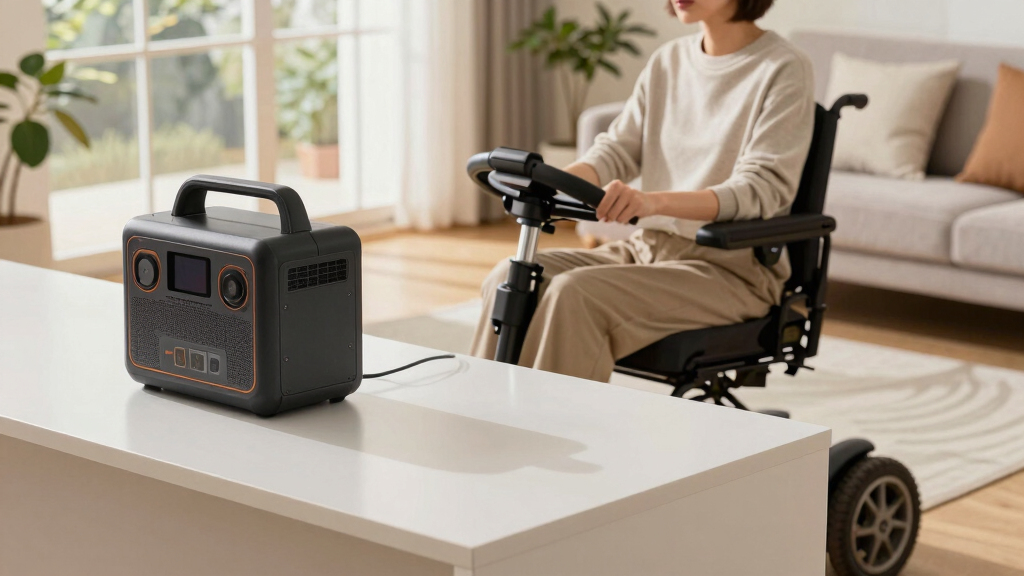

Finding the best backup power station for accessibility devices requires balancing reliability, capacity, and portability. The ideal choice offers enough power to sustain essential devices without being too cumbersome or expensive. The Jackery Explorer 1000 v2 stands out for its balanced capacity and portability, while the Anker SOLIX S2000 provides massive capacity for critical long-term needs. However, tradeoffs include size, weight, and price—more capacity often means more bulk and cost. Continue reading for a detailed breakdown of the top options and what factors should influence your decision.

Get everyday helpers delivered free with Prime
- Fast, free delivery on millions of items
- Prime Video, Amazon Music and more included
- Member-only deals all year
Complete the kit


Key Takeaways
- Capacity matters most when powering multiple or high-wattage accessibility devices for extended periods.
- Portability varies widely; some options prioritize lightweight design, others focus on maximum power output.
- Battery chemistry like LiFePO4 offers longer lifespan and safety, influencing long-term reliability.
- Fast charging and multiple ports provide flexibility but can add to the cost and complexity.
- Size and weight are critical tradeoffs—larger stations often deliver more power but are less convenient to carry.


| backup power stations for accessibility device | Capacity | Weight |
|---|---|---|
| Librids Portable Power Station | 640Wh | — |
| Anker SOLIX C1000 Gen 2 Portab | 1024Wh | 11.3 kg |
| Jackery Explorer 300 Portable | 292Wh | 7.5 lbs |
| Anker Portable Power Station S | 288Wh | 9.4 lbs |
| BLUETTI Elite 30 V2 Portable P | 288Wh | 9.4 lbs |
| Jackery HomePower 3600 Plus Po | 3584Wh | — |
| EF ECOFLOW Delta 2 Solar Gener | 1024Wh | — |
| Jackery Explorer 1000 v2 Porta | 1070Wh | — |
| Anker SOLIX S2000 Portable Pow | 2010Wh | 35.7 lbs |
More Details on Our Top Picks
Librids Portable Power Station C600, 640Wh LiFePO4 Battery, 600W (Peak 1200W) Solar Generator, Fast Charge, UPS, 8 Ports for Camping and Home Backup
This option stands out for its balanced capacity of 640Wh and robust 600W continuous output, making it ideal for those who need dependable power during outages or at home. Unlike the lighter Jackery Explorer 300, the Librids C600 provides more stable power suited for sensitive accessibility devices, with a pure sine wave inverter ensuring safe operation. Its LiFePO4 battery offers over 4,000 cycles, translating into long-term reliability, though its weight and indoor-only design limit portability. Compared with the Anker SOLIX C1000, it is less powerful but also more affordable and simpler to operate. The fast 1.5-hour charging time minimizes downtime, critical in emergency scenarios. However, its bulk and inability to handle outdoor wet conditions mean it’s best for stationary indoor use rather than outdoor adventures.
Pros:- Fast charging in just 1.5 hours minimizes downtime
- Long-lasting LiFePO4 battery with over 4000 cycles
- Multiple output ports including pure sine wave inverter
Cons:- Heavy and bulky, limiting portability
- Indoor use only, not suitable for wet outdoor conditions
Best for: Homeowners or caregivers needing a dependable backup for accessibility devices during power outages
Not ideal for: Active outdoor users requiring lightweight, weatherproof units for mobile use
- Capacity:640Wh
- Continuous Power:600W
- Peak Power:1200W
- Charging Time:1.5 hours
- Battery Type:LiFePO4
- Cycle Life:4000+ cycles
Our verdict“This power station is best for those prioritizing reliable, stable backup power at home or in a sheltered environment.”
Anker SOLIX C1000 Gen 2 Portable Power Station, 1024Wh, 2000W, Camping, Emergency Backup
The Anker SOLIX C1000 Gen 2 makes a compelling case for those needing substantial power in a portable package, boasting a 1024Wh capacity and a 2000W continuous output that outshines smaller units like the Jackery Explorer 300. Its HyperFlash recharging technology can restore power in just 49 minutes, a major advantage in emergencies. However, at 11.3 kg, it’s heavier than the BLUETTI Elite 30 V2, making it less convenient to carry for outdoor use. Its nine outlets may suffice for most needs but can limit flexibility for larger device arrays. Compared to the smaller Anker SOLIX C300, it offers more power but at a higher price point and weight. It’s best suited for users who need serious capacity and quick recharge times, though portability may be a concern for frequent movers.
Pros:- Fast recharging in just 49 minutes with HyperFlash technology
- High capacity of 1024Wh and 2000W output
- Supports solar charging in 1.8 hours
Cons:- Relatively heavy at 11.3 kg, less portable
- Limited to 9 outlets which might restrict device connections
Best for: Emergency responders, off-grid dwellers, or campers who need high capacity and quick recharging
Not ideal for: Lightweight backpackers or users with limited space who prioritize portability over capacity
- Wattage:2000W
- Capacity:1024Wh
- Charging Time:49 minutes
- Weight:11.3 kg
- Number of Outlets:9
- Supports Solar Recharging:Yes
Our verdict“This model suits users needing large capacity and rapid recharge in emergency or off-grid settings, but it’s less ideal for frequent outdoor portability.”
Jackery Explorer 300 Portable Power Station, 292Wh, LiFePO4 Battery, Solar Generator for Outdoors, Camping, Travel, Hunting, Blackout
The Jackery Explorer 300 is designed for those who prioritize portability and simplicity, featuring a compact 292Wh capacity and durable LiFePO4 chemistry**. While it lacks the power output for heavy-duty devices like medical equipment with high surge requirements, it’s well-suited for small accessibility devices during short-term outages or outdoor excursions. Its lightweight design (7.5 lbs) makes it a favorite for camping and travel, but this comes with the tradeoff of limited capacity—longer-term backup or multiple device support can become challenging. It’s comparable to the smaller Anker SOLIX C300 in portability but offers even less power, making it less suitable for extended use or high-demand devices. Solar charging is fast, but the absence of a solar panel included limits immediate off-grid use without additional purchases.
Pros:- Lightweight and highly portable at 7.5 lbs
- Durable LiFePO4 battery with over 4,000 cycles
- Multiple device charging options including USB-C and AC outlets
Cons:- Limited capacity of 292Wh restricts longer-term use
- Solar panel not included, requiring additional purchase
Best for: Outdoor enthusiasts or caregivers needing portable, lightweight backup for essential devices during short outages
Not ideal for: Users needing extended backup power or to support multiple high-power devices for long periods
- Capacity:292Wh
- Battery Chemistry:LiFePO4
- AC Outlets:2
- Weight:7.5 lbs
- Charge Cycles:Over 4,000
- Solar Charging:Yes (not included)
Our verdict“This unit is best for outdoor users or caregivers who need a lightweight and reliable backup for short durations and small devices.”
Anker Portable Power Station SOLIX C300, 288Wh LiFePO4 Backup Battery, 300W Solar Generator, 140W Two-Way Fast Charging
The Anker SOLIX C300 offers a compact 288Wh capacity with a 300W continuous output, making it a practical choice for those who need a balance between size and power. It supports multiple charging ports, including USB-C and AC outlets, and features a quick 50-minute recharging to 80%, which is helpful during emergencies. Compared to the Jackery Explorer 300, it provides more versatile charging options and supports solar recharging, but it’s slightly less powerful, limiting its effectiveness for larger or more demanding devices. The inclusion of multiple USB ports and a quiet operation at 25dB makes it suitable for sensitive environments. Its small size and fast recharge make it ideal for quick, portable backup, though its capacity isn’t enough for extended outages or high-power accessibility devices.
Pros:- Portable and easy to carry at only 9.4 lbs
- Supports solar panel charging for sustainable energy
- Fast recharge from 0-80% in 50 minutes
Cons:- Limited capacity of 288Wh for extended outages
- Requires separate purchase of straps for carrying
Best for: Travelers, caregivers, or emergency users needing a small, fast-charging backup for essential devices
Not ideal for: Users requiring long-term or high-capacity backup for multiple devices or medical equipment
- Capacity:288Wh
- Power Output:300W (600W surge)
- Recharging Time:50 minutes
- Weight:9.4 lbs
- Cycle Life:3,000 cycles
- Supports Solar:Yes
Our verdict“This power station is best suited for travel, quick emergency backup, and small device support, but falls short for prolonged power needs.”
BLUETTI Elite 30 V2 Portable Power Station 288Wh 600W LFP Solar Generator
The BLUETTI Elite 30 V2 strikes a balance between lightweight portability and power, weighing only 9.4 lbs with a 288Wh capacity and a 600W continuous output. It excels in providing reliable UPS backup with ≤10ms switching time, which is critical for sensitive accessibility devices. Its multiple charging modes, including ultra-fast 45-minute recharge from 0-80%, make it practical for both outdoor adventures and emergency use at home. While its capacity is limited compared to larger models like the Anker SOLIX C1000, its fast charging and energy-efficient technology make it a strong contender for short-term backup needs. The 9 outlets support a variety of devices, though some users might find the capacity insufficient for extended outages, especially with multiple high-draw devices.
Pros:- Lightweight at only 9.4 lbs
- Fast charging from 0-80% in 45 minutes
- Reliable UPS backup with ultra-fast switching
Cons:- Limited battery capacity for extended outages
- Only 9 outlets may limit device connections
Best for: Caregivers or outdoor users needing quick, reliable backup with fast recharge in a lightweight form
Not ideal for: Long-term backup scenarios or users with high power demands requiring more capacity
- Capacity:288Wh
- Continuous Power:600W
- Surge Power:1500W
- Charging Time (0-80%):45 minutes
- Weight:9.4 lbs
- UPS Backup:Yes
Our verdict“This power station is ideal for quick, reliable backup with fast recharge in portable and sensitive environments, though limited capacity restricts longer-term use.”
Jackery HomePower 3600 Plus Portable Power Station, 3600W AC Output, 3584Wh LFP Solar Generator, Expandable up to 21kWh, Home Backup for Emergencies and RV
The Jackery HomePower 3600 Plus stands out for its massive 3584Wh capacity, making it ideal for prolonged outages or powering multiple accessibility devices simultaneously. Its multiple charging options, including solar, AC, and even gas generator compatibility, provide flexible energy sources—especially useful during extended emergencies. Compared to Anker SOLIX S2000, which offers a similar capacity but weighs less and is more portable, the Jackery’s higher capacity makes it better suited for stationary home backup rather than frequent moving. The tradeoff lies in its weight—over 77 pounds—which could be a barrier for those needing mobility. This unit is perfect for users who prioritize long-term reliability and have space for setup, but less so for those requiring a lightweight, portable solution.
Pros:- Exceptional 3584Wh capacity supports long-term power needs
- Multiple charging options including solar, AC, and gas generator compatibility
- Portable design with wheels and telescopic handle for easier movement
Cons:- Heavy at 77.2 pounds, challenging to carry without wheels
- Higher price point compared to smaller portable units
- Requires dedicated space for setup and storage
Best for: Homeowners needing reliable, extended backup power during outages or emergencies for accessibility devices.
Not ideal for: Individuals who require lightweight, highly portable power stations for frequent travel or outdoor activities.
- Voltage:120V & 240V in parallel
- Power Source:Battery-Powered
- Wattage:3600W
- Capacity:3584Wh
- Number of Outlets:2
- Item Weight:77.2 pounds
- Charging Time:AC in 2.5 hours, solar in 4 hours
- Expandable Capacity:up to 21kWh per unit, 43kWh with multiple units
Our verdict“This makes the most sense for users seeking a high-capacity, reliable home backup solution for accessibility devices, willing to handle its size and weight.”
EF ECOFLOW Delta 2 Solar Generator with 2x100W Solar Panels, 1024Wh, 1800W Portable Power Station
The EF ECOFLOW Delta 2 offers a compelling balance of portability and power with its 1024Wh capacity and 1800W continuous output. Its LiFePO4 battery provides over 3,000 cycles, ensuring long-term durability—an advantage over smaller units like the Jackery Explorer 1000 v2, which, while lighter and more compact, offers less capacity. The Delta 2 excels when rapid charging is needed, reaching full capacity in just over 5 hours with solar panels, though those panels are sold separately, which adds to the initial investment. This unit is better suited to users who want a reliable, portable power station that can handle most household devices with ease, but it may be less ideal if you need higher capacity or integrated solar panels.
Pros:- Long-lasting LiFePO4 battery with over 3,000 cycles
- Fast recharge time with multiple solar panels (sold separately)
- Powerful 1800W output suitable for most household devices
Cons:- Solar panels are sold separately, increasing overall cost
- Relatively heavy for portable use at over 20 pounds
- Initial setup may be complex for less tech-savvy users
Best for: Individuals seeking a portable, fast-recharging power station capable of supporting most accessibility devices during outages or outdoor use.
Not ideal for: People who need very high capacity or integrated solar panels, or who prefer an all-in-one, plug-and-play setup for home backup.
- Capacity:1024Wh
- Power Output:1800W (Surge 2700W)
- Battery Type:LiFePO4
- Charge Time:5.1 hrs with two panels
- Cycle Life:3000+ cycles
- Expandable Capacity:up to 3kWh
- Included Solar Panels:2x100W (sold separately)
Our verdict“Ideal for users needing a portable, durable, and fast-charging power station for home backup or outdoor adventures, accepting the extra cost of solar panels separately.”
Jackery Explorer 1000 v2 Portable Power Station, 1070Wh, 1500W, Fast Charge, LiFePO4 Battery, USB-C, Solar Generator for Camping and Emergencies
The Jackery Explorer 1000 v2 offers a solid 1070Wh capacity with a 1500W output, making it a versatile choice for users who need reliable power on the go. Its fast charging feature can bring it from zero to full in just over an hour, which is a significant advantage over bulkier options like the HomePower 3600 Plus. While its weight of under 24 pounds makes it portable, it isn’t as powerful or expandable as larger units, limiting its use for long-term or high-wattage needs. It pairs well with Jackery’s solar panels but isn’t compatible with other brands, which could be a drawback for some. This pick makes the most sense for those who prioritize portability and quick recharging for smaller accessibility devices during outages.
Pros:- Fast charging from 0% to 100% in about 1 hour
- Lightweight and portable at 23.8 pounds
- Long-lasting LiFePO4 battery with over 10 years lifespan
Cons:- Limited capacity at 1070Wh, less suited for extended outages
- Solar panels sold separately, adding to total cost
- Only compatible with Jackery solar panels
Best for: Individuals needing a lightweight, fast-charging backup for essential accessibility devices during short-term outages or outdoor activities.
Not ideal for: Users requiring high-capacity or expandable systems for prolonged power needs or multiple devices running simultaneously.
- Wattage:1500W
- Capacity:1070Wh
- Battery Type:LiFePO4
- Additional Features:Fast Charging, USB-C
- Item Weight:23.8 pounds
- Dimensions:12.87″L x 8.82″W x 9.72″H
Our verdict“Perfect for users who need a quick, portable backup solution for essential devices during short outages or outdoor use, accepting its limited capacity.”
Anker SOLIX S2000 Portable Power Station, 2010Wh, 1500W, Home Backup, UPS
The Anker SOLIX S2000 offers a substantial 2010Wh capacity with a 1500W continuous output, making it a prime candidate for home backup scenarios. Its LiFePO4 chemistry guarantees a remarkable 10,000 cycles, translating to over a decade of reliable service—far exceeding typical portable stations like the EF ECOFLOW Delta 2. Its 35.7-pound weight is manageable for a unit of this size, and multiple recharging options—including AC, solar, and car—make it flexible. However, the lack of a dedicated 12V DC port limits some device connections, and its size might be less ideal for frequent movement. This product is best suited for users prioritizing longevity, capacity, and dependable backup power over ultra-portability.
Pros:- Long-lasting 10,000-cycle battery with a 15-year lifespan
- Large capacity of 2010Wh supports prolonged outages
- Multiple recharging options including solar, AC, and car outlet
Cons:- Lacks a dedicated 12V DC port for some devices
- Heavier than smaller units, at 35.7 pounds
- Less suitable for frequent, quick moves due to size
Best for: Homeowners or renters seeking a durable, high-capacity backup power station with long cycle life for essential devices and extended outages.
Not ideal for: People who need a lightweight, compact unit for frequent outdoor trips or quick portability.
- Capacity:2010Wh
- Battery Type:LiFePO4
- Continuous Power:1500W
- Peak Power:3000W
- Weight:35.7 lbs
- Dimensions:8.2 x 11.1 x 12.7 inches
- Cycle Life:10,000 cycles
- Recharge Options:AC, solar, generator, car outlet
Our verdict“Ideal for users who want a long-term, dependable backup power station for home or emergency use, accepting some weight and size for superior capacity and durability.”
How We Picked
The products in this roundup were selected based on their ability to reliably power accessibility devices during outages, with an emphasis on capacity, safety, and usability. We prioritized units with proven battery chemistry like LiFePO4 for longevity, and included models with sufficient wattage to run essential devices simultaneously. Ease of use, port variety, and charging options also influenced rankings, alongside build quality and price. Our goal was to identify options suitable for both emergency backup and everyday mobility, ensuring each product offers a clear advantage for specific needs and budgets.Factors to Consider When Choosing Best Backup Power Stations For Accessibility Devices
Choosing the best backup power station involves more than just capacity. Consider how you plan to use it—whether for short outages, long-term emergencies, or portable daily use—and weigh factors like size, weight, and charging options. Understanding these elements can help prevent common mistakes, such as overpaying for capacity you don’t need or choosing a station too bulky for regular portability.Capacity and Power Output
Ensure the station’s capacity (measured in watt-hours) exceeds your total device power needs, especially if you plan to run multiple devices or longer durations. Look at the continuous wattage output to confirm it can handle the peak power of your accessibility devices. Overestimating capacity can lead to unnecessary expense and bulk, while underestimating risks insufficient runtime during outages.
Port Selection and Compatibility
Check for a variety of ports (AC outlets, USB-C, USB-A, DC) that match your devices’ charging requirements. Compatibility issues are common if you rely on specific adapters or chargers. A station with versatile ports simplifies setup and reduces the need for multiple devices or converters, making it more user-friendly during stressful situations.
Size, Weight, and Portability
Balance your need for power with portability—larger units tend to offer higher capacity but are heavier and less convenient to carry. If you need a backup station for mobility or frequent transport, prioritize lightweight, compact models. Conversely, stationary setups can benefit from larger, more powerful units that stay in one place and handle extended power needs.
Battery Chemistry and Longevity
LiFePO4 batteries are increasingly popular for their longer lifespan, safety, and stability, especially important for frequent or long-term use. Cheaper chemistries may degrade faster and require more replacements, increasing total ownership costs. Investing in a quality chemistry can pay off over time, especially for critical accessibility needs.
Charging Options and Replenishment
Consider how quickly and conveniently you can recharge the station—solar, AC wall outlet, or car charger. Fast recharging features can be vital during extended outages. Also, check if the station supports pass-through charging, allowing you to use it while it recharges, which is helpful during emergencies or daily use.
Frequently Asked Questions
How much capacity do I need to power my accessibility devices during a power outage?
To determine your required capacity, add up the wattage of all essential devices and estimate how long you need them to run. For example, if your devices draw 50W each and you need 8 hours of backup, you’ll need at least 400Wh of capacity, with additional margin for safety and startup surges. Larger capacity units provide more flexibility, especially if power outages may last several days.
Can I run my accessibility devices directly from a portable power station?
Yes, most stations with AC outlets or appropriate ports allow direct connection to devices. Confirm that the station’s wattage limits match your device’s power draw. For sensitive electronics, look for units with pure sine wave inverters to prevent damage. Proper compatibility ensures reliable operation and safety during use.
Is it worth paying more for a lithium iron phosphate (LiFePO4) battery?
LiFePO4 batteries typically cost more upfront but offer longer cycle life, better safety, and more stable performance over time. For accessibility devices that require frequent or long-term use, investing in a LiFePO4-based station can reduce replacement costs and provide peace of mind during extended outages. Cheaper batteries may degrade faster, necessitating earlier replacements.
How important is portability for backup stations used with accessibility devices?
Portability becomes essential if you need to move the power station between different locations, such as from home to a vehicle or in emergency situations. Lightweight, compact models are easier to carry and set up, but they may have lower capacity. Larger stations are better suited for stationary backup, especially if weight and size are less of a concern.
What safety features should I look for in a backup power station?
Prioritize units with built-in protections like overcurrent, short circuit, overvoltage, and thermal cutoff. These features help prevent damage to your devices and ensure safe operation, especially during extended use or in emergency scenarios. Safety certifications from recognized standards bodies add an extra layer of reliability and peace of mind.
Conclusion
If you need a reliable, all-around backup for powering essential accessibility devices, the Jackery Explorer 1000 v2 offers a balanced mix of capacity, portability, and affordability. For those seeking maximum power and long-term backup, the Anker SOLIX S2000 stands out despite its weight and cost. Beginners or those with limited space might prefer compact models like the Anker Portable Power Station SOLIX C300. For emergency preparedness and high-capacity needs, the Jackery HomePower 3600 Plus or the EF ECOFLOW Delta 2 excel, with larger capacities and fast recharge options. Ultimately, your choice depends on your specific power needs, mobility requirements, and budget.
Fall Picks
fall essentials
As an affiliate, we earn on qualifying purchases.