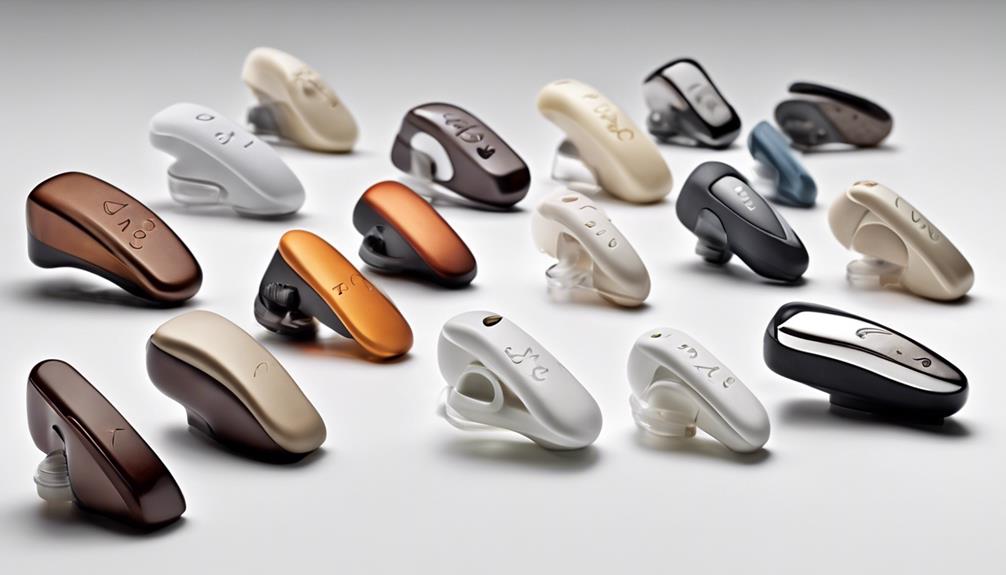

CIC hearing aids — completely-in-canal devices — are the smallest, most discreet hearing aids you can buy, and 2026’s over-the-counter market has made them more affordable than ever. After comparing the leading options, Ceretone Core One Pro stands out as the best overall pick, thanks to its Intricon digital chip, wind noise reduction, and genuinely tiny fit. Close behind, the Vivtone Supermini earns its place with 16-channel sound processing at a friendlier price, while the Nano First Ear Pro CIC is the pick I’d point first-time buyers toward for its simple charging case and ease of use. The main tradeoff in this category is straightforward: the smaller and more invisible the device, the harder it gets to handle the battery, controls, and cleaning. Cheap CIC clones also flood the market, so sound processing quality varies widely between models that look identical. Keep reading for the full breakdown of all 15 options and which one fits your ears, budget, and lifestyle.

Get everyday helpers delivered free with Prime
- Fast, free delivery on millions of items
- Prime Video, Amazon Music and more included
- Member-only deals all year
Key Takeaways
- Sound processing is the biggest differentiator in this roundup — 16-channel models like the Vivtone Supermini clearly outperform cheaper fixed-gain devices that are really just amplifiers in disguise.
- Charging case design matters as much as the hearing aids themselves: models with UV cleaning cases (like the CIC Hearing Aids with Rechargeable UV Cleaning Charging Case) cut maintenance effort dramatically for dexterity-limited buyers.
- Battery life claims cluster between 20 and 100+ hours, and the longest-lasting options tend to be bulkier in the canal — a real tradeoff between invisibility and runtime.
- Auto on/off was present on every top pick; models missing it force daily manual fiddling that defeats the purpose of a discreet CIC design.
- Volume control styles split the field: touchscreen (Audien Atom X) suits tech-comfortable users, while physical buttons and rocker switches remain easier for arthritic hands.
| Ceretone Core One Pro OTC Hearing Aids |  | Best Overall | Style: Completely-in-canal (CIC), invisible in-ear | Chip: Intricon digital chip, Knowles speakers | Battery life: 20–25 hours per charge; 80+ hours with case | VIEW ON AMAZON | See Our Full Breakdown |
| Vivtone Supermini Hearing Aids |  | Best Value | Style: CIC, 30% smaller than typical CIC devices | Processing: 16-channel digital sound processing | Modes: 2 (general and noisy environment) | VIEW ON AMAZON | See Our Full Breakdown |
| Audien Atom X OTC Hearing Aid |  | Easiest to Use | Style: In-ear, side-specific comfort fit | Control: Touchscreen on charging case (CaseControl) | Modes: 4 (Conversation, Crowd, TV, Comfort) | VIEW ON AMAZON | See Our Full Breakdown |
| Oldriv K159 Mini CIC Hearing Aids |  | Best for All-Day Discreet Comfort | Style: Completely-in-canal, 50% smaller than typical devices | Battery life: 24 hours per full charge | Charge time: 3 hours in charging box | VIEW ON AMAZON | See Our Full Breakdown |
| CIC Hearing Aids with UV Cleaning Charging Case |  | Best for Hygiene and Long Days | Style: Deep-canal CIC with removal cord | Battery life: 20 hours per charge; 80 hours total with case | Quick charge: 15 minutes for 4 hours of use; full charge ~2 hours | VIEW ON AMAZON | See Our Full Breakdown |
| HEARO OTC Hearing Aids for Seniors, Rechargeable CIC Invisible, Pair |  | Easiest Setup for First-Time Users | Design: Completely-In-Canal (CIC), beige, nearly invisible | Battery Life: Up to 12 hours per charge | Charging: USB-C charging case (included) | VIEW ON AMAZON | See Our Full Breakdown |
| Nano Hearing Aids First Ear Pro CIC |  | Best All-Day Versatility | Type: Completely-in-Canal (CIC) | Battery Life: Up to 18 hours per charge | Charging Case: Portable case with 3 full recharges | VIEW ON AMAZON | See Our Full Breakdown |
| Audien Atom One OTC Hearing Aids | 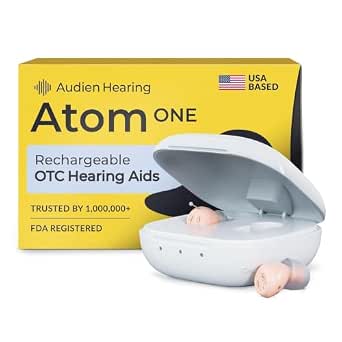 | Best Battery Life and Support | Fit Type: In-Ear (nano design) | Battery Life: 24 hours per charge | Charging: USB-C dock, approximately 3 hours | VIEW ON AMAZON | See Our Full Breakdown |
| Oricle Hearing Aids for Seniors |  | Best for Long Stretches Between Charges | Design: Completely-in-Canal (CIC), compact in-ear | Battery Life: Up to 60 hours per charge | Charging: Portable charging case | VIEW ON AMAZON | See Our Full Breakdown |
| Vivtone Supermini Digital Hearing Aids, Rechargeable, 16-Channel Sound Processing, Pair |  | Best Sound Quality for the Money | Sound Processing: 16-channel digital | Battery Life: Over 16 hours after a full charge | Charging Time: 2 hours | VIEW ON AMAZON | See Our Full Breakdown |
| OTC Hearing Aids for Seniors with Noise Cancelling, 100 Hours Battery Life | 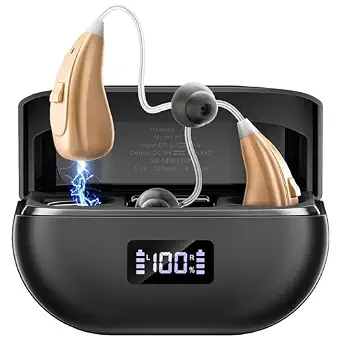 | Best Battery Endurance | Channels: 16 | Battery Life: 25+ hours per charge; 100+ hours with case | Charging Time: Approximately 2 hours | VIEW ON AMAZON | See Our Full Breakdown |
| Nova Hearing Aids for Seniors and Adults with Noise Cancelling and Long Battery Life |  | Best for Conversational Clarity | Battery Life: 100 hours total | Charging Time: 1.5 hours fast charge | Noise Reduction: 80% | VIEW ON AMAZON | See Our Full Breakdown |
| Flaygo Rechargeable Hearing Aid for Seniors, 16-Channel Digital, Noise Cancellation, Compact & Invisible Design |  | Best Truly Invisible Pick | Channels: 16 | Battery Life: Up to 16 hours per charge | Standby Time: Up to 7 days | VIEW ON AMAZON | See Our Full Breakdown |
| OTC Hearing Aids for Seniors & Adults, Rechargeable, Noise Cancelling, 16-Channel Digital DSP, 2 Environment Modes, 80+ Hour Battery Life, Comfort-Fit, Black |  | Best for Environment Switching | Channels: 16 | Environment Modes: 2 — Quiet and Noise-Canceling | Battery Life: 80+ hours | VIEW ON AMAZON | See Our Full Breakdown |
| Rechargeable OTC Hearing Aids for Seniors, Digital Noise Cancellation & Feedback Suppression, Mini In-Ear Design with Button Control, Magnetic Charging Case, 100H Use |  | Best Charging Convenience | Battery Life: Up to 100 hours total | Charging: Magnetic case holding 4 full charges | Control: One-button operation | VIEW ON AMAZON | See Our Full Breakdown |
| cic hearing aid | Battery life | Design |
|---|---|---|
| Ceretone Core One Pro OTC Hear | 20–25 hours per charge; 80+ hours with case | — |
| Vivtone Supermini Hearing Aids | 16+ hours per charge; case provides ~1 week standby power | — |
| Audien Atom X OTC Hearing Aid | 16 hours per charge; 48 hours with charging case | — |
| Oldriv K159 Mini CIC Hearing A | 24 hours per full charge | — |
| CIC Hearing Aids with UV Clean | 20 hours per charge; 80 hours total with case | — |
| HEARO OTC Hearing Aids for Sen | Up to 12 hours per charge | Completely-In-Canal (CIC), beige, nearly invisible |
| Nano Hearing Aids First Ear Pr | Up to 18 hours per charge | — |
| Audien Atom One OTC Hearing Ai | 24 hours per charge | — |
| Oricle Hearing Aids for Senior | Up to 60 hours per charge | Completely-in-Canal (CIC), compact in-ear |
| Vivtone Supermini Digital Hear | Over 16 hours after a full charge | Super mini, invisible, ergonomic fit |
| OTC Hearing Aids for Seniors w | 25+ hours per charge; 100+ hours with case | In-canal, invisible fit |
| Nova Hearing Aids for Seniors | 100 hours total | In-canal, discreet |
| Flaygo Rechargeable Hearing Ai | Up to 16 hours per charge | Ultra-miniature, invisible in-ear |
| OTC Hearing Aids for Seniors & | 80+ hours | Comfort-fit, discreet in-ear |
| Rechargeable OTC Hearing Aids | Up to 100 hours total | Mini in-ear, discreet, ergonomic |
More Details on Our Top Picks
Ceretone Core One Pro OTC Hearing Aids
The Ceretone Core One Pro earns the top spot because it balances everything a CIC buyer cares about: genuine name-brand internals, discreet fit, and a charging case that actually covers multi-day use. The Intricon digital chip and Knowles speakers are components found in far pricier prescription devices, and that shows up in speech clarity and wind noise handling that cheaper options like the Oldriv K159 can’t match. The 80+ hours of total battery life from the case beats the Audien Atom X’s 48 hours, which matters for travel. Four listening programs give more environmental flexibility than the Vivtone Supermini’s two modes. The tradeoff: with four programs and a display screen, there’s a slightly steeper learning curve than single-button devices, and the auto on/off (triggered by removal from the case) takes getting used to.
Pros:- Name-brand Intricon chip and Knowles speakers for natural speech clarity
- 80+ hours total use with charging case
- Four environment programs with memory settings
- Three ear tip sizes with an ergonomic 30° in-ear shape
Cons:- More settings to learn than single-mode competitors
- No dedicated noisy-restaurant tuning beyond the four preset programs
Best for: First-time hearing aid buyers with mild to moderate loss who want premium sound components without prescription prices
Not ideal for: Buyers who want zero settings to manage — four programs and memory settings add complexity the most basic single-mode devices avoid
- Style:Completely-in-canal (CIC), invisible in-ear
- Chip:Intricon digital chip, Knowles speakers
- Battery life:20–25 hours per charge; 80+ hours with case
- Programs:4 listening programs (P1–P4)
- Ear tips:3 pairs, medical-grade silicone (S/M/L)
- Features:Auto on/off, wind noise reduction, memory settings, display screen
- Support:U.S.-based support, 60-day return and exchange
Our verdict“If you want the closest thing to prescription-grade sound in a discreet CIC package, this is the pick to beat.”
Vivtone Supermini Hearing Aids
What sets the Vivtone Supermini apart is the 16-channel digital sound processing — genuine frequency-shaping technology, not the analog amplification that dominates the low end of this market. That processing power translates to noticeably better background noise reduction than simpler devices like the Oldriv K159, and the dual-mode design (general plus noisy environment) covers the two situations most buyers actually face. Physically, Vivtone claims a shell 30% smaller than typical CIC devices, which makes it a smart choice for anyone who wears glasses or masks, since nothing hangs off the ear. The compromise: battery life sits at roughly 16 hours per charge, short of the Ceretone Core One Pro’s 20–25 hours, and with only two modes there’s less fine-tuning for specific scenarios like TV watching. The 10-minute memory lock-in is a thoughtful touch that prevents repeated fiddling.
Pros:- True 16-channel digital processing with background noise reduction
- Two listening modes including a dedicated noisy-environment setting
- Extra-small shell stays put and suits glasses and mask wearers
- Four ear tip sizes (XS–L) for a precise canal fit
Cons:- Shorter per-charge battery life than Ceretone or K159
- Only two modes limits environmental customization
Best for: Budget-conscious buyers who want real digital processing, not an amplifier, and who split time between quiet and noisy settings
Not ideal for: Power users wanting long marathon days — 16 hours per charge is the shortest runtime among the top picks here
- Style:CIC, 30% smaller than typical CIC devices
- Processing:16-channel digital sound processing
- Modes:2 (general and noisy environment)
- Battery life:16+ hours per charge; case provides ~1 week standby power
- Charge time:2 hours for aids and case
- Ear tips:4 sizes (X-small, small, medium, large)
- Features:Auto on/off, memory function after 10 minutes of use
Our verdict“The most legitimate digital hearing aid you’ll find near this price — choose it when sound processing matters more than battery runtime.”
Audien Atom X OTC Hearing Aid
The Atom X solves the single biggest complaint about CIC hearing aids: controls too tiny to feel. Its CaseControl touchscreen on the charging case moves volume and mode changes off the device entirely — a genuinely different approach than the button-on-device designs of the Ceretone Core One Pro or Vivtone Supermini. For anyone with dexterity issues or arthritic fingers, this is the difference between independent use and constant frustration. The four named listening modes (Conversation, Crowd, TV, Comfort) are more intuitive than numbered programs, and the included expert-guided Sound Check setup removes first-day guesswork. The tradeoff is battery: 16 hours per charge and 48 hours total with the case trails the 80-hour totals from Ceretone and the UV-case model below. The touchscreen case is also bulkier in a pocket than plain charging cases, which undercuts some of the portability appeal.
Pros:- Touchscreen case controls eliminate tiny on-device buttons
- Four plainly named listening modes for real situations
- Expert-guided setup session included
- FDA-registered OTC device, FSA/HSA eligible
Cons:- Lowest total battery life in this lineup (48 hours with case)
- Larger touchscreen case reduces pocket portability
Best for: Seniors with limited dexterity or anyone who hates fumbling with tiny buttons and smartphone apps
Not ideal for: Travelers needing multi-day power away from an outlet — 48 total hours is the weakest battery figure in this batch
- Style:In-ear, side-specific comfort fit
- Control:Touchscreen on charging case (CaseControl)
- Modes:4 (Conversation, Crowd, TV, Comfort)
- Battery life:16 hours per charge; 48 hours with charging case
- Battery type:Rechargeable lithium-ion, no disposables
- Classification:FDA-registered OTC hearing aid
- Included:Multiple ear dome sizes, wax guards, cleaning brush, expert setup
Our verdict“If small buttons are the barrier between you or a loved one and better hearing, the touchscreen case makes this the most accessible choice here.”
Oldriv K159 Mini CIC Hearing Aids
Where the Oldriv K159 wins is raw comfort: at 50% smaller than typical devices, it’s the most vanish-in-your-ear option in this group, including against the already-tiny Vivtone Supermini. That smallness translates directly into outcomes — no pressure pain during long wear, no visible profile, and nothing competing with glasses or masks. The whistling (feedback) cancellation is the other standout, addressing the most common complaint that drives new users to abandon CIC devices entirely. But the miniaturization costs you sophistication: this lacks the named environment modes of the Audien Atom X and the 16-channel processing of the Vivtone, so sound is adequate rather than refined. A 3-hour charge time is also the slowest in this batch. If prioritizing invisibility and zero discomfort over audio flexibility, this model makes the most sense; if you regularly navigate noisy restaurants, look elsewhere.
Pros:- Smallest physical profile in this lineup — nearly invisible in the canal
- Feedback whistling cancellation prevents the top cause of user abandonment
- 24-hour battery life per full charge
- Pain-free extended wear design
Cons:- No dedicated environment modes or advanced multi-channel processing
- 3-hour full charge is the slowest here
Best for: Buyers with sensitive ear canals or strong cosmetic preferences who value an invisible, pain-free fit above advanced sound tuning
Not ideal for: People in unpredictable noisy environments — limited mode selection and simpler processing than the Vivtone or Atom X
- Style:Completely-in-canal, 50% smaller than typical devices
- Battery life:24 hours per full charge
- Charge time:3 hours in charging box
- Control type:Button control
- Noise features:Noise reduction and feedback/whistling cancellation
- Battery type:Rechargeable lithium-ion
- Weight:Approximately 1 g per unit
Our verdict“Choose this when being unable to feel or see the device matters more than having a mode for every room.”
CIC Hearing Aids with UV Cleaning Charging Case
This model’s differentiator is the built-in UV cleaning cycle — every time the case charges the aids, a 5-minute UV session runs automatically. For CIC devices specifically, that matters more than it would for behind-the-ear styles, because deep-canal earpieces accumulate earwax and moisture that degrade sound and shorten device life. Nobody else in this roundup, including the Ceretone Core One Pro, offers this. Battery math is strong too: 20 hours per charge, 80 total with the case, plus a 15-minute quick charge delivering 4 hours — the fastest emergency top-up here and better than the Audien Atom X’s slower ecosystem. The near-synchronized audio for calls and video addresses lip-sync lag that cheaper CIC units ignore. On the downside, just two preset modes (Outdoor and Universal) is thin compared with the four-program Ceretone, and the brand’s support infrastructure is less established than Audien’s or Ceretone’s U.S.-based teams.
Pros:- Automatic 5-minute UV cleaning on every charge keeps earpieces hygienic
- 15-minute quick charge yields 4 hours of use
- 80 hours total battery with case; separate left/right LED indicators
- Low-latency audio for calls, TV, and video playback
Cons:- Only two listening modes (Outdoor and Universal)
- Lesser-known brand with a thinner support track record than Audien or Ceretone
Best for: All-day wearers who want hands-off hygiene maintenance and fast top-up charging between activities
Not ideal for: Buyers who want a broad set of listening programs — two modes is the minimum configuration in this lineup
- Style:Deep-canal CIC with removal cord
- Battery life:20 hours per charge; 80 hours total with case
- Quick charge:15 minutes for 4 hours of use; full charge ~2 hours
- Modes:2 presets (Outdoor and Universal)
- Cleaning:Built-in 5-minute automatic UV cycle in charging case
- Microphones:High-sensitivity silicone microphones
- Features:AI chip voice focus, sound stabilization, left/right LED battery display
Our verdict“The pick for anyone whose priority is set-and-forget cleanliness plus marathon battery days over deep sound customization.”
HEARO OTC Hearing Aids for Seniors, Rechargeable CIC Invisible, Pair
HEARO earns its place by being the least intimidating option here. Where the Vivtone Supermini leans on 16-channel digital processing and multiple modes, HEARO strips everything down to one button and two listening programs — one beep for Program 1, two for Program 2. For a senior who has never worn a hearing aid, that simplicity is the whole point. The USB-C charging case and three dome sizes (S/M/L) mean the box contains everything needed on day one, with no app or smartphone requirement. Tradeoffs are real, though: with no advanced noise reduction circuitry, noisy restaurants will be harder work than on the Nano First Ear Pro CIC, and the 12-hour battery is the shortest runtime in this batch — anyone with long days will want the case nearby.
Pros:- One-button control with two simple programs — no app, pairing, or menus required
- Nearly invisible skin-tone CIC design that avoids the bulk of behind-the-ear styles
- Complete kit includes charging case, cleaning tool, and S/M/L silicone domes
- FDA-registered facility and OTC-compliant for adults 18+ with no prescription
Cons:- 12-hour battery life is the shortest of the CIC picks in this roundup
- No advanced noise reduction — struggles more in loud environments than multi-program rivals
- Only two listening programs limits flexibility across varied settings
Best for: First-time hearing aid users and seniors who want a prescription-free device with zero tech learning curve
Not ideal for: People with full schedules away from a charger — the 12-hour battery is the shortest in this lineup, and there’s no app or advanced tuning for noisy settings
- Design:Completely-In-Canal (CIC), beige, nearly invisible
- Battery Life:Up to 12 hours per charge
- Charging:USB-C charging case (included)
- Programs:Two listening programs
- Controls:Single button (volume and program)
- Fit Accessories:Silicone domes in S/M/L
- Special Features:Feedback reduction, sweatproof, rechargeable
- Intended Use:Adults 18+ with mild to moderate hearing loss
Our verdict“This pick makes the most sense for a first-time buyer who values dead-simple controls over feature depth.”
Nano Hearing Aids First Ear Pro CIC
The First Ear Pro CIC stands out for matching everyday flexibility with genuine discretion. Compared with HEARO’s two programs, Nano offers four listening modes — quiet, conversation, outdoor, and music — which translates to fewer moments of fiddling when you move from a kitchen chat to a windy walk. The portable charging case holds three additional full recharges, so a weekend away doesn’t require a cable, something the Audien Atom One’s dock-only charging can’t match. Automatic on/off when removed also means one less thing to remember. The honest tradeoff: without water resistance, this is not the right choice for gardeners, gym-goers, or anyone regularly caught in the rain, and comfort in smaller ear canals may take dome experimentation. It suits mild to moderate loss only — severe loss needs a professional fitting.
Pros:- Four environment-specific programs (quiet, conversation, outdoor, music)
- Up to 18 hours per charge with a case carrying 3 extra full recharges
- Nearly invisible CIC fit with automatic on/off
- Noise reduction built in for clearer conversations
Cons:- No waterproof or water-resistant rating
- Initial comfort may require an adjustment period
- Limited to mild to moderate hearing loss
Best for: Active adults with mild to moderate loss who move between quiet rooms, conversations, and outdoor settings throughout the day
Not ideal for: Anyone exposed to sweat, rain, or humidity regularly — there’s no stated water resistance, and severe hearing loss exceeds its amplification range
- Type:Completely-in-Canal (CIC)
- Battery Life:Up to 18 hours per charge
- Charging Case:Portable case with 3 full recharges
- Programs:Four (quiet, conversation, outdoor, music)
- Microphone:Omnidirectional
- Automatic On/Off:Yes
- Included:Rechargeable battery, charging case, cable
Our verdict“This model is the strongest middle-ground pick for buyers who want multi-environment performance without giving up near-invisibility.”
Audien Atom One OTC Hearing Aids
Audien’s Atom One wins on two fronts nothing else in this batch matches: a 24-hour battery per charge and an expert-guided setup session included with purchase. That guidance matters for buyers nervous about fit and tuning — HEARO and Oricle leave you with printed instructions and trial-and-error. The analog dials for volume and frequency are refreshingly direct for seniors, though they cap how precisely the device can be tuned compared with the Vivtone Supermini’s 16-channel digital processing. At roughly 5 grams, it’s among the lightest here, and FSA/HSA eligibility plus a 1-year warranty round out a reassuring package. The main compromises: charging happens on a dock rather than a pocketable case like the Nano First Ear Pro CIC, and there’s no app or advanced programming for anyone wanting finer control later.
Pros:- 24-hour battery life — the longest per-charge runtime in this batch
- Expert-guided setup session included with purchase
- Ultra-light nano design (about 5 g) with three ear dome sizes
- 1-year warranty and FSA/HSA eligibility
Cons:- Analog dials only — no app or advanced digital programming
- Dock-only charging is less travel-friendly than pocketable charging cases
- Compatible only with mild to moderate hearing loss
Best for: Seniors and adults who want the longest single-charge runtime plus human setup help rather than figuring out fit alone
Not ideal for: Tech-comfortable users who want app-based tuning or fine-grained sound customization — the analog dials offer only basic adjustment
- Fit Type:In-Ear (nano design)
- Battery Life:24 hours per charge
- Charging:USB-C dock, approximately 3 hours
- Controls:Analog dials (volume and frequency)
- Weight:Approximately 5 g
- Ear Domes:3 sizes (S/M/L)
- Warranty:1 year
- FSA/HSA Eligible:Yes
Our verdict“Choose this if guided setup and all-day-plus battery matter more to you than deep customization options.”
Oricle Hearing Aids for Seniors
If recharging feels like a chore, Oricle’s headline number does the talking: up to 60 hours on a single charge, dwarfing the HEARO’s 12 hours and even the Audien Atom One’s 24. In practice, that means charging the case weekly rather than nightly — a genuine quality-of-life difference for travelers or anyone who forgets to plug things in. The auto on/off with smart memory keeps your preferred volume and settings intact every time you dock, and five sound levels give more room to adapt than HEARO’s two programs, though less environmental shaping than the Nano’s four dedicated modes. Comfort gets real attention here, with soft silicone tips aimed at extended wear. The catch: noise cancellation is described broadly rather than specified, so buyers in genuinely loud environments may find the Nano First Ear Pro CIC more predictable.
Pros:- Up to 60 hours of use per charge — among the longest runtimes in this roundup
- Auto on/off in the case with smart memory that preserves settings
- Five adjustable sound levels for varied environments
- Soft silicone tips designed for secure, all-day comfort
Cons:- Noise cancellation claims are vague compared with rivals’ dedicated programs
- Long-press power control (5 seconds) is slower than auto-on competitors
- No dedicated environment modes like the Nano’s four-program setup
Best for: Travelers, campers, and anyone who wants to charge weekly instead of nightly without losing settings
Not ideal for: Buyers who spend most of their time in loud restaurants or crowds — the noise cancellation is less specified and less predictable than multi-program rivals
- Design:Completely-in-Canal (CIC), compact in-ear
- Battery Life:Up to 60 hours per charge
- Charging:Portable charging case
- Power:Long press 5 seconds on/off; auto on/off in case
- Sound Levels:5 adjustable levels
- Memory:Smart memory retains preferred settings
- Comfort:Soft silicone ear tips for extended wear
Our verdict“This is the pick for people whose priority is charging as rarely as possible while keeping a stable, comfortable fit.”
Vivtone Supermini Digital Hearing Aids, Rechargeable, 16-Channel Sound Processing, Pair
The Vivtone Supermini is the pick where sound processing takes priority. Its 16-channel digital processing separates speech from background noise far more precisely than the analog-dial Audien Atom One or HEARO’s basic two-program amplification — for buyers frustrated by muddy, amplified-everything sound, that difference is the reason to spend a bit more. The ergonomic super-mini fit comes with four earbud sizes (X-small through large), which matters for anyone whose canals fall outside the standard S/M/L trio most competitors include. Charging is quick at 2 hours for 16+ hours of use, with roughly a week of standby. The tradeoffs: unlike the Oricle’s 60-hour runtime, you’ll want a nightly charging habit, and there’s no confirmed sweat or water resistance — so workouts and rain are off the menu.
Pros:- 16-channel digital sound processing with background noise reduction
- Four earbud sizes including X-small for hard-to-fit ear canals
- Quick 2-hour charge yielding 16+ hours of use and about a week of standby
- Multiple listening modes for different environments
Cons:- Needs daily charging for continuous use
- Likely pricier than basic analog options in this roundup
- No stated waterproof or sweat-resistance rating
Best for: Buyers who prioritize clearer speech separation in noisy rooms and want real digital processing, not basic amplification
Not ideal for: Very humid climates or sweaty activities — no confirmed water resistance — and buyers wanting multi-day battery like the Oricle’s
- Sound Processing:16-channel digital
- Battery Life:Over 16 hours after a full charge
- Charging Time:2 hours
- Standby Power:Around 1 week
- Design:Super mini, invisible, ergonomic fit
- Earbud Sizes:X-small, small, medium, large
- Modes:Multiple listening modes
- Format:Pair (both ears)
Our verdict“This option stands out for listeners willing to pay a modest premium for genuinely better sound processing and a more precise fit range.”
OTC Hearing Aids for Seniors with Noise Cancelling, 100 Hours Battery Life
This option stands out for one thing above everything else in this lineup: sheer runtime. With 25+ hours per charge and 100+ hours total from the case, it outlasts the Flaygo, which caps out at 16 hours per charge and relies on standby time to sound impressive. For a buyer who travels, forgets to charge devices, or simply hates nightly routines, that gap matters more than almost any other spec. The 16-channel processing and adaptive noise cancellation put it on par with the Nova in sound shaping, and the LED power display is a genuinely useful touch the Flaygo and Oricle lack. The tradeoff is that the one-button, five-level volume scheme leaves little room for fine tuning — buyers who want environment-specific adjustments will find the B0FRXQMHKR model’s dual modes more flexible. At 3 grams per aid, comfort and discretion are strong, though the fixed shell means fit depends on the included tips rather than customization.
Pros:- 100+ hours total battery life with 25+ hours per single charge
- 16-channel processing for clearer speech in noise
- Featherweight 3-gram design that stays invisible in the canal
- LED display removes guesswork about remaining charge
Cons:- Only five fixed volume levels — no program modes or sound profiles
- Rapid 2-hour recharge still trails the Nova’s 1.5-hour fast charge
Best for: Frequent travelers and forgetful chargers who need multi-day power without hunting for an outlet
Not ideal for: Listeners who move between many sound environments and want program modes or app-level customization
- Channels:16
- Battery Life:25+ hours per charge; 100+ hours with case
- Charging Time:Approximately 2 hours
- Weight:3 grams per aid
- Controls:One-button, 5 volume levels with memory
- Design:In-canal, invisible fit
- Materials:Medical-grade silicone
- Warranty:1 year
Our verdict“This is the pick for anyone whose first priority is never worrying about battery life, as long as basic volume control is enough for their listening situations.”
Nova Hearing Aids for Seniors and Adults with Noise Cancelling and Long Battery Life
Where most CIC devices in this roundup promise generic noise reduction, the Nova commits to a specific outcome: isolating human voices. That voice-first tuning makes restaurant conversations and TV dialogue noticeably easier to follow than the Flaygo, whose noise reduction is broader but less targeted. Two features push it ahead for daily reliability: feedback cancellation, which keeps whistling in check when you hug someone or adjust the fit, and an automatic drying case that removes moisture overnight — a maintenance advantage nobody else in this lineup offers, and one that extends the life of in-canal electronics exposed to ear humidity all day. The nine pairs of soft tips also give it the best shot at a snug, personalized seal compared with the fixed-tip approach of the Oricle. The 1.5-hour fast charge is the quickest here. The honest tradeoff: there is no way to customize the sound profile, so buyers with asymmetrical or unusual hearing needs will bump against its fixed tuning.
Pros:- Voice-focused processing tuned for conversations and TV
- Automatic drying case prevents moisture buildup
- 9 pairs of soft tips for a better individual fit
- 80% noise reduction plus effective feedback cancellation
Cons:- No customizable sound settings or program modes
- New users may need an adjustment period to get accustomed to in-canal sound
Best for: Social seniors who live for dinner-table conversation and TV and want voices prioritized over everything else
Not ideal for: Anyone needing tailored frequency shaping, since the sound profile is fixed rather than adjustable
- Battery Life:100 hours total
- Charging Time:1.5 hours fast charge
- Noise Reduction:80%
- Feedback Cancellation:Yes
- Charging Case:Fast charge with automatic moisture-drying
- Design:In-canal, discreet
- Ear Tips:9 pairs of soft tips included
Our verdict“Buy this if clearer conversations are your single biggest frustration, and skip it if you want control over your own sound signature.”
Flaygo Rechargeable Hearing Aid for Seniors, 16-Channel Digital, Noise Cancellation, Compact & Invisible Design
If being unnoticeable is the reason you’re shopping CIC in the first place, the Flaygo makes the strongest case here. Its ultra-miniature shell sits deeper and disappears more completely than the B0FRXQMHKR pair, which is comfortable but visibly present in black. Operation is nearly hands-off: the aids switch on and adjust automatically when inserted, so there are no buttons to fumble with — a sharper contrast with the one-button B0H1LBMWVJ, which still asks you to cycle volume manually. The medical-grade silicone build and ergonomic shaping make all-day wear realistic. But this simplicity is also its ceiling. The 16-hour per-charge battery is the shortest runtime in this batch — the Nova doubles it with its case, and B0H8RNRMCD offers 100+ hours — so it suits predictable daily routines rather than travel. And with no manual volume or program controls at all, anyone who wants even occasional override of the automatic settings will feel boxed in.
Pros:- Ultra-miniature design that is nearly invisible in the ear
- Automatic operation — no buttons or setup required
- 16-channel sound processing with intelligent noise reduction
- Medical-grade silicone for comfortable extended wear
Cons:- 16-hour per-charge battery is the shortest runtime in this group
- No manual volume or program controls — the automation is the only option
Best for: Buyers whose top priority is a hearing aid nobody can see, with set-and-forget daily use
Not ideal for: Long days away from a charger or tinkerers who want any manual control over volume and sound
- Channels:16
- Battery Life:Up to 16 hours per charge
- Standby Time:Up to 7 days
- Charging Time:1-2 hours
- Design:Ultra-miniature, invisible in-ear
- Material:Medical-grade silicone
- Warranty:1 year
Our verdict“The Flaygo is the right choice when invisibility and zero-fuss operation matter more than battery headroom or control.”
OTC Hearing Aids for Seniors & Adults, Rechargeable, Noise Cancelling, 16-Channel Digital DSP, 2 Environment Modes, 80+ Hour Battery Life, Comfort-Fit, Black
This is the only product in this batch that lets you change sound modes, with dedicated Quiet and Noise-Canceling settings. That single feature answers the main complaint I’d raise against the Flaygo and B0H8RNRMCD, both of which lock you into one automatic sound profile regardless of whether you’re in a library or a birthday party. Switching modes takes one press, and the payoff — speech that isn’t fighting the wrong noise profile — is the difference between tolerating a device and forgetting it’s there. The 16-channel DSP matches the Nova on paper, and the 80+ hour battery with 2-hour charging sits comfortably between the Flaygo’s short runtime and the 100-hour champions. The cost of that flexibility is slightly more complexity: first-time users who just want to insert and go may find the mode button one step too many, and unlike the Flaygo, this design is visible in the ear. Black is also the only color, which limits appeal for buyers wanting a subtler finish.
Pros:- Two environment modes — Quiet and Noise-Canceling — rare at this tier
- 16-channel DSP with feedback elimination
- 80+ hour battery with 2-hour rapid recharge
- Comfort-fit design suitable for all-day wear
Cons:- Extra mode control adds a learning curve for new users
- Only available in black — no subtler color options
Best for: Buyers who split their week between quiet homes and loud venues and want sound tuned for each
Not ideal for: Tech-averse first-time users who want fully automatic operation with zero buttons to learn
- Channels:16
- Environment Modes:2 — Quiet and Noise-Canceling
- Battery Life:80+ hours
- Charge Time:2 hours
- Design:Comfort-fit, discreet in-ear
- Color:Black
Our verdict“Pick this if your listening environments genuinely vary week to week; skip it if simplicity outranks flexibility.”
Rechargeable OTC Hearing Aids for Seniors, Digital Noise Cancellation & Feedback Suppression, Mini In-Ear Design with Button Control, Magnetic Charging Case, 100H Use
The standout detail here is the magnetic charging case. Drop the aids in and they seat and charge themselves — no alignment fumbling, which is a real advantage over standard contact-pad cases for anyone with dexterity issues or fading eyesight. The case holds four full charges for 100 hours total, matching B0H8RNRMCD on endurance while being friendlier to use. Its feedback suppression pairs with noise cancellation for clean sound, putting it in the same conversation as the Nova, though it lacks that model’s drying function and voice-focused tuning. One-button operation keeps the learning curve flat, and the medical-grade, skin-friendly materials make long wear sessions comfortable. The weaknesses are structural rather than superficial: there are no advanced customization options, no mention of water or sweat resistance — a concern for anyone active or living in humid climates — and post-purchase support details are thin compared with brands like Audien or Nano that have established service reputations.
Pros:- Magnetic drop-in charging case — no fiddly contact alignment
- 100 hours total battery across four full case charges
- Combined noise cancellation and feedback suppression
- Simple one-button operation with ergonomic, skin-friendly design
Cons:- No waterproofing or sweat resistance mentioned
- Limited customization and unclear long-term customer support
Best for: Seniors with limited dexterity who want drop-in magnetic charging and simple one-button control
Not ideal for: Active or humid-climate users, since there’s no stated water or sweat resistance
- Battery Life:Up to 100 hours total
- Charging:Magnetic case holding 4 full charges
- Control:One-button operation
- Design:Mini in-ear, discreet, ergonomic
- Noise Handling:Digital noise cancellation and feedback suppression
- Materials:Medical-grade, skin-friendly
Our verdict“This model earns its spot through the easiest charging experience in the batch, best for buyers who value effortless daily handling over advanced features.”

How We Picked
I evaluated every model on five buyer-relevant criteria: fit and discretion (how deep and invisible the device sits), sound processing quality (true digital multi-channel processing versus simple amplification), battery life and charging design, ease of handling (controls, insertion, and removal for users with limited dexterity), and noise management features like wind reduction, feedback suppression, and environment modes. Because CIC buyers prioritize invisibility above almost everything, I weighted fit and discretion heavily — but a device that disappears in your ear while distorting speech was penalized just as hard.
The ranking logic favors devices that balance all five criteria rather than excelling at one. The Ceretone Core One Pro took the top spot because its digital chip and wind noise reduction solve the two most common CIC complaints — muffled sound and outdoor whistle — in a genuinely tiny shell. Value picks like the Vivtone Supermini ranked high for delivering premium-level channel processing at mid-tier pricing, while models with gimmicky features but weak sound processing landed lower regardless of popularity. Where a device only suits one buyer type (like the Audien Atom X for touchscreen fans), I assigned it a specialized role rather than a top ranking.
Factors to Consider When Choosing Cic Hearing Aids
Buying CIC hearing aids over the counter is full of pitfalls, because the category is flooded with devices that look nearly identical but perform completely differently. Before you commit, here are the factors that actually separate a good purchase from a frustrating one — and the mistakes I see buyers make most often.
True Digital Processing vs. Disguised Amplifiers
The single biggest trap in the CIC market is buying a personal sound amplifier dressed up as a hearing aid. Real digital devices use multi-channel processing to compress loud sounds and boost quiet speech frequencies separately, while cheap amplifiers just make everything louder — including background noise you don’t want. Look for explicit mention of channels (8, 12, or 16), digital chips, or DSP processing in the product description. If a listing only promises “loud and clear sound” with no processing details, treat that as a warning sign. This distinction matters more for CIC devices than larger styles, because their tiny shells leave less room for the circuitry that does this work. Buyers with mild-to-moderate hearing loss who skip this check often end up returning devices that make restaurants and family gatherings worse, not better.
Physical Fit and Ear Anatomy
CIC devices sit deep inside the ear canal, which means ear shape matters far more here than with behind-the-ear styles. People with narrow or sharply bent canals may struggle with insertion and removal, and a too-loose fit causes feedback whistling that no noise-cancellation feature can fully fix. Some models include multiple ear tip sizes while others ship with only one or two — check before buying, because a poor tip match ruins an otherwise excellent device. If you have a history of earwax buildup, know that CIC devices sit right where wax accumulates and will need frequent cleaning or they’ll cut out. Larger in-canal styles with longer battery life are often easier to grip and seat properly, so don’t assume the smallest option is always the smartest choice for your hands or your ears.
Battery Life vs. Size Tradeoff
Battery life claims in this category range from around 20 hours to over 100, and the difference comes down to physics: bigger batteries mean bigger shells. A true invisible CIC device will typically need daily or every-other-day charging, while the longer-lasting models protrude slightly and are more visible. Think honestly about your routine — if you’re near a charging case every night, a 20-hour device is fine and lets you go smaller. If you travel frequently or hate fiddling with chargers, the 80-100 hour models justify their extra bulk. Also check whether the charging case actually extends use time or just protects the devices, because some cases are storage-only. Magnetic charging docks are far easier to use than precise plug-in ports, especially for anyone with unsteady hands or poor eyesight.
Controls and Dexterity
Every control style in this category — physical buttons, rocker wheels, touchscreens, and app-free auto-adjustment — suits a different user. Buttons work well for arthritic fingers but can be hard to find on a device buried in your ear canal. Touchscreens, like on the Audien Atom X, appeal to tech-comfortable buyers but confuse those who prefer tactile feedback. Auto on/off and automatic environment switching remove the handling problem entirely, which is why I weighted it so heavily in the rankings. A common mistake is buying a device with tiny controls for a senior who already struggles with phone buttons and pill bottles. Match the control scheme to the actual user, not to whoever is doing the buying.
Noise Management for Real Environments
Wind noise is a notorious CIC weakness because the deep canal placement amplifies airflow over the device, so features like wind noise reduction genuinely matter if you walk, garden, or golf. Feedback suppression matters equally — that high-pitched whistle when you hug someone or rest your head on a pillow is the fastest way to abandon a device. Some models offer two or more environment modes (quiet room versus noisy restaurant), which older single-mode devices lack. Be skeptical of generic “noise cancelling” claims though: without digital processing behind it, the label means little. Read the feature list for specifics like wind reduction, feedback suppression, and DSP — vague marketing language usually signals a basic amplifier underneath.
Who Should Skip CIC Altogether
CIC devices are designed for mild to moderate hearing loss, and they are the wrong tool for severe or profound loss — no over-the-counter model will deliver enough amplification, and you’d be better served by a professional fitting for a more powerful style. People with profound high-frequency loss often do better with receiver-in-canal devices anyway. Chronic ear infections, drainage, or very waxy canals also argue against the deep-canal fit, since trapped moisture causes irritation and repairs. That said, for the typical buyer — an adult with mild-to-moderate age-related loss who wants discretion — the CIC options in this roundup are legitimate and far more affordable than prescription devices. If you’re unsure of your loss level, a professional hearing test first is money well spent, even if you then buy over the counter.
Halloween Picks
halloween
As an affiliate, we earn on qualifying purchases.