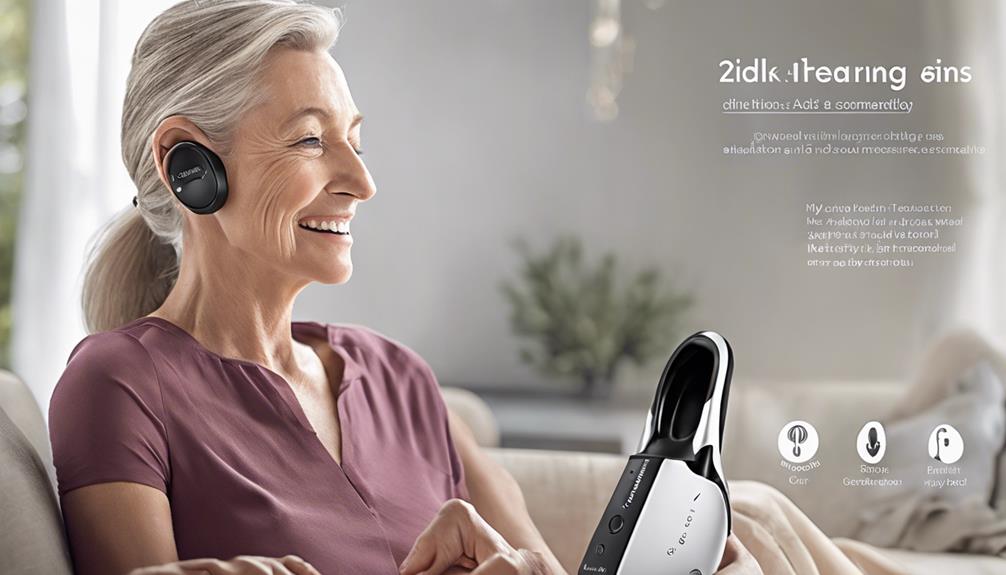

For readers searching for hearing aids by Consumer Reports, this roundup compares 13 OTC options by the features that shape everyday use. The MDHearing VOLT 4 stands out for buyers who prefer a behind-the-ear style, while the Beyond Pro adds Bluetooth and speech-focused processing, and the Audien Atom One offers a compact in-ear alternative. The main tradeoffs are discreet fit versus simpler handling, and extra controls versus ease of use. Product names and listed features alone do not establish independent test results or Consumer Reports rankings. Read on for the full breakdown and guidance on choosing a style that fits your needs.

Get everyday helpers delivered free with Prime
- Fast, free delivery on millions of items
- Prime Video, Amazon Music and more included
- Member-only deals all year
Complete the kit

Key Takeaways
- Fit divides this lineup: most options use in-ear designs, while the MDHearing VOLT 4 is the clear behind-the-ear choice.
- Bluetooth and app control appear on only a few named options: Beyond Pro and the app-controlled model suit buyers who want connected features, while simpler models avoid that added setup.
- Battery claims vary in what they describe: some listings cite long use with a charging case, so compare daily device runtime separately from case capacity.
- Noise processing is a recurring claim, not a guarantee: channel counts and noise-reduction labels do not show how well a device handles your particular listening environments.
- The product descriptions provide uneven evidence: confirm fit, return terms, support, and suitability for your hearing profile before choosing among similar Karthus and generic rechargeable models.


| hearing aids by consumer report | Battery life |
|---|---|
| Karthus Rechargeable In-Ear He | Up to 24 hours per charge; up to 96 hours total with case |
| Audien Atom One OTC Hearing Ai | Up to 24 hours per charge |
| Rechargeable Hearing Aids for | 36 hours |
| Karthus Hearing Aids for Senio | 96+ hours, as stated in the listing |
| MDHearing VOLT 4 OTC Hearing A | Full day |
| Rechargeable Hearing Aids for | — |
| Beyond Pro Bluetooth OTC Heari | Up to 20 hours per charge |
| Oricle Rechargeable In-Ear Hea | Up to 60 hours per charge |
| Rechargeable Digital Hearing A | — |
| Rechargeable Hearing Aid for S | 16 hours per charge |
| Hearing Aids for Seniors | — |
| Karthus Rechargeable OTC Heari | Up to 30 hours per charge; up to 100 hours with charging case |
| Karthus Rechargeable OTC Heari | Up to 30 hours per charge; up to 100 hours with charging case |
More Details on Our Top Picks
Karthus Rechargeable In-Ear Hearing Aids with Noise Reduction
Automatic power-on and a single control make these Karthus aids a straightforward choice for someone who wants to put them in and adjust by feel. I’d rank them ahead of the Audien Atom One for buyers who prefer preset listening modes over separate volume and frequency dials. The two modes and six volume levels offer some adjustment for speech or quieter surroundings, while the Type-C case adds up to 96 hours total runtime according to the supplied product data.
The tradeoff is limited customization: there’s no app or Bluetooth, and these are intended for perceived mild to moderate hearing loss. Buyers who want independent frequency adjustment may find Audien’s analog controls more useful. The in-ear design is discreet, but fit still depends on choosing an appropriate dome size.
Pros:- Type-C case provides up to 96 hours total runtime
- Two listening modes and six volume levels provide basic adjustments
- Automatic power-on and single control simplify operation
- Six ear domes across three sizes support fit adjustment
Cons:- No Bluetooth or app support for streaming or detailed customization
- Designed for perceived mild to moderate hearing loss
- Preset modes offer less direct frequency control than the Audien Atom One
Best for: Adults with perceived mild to moderate hearing loss who want discreet aids with basic controls and no app setup
Not ideal for: Buyers who want Bluetooth streaming, app-based fine tuning, or support beyond mild to moderate hearing loss
- Fit:In-ear
- Intended users:Adults 18+ with perceived mild to moderate hearing loss
- Listening modes:Noise Reduction and Quiet
- Volume levels:6
- Battery life:Up to 24 hours per charge; up to 96 hours total with case
- Charging:Type-C rechargeable case
- Controls:Automatic power-on; single control
- Included ear domes:6 in small, medium, and large
Our verdict“Choose this Karthus pair if simple controls and extended case runtime matter more to you than app or Bluetooth features.”
Audien Atom One OTC Hearing Aids
The Audien Atom One gives buyers two separate analog dials, one for volume and one for frequency. That makes it a better fit than the Karthus Rechargeable In-Ear Hearing Aids with Noise Reduction for someone who wants direct, hands-on adjustment without an app. Its rechargeable dock and included USB-C accessories also avoid routine disposable-battery changes, and the three dome sizes let buyers work toward a secure fit.
The compromise is a more manual setup: there are no listed noise-control modes, and a full recharge takes about three hours. Karthus offers preset listening modes and a longer stated total runtime with its case, while Audien’s supplied data specifies up to 24 hours per charge. The included guided setup session may help new users, but the controls still require comfort with small dials.
Pros:- Separate analog dials adjust volume and frequency
- Rechargeable battery with USB-C charging dock
- Three ear dome sizes accommodate different fits
- Includes cleaning and wax guard accessories plus guided setup
Cons:- No noise-control features are listed in the supplied product data
- Full recharge takes about three hours
- Manual dials may be less convenient than the Karthus single-control design
Best for: Adults with mild to moderate hearing loss who want independent, physical volume and frequency controls
Not ideal for: Buyers seeking automatic adjustment, listed noise-reduction modes, or a quick recharge between uses
- Fit type:In-ear
- Hearing loss support:Mild to moderate
- Controls:Separate analog volume and frequency dials
- Battery:2 included lithium-ion batteries
- Battery life:Up to 24 hours per charge
- Charging:USB-C dock; about 3 hours
- Ear dome sizes:Small, medium, and large
- Warranty:1 year
Our verdict“Pick the Audien Atom One if you value direct frequency adjustment and guided setup over preset noise modes.”
Rechargeable Hearing Aids for Seniors – 3-Mode Noise Cancelling, FDA-Registered, Invisible, Lightweight
Among these five products, this model lists the most listening modes: three customizable modes paired with noise-canceling technology. That gives it a distinct role for seniors who want to switch settings across environments, while the MDHearing VOLT 4 is described more generally as noise canceling and offers a behind-the-ear fit instead. Its lightweight, nearly invisible design may appeal to buyers who put discretion first.
The available product data is sparse, though: it doesn’t specify volume steps, charging connector, or what distinguishes the modes. The stated 36-hour battery life also trails the Karthus products’ claimed case totals, though those figures may describe different usage measures. FDA registration is stated by the seller, but it does not establish a particular hearing-loss fit. Buyers needing precise specifications should compare carefully before choosing.
Pros:- Three customizable listening modes are listed
- Noise-canceling technology is included
- Lightweight, nearly invisible design
- Rechargeable battery with stated 36-hour life
Cons:- Product data does not explain the modes or specify volume controls
- Charging connector and case capacity are not provided
- Seller describes it for seniors, but the data does not define supported hearing-loss levels
Best for: Seniors who want a discreet rechargeable in-ear style and the option to switch among three listening modes
Not ideal for: Buyers who need detailed control, clearly documented charging specifications, or a hearing aid matched to a specific hearing profile
- Design:Invisible, lightweight
- Listening modes:3
- Noise control:Noise-canceling technology
- Battery life:36 hours
- Rechargeable:Yes
- Registration:Described as FDA-registered by the product listing
Our verdict“Consider this model if three modes and a discreet design are your priorities and the limited specifications meet your needs.”
Karthus Hearing Aids for Seniors and Adults with Hearing Loss, 2 Modes, In-Ear Design with Noise Cancelling and Clear Sound, Nearly Invisible and Comfort-Fit, 6 Level Volume, 96H+ Battery Life, White
This Karthus model is the clearest fit for buyers prioritizing a long stated runtime: its listing claims 96+ hours of battery life, alongside Type-C charging. It shares the two-mode, six-level approach of the Karthus Rechargeable In-Ear Hearing Aids with Noise Reduction, so the choice between them comes down to the supplied descriptions: this version emphasizes noise cancellation and a comfort-fit design, while the other specifies automatic power-on and six included domes.
Neither Karthus listing provides app or Bluetooth controls, so buyers who want fine tuning will get more direct adjustment from the Audien Atom One. The product data says the aids are for mild to moderate hearing loss and calls for manual adjustment across environments. That means the modes and volume levels may help with basic changes, but they don’t replace individualized fitting or richer controls.
Pros:- Listing states more than 96 hours of battery life
- Type-C charging
- Two listening modes and six volume levels
- Nearly invisible in-ear design
Cons:- No app or Bluetooth connectivity
- Manual adjustments may be needed across different environments
- Intended for mild to moderate hearing loss
Best for: Adults or seniors seeking in-ear aids with basic controls and a long stated rechargeable runtime
Not ideal for: People who want app customization, Bluetooth streaming, or automatic changes between listening environments
- Design:In-ear
- Listening modes:2
- Volume levels:6
- Noise cancellation:Yes
- Battery life:96+ hours, as stated in the listing
- Charging:Type-C
- Intended hearing loss:Mild to moderate
- Color:White
Our verdict“Choose this Karthus model if its stated long runtime and simple in-ear controls suit your routine.”
MDHearing VOLT 4 OTC Hearing Aids for Seniors – Behind-the-Ear
The behind-the-ear format gives the MDHearing VOLT 4 a different place in this group of mostly in-ear options. It may suit seniors who prefer a device that sits around the ear, and its rechargeable design is described as lasting a full day. Noise canceling is also listed, making it a more environment-focused choice than the Audien Atom One, whose supplied specifications do not list noise-control features.
The product data leaves out the exact battery runtime, charging connector, and control details, so buyers can’t compare its day-to-day handling as precisely as they can with the Karthus models. It is intended for mild to moderate hearing loss, and the listing mentions an adjustment period and possible setup support. That makes it less compelling for someone who wants fully documented specs or a fit hidden inside the ear.
Pros:- Behind-the-ear format offers an alternative to the in-ear models
- Rechargeable battery is described as lasting a full day
- Noise canceling is listed
- Small, contoured design is intended for comfortable wear
Cons:- Exact runtime and charging connector are not specified
- May require an adjustment period and initial setup support
- Designed for mild to moderate hearing loss
Best for: Seniors with mild to moderate hearing loss who prefer a rechargeable behind-the-ear style and want listed noise canceling
Not ideal for: Buyers who require an in-ear design, exact battery and charging specifications, or a fully specified setup process
- Type:Behind-the-ear hearing aids
- Rechargeable:Yes
- Battery life:Full day
- Noise canceling:Yes
- Design:Small, discreet, contoured
- Intended hearing loss:Mild to moderate
Our verdict“Choose the VOLT 4 if you prefer a behind-the-ear rechargeable aid and can work with the limited published specifications.”
Rechargeable Hearing Aids for Seniors, 16-Channel DSP Noise Reduction, Invisible In-Ear Design, Volume Control, 35 Hours Battery Life with Charging Case
Longer stated use between charges gives this model a practical edge for buyers who want a simple daily routine. Its 16-channel DSP and three modes—Normal, Noise Reduction, and Enhanced Clarity—offer a little more listening choice than the two-channel Rechargeable Digital Hearing Aids for Seniors, while keeping controls straightforward. The stated 35-hour battery life and Type-C charging case may reduce charging interruptions, though the listed charging details also mention a two-hour charge for 140 hours of use, so the exact battery figures are not fully consistent. This is a basic, discreet option, not a finely adjustable one: buyers who want app-based tuning or extensive settings should look at the Beyond Pro Bluetooth model instead. Fit also depends on choosing ear tips that suit your ears.
Pros:- Three listening modes provide more choice than a single-purpose amplifier.
- 16-channel DSP offers more signal processing channels than the two-channel Rechargeable Digital Hearing Aids for Seniors.
- Type-C charging case supports convenient recharging.
- Discreet in-ear design and intuitive controls keep daily operation simple.
Cons:- Basic modes may not provide enough adjustment for varied listening needs.
- Battery claims are inconsistent: 35 hours is listed alongside 140 hours of use after a two-hour charge.
- Ear-tip fit may be uncomfortable or insecure for some ear shapes.
Best for: Adults who prefer discreet in-ear aids, simple controls, and fewer charging interruptions over app-based tuning.
Not ideal for: Buyers who need detailed sound customization, smartphone features, or a fit that avoids placing a device in the ear canal.
- DSP channels:16
- Listed battery life:35 hours
- Charging case:Type-C
- Charging details:2-hour charge; listing also states 140 hours of use
- Design:Invisible in-ear
- Listening modes:Normal, Noise Reduction, Enhanced Clarity
Our verdict“Choose this model if you want a discreet, straightforward in-ear aid with several listening modes and the stated longer battery runtime.”
Beyond Pro Bluetooth OTC Hearing Aids for Seniors and Adults with VocClear 2.0 Technology
App-based voice tuning and Bluetooth set the Beyond Pro apart from simpler picks such as the Oricle Rechargeable In-Ear Hearing Aids, which rely on button controls and five volume levels. The listing describes VocClear 2.0, AI noise reduction, and enhanced high-frequency detail as tools for making speech easier to follow; those features make this the most connected, adjustable choice in this group. Bluetooth also adds real-time translation in 11 languages, a feature aimed at travelers rather than every everyday wearer. The tradeoff is reliance on a smartphone for full functionality, plus a stated runtime of up to 20 hours—shorter than the Oricle’s listed 60 hours. Its claimed 30% speech-clarity improvement is a product claim, not comparative test evidence, and the listing says it may be less effective for severe hearing loss.
Pros:- App offers voice tuning and soundscapes for more adjustment than button-only models.
- Bluetooth connectivity and listed translation support target connected use and travel.
- 15-minute fast charge is stated to provide six hours of use.
- Up to 8500 Hz frequency range is listed for high-frequency detail.
Cons:- Full functionality depends on a smartphone.
- Up to 20 hours of stated battery life is shorter than the Oricle model’s listed runtime.
- The 30% speech-clarity improvement is a product claim, not independently substantiated in the supplied data.
Best for: Adults with mild to moderate hearing needs who already use a smartphone and want app controls, Bluetooth, or translation features.
Not ideal for: People who want standalone controls, longer stated runtime between charges, or support for severe hearing loss.
- Technology:VocClear 2.0
- Listed speech clarity:30% improvement claim
- Frequency range:Up to 8500 Hz
- Latency:8 ms
- Battery life:Up to 20 hours per charge
- Fast charge:15 minutes for up to 6 hours of use
- Languages supported:11
- Connectivity:Bluetooth
Our verdict“Pick the Beyond Pro if app tuning and Bluetooth features matter more to you than longer battery life or standalone simplicity.”
Oricle Rechargeable In-Ear Hearing Aids with Noise Cancellation and Portable Charging Case
The Oricle stands out on listed battery runtime: up to 60 hours per charge is longer than the 16-hour figure for the Rechargeable Hearing Aid with 16-Channel Digital Chips. It pairs that claim with five volume levels, memory settings, and automatic power on and off, making it a more feature-rich button-controlled option than the simpler two-channel Rechargeable Digital Hearing Aids for Seniors. Its completely-in-canal fit and soft silicone tips favor a low-profile, snug feel, but that design will not suit everyone; comfort and stability depend on individual ear shape. Noise reduction and speech enhancement are intended to help in conversations, though the listing gives no detailed adjustment range or performance measure. Buyers who prefer app tuning and connected features should compare it with Beyond Pro, while those wanting a behind-the-ear fit should skip this one.
Pros:- Up to 60 hours per charge is the longest listed runtime among these five products.
- Five volume levels and memory settings provide more control than basic single-setting options.
- Automatic power on and off simplifies daily handling.
- Silicone tips and a completely-in-canal design aim for a secure, low-profile fit.
Cons:- Canal-style fit may not suit every ear shape or comfort preference.
- Five volume levels offer less fine adjustment than an app-based system such as Beyond Pro.
- The supplied data does not specify charging time or quantify noise-reduction performance.
Best for: Adults who want a compact, button-controlled in-ear aid with several volume levels and a long stated runtime.
Not ideal for: People who find canal-style devices uncomfortable, need app-based adjustments, or prefer a behind-the-ear design.
- Model:Standard 3.0 (HA-JHA490-3.0)
- Fit:In-ear, completely-in-canal
- Material:Silicone
- Volume levels:5
- Battery life:Up to 60 hours per charge
- Battery type:Lithium-ion
- Battery weight:43 g
- Controls:Buttons; hold 5 seconds to turn on or off
Our verdict“Choose Oricle if you want a compact, button-operated in-ear option with a particularly long stated runtime and can tolerate a canal-style fit.”
Rechargeable Digital Hearing Aids for Seniors, 2 Channel Ear Amplifier
Behind-the-ear wear and simple controls make this the clearest fit for buyers who do not want a canal-style device. It is a more basic choice than the 16-channel Rechargeable Hearing Aids for Seniors with DSP: the supplied details list only two channels and environmental noise cancellation, with no multi-mode or app tuning. That simplicity may suit someone seeking straightforward daily amplification, but it limits adjustment choices. The battery information also conflicts: the description says up to 30 hours, while the detailed specification says approximately 16–20 hours per charge. I would treat runtime as uncertain until clarified. At 14.2 g, its listed weight is a useful comparison point, although the listing also mentions nonstandard batteries despite describing a rechargeable lithium-ion battery—another detail buyers should verify before relying on a charging routine.
Pros:- Behind-the-ear fit avoids placing the main device in the ear canal.
- Lightweight design is listed at 14.2 g.
- Noise cancellation and anti-howling are included in the listed features.
- Simple controls are aimed at straightforward daily use.
Cons:- Two-channel processing offers less listed adjustment than the 16-channel DSP model.
- Battery runtime conflicts between the 30-hour description and 16–20-hour detailed specification.
- Battery details are unclear, including references to both nonstandard batteries and rechargeable lithium-ion.
Best for: Seniors who prefer a lightweight behind-the-ear style and want uncomplicated controls without app-dependent features.
Not ideal for: Buyers who need multiple listening modes, precise sound adjustments, or clear and consistent battery specifications.
- Fit:Behind-the-ear (BTE)
- Channels:2
- Detailed battery life:Approximately 16–20 hours per charge; description separately states up to 30 hours
- Battery:Rechargeable lithium-ion, USB charging; listing also references nonstandard batteries
- Battery voltage:3.7 V
- Weight:14.2 g
- Noise control:Environmental noise cancellation
- Listed audio sensitivity:120 dB
Our verdict“Consider this model if you prefer a lightweight behind-the-ear fit and simple operation, but verify its battery setup and runtime first.”
Rechargeable Hearing Aid for Seniors with 16-Channel Digital Chips, Noise Cancellation, and Ultra Mini Design
Ultra-mini in-ear design is the main reason to choose this model: it targets buyers who want a discreet aid with automatic on/off and uncomplicated noise reduction. Its 16 channels match the channel count of the Rechargeable Hearing Aids for Seniors with 35 Hours Battery Life, but the listed 16-hour runtime is shorter and calls for a daily charging routine. That makes this a more compact-focused pick than a longer-wearing option such as Oricle, whose listing claims up to 60 hours. Medical-grade silicone and a portable charging case support everyday handling, while the one-year warranty adds a stated coverage period. The tradeoff is a canal-only fit and limited information about how the noise cancellation behaves in very loud settings. Buyers who want multiple modes or extended time between charges should compare alternatives.
Pros:- Ultra-mini canal design prioritizes discretion.
- 16-channel digital processing and noise cancellation are listed.
- Automatic on/off may reduce steps during everyday use.
- One-year warranty is specified.
Cons:- The 16-hour battery life is shorter than the 35-hour model’s stated runtime and requires daily charging for continuous use.
- In-ear fit may not suit every wearer.
- The listing gives limited detail about noise-cancellation performance in very noisy environments.
Best for: Adults prioritizing a discreet, compact in-ear design and automatic operation for a routine that includes daily charging.
Not ideal for: People who dislike in-ear devices, need long runtime between charges, or want detailed evidence about performance in loud environments.
- Digital channels:16
- Noise cancellation:Yes
- Battery life:16 hours per charge
- Charging time:1–2 hours
- Standby time:7 days
- Material:Medical-grade silicone
- Design:Super-mini, invisible in-ear canal
- Warranty:1 year
Our verdict“Choose this model if a compact, discreet fit matters more than extended battery life or detailed listening adjustments.”
Hearing Aids for Seniors, Rechargeable Bluetooth with APP Control
For buyers who want hearing support alongside phone and media streaming, this model stands apart from the app-free Karthus options. Bluetooth connectivity supports calls, music, and movies, while app controls let the wearer adjust left and right aids independently and tailor settings to different needs. Its 16 channels and three automatic noise-cancellation modes offer more adjustment than a basic amplifier, which may help when moving between quieter rooms and busier surroundings.
That flexibility comes with a learning curve: full customization requires a smartphone, so it is less convenient for someone who prefers physical controls. The listing also provides no battery-life figure, making all-day use harder to judge than with Karthus models that specify per-charge and case totals. I would shortlist it for a tech-comfortable wearer who values streaming, while treating fit and hearing results as individual.
Pros:- Bluetooth supports calls and media listening
- App provides customizable settings and independent left/right control
- Three automatic noise-cancellation modes
- 16-channel sound processing
Cons:- Full customization depends on a smartphone
- Battery life is not specified in the provided product data
- More features may mean more setup than the button-controlled Karthus models
Best for: Smartphone users who want adjustable left and right hearing aids and Bluetooth streaming for calls, music, and movies
Not ideal for: People who avoid smartphone apps or want clearly stated battery-life figures before choosing
- Bluetooth:Yes
- Rechargeable:Yes
- App control:Yes
- Noise cancellation:Automatic, 3 modes
- Volume adjustment:0–100, 5 levels
- Independent left/right control:Yes
- Channels:16
Our verdict“Choose this model if app-based adjustment and Bluetooth streaming matter more to you than simple controls or clearly documented battery life.”
Karthus Rechargeable OTC Hearing Aids for Mild to Moderate Hearing Loss
The Karthus makes the most sense for someone who wants straightforward adjustments without pairing a phone or navigating an app. Seven physical volume levels and two listening modes give the wearer direct control for quieter rooms or busier settings. That simpler setup is its main distinction from the Bluetooth model in this roundup, which offers streaming and app customization but asks more of the user.
Battery details are unusually specific: the aids are listed for up to 30 hours per charge, with up to 100 hours using the case, and a 15-minute charge said to provide up to six hours. Its light behind-the-ear design and soft tulip tips may suit extended wear, though fit can vary. Unlike the streaming-focused model, this Karthus does not list Bluetooth or app features. It is intended for mild to moderate hearing loss, not severe or profound loss.
Pros:- Seven volume levels adjusted with physical controls
- Quiet and Noise listening modes
- Up to 30 hours per charge and up to 100 hours with the case
- 15-minute quick charge is listed to provide up to 6 hours of use
Cons:- Not intended for severe or profound hearing loss
- No Bluetooth or app control is listed
- Fit and listening results may vary by wearer and environment
Best for: Adults with mild to moderate hearing loss who prefer physical buttons and want rechargeable aids without smartphone setup
Not ideal for: People seeking Bluetooth calls or media streaming, or those with severe or profound hearing loss
- Type:Rechargeable OTC hearing aids
- Intended hearing loss:Mild to moderate
- Fit:Behind-the-ear
- Signal processing:16-channel DSP
- Listening modes:Quiet Mode and Noise Mode
- Volume levels:7
- Battery life:Up to 30 hours per charge; up to 100 hours with charging case
- Quick charge:15 minutes provides up to 6 hours of use
Our verdict“Pick this Karthus if you value direct button controls and detailed battery claims over the Bluetooth streaming and app features of the other model.”
Karthus Rechargeable OTC Hearing Aids for Seniors
This Karthus is a practical fit for seniors who want a familiar button-based routine and do not want to rely on a smartphone. Its seven volume levels and Quiet and Noise modes cover basic adjustments for conversations, television, and noisier settings. Like the other Karthus in this batch, it lists up to 30 hours per charge and up to 100 hours with the case, so the choice between them comes down more to the intended buyer and listed finish than to a major feature difference.
Compared with the Bluetooth app-controlled model, this one gives up streaming and fine app adjustments in exchange for simpler operation. Its lightweight behind-the-ear form may be comfortable for longer wear, but fit and results vary, and it is specified for mild to moderate hearing loss only. The product data lists a quick-charge claim of 15 minutes for up to six hours, but offers no Bluetooth or app capability.
Pros:- No app or smartphone setup required
- Seven volume levels and two listening modes
- Up to 30 hours per charge and up to 100 hours with the case
- Lightweight behind-the-ear design listed at 0.1 oz
Cons:- No Bluetooth streaming or app control is listed
- Not intended for severe or profound hearing loss
- Fit and listening results may vary by wearer and environment
Best for: Seniors with mild to moderate hearing loss who want button controls, basic listening modes, and a rechargeable case
Not ideal for: Wearers who want Bluetooth streaming, app-based fine tuning, or support for severe or profound hearing loss
- Fit type:Behind-the-ear
- Intended hearing loss:Mild to moderate
- Sound processing:16-channel DSP
- Listening modes:Quiet Mode and Noise Mode
- Volume levels:7
- Controls:Button control
- Battery life:Up to 30 hours per charge; up to 100 hours with charging case
- Quick charge:15 minutes provides up to 6 hours of use
Our verdict“Choose this Karthus for a simple, app-free hearing-aid routine, and choose the Bluetooth model if streaming and app adjustments are priorities.”

How We Picked
I compared the 13 products using the information provided in their names and descriptions, with attention to wearing style, controls, connectivity, battery details, and stated sound features. I ranked options by how clearly their listed design serves a distinct buyer need: the behind-the-ear VOLT 4 offers a meaningful fit alternative, while Beyond Pro and the app-controlled option distinguish themselves through connectivity. Compact in-ear models fill the discreet-fit role, but similar descriptions make it harder to identify meaningful differences among them.
This is a feature-based editorial comparison, not a Consumer Reports test or clinical assessment. Listing language such as “noise cancelling,” “FDA-registered,” or a channel count does not independently verify performance, medical suitability, or regulatory status. I give more weight to concrete design and control differences than to broad claims, and advise readers to check current specifications, fitting support, return policies, and professional guidance before buying.
Factors to Consider When Choosing Hearing Aids By Consumer Reports
Before choosing from this roundup, match the device to how you hear and how you want to manage it. A useful decision starts with fit and support, then narrows to controls, connectivity, and the environments where you need help.
Start With Your Hearing Needs
OTC hearing aids are intended for adults with perceived mild to moderate hearing loss, but a product listing cannot tell you whether that description fits your hearing. If hearing changes were sudden, affect one ear much more than the other, or come with pain, dizziness, or drainage, seek clinical advice before shopping. A hearing assessment can also identify patterns that generic sound amplification may not address well. Think about where conversations are hardest: television, one-to-one speech, or busy rooms may call for different fitting support. Avoid choosing solely by claims such as “noise reduction,” since those words do not establish how speech will sound for you. When the cause or degree of hearing difficulty is uncertain, getting assessed is a better first step than comparing feature lists.
Choose a Fit You Can Handle Every Day
In-ear devices can be less visible, but their small size may make insertion, removal, and cleaning harder for people with limited dexterity or vision. A behind-the-ear style is more visible and may feel less discreet, yet its larger parts can be easier to handle. The right choice depends on comfort and routine, not appearance alone. Ask whether the product comes with multiple tip sizes and clear fitting instructions, and check how it is retained during movement. A tight seal can affect comfort and sound, while a loose fit can undermine use. If possible, favor a seller with a workable trial or return period so you can judge the fit at home.
Separate Useful Controls From Extra Complexity
Volume steps, listening modes, Bluetooth, and app controls can help tailor daily use, but each adds something to learn and maintain. A phone-based control scheme may suit someone comfortable with apps, while physical controls can be easier when a phone is not always nearby. Before buying, check whether settings remain saved when the device is turned off or disconnected. Also confirm that the app supports your phone and that the manufacturer offers usable setup help. Avoid assuming that more channels or modes automatically mean clearer speech; the quality of fitting and adjustment matters too. If you are new to hearing aids, a smaller set of predictable controls may make regular use easier.
Compare Battery Runtime and Charging Habits
Rechargeable designs remove the need to keep spare disposable batteries, but they require a dependable charging routine. Read the runtime claim carefully: a figure that includes a charging case is different from hours of use on one charge. Consider whether you can charge overnight and whether the case is practical for travel. Check how the device signals low battery and whether it can still be used while charging. Battery life may also change with streaming or other connected features. Choose around your daily schedule, and keep a backup plan for travel or a missed charge.
Treat Performance Claims as Questions to Verify
Terms like “noise cancelling,” “digital chip,” and “clear sound” are not standardized measures of real-world speech understanding. A high channel count by itself does not tell you how well a device is tuned to your hearing profile. Look for details on self-fitting tools, remote assistance, clinician support, and adjustments after purchase. Ask how the company handles troubleshooting and whether support continues after the initial setup. Verify regulatory statements against official information rather than relying on wording in a product title. This approach helps distinguish practical support from specifications that sound impressive but are hard to interpret.
Check the Full Ownership Terms
The purchase decision includes more than the hearing aid itself: confirm what comes in the box, how replacement tips or parts are obtained, and how warranty claims work. A trial period is especially useful because comfort and sound are personal and may take time to judge. Read the return terms for hygiene-related restrictions, required packaging, and deadlines. Consider whether customer support can help with fitting or only with technical faults. If a device does not meet your needs, a clear return path matters more than another advertised feature. Keep product documentation and purchase records so you can access support if needed.
Frequently Asked Questions
Are these products ranked or tested by Consumer Reports?
No independent Consumer Reports testing or ranking is established by the product information provided here. This roundup compares listed features and design differences, rather than claiming lab results or hands-on evaluation. Treat the phrase “by Consumer Reports” in a search as a request for a careful comparison, not proof that a particular model earned a Consumer Reports recommendation. Check Consumer Reports directly for any current testing they publish. For each device, verify specifications and support with the manufacturer or seller before buying.
Should I choose an in-ear model or the behind-the-ear VOLT 4?
Choose based on comfort, handling, and how discreet you want the device to be. The in-ear products in this roundup may appeal if a low-profile fit is your priority, while the VOLT 4 provides a behind-the-ear alternative with larger components. Smaller devices can be more difficult to insert or clean, especially if dexterity is limited. Behind-the-ear devices are more visible and may not suit everyone’s comfort preferences. If possible, use a trial period to judge both fit and ease of daily care.
Do Bluetooth or app controls make a hearing aid a better choice?
They can be useful if you want connected features or prefer adjusting settings on a phone, but they do not guarantee clearer hearing. Check compatibility with your phone, how easy pairing is, and whether basic controls still work without the app. Streaming may affect battery runtime, so review usage details as well as the headline battery claim. Buyers who want a simpler routine may prefer direct controls and fewer setup steps. Choose connected features for a specific need, not just because they appear on a specification list.
How can I tell whether a rechargeable model will last through my day?
Look for runtime per charge on the device itself and distinguish it from additional charges supplied by the case. Ask whether the stated duration assumes limited streaming or other connected use, since those activities can affect battery life. Consider how long your typical day is and whether you can recharge between uses. Check how the device indicates remaining battery and what happens when the charge runs low. If the manufacturer does not explain the conditions behind a runtime claim, contact support before relying on it.
When should I seek a hearing professional instead of buying OTC?
Seek professional advice if your hearing loss is sudden, strongly uneven between ears, or accompanied by pain, dizziness, or drainage. A clinician can assess whether an OTC device fits your needs and whether another issue may be affecting your hearing. Professional fitting may also help if you have tried amplification but still struggle to understand speech. OTC devices are not a substitute for evaluating possible medical causes. When uncertain, arrange an assessment before purchasing and bring your questions about fit and follow-up support.
Conclusion
For the best overall fit choice, I would start with the MDHearing VOLT 4 if a behind-the-ear style suits your routine; it is the clearest alternative to the in-ear-heavy lineup. The Beyond Pro is the connected pick for buyers interested in Bluetooth and speech-focused processing, while the app-controlled model is worth examining if phone adjustments matter to you. For a beginner, I would favor a model with straightforward controls, clear fitting help, and a usable trial period over one with the longest feature list. The lineup does not provide enough verified detail to name a defensible best value or best premium option, so compare full support and ownership terms before deciding. If discretion is your priority, shortlist the compact in-ear choices and check fit and return conditions; if you have uncertain or concerning symptoms, consult a hearing professional first.