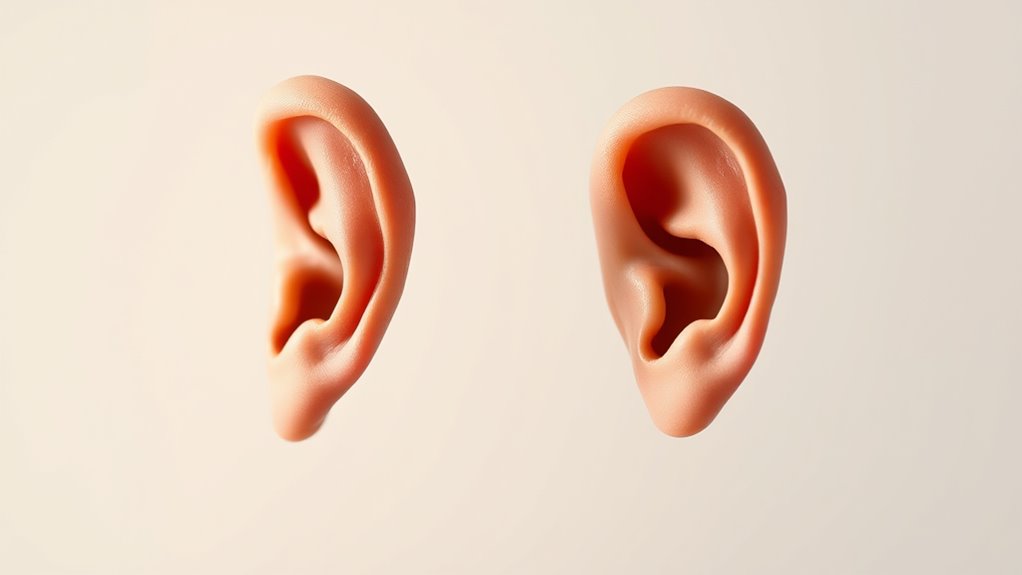

Gender differences in hearing thresholds often stem from anatomical and hormonal factors. Men usually have larger ear canals, which can influence sound transmission and make them more sensitive to lower frequencies. Women experience hormonal fluctuations that can temporarily affect hearing sensitivity, especially during menstrual cycles or menopause. These biological differences impact hearing test results and device fitting. To understand how these factors interact and affect your hearing, keep exploring more about the role of gender in auditory health.
Key Takeaways
- Men tend to have larger, longer ear canals, affecting sound conduction and sensitivity to certain frequencies.
- Hormonal fluctuations in women can cause temporary changes in hearing thresholds over time.
- Women generally exhibit more variable hearing thresholds due to hormonal cycles, while men show more stability.
- Anatomical differences influence baseline hearing sensitivity and are important for accurate audiometric interpretation.
- Recognizing gender-specific biological factors aids in customizing hearing assessments and device fittings.
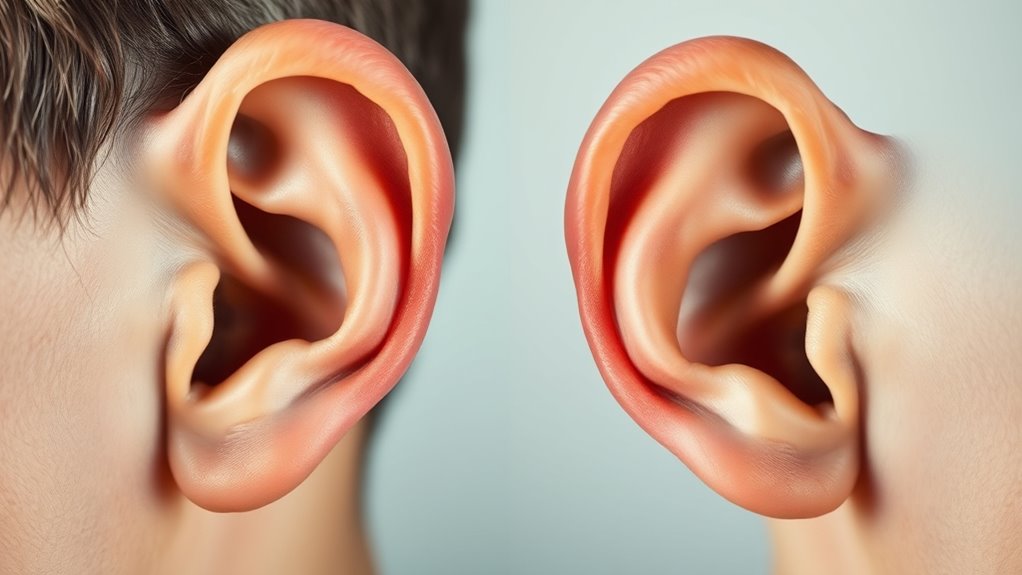
Understanding how hearing thresholds differ between genders is essential for accurate assessment and effective treatment of hearing loss. These differences stem from a variety of biological and physiological factors, including the structure of the ear canal and hormonal influences. When you evaluate hearing, recognizing how these elements vary between men and women can help ensure you provide the most precise diagnosis and tailored interventions.
Gender differences in hearing thresholds are shaped by ear anatomy and hormonal factors, influencing assessment and treatment.
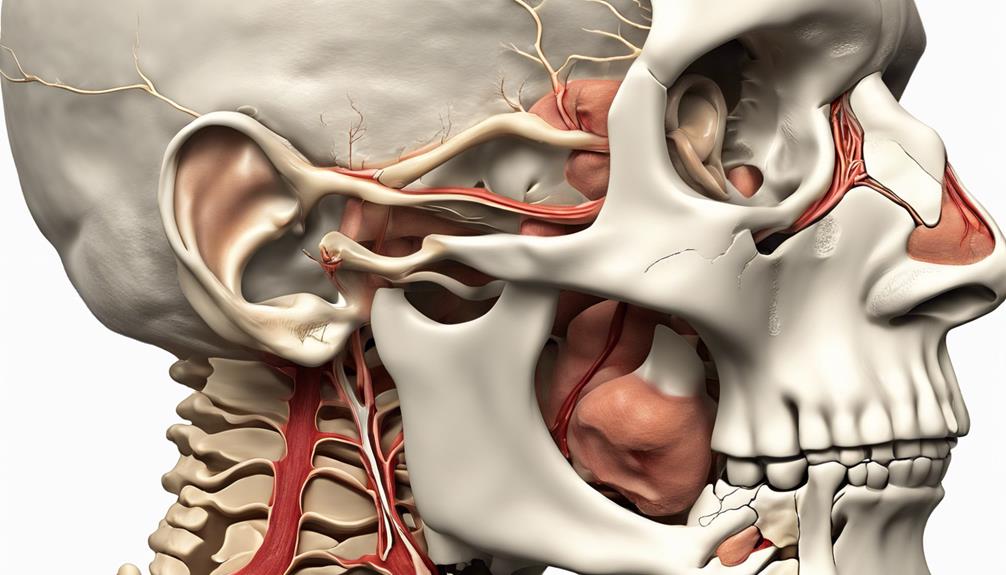
One key aspect is ear canal anatomy, which varies between genders and influences sound conduction. Typically, men tend to have larger ear canals compared to women, affecting how sound waves are transmitted to the eardrum. A larger ear canal can sometimes lead to differences in hearing sensitivity, especially at certain frequencies. For example, the increased length and diameter may slightly alter the resonance characteristics, making men more sensitive to lower frequencies. Conversely, women usually have shorter and narrower ear canals, which can affect their hearing thresholds at specific pitches. These anatomical differences are important because they can contribute to baseline variations in hearing tests, independent of any hearing impairment.
Hormonal influences also play a significant role in shaping hearing thresholds. Fluctuations in hormones, especially estrogen and progesterone, can impact the auditory system’s functioning. In women, hormonal changes during different life stages—such as pregnancy, menstruation, and menopause—may cause temporary shifts in hearing sensitivity. For instance, higher estrogen levels are often associated with enhanced auditory sensitivity, whereas declines during menopause can lead to subtle hearing changes. These hormonal effects can make women’s hearing thresholds more variable over time, which you need to consider during assessment. For men, hormonal fluctuations tend to be less pronounced, often resulting in more stable hearing thresholds over the lifespan.
Understanding these biological differences helps you interpret audiometric data more accurately. For instance, if a woman reports changes in hearing during hormonal shifts, recognizing the influence of hormonal fluctuations can prevent misdiagnosis of pathological hearing loss. Similarly, awareness of anatomical differences can guide the choice of assessment techniques or hearing aid fittings, ensuring that devices are optimized for each individual’s ear canal structure.

RlsitKee Hearing Aids, Hearing Aids for Seniors, Rechargeable, Hearing Amplifiers with HD digital Displays and Charging Case, Hearing Aid with Volume Adjustable and Noise Reduction for Hearing Loss
【Noise Reduction System】The hearing aid features an advanced active noise reduction system and multiple noise filters that optimize…
As an affiliate, we earn on qualifying purchases.
As an affiliate, we earn on qualifying purchases.
Frequently Asked Questions
Do Hormonal Changes Influence Hearing Thresholds Differently in Men and Women?
Hormonal fluctuations can influence auditory sensitivity, affecting hearing thresholds differently in men and women. When hormone levels change, such as during menstrual cycles or menopause, they can alter inner ear function and auditory nerve responses. These variations may lead to temporary shifts in hearing acuity. You might notice that hormonal changes impact your hearing, making you more or less sensitive to certain sounds at different times.
How Do Cultural Factors Impact Gender Disparities in Hearing Health?
Cultural cues can considerably shape your hearing health, as perceptions and stereotypes influence behaviors and access to care. When societal stereotypes suggest hearing issues are more common in one gender, you might neglect early signs or delay seeking help. Cultural perceptions can either encourage proactive hearing protection or perpetuate silence around hearing struggles, leading to disparities. Recognizing these influences helps you break barriers and prioritize your auditory well-being.
Are There Specific Occupations That Affect Hearing Differently Based on Gender?
You might notice that occupational noise and work environments affect hearing differently based on gender. Men often work in louder settings like construction or manufacturing, increasing their risk of hearing loss. Women may work in quieter offices but still face exposure in roles with frequent noise. Your gender can influence how occupational noise impacts your hearing, highlighting the importance of tailored protective measures and regular hearing assessments for different work environments.
What Role Does Genetics Play in Gender-Based Hearing Differences?
Imagine your genes as the blueprint of a symphony, subtly guiding how your ears respond to sound. Genetic predispositions and hereditary factors shape these differences, acting like unseen conductors. They influence how your auditory system develops and ages, creating variations between genders. While environment and lifestyle also play roles, your genetic makeup orchestrates the foundational notes that contribute to how you hear and perceive sound over a lifetime.
How Do Lifestyle Choices Contribute to Hearing Threshold Variations Between Genders?
Your lifestyle choices, like diet habits and noise exposure, substantially impact hearing threshold variations. Poor diet can lead to nutrient deficiencies that affect ear health, while frequent noise exposure damages delicate hair cells in your ears. Men might encounter more noise-related risks due to occupational or recreational activities, whereas women often adopt healthier eating habits. These behaviors shape how your hearing thresholds change over time, influencing your auditory health.

DECIBEL DEFENSE Professional Safety Ear Muffs 37dB NRR – The HIGHEST Rated & MOST COMFORTABLE Ear Protection For Shooting & Industrial Use – THE BEST HEARING PROTECTION…GUARANTEED (PINK)
Maximum Hearing Protection with Unmatched Comfort – Our safety earmuffs provide industry-leading NRR 37 dB noise reduction, making…
As an affiliate, we earn on qualifying purchases.
As an affiliate, we earn on qualifying purchases.
Conclusion
You might wonder if gender truly impacts hearing thresholds, and the evidence suggests it does. Studies indicate women generally have better hearing at higher frequencies than men, possibly due to biological or environmental factors. This challenges the idea that hearing loss affects everyone equally. By understanding these differences, you can better protect your hearing. So, next time you think about hearing health, remember, gender could play a surprising role in how well you hear over time.

Oricle Standard 2.0 Hearing Aids for Seniors – Oricle Hearing Aids for Adults with Advanced Noise Cancellation – Easy Volume Control with Portable Charging Case
No-More-Ear-Discomfort: Experience all-day comfort with these in-ear silicone earplugs. Enjoy a secure, gentle fit with soft ear tips…
As an affiliate, we earn on qualifying purchases.
As an affiliate, we earn on qualifying purchases.

Audien Atom One OTC Hearing Aids – Wireless, Rechargeable, and Comfortable | Clear Sound in a Small, Discreet Design for Seniors & Adults with Hearing Loss
Hear What Matters Most: Hearing isn’t one-size-fits-all. That’s why our adjustable frequency system lets you personalize your sound…
As an affiliate, we earn on qualifying purchases.
As an affiliate, we earn on qualifying purchases.