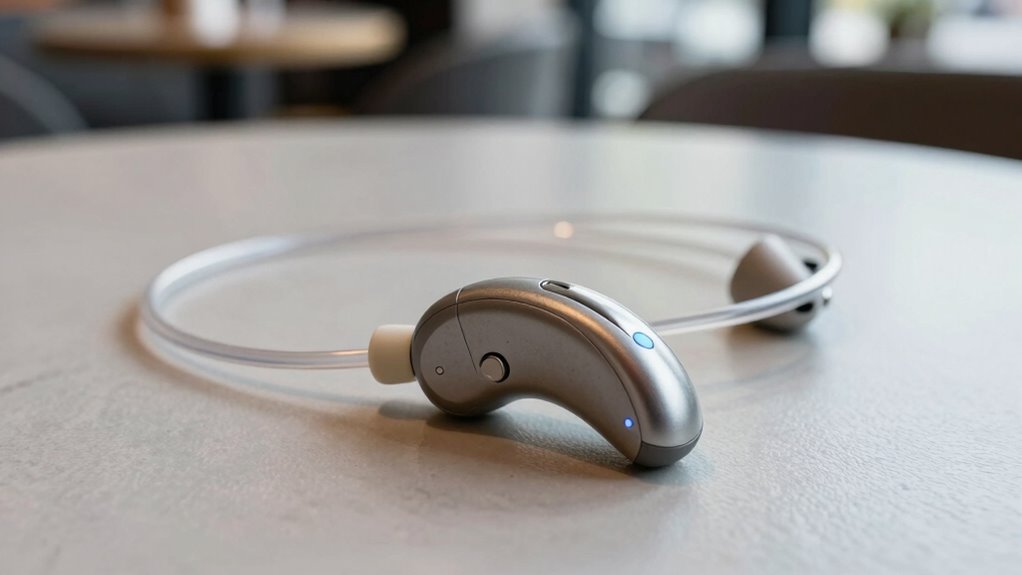

If you have a telecoil in your hearing aid, it lets you connect directly to hearing loops in public places, giving you clearer, more natural sound and reducing background noise. This feature works by wirelessly transmitting sound from venues like theaters and churches straight to your device. If you want to enjoy better hearing in noisy environments and simplify conversations, exploring how telecoils and hearing loops can help you is worth your time. Continue to learn more about making the most of this technology.
Key Takeaways
- Telecoils enable direct, clear sound transmission from public loop systems, reducing background noise and improving speech comprehension.
- Hearing loops are widely available in public venues, making listening more natural and effortless for telecoil-equipped devices.
- Using a telecoil minimizes the need for volume adjustments and enhances sound quality in noisy environments.
- Many modern hearing aids and cochlear implants include built-in telecoils, offering seamless access to hearing loop systems.
- Proper activation and maintenance of telecoil features significantly enhance hearing clarity and communication confidence.
As an affiliate, we earn on qualifying purchases.
What Are Telecoils and How Do They Work?
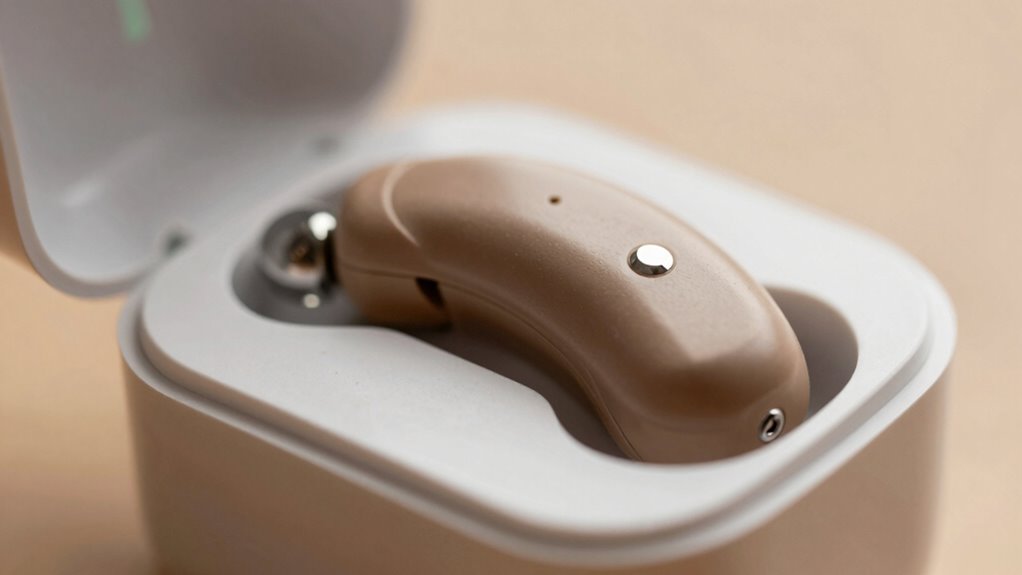
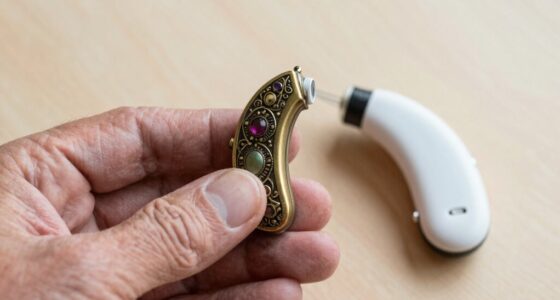
Telecoils, also known as T-coils, are small wire coils inside hearing aids and cochlear implants that pick up magnetic signals. These signals enable wireless connectivity between your device and compatible sound sources, like hearing loops or telecoil-equipped systems. When you activate the telecoil, your hearing device automatically switches to pick up these magnetic signals, providing clear, direct sound. This feature enhances sound amplification by reducing background noise and minimizing echo, making conversations more understandable in noisy environments. With telecoils, you don’t need to rely on external microphones or Bluetooth connections, giving you a seamless way to access audio directly through your hearing aid. It’s a simple, effective way to improve your listening experience without the hassle of cables or additional devices. Additionally, many hearing aids now incorporate advanced technology to optimize telecoil performance and compatibility, ensuring better functionality across various systems. Innovations in European cloud solutions are also making it easier to manage and update telecoil features remotely, enhancing overall user experience. These developments highlight how standardized protocols are improving telecoil performance and interoperability across different hearing devices.
How to Check If Your Hearing Aids Have a Telecoil Feature
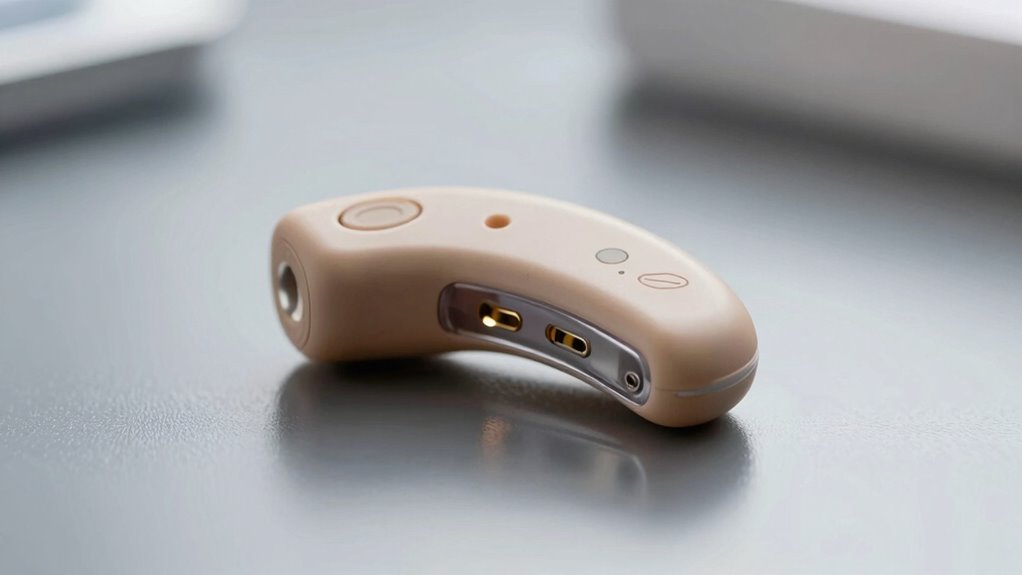
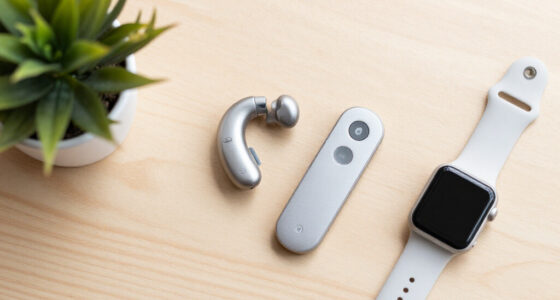
To determine if your hearing aids have a telecoil feature, start by checking the device’s user manual or product specifications. Many modern hearing aids include this feature, often labeled as “T-coil” or “telecoil.” If you see a setting for telecoil or T-coil, your device likely supports it. Additionally, explore your hearing aid’s wireless connectivity options, as some models combine telecoil functionality with wireless accessories for easier use in loop systems. You can also consult your audiologist or hearing care professional, who can confirm whether your hearing aids are equipped with this feature. Remember, hearing aid accessories like remote controls or streamer devices may also offer telecoil options, making it easier to access telecoil features even if they’re not immediately apparent on your device. Being aware of loop system compatibility and hearing aid accessories can help you maximize the benefits of your telecoil feature in public spaces, especially when combined with telecoil-enabled devices. Additionally, understanding the technological compatibility of your hearing aids ensures you get the most effective use of telecoil systems in various environments. Checking for compatibility with public loop systems can further enhance your listening experience.
How Hearing Loop Systems Provide Clearer Sound
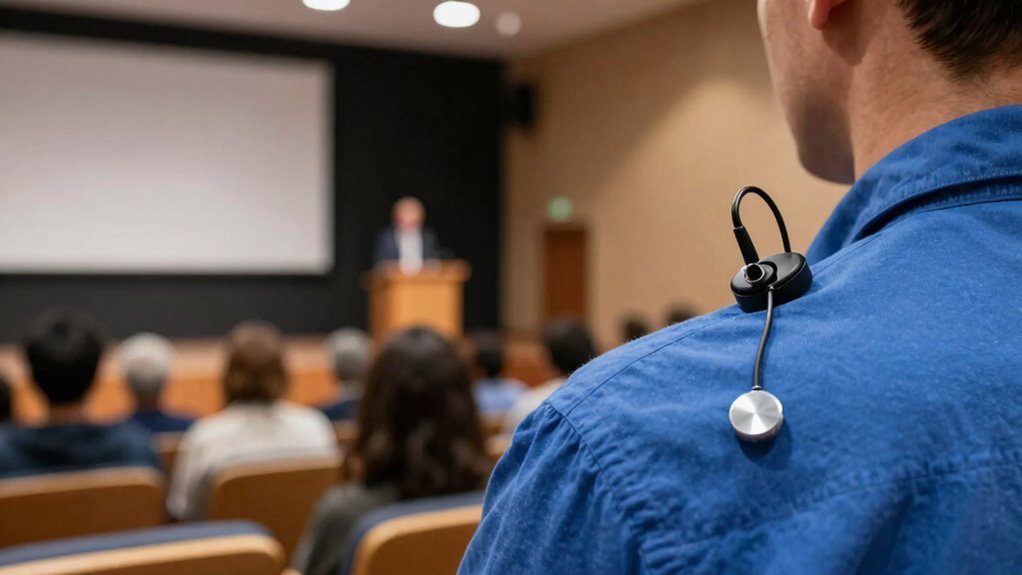
Hearing loop systems improve sound clarity by delivering a direct signal to your telecoil-equipped hearing aids. This reduces background noise, making speech easier to understand. As a result, your listening experience becomes clearer and less strained. Additionally, these systems can be especially beneficial for those who are sensitive to background noise or have difficulty distinguishing speech in noisy environments. They are also an example of assistive listening technology that enhances communication in various settings. Incorporating hearing loop systems into public spaces can significantly improve accessibility for individuals with hearing aids. Moreover, these systems support inclusive design by making environments more welcoming for everyone. Understanding the science behind sound transmission can help you better appreciate how these systems work to improve auditory clarity.
Improved Sound Clarity
Hearing loop systems considerably enhance sound clarity by transmitting audio directly to your telecoil-equipped hearing aids or cochlear implants. This direct connection reduces interference from background noise and echoes, making speech easier to understand. Proper hearing aid maintenance guarantees your telecoil functions at its best, maximizing clarity. Using a hearing loop minimizes the need for volume adjustments and helps you focus on speech rather than ambient sounds. Understanding the filtration system within your hearing devices can further improve overall sound quality. Additionally, ensuring your navigation and mapping features are optimized can help you benefit from more precise audio transmission in different environments. Regularly updating your device settings can also enhance overall performance and clarity, especially when paired with maintenance tips to keep your equipment functioning optimally. Incorporating device compatibility considerations can further improve your experience with hearing loop systems in various settings.
Reduced Background Noise
When using a hearing loop system, background noise becomes considerably less distracting because the system transmits audio directly to your telecoil-equipped device. This targeted transmission markedly improves background noise reduction, making conversations clearer. As a result, speech intelligibility increases, allowing you to focus on what’s being said without competing sounds. Here are four ways hearing loops enhance your listening experience:
- Eliminates ambient noise, reducing distractions
- Delivers a direct audio feed for clearer understanding
- Minimizes interference from other electronic devices
- Provides consistent sound quality across different environments
How to Set Up and Use Hearing Loops in Public Places
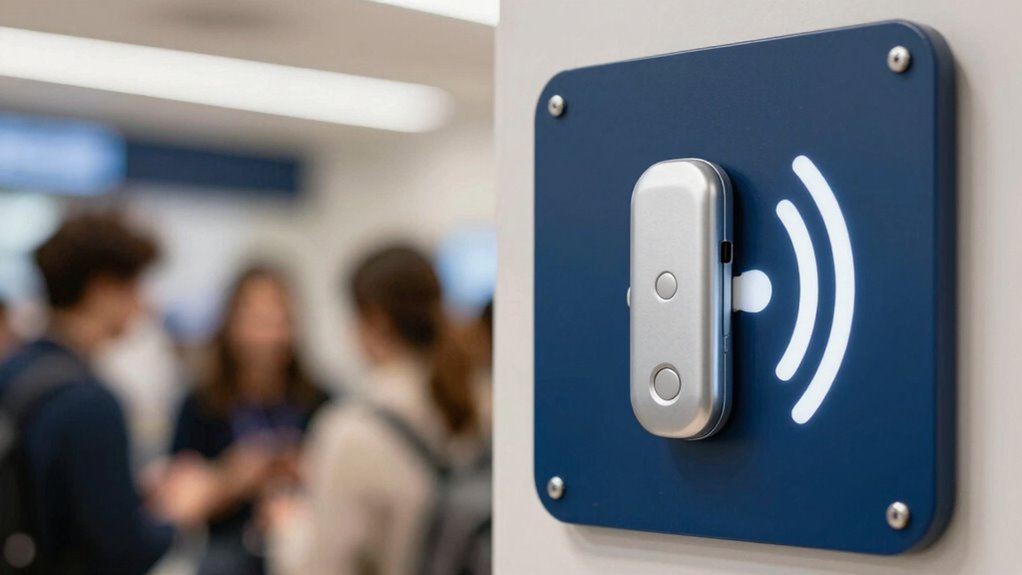
To get the most out of hearing loops in public places, you need to find the designated loop areas first. Once you’re there, make sure you’re using your telecoil setting correctly on your hearing devices. Knowing how to properly activate and position yourself will help you enjoy clearer sound effortlessly. Additionally, understanding media literacy can help you identify reliable sources of information about hearing assistive technology. Always verify that the hearing aid or cochlear implant manufacturer recommends the use of telecoils for optimal performance, as product compatibility can vary among devices. Incorporating nanotechnology advancements in hearing aid design may further enhance sound quality and device durability in the future. Being aware of field‑of‑view considerations can also help you better understand how sound is transmitted and received through hearing loops. Familiarizing yourself with installation standards can ensure the system functions properly and provides the best experience.
Locating Hearing Loop Areas
Locating hearing loop areas in public places is typically straightforward if you know what to look for. Usually, signs indicate the presence of a hearing loop, often featuring a telecoil symbol or wording like “Hearing Loop” or “Assistive Listening.” Once you find an area, check if your device is compatible with the system to guarantee good sound quality. Here are some tips to help you locate these areas:
- Look for clear signage near entrances, auditoriums, or service desks.
- Ask staff or attendants if a hearing loop is available.
- Check for telecoil symbols on your hearing device or receiver.
- Test the sound quality by briefly listening before committing to a seat.
These steps make finding hearing loop areas simple and improve your overall experience.
Proper Loop System Use
Using a hearing loop system correctly guarantees you get the best sound quality and a clear listening experience. First, confirm your device’s telecoil setting is activated, which allows it to connect wirelessly to the loop’s sound system. When in a looped area, position yourself close to the loop to maximize wireless connectivity and sound amplification. Avoid moving around excessively, as it can cause fluctuations in sound clarity. If the venue offers adjustable settings, select the telecoil mode for superior performance. Remember, hearing loops are designed to transmit sound directly to your hearing device, reducing background noise. Additionally, choosing the right exterior home security cameras can help ensure your property’s safety by providing reliable, weather-resistant surveillance. To ensure optimal performance, periodically check the loop system’s maintenance and ensure it is functioning correctly. By following these steps, you’ll experience improved clarity and a more natural listening environment, making your visit more comfortable and enjoyable.
Where Do Hearing Loops Make the Biggest Difference?
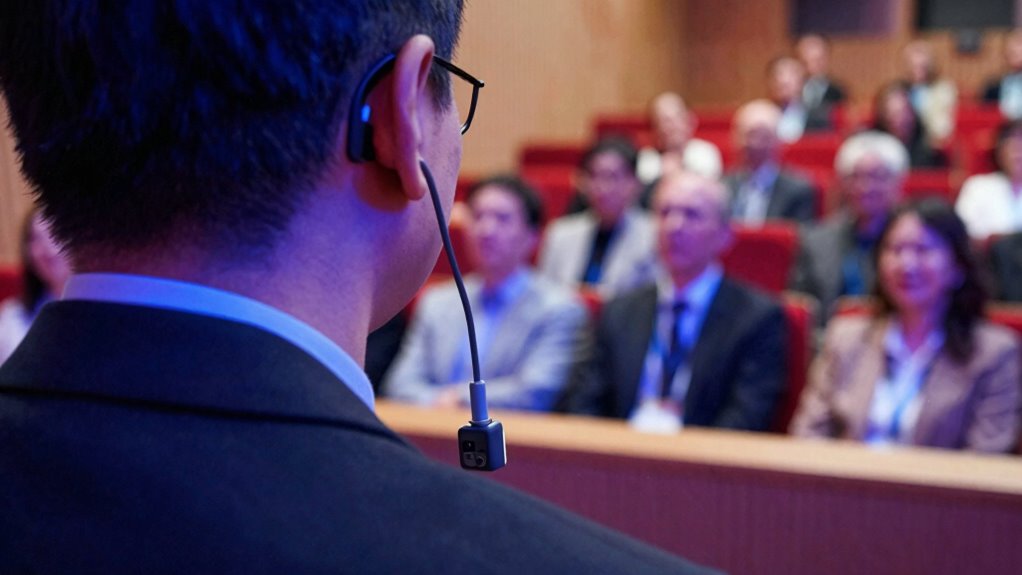
Hearing loops are most beneficial in environments where clear and consistent sound transmission is essential, especially for people with hearing aids equipped with telecoils. They excel in settings where sound clarity makes a difference. You’ll notice the biggest impact in places like:
- Large auditoriums and theaters, where sound amplification is critical.
- Places of worship, ensuring sermons are easily heard.
- Conference rooms, for seamless communication with wireless microphones.
- Public transportation hubs, helping you catch announcements without background noise.
In these environments, hearing loops eliminate background noise and echo, delivering direct sound to your telecoil. This setup provides a more natural, comfortable listening experience, especially where sound quality is crucial.
Which Hearing Loop Options Are Compatible With Your Devices?
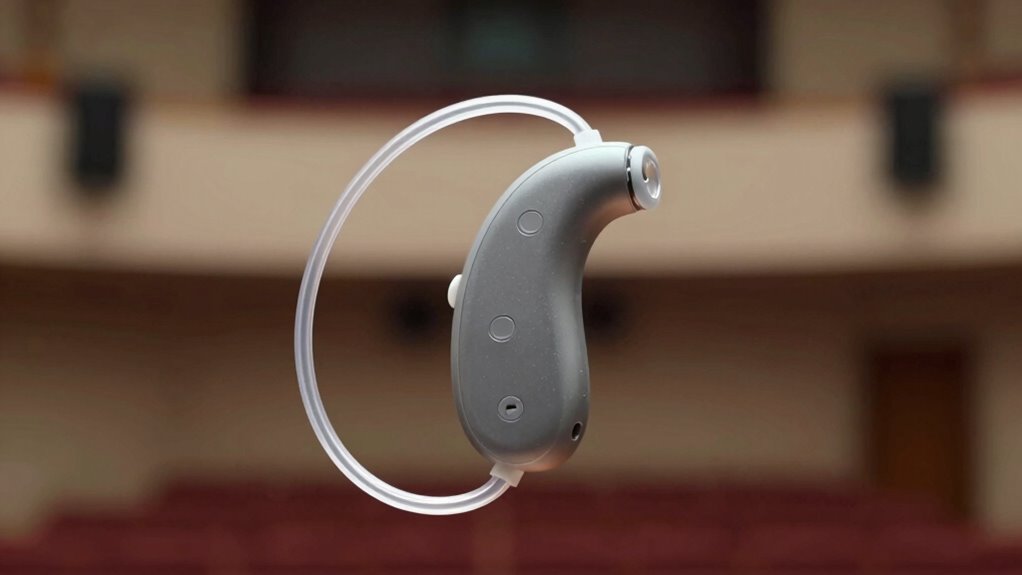
To guarantee your hearing loop system works seamlessly with your devices, it’s important to understand the different options available. Device compatibility varies depending on whether your devices have telecoil capabilities or require external accessories. Many modern hearing aids come with built-in telecoils, making them directly compatible with hearing loops. If your device lacks this feature, you might need accessory options such as a telecoil adapter or a Bluetooth streamer that connects to the loop system. Check your device’s specifications to confirm telecoil support or compatibility with external accessories. Ensuring the right accessory options are in place helps you maximize your hearing experience and avoid compatibility issues, so you can enjoy clear, direct sound transmission through the hearing loop.
Common Hearing Loop Problems and How to Fix Them
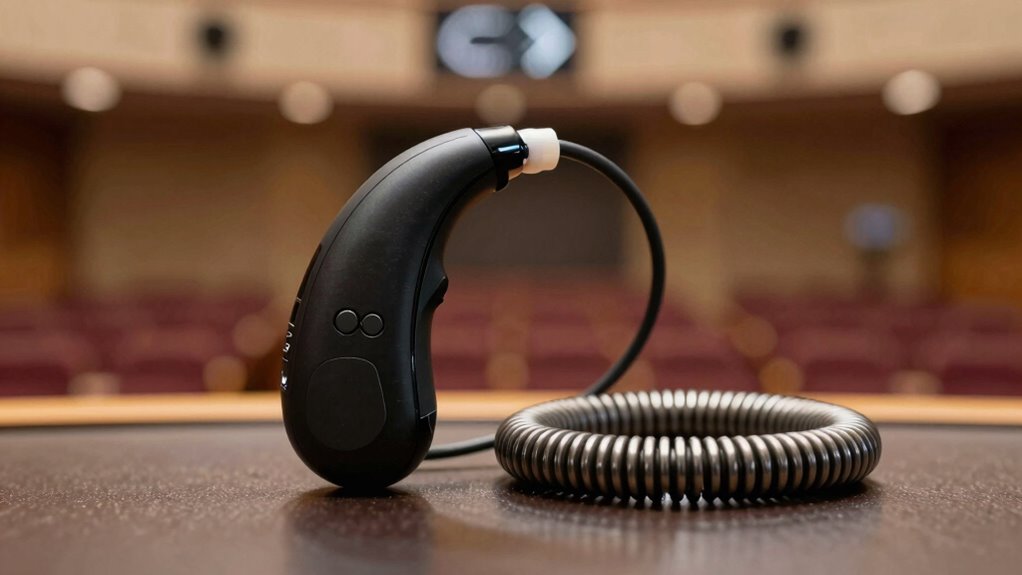
Despite their benefits, hearing loop systems can sometimes encounter problems that disrupt sound clarity. Common issues include poor sound quality, feedback noise, or difficulty connecting. To fix these, start with these steps:
- Check your hearing aid maintenance—ensure the telecoil is activated and clean.
- Verify the loop amplifier is working correctly and that there are no loose connections.
- Test your assistive listening devices for compatibility and proper pairing.
- Reduce background noise and move closer to the loop to improve signal strength.
Addressing these problems can often resolve sound issues quickly. Regular maintenance of your hearing aids and assistive listening devices helps keep the system functioning smoothly, ensuring you get the best listening experience possible.
Why More Venues Are Installing Hearing Loops Today
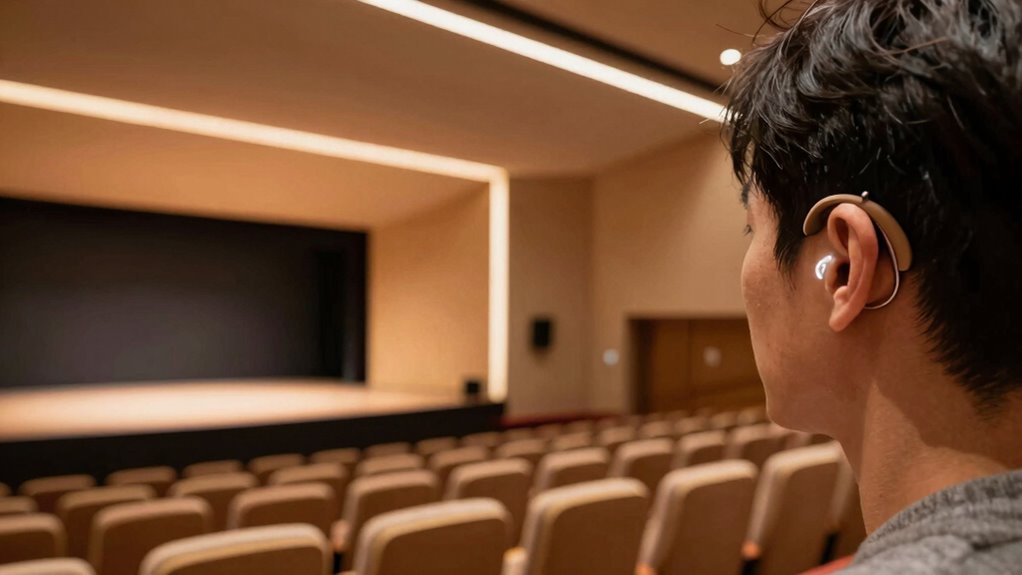
More venues are installing hearing loops because they offer clearer listening experiences for everyone. They also help venues meet accessibility standards without breaking the bank. As a result, it’s easier than ever to create inclusive spaces that benefit all guests.
Improved Listening Clarity
As venues recognize the limitations of traditional hearing aids, they are increasingly installing hearing loops to provide clearer sound. Hearing loops improve sound quality by reducing background noise and minimizing feedback, so your conversations become more natural and easier to follow. This enhanced clarity means you won’t miss important details during events or conversations. Plus, the setup offers user convenience, allowing your hearing aid’s telecoil to automatically connect without extra devices or adjustments.
Here’s why more venues are making the switch:
- Better sound quality for clearer conversations
- Reduced listening fatigue in noisy environments
- Seamless, hands-free connection to audio sources
- Increased comfort and confidence in social settings
Hearing loops make listening simpler and more enjoyable.
Accessibility Compliance Gains
Many venues are installing hearing loops to meet accessibility regulations and guarantee inclusivity. These installations ensure adherence to laws like the ADA, reflecting a commitment to equal access. Hearing loops provide seamless wireless connectivity, allowing you to connect directly to your hearing aid or cochlear implant without background noise interference. Audiologist recommendations often highlight the importance of telecoil-equipped devices for clear sound transmission. This trend is driven by legal requirements and the desire to serve diverse audiences.
| Benefit | Why It Matters | Key Feature |
|---|---|---|
| Legal compliance | Avoid fines and penalties | Meets ADA and accessibility codes |
| Inclusivity | Reaches more attendees | Wireless connectivity |
| User satisfaction | Enhances hearing experience | Telecoil compatibility |
| Industry standards | Keeps venues current | Audiologist-endorsed solutions |
| Reputation boost | Demonstrates social responsibility | Accessibility gains |
Cost-Effective Installation
Installing hearing loops is increasingly seen as a cost-effective way for venues to enhance accessibility without overspending. Their affordability comes from the potential for significant cost savings over other solutions and the ease of installation. Many venues find that hearing loops require less maintenance and fewer ongoing expenses, making them a smart long-term investment. Plus, the installation process is straightforward, reducing labor costs and downtime. Consider these benefits:
- Low initial setup costs compared to alternative systems
- Quick, simple installation with minimal disruption
- Reduced maintenance expenses over time
- Enhanced accessibility that attracts more visitors
With these advantages, hearing loops deliver both financial and practical value, making them an attractive choice for venues aiming to improve accessibility efficiently.
How Telecoil Technology Enhances Your Hearing Experience
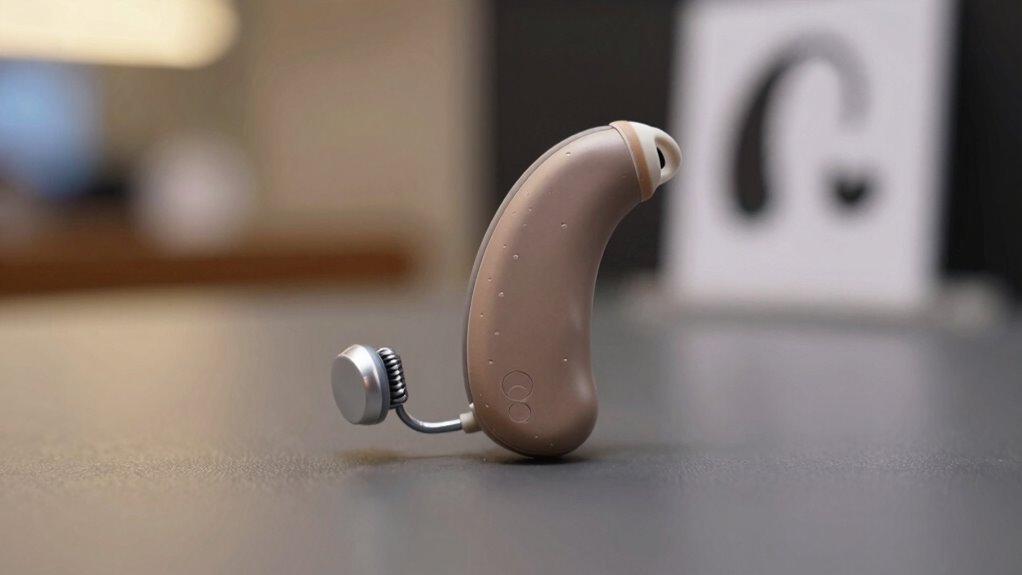
Telecoil technology markedly enhances your hearing experience by allowing you to clearly pick up sound directly from compatible devices and environments. This feature improves clarity by reducing background noise, making conversations easier to follow. When you use assistive devices with telecoil, your hearing aid can connect seamlessly to hearing loops, telephones, and other systems, delivering sound straight to your ears. This direct transmission minimizes distortion and echo, providing a more natural listening experience. Many hearing aid features include telecoils because they’re designed to improve communication in challenging settings. With telecoil technology, you won’t have to strain or ask others to repeat themselves, giving you greater confidence and independence in social situations. It’s a simple upgrade that appreciably boosts your overall hearing quality.
Should You Upgrade to a Telecoil-Enabled Hearing Aid?
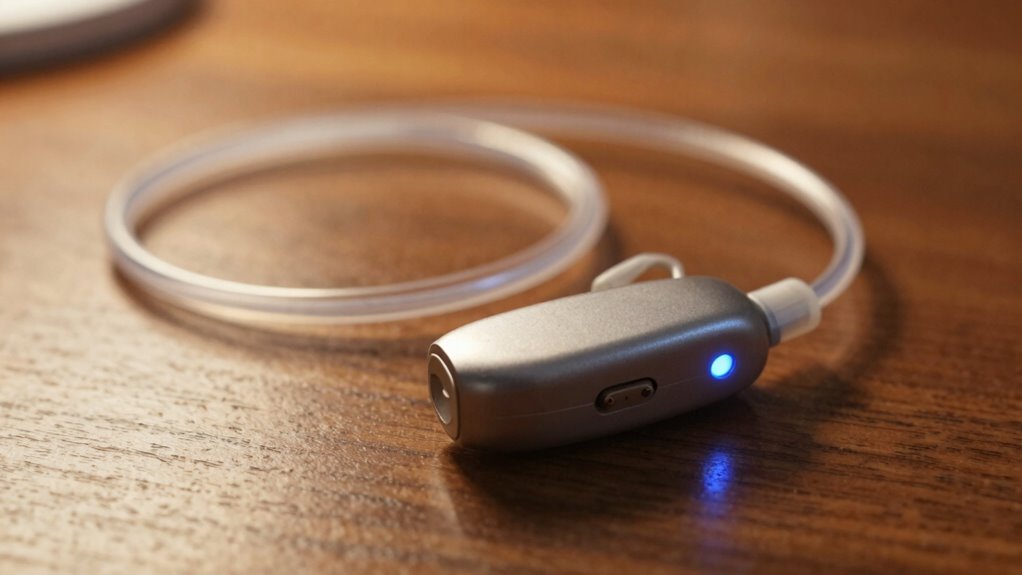
Are you considering upgrading your hearing aids to include telecoil technology? If so, it’s worth weighing the benefits. Telecoils work with hearing loops to improve sound clarity, especially in public spaces. Here’s why you might want to upgrade:
Considering a hearing aid upgrade? Telecoils enhance sound clarity, especially in public spaces.
- Enhanced Listening: Telecoils provide direct audio input, reducing background noise.
- Wireless Connectivity: Many telecoil-enabled hearing aids now seamlessly connect to smartphones and other devices.
- Hearing Aid Styles: Whether you prefer in-the-ear or behind-the-ear models, telecoils are available across styles.
- Futureproofing: Upgrading ensures compatibility with new hearing loop systems and wireless tech.
If you often find yourself in public venues, upgrading could considerably improve your hearing experience.
Frequently Asked Questions
Can Telecoils Improve Sound Quality in Noisy Environments?
Yes, telecoils can substantially improve sound quality in noisy environments. By directly connecting to wireless systems like hearing loops, they deliver clearer sound and reduce background noise. This enhances sound clarity, making conversations easier to follow. You’ll find that telecoils help you focus on speech without distractions, especially in crowded places like theaters or churches, giving you a more natural listening experience with less effort.
Are There Any Downsides to Using Telecoil Technology?
About 20% of hearing aid users report privacy concerns with telecoil technology, as conversations can sometimes be overheard through hearing loops. Additionally, you’ll need to keep up with maintenance requirements, like checking the loop system for proper function. While telecoils improve sound quality, be aware of these downsides to ensure they meet your needs without unexpected issues.
How Does Telecoil Compatibility Vary Between Hearing Aid Brands?
You’ll find that telecoil compatibility varies between hearing aid brands due to differences in brand consistency and technology integration. Some brands prioritize seamless telecoil features, ensuring easy switching and reliable performance, while others may require additional accessories or have less integrated systems. To get the best experience, choose a brand known for strong telecoil support and compatibility, making it easier to connect with hearing loop systems in different environments.
Is Professional Installation Required for Hearing Loop Systems?
You might think professional installation isn’t necessary, but evidence suggests it’s essential for peak performance. With professional setup, you guarantee the hearing loop system is correctly installed and calibrated, reducing future system maintenance issues. Proper installation guarantees seamless connectivity and sound clarity. Skipping professionals could lead to system malfunctions or reduced effectiveness, making regular maintenance more challenging. Trust experts to maximize your hearing loop system for the best listening experience.
What Future Advancements Are Expected in Telecoil Technology?
You can expect future telecoil technology to improve wireless connectivity, making it easier to connect seamlessly with various devices. Battery efficiency will also see advancements, allowing your hearing aid to last longer without frequent charging or battery replacements. These innovations will enhance your hearing experience, providing clearer sound and more reliable connections, so you can enjoy conversations and environments with greater ease and less hassle.
Conclusion
If you want clearer conversations, easier hearing, and more independence, then embracing telecoil technology and hearing loops is a must. It’s about enhancing your environment, improving your connections, and empowering your daily life. Whether you’re checking your hearing aids, exploring public options, or considering an upgrade, take action today. Because when your hearing becomes easier, your world becomes richer, clearer, and more connected—making every moment more meaningful.