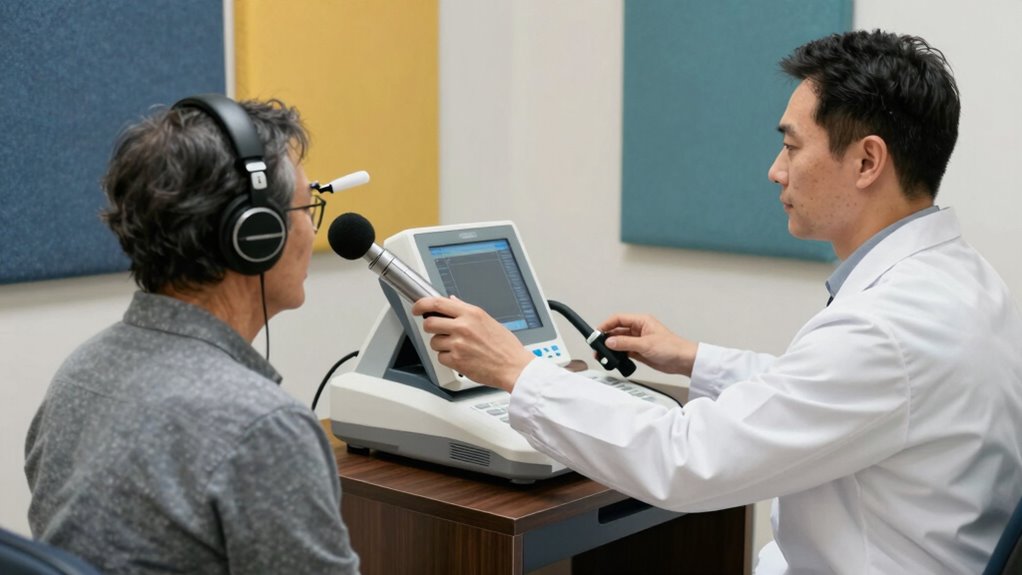
Speech-in-noise testing is a crucial part of hearing care that reveals how well you understand speech amid background sounds—something standard tests often miss. It helps identify everyday listening challenges, guides personalized treatment, and fine-tunes hearing aids for noisy environments. By understanding your specific difficulties, your audiologist can improve your communication and quality of life. Keep exploring to discover how this assessment can make a real difference for your hearing journey.
Key Takeaways
- Speech-in-noise testing reveals real-world listening challenges that traditional assessments often overlook.
- It helps personalize hearing solutions by identifying specific difficulties in noisy environments.
- Incorporating speech-in-noise tests guides optimal hearing aid adjustments to improve speech understanding.
- The test detects cognitive and auditory processing issues affecting communication beyond pure-tone thresholds.
- Including speech-in-noise assessment enhances overall hearing care, social participation, and quality of life.

Audien Atom One OTC Hearing Aids - Wireless, Rechargeable, and Comfortable | Clear Sound in a Small, Discreet Design for Seniors & Adults with Hearing Loss
Hear What Matters Most: Hearing isn’t one-size-fits-all. That’s why our adjustable frequency system lets you personalize your sound...
As an affiliate, we earn on qualifying purchases.
What Is Speech-In-Noise Testing and Why Does It Matter?
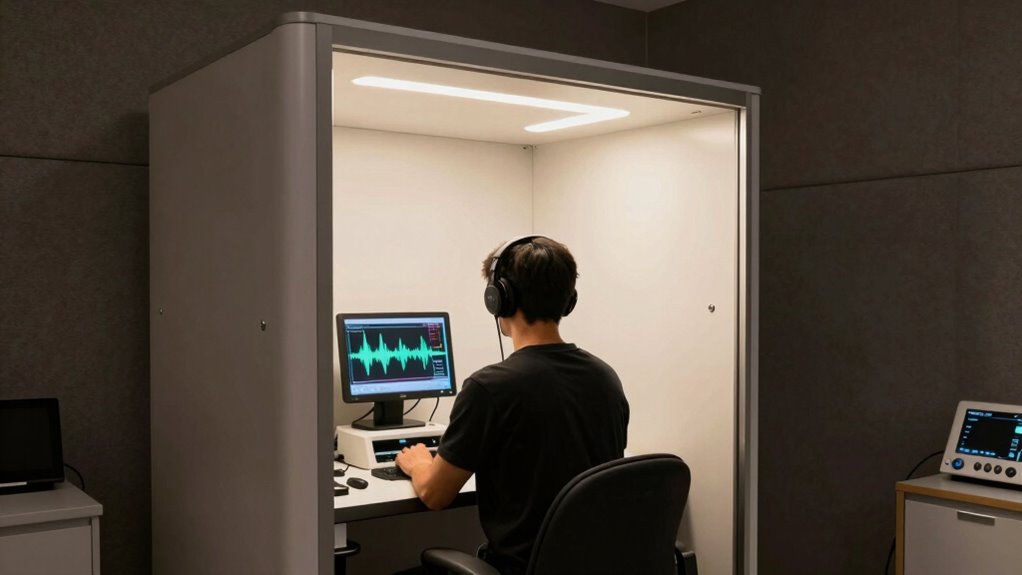
Have you ever struggled to understand someone speaking in a noisy environment? That’s where speech-in-noise testing comes in. It measures your ability to process speech amid background sounds, highlighting challenges in auditory processing. When listening in noisy settings, your brain faces increased cognitive load, making it harder to distinguish words and understand speech. This test helps identify if your difficulty stems from issues with your auditory system or how your brain handles complex sounds. Knowing this is essential because standard hearing tests often don’t reveal problems in real-world listening. Speech-in-noise testing provides valuable insights into your hearing health, guiding more effective treatment options. It’s a key tool for understanding how well your ears and brain work together in everyday situations. Additionally, understanding your auditory processing capabilities can help tailor interventions that improve your ability to function in challenging listening environments. Recognizing hearing challenges beyond just pure-tone thresholds can lead to more comprehensive and successful management strategies. Moreover, advances in hearing technology are increasingly incorporating speech-in-noise assessments to better customize hearing solutions. For example, some hearing aids now feature noise reduction algorithms that are optimized based on speech-in-noise test results. In fact, ongoing research emphasizes the importance of this testing in developing truly personalized hearing care approaches.
Audien Atom X Hearing Aid For Seniors & Adults with Hearing Loss - Noise Cancelling, Rechargeable OTC Bluetooth Hearing Aids w/Charging Case, 48+ Hour Battery Life, Touchscreen Control, Nearly Invisible Design
WORLD’S FIRST TOUCHSCREEN CONTROL HEARING AIDS - The Atom X is more than just a hearing aid, it’s...
As an affiliate, we earn on qualifying purchases.
How Is Speech-In-Noise Testing Conducted?
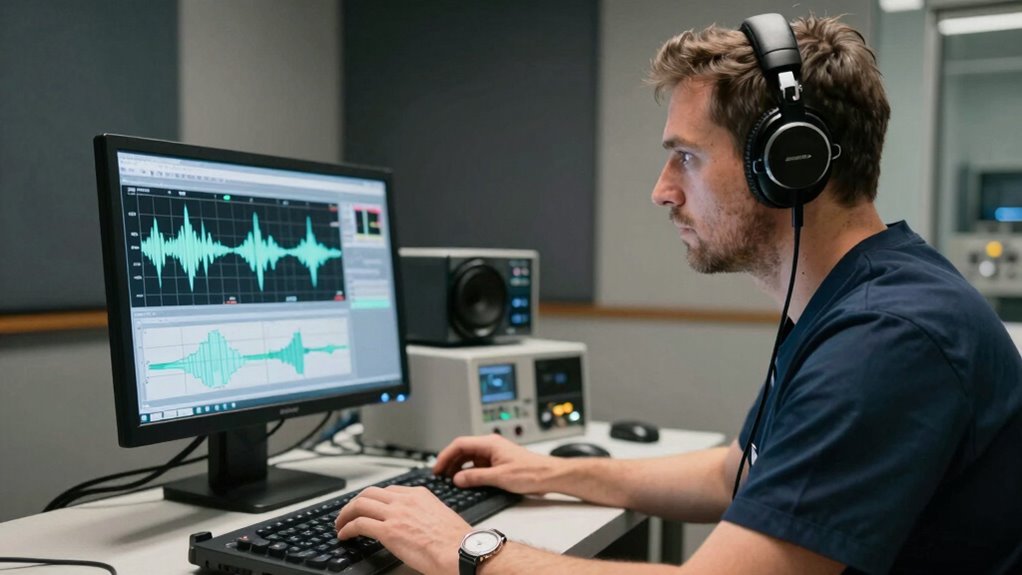
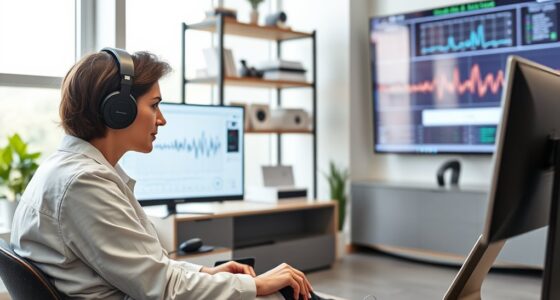
Speech-in-noise testing is typically conducted in a sound-treated environment to guarantee accurate results. During the test, you listen to words or sentences presented with background noise, and your task is to identify what you hear. This process assesses your auditory processing skills and how cognitive factors like attention and memory influence your ability to understand speech. The test often involves varying noise levels and types to simulate real-world listening challenges. Here’s a quick overview:
| Step | Description |
|---|---|
| 1 | Present speech with background noise |
| 2 | Adjust noise levels based on responses |
| 3 | Measure recognition accuracy |
| 4 | Analyze results considering cognitive factors and auditory processing skills |
Additionally, understanding these results can help tailor personalized hearing solutions that address specific listening difficulties. Analyzing the performance across different noise types and levels can provide valuable insights into how individuals process complex auditory environments. Incorporating knowledge of auditory processing skills can further optimize these assessments and improve intervention strategies. Recognizing the importance of comprehensive testing can lead to more effective and targeted hearing healthcare. Recognizing that test environment quality influences results is also crucial for obtaining reliable assessments.

Flaygo Hearing Aids for Seniors,Hearing Aids for People with Hearing Loss, Sound Quality Restoration, Intelligent Noise Reduction, Standby 80h, One-Button Operation, Comfortable Wearing,Beige
Digital Chip, HIFI Sound Quality:Hearing amplifiers have a built-in 16-channel digital chip with intelligent noise reduction technology that...
As an affiliate, we earn on qualifying purchases.
Why Traditional Hearing Tests Might Miss Real-World Listening Challenges
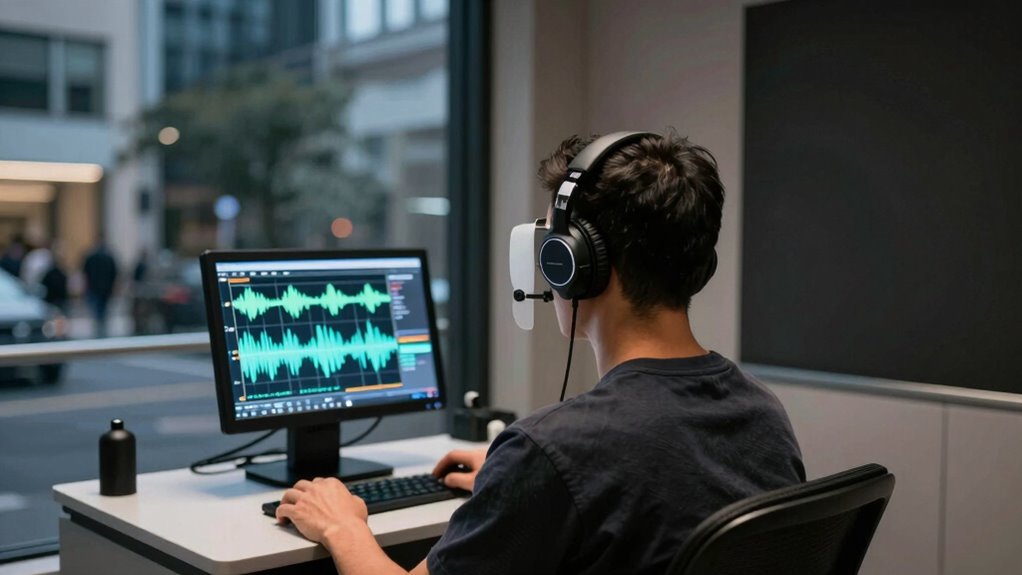
Traditional hearing tests often focus on quiet, controlled environments that don’t reflect everyday situations. As a result, they can miss how you actually struggle to understand speech in noisy places. This gap highlights the need for tests that better mimic real-world listening challenges. Incorporating listening environment simulation into assessments can provide a more accurate picture of your hearing difficulties in daily life, much like how maximizing your truck bed’s potential can enhance your overall experience in various scenarios. Understanding media literacy can also help you interpret auditory information more effectively in complex listening environments, especially when smart technology is integrated into hearing solutions to adapt dynamically to different noise levels.
Limitations of Standard Tests
Standard hearing tests often focus on detecting quiet sounds in a silent environment, but they can overlook how you actually experience hearing in noisy, real-world situations. This highlights the standard limitations of traditional tests, which may not accurately reflect daily listening challenges. These tests typically measure pure-tone thresholds, missing how well you understand speech amid background noise. As a result, test inaccuracies can occur because they don’t simulate real environments. You might pass a hearing test yet still struggle in crowded places. Imagine trying to follow a conversation at a busy restaurant or during a family gathering—these scenarios aren’t captured by standard assessments. Consequently, relying solely on traditional tests can give you a false sense of hearing ability, overlooking the complexities of real-world listening. Speech-in-noise testing is emerging as an essential component to better evaluate how effectively you hear in everyday situations. Additionally, advancements in hearing assessment methods aim to bridge this gap, providing more comprehensive insights into your auditory experience.
Real-World Listening Challenges
While hearing tests often show you have normal hearing, they don’t always reveal how well you can understand speech in everyday environments. Real-world listening involves more than just detecting sounds; it requires processing speech amid background noise and multitasking with auditory information. This is where traditional tests fall short, as they typically focus on quiet conditions. Your auditory processing skills are vital when background noise makes understanding speech difficult. To illustrate, consider the following:
| Situation | Challenge | Important Skill |
|---|---|---|
| Talking in a busy café | Background chatter disrupts speech | Auditory processing |
| Listening during a meeting | Multiple voices compete | Focus and filtering |
| Watching TV with family | Background noise from household | Sound discrimination |
| Phone conversations | Poor signal and noise interference | Speech clarity |
Understanding these challenges highlights why speech-in-noise testing is essential. Recognizing the auditory processing involved in these scenarios helps explain why traditional hearing assessments may not fully capture real-world listening difficulties.

ELEHEAR-Beyond Pro Hearing Aids, Bluetooth Rechargeable OTC Hearing Aids for Seniors and Adults, Premium Sound Algorithm with VocClear 2.0, 30% Clearer Speech, Music Mode & Enhanced App, Champagne Gold
Ultra-clear, Natural Sound - Powered by VocClear 2.0 technology that delivers 30% clearer speech, ELEHEAR-Beyond Pro hearing aids...
As an affiliate, we earn on qualifying purchases.
How Speech-In-Noise Testing Benefits Your Hearing and Quality of Life
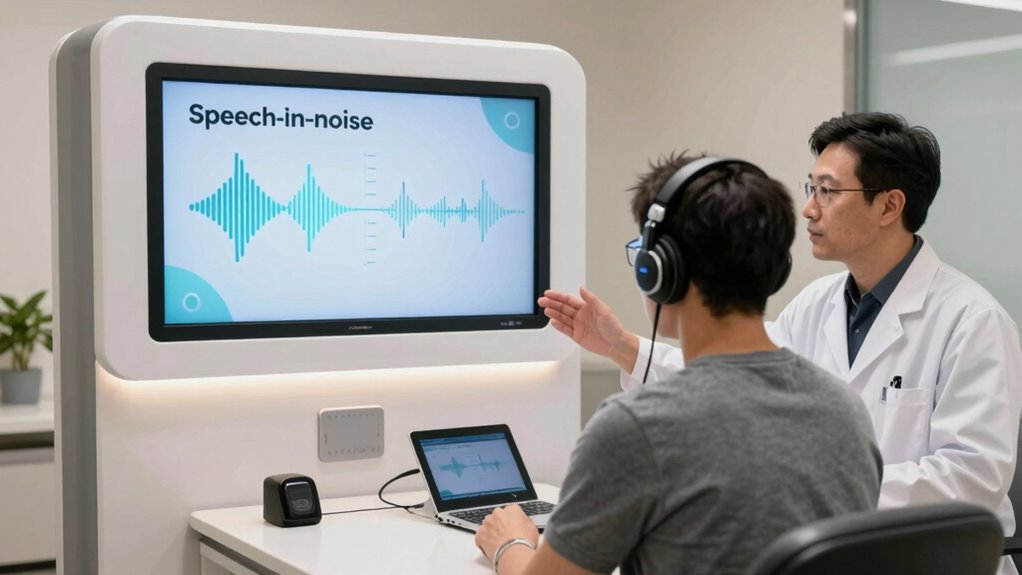
Speech-in-noise testing plays a vital role in identifying how well you can understand speech in real-world environments filled with background sounds. This insight helps tailor solutions that improve your overall hearing ability and quality of life. With better understanding, you can confidently maneuver busy social gatherings, bustling streets, or crowded restaurants. The test reveals how your cognitive processing manages challenging listening situations, highlighting areas where environmental adaptations can help. These may include strategic positioning, reducing background noise, or using hearing devices effectively. Visualize yourself:
- Engaging effortlessly in conversations at lively gatherings
- Maneuvering noisy streets with clarity
- Enjoying media without straining to hear
Comprehensive understanding of your hearing capabilities can be gained through speech-in-noise testing, guiding personalized treatment options.
Using Test Results to Improve Hearing Aids and Treatment Plans

Your speech-in-noise test results provide valuable insights into how well your hearing aids are working. By analyzing this data, your audiologist can tailor the device settings to better suit your listening needs. This process helps optimize your treatment plan for improved communication in challenging environments. Additionally, considering factors such as ventilation considerations can enhance overall comfort and device performance during extended use. Understanding battery performance metrics can further inform adjustments to improve the efficiency and lifespan of your hearing aids. Incorporating maintenance schedules based on your test outcomes can ensure your devices operate at peak performance over time. Recognizing the importance of signal processing features can also help fine-tune your hearing aids for clarity in noisy settings, and evaluating small appliance efficiency can contribute to more reliable device operation over time.
Tailoring Hearing Aid Settings
Using test results from speech-in-noise assessments allows audiologists to customize hearing aid settings more effectively. These results reveal how well you process auditory information amid background noise, helping to reduce cognitive load. You might notice adjustments such as:
- Enhancing speech clarity while suppressing background sounds
- Fine-tuning directional microphones for better focus during conversations
- Adjusting noise reduction features to balance comfort and awareness
These modifications support your auditory processing, making speech easier to understand without overwhelming your cognitive resources. By tailoring settings based on your specific challenges, audiologists help improve your overall listening experience. This personalized approach minimizes fatigue and enhances communication, especially in complex listening environments. Ultimately, it ensures your hearing aids work smarter, aligning with your unique auditory and cognitive needs.
Optimizing Treatment Strategies
By analyzing test results from speech-in-noise assessments, you can develop more effective treatment strategies that directly target your listening challenges. Audiologists use these results to recommend tailored interventions, such as auditory training, to strengthen your ability to differentiate speech in noisy environments. Cognitive assessments help identify any underlying cognitive factors affecting your hearing, guiding personalized therapy approaches. Combining these insights allows for optimizing your hearing aids’ settings and developing comprehensive treatment plans that improve real-world communication. This targeted approach ensures that your therapy addresses specific difficulties, rather than relying on one-size-fits-all solutions. Ultimately, integrating speech-in-noise test results with auditory training and cognitive insights helps you achieve better clarity and confidence in everyday listening situations.
Who Should Consider Speech-In-Noise Testing? Signs and Recommendations
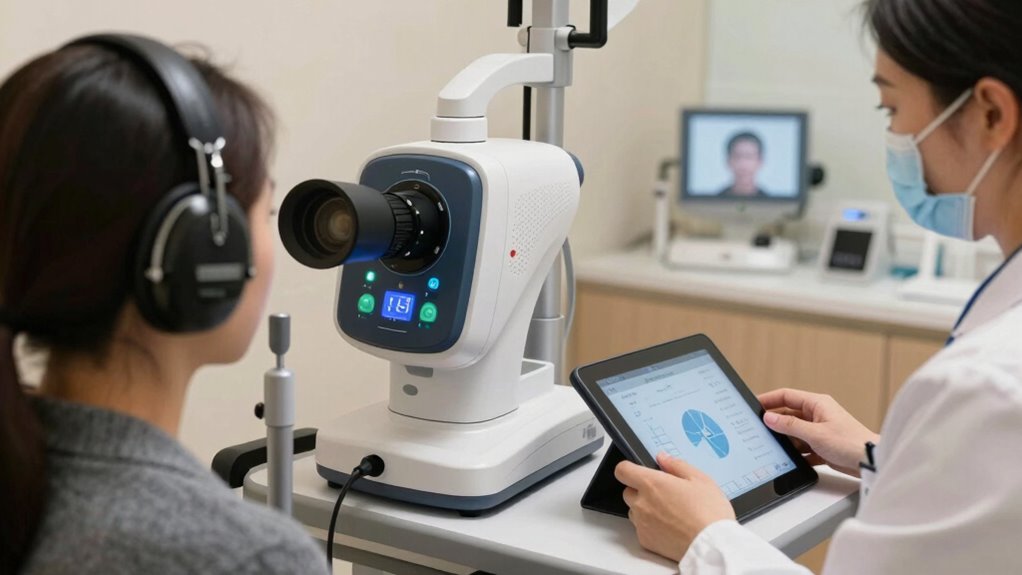
Anyone experiencing difficulty understanding speech in noisy environments should consider speech-in-noise testing. If you find yourself struggling in places like busy restaurants, social gatherings, or family events, this test can reveal underlying issues. Cognitive factors, such as processing speed and memory, often influence your ability to follow conversations. Ignoring these challenges can lead to social implications, like avoiding social interactions or feeling isolated. Signs include asking people to repeat themselves frequently, feeling exhausted after social outings, or missing out on conversations. Speech-in-noise testing can help identify specific difficulties and guide effective treatment strategies, improving your confidence and social life. Additionally, auditory processing challenges can impact how well you understand speech amid background noise. Don’t wait—if noise hampers your communication, consider this valuable assessment.
Frequently Asked Questions
How Often Should I Undergo Speech-In-Noise Testing?
You should undergo speech-in-noise testing at least once a year as part of your regular hearing health assessment. Testing frequency depends on your age, lifestyle, and any hearing concerns you may have. If you notice difficulties understanding speech in noisy environments, seek testing sooner. Regular assessments help catch issues early and guarantee your hearing aids or treatments are effective, keeping your hearing health ideal.
Can Speech-In-Noise Testing Be Performed Remotely or Online?
Yes, speech-in-noise testing can be performed remotely, but its remote feasibility depends on the technology used. Many online platforms aim to deliver accurate results, yet online accuracy can vary due to device quality and environment control. To guarantee reliable results, choose reputable providers that use calibrated equipment and secure, standardized testing protocols. Always consult your audiologist to determine if remote speech-in-noise testing fits your specific hearing needs.
Are There Age Limits for Effective Speech-In-Noise Testing?
Age restrictions can impact speech-in-noise testing, as very young children or older adults may face testing limitations. For young children, attention span and comprehension can affect results, while for seniors, cognitive or auditory decline might influence accuracy. While testing is generally effective across ages, it’s important to take into account these limitations and adapt testing methods accordingly, ensuring accurate assessments tailored to each age group.
How Does Speech-In-Noise Testing Differ for Cochlear Implant Users?
When testing cochlear implant users, you focus on their unique auditory journey. You assess speech-in-noise by carefully examining cochlear implant mapping and auditory nerve response, which differ from natural hearing. This tailored approach guarantees you capture how well they distinguish speech amid noise. You might use specialized tools to optimize device settings, helping users experience clearer, more natural conversations despite their unique auditory landscape.
What Costs Are Typically Associated With Speech-In-Noise Assessments?
You’ll typically face costs for speech-in-noise assessments through equipment expenses and professional fees. Equipment costs include specialized testing devices and software, which can be significant upfront investments. Professional fees cover the audiologist’s time and expertise in administering and interpreting the tests. These costs vary depending on the practice location and the complexity of the assessment, but they are essential for accurate diagnosis and tailored treatment planning.
Conclusion
Incorporating speech-in-noise testing into your hearing care is like having a trusty squire by your side, ensuring you navigate noisy battles with confidence. It reveals challenges traditional tests might miss, helping you and your provider craft better solutions. Don’t wait for the troubadour’s song to fade—the time to act is now. Embrace this essential test, and reclaim your ability to enjoy life’s symphony, even amid the chaos of a bustling marketplace.