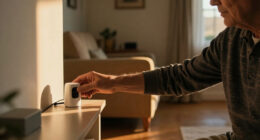
To determine what you need for a home hearing loop, start by assessing your space, hearing needs, and existing equipment. Make sure the system supports your devices and provides reliable coverage. Consider installation options, whether DIY or professional, and budget accordingly. Focus on features like adjustable volume, wireless connectivity, and ease of use. Once you understand these factors, you can create an effective setup and troubleshoot for peak performance—continue to learn more about making your home hearing accessible.

Get everyday helpers delivered free with Prime
- Fast, free delivery on millions of items
- Prime Video, Amazon Music and more included
- Member-only deals all year
Key Takeaways
- Assess room acoustics, furniture, and background noise to determine if a home hearing loop will improve sound clarity.
- Ensure your hearing aids or cochlear implants are compatible with telecoil or wireless connectivity standards.
- Decide between DIY installation or professional setup for optimal loop placement and calibration.
- Consider the size of your space and choose the appropriate loop system to ensure consistent coverage.
- Budget for quality components, proper installation, and maintenance to ensure long-term performance and reliability.
As an affiliate, we earn on qualifying purchases.
What Are Hearing Loops and How Do They Work at Home
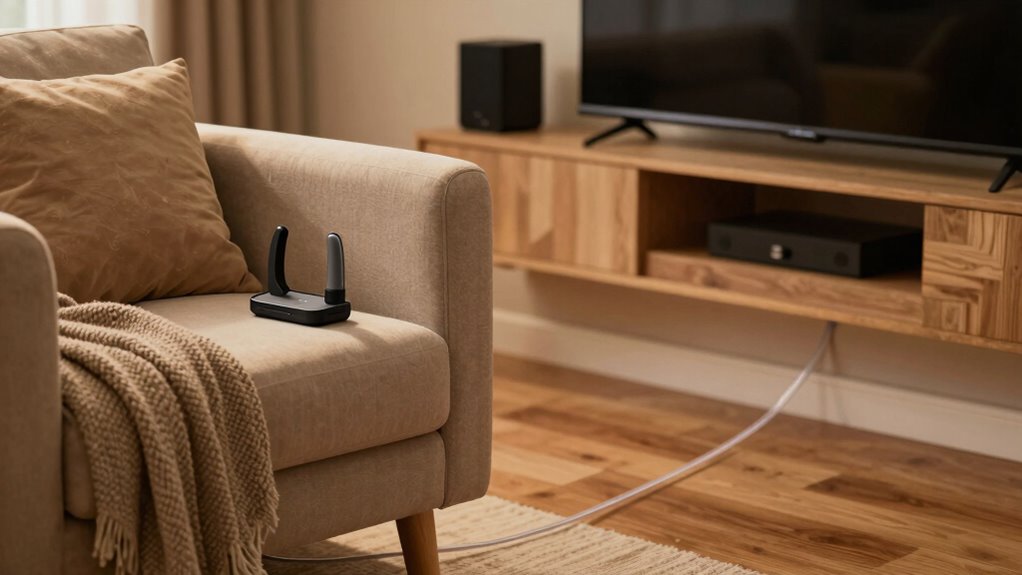
Hearing loops are devices that transmit sound directly to your hearing aids or cochlear implants, providing clearer audio without background noise. They rely on wireless connectivity, which means you don’t need extra equipment or cables to enjoy improved sound quality. When you activate the loop, it creates a magnetic field that your compatible hearing device picks up, delivering audio straight from the source. This setup enhances audio clarity, especially in environments with competing sounds or echoes. At home, hearing loops can be installed in specific areas like living rooms or home theaters, ensuring you experience better sound during conversations, TV watching, or listening to music. The seamless wireless connection makes it easy to enjoy clear, natural sound without the hassle of cumbersome wires. Additionally, integrating energy-efficient technology into hearing loops can reduce power consumption, making them more sustainable and environmentally friendly for everyday use. Incorporating trusted technology standards can further ensure reliable and consistent performance in your home environment. Modern wireless communication protocols also help minimize interference, providing a more stable listening experience. Furthermore, selecting systems that utilize advanced signal processing can further improve audio clarity and reduce background noise for a better listening experience. Using smart home integration features can also allow for easier control and automation of hearing loop systems within your living space.
Do You Need a Hearing Loop? How to Assess Your Home Setup

To determine if a hearing loop is right for your home, start by appraising your room acoustics and identifying areas where sound may be muddled or echoey. Next, evaluate your current equipment to see if it’s compatible or if upgrades are needed. Additionally, considering how assistive listening devices integrate with your existing setup can help you make an informed decision. Assessing room acoustics can reveal how sound behaves in your space and whether a hearing loop would be effective. Conducting a sound test in different parts of your home can also provide valuable insights into your specific hearing needs. Moreover, understanding the Flat Iron Bike concepts can offer insights into the importance of proper installation and maintenance of audio systems for optimal performance. Finally, consider your hearing needs and how often you experience difficulties understanding speech in different parts of your home. Additionally, exploring options like support breakfast can provide insight into assistive listening solutions suitable for various environments.
Assess Room Acoustics
Understanding your room’s acoustics is essential when deciding if a hearing loop will benefit you. Notice how room echo can make speech harder to understand, especially during conversations. To assess this, pay attention to how sound reflects off walls and furniture. Proper furniture placement can reduce echo and improve sound clarity by breaking up sound waves and minimizing reverberation. Soft furnishings like rugs, curtains, and cushions absorb excess sound, creating a more controlled acoustic environment. If your room has significant echo or sound reflections, a hearing loop could enhance your listening experience by delivering clearer audio directly to your hearing aids. Take time to listen carefully in different areas, and consider how furniture and room layout influence sound quality before deciding. Room acoustics play a critical role in overall sound clarity and the effectiveness of hearing loops.
Evaluate Existing Equipment
Before installing a hearing loop, it’s important to evaluate your existing equipment to determine if it’s compatible and sufficient. Check if your current audio devices support wireless connectivity, as this can affect how seamlessly the loop integrates with your setup. Consider the sound quality of your current system—if it’s clear and consistent, a hearing loop could enhance your listening experience. Test your speakers, microphones, and any amplifiers to see if they deliver reliable, high-quality audio. If your equipment is outdated or lacks wireless options, upgrading might be necessary before installing a hearing loop. Proper assessment ensures you avoid unnecessary costs and achieve ideal sound clarity with the new system. Knowing what you already have helps you make informed decisions about your home’s hearing accessibility, especially since precious metals investments are increasingly popular for financial security. Additionally, evaluating the contrast ratio of your existing audio setup can help determine if it provides the dynamic range needed for clear, natural sound reproduction. Incorporating aquatic exercise equipment or techniques may also enhance your overall auditory environment by promoting relaxation and well-being. Performing a comprehensive audio assessment can help identify any gaps or limitations in your current setup before installation. Moreover, understanding the ethnicity of your audio sources can sometimes influence how you calibrate your system for the best sound experience.
Consider Hearing Needs
Evaluating your hearing needs is the next step to determine if installing a hearing loop makes sense for your home. Think about how you use your space and the types of sounds that are most important to you. Personalized hearing solutions consider your specific hearing loss and daily routines, helping you decide if a hearing loop will improve your listening experience. Consider whether background noise or distance from sound sources affects clarity during conversations or TV watching. Lifestyle adjustments may be necessary to optimize the benefit of a hearing loop, such as seating arrangements or device compatibility. By understanding your unique hearing needs, you can make an informed decision about whether a hearing loop will enhance your comfort and communication at home.
How Much Should You Budget for a Hearing Loop System

Budgeting for a hearing loop system depends on several cost factors, like the size of your space and the quality of components. You can find ways to save by comparing options and knowing what features matter most to you. Setting a clear budget helps you prioritize and make informed decisions for your home. Considering free floating options can also impact overall costs and flexibility. Additionally, understanding the technology used in different systems can help you choose the right balance between cost and performance.
Cost Factors to Consider
Understanding the costs involved in installing a hearing loop system is essential to ensuring you get the right solution without overspending. Factors influencing your budget include the size of your space, the complexity of installation, and equipment quality. A thorough cost comparison helps identify options that fit your needs and budget. Installation costs can vary based on whether you do it yourself or hire professionals, impacting your overall expense. Be mindful that higher-quality components may cost more initially but offer better performance and durability. Budgeting wisely means considering these cost factors upfront to avoid surprises later. Additionally, researching hearing loop standards can ensure compatibility and optimal performance. Being aware of wave and wind interference can help in selecting appropriate systems for your environment. Understanding net worth can also aid in financial planning for such investments. When evaluating options, it’s helpful to consider system scalability to accommodate future needs without complete replacements. Here’s a breakdown to guide you:
| Factor | Description |
|---|---|
| Space size | Larger areas may require more wiring |
| Equipment quality | Higher quality costs more upfront |
| Professional installation | Adds to initial expenses |
| DIY installation | Less costly but requires skill |
| Maintenance and upgrades | Long-term costs to think about |
Budgeting Tips and Tricks
Determining how much to set aside for a hearing loop system can seem challenging, but with some planning, you can avoid overspending. Start by evaluating your needs for wireless connectivity and sound amplification, which influence the system’s complexity and cost. Basic models with essential features are usually more affordable, while advanced options offer better sound clarity and integration. Consider installation costs, as professional setup can increase your budget, but it guarantees maximum performance. Look for systems compatible with your existing devices and technology, maximizing value. Comparing prices from different providers helps you find quality options within your budget. Remember, investing in a reliable hearing loop improves sound clarity and connectivity, making it a worthwhile expense for better hearing in your home. Additionally, understanding the field‑of‑view and imaging‑scale aspects of compatible equipment can help you select the most suitable system for your space. It’s also helpful to research system durability and maintenance requirements to ensure long-term satisfaction and avoid unexpected expenses. Taking into account the installation process and support services can further help you choose a system that offers ongoing reliability and assistance.
Essential Features to Evaluate in a Hearing Loop System

When evaluating a hearing loop system for your home, focusing on essential features guarantees you get the best performance and reliability. Accessibility features are critical—they ensure the system works seamlessly for different hearing needs, like adjustable volume or compatibility with hearing aids. Wireless connectivity is equally important, allowing you to connect easily with other devices such as smartphones, TVs, or smart home systems. Look for systems that offer straightforward pairing processes and stable connections to prevent interruptions. A reliable system should also minimize static or interference, providing clear, consistent sound. By prioritizing these features, you’ll ensure your hearing loop system is both user-friendly and effective, enhancing your home listening experience without unnecessary complications.
How to Install Your Hearing Loop: DIY Tips or Professional Help?

Installing a hearing loop in your home can be straightforward if you choose the right approach. If you’re comfortable with basic wiring and technical tasks, a DIY installation might be suitable, saving you money and giving you control. However, for peak performance and safety, professional consultation is recommended, especially if your space has complex layouts or specific needs. Consider these options:
DIY hearing loop installation is possible, but professional help ensures optimal safety and performance.
- Follow detailed DIY guides and tutorials for straightforward setups
- Hire a professional to ensure proper placement and system calibration
- Combine both approaches: DIY for simple areas and professional help for complex spaces
While DIY installation can be rewarding, consulting an expert ensures your hearing loop works seamlessly and meets all standards. Choose the method that best matches your skills and the complexity of your home environment.
Common Mistakes to Avoid When Choosing or Installing a Hearing Loop

Choosing the right hearing loop and installing it properly are essential steps toward improving your listening experience at home. A common mistake is poor loop placement, which can markedly reduce sound quality. Place the loop wire in a continuous, unobstructed circle around the listening area, avoiding corners or areas with metal objects that can disrupt the signal. Failing to test the loop’s coverage before final installation may lead to inconsistent sound quality. Also, don’t overlook the importance of equalizing sound levels; too high or too low can cause discomfort or difficulty understanding speech. Avoid installing the loop too close to electrical devices or sources of interference, as this can degrade sound quality. Proper planning and strategic placement ensure you get clear, consistent audio throughout your home.
How to Test Your Hearing Loop for Best Performance

To guarantee your hearing loop works at its best, start by checking that it’s compatible with your hearing aids or assistive devices. Then, perform sound tests to identify any issues with clarity or volume. These steps help you confirm your system is providing ideal performance for your needs.
Check Loop Compatibility
Before relying on your hearing loop, it’s vital to verify its compatibility to guarantee it delivers clear and consistent sound. First, confirm your device meets the proper loop standards, such as IEC 60118-4, for reliable performance. Next, check wireless compatibility to confirm your hearing aids or receivers work seamlessly with the loop system. Finally, test the loop’s signal strength and clarity by walking around your space, listening for any fluctuations or interruptions.
- Confirm your hearing aids or receivers support loop standards
- Verify they are compatible with your device’s wireless protocols
- Guarantee the loop provides a stable, noise-free signal throughout the area
These steps help guarantee your hearing loop performs at its best, giving you clear, consistent sound.
Perform Sound Tests
After confirming your hearing loop is compatible and working properly, it’s important to perform sound tests to guarantee ideal performance. Start by walking around your space with a hearing device, listening for consistent, clear audio. Use different locations to identify any dead spots or interference. To maximize sound quality, consider soundproofing techniques that reduce background noise, ensuring your loop stays clean. Also, explore decorative options like concealment panels that blend with your decor while improving acoustics. Create a simple table to compare areas:
| Location | Sound Quality | Interference | Suggestions |
|---|---|---|---|
| Living Room | Clear | Minimal | Add soundproofing |
| Kitchen | Slight echo | Moderate | Use decorative panels |
| Bedroom | Good | None | Check device placement |
| Office | Slight distortion | Some | Adjust loop settings |
Regular sound tests help maintain maximum performance and comfort.
How to Connect Your Hearing Loop With Your Hearing Aids and Devices

Connecting your hearing loop with your hearing aids and devices is straightforward once you understand the options available. Many modern hearing aids feature wireless connectivity, making it easy to pair directly with your loop system. Confirm your hearing aids are hearing aid compatible with Bluetooth or telecoil functions. To connect, you might need to:
Easily connect your hearing aids to your loop system using Bluetooth or telecoil features.
- Enable telecoil or Bluetooth mode on your hearing aids
- Use a wireless streamer or compatible device to link with the loop
- Follow manufacturer instructions for pairing and setup
Most hearing aids now support wireless connectivity, simplifying the process. Check if your hearing aids have a telecoil or Bluetooth capability, which is essential for seamless integration. With the right setup, you’ll enjoy clear, direct sound from your hearing loop without extra effort.
Troubleshooting Common Hearing Loop Issues
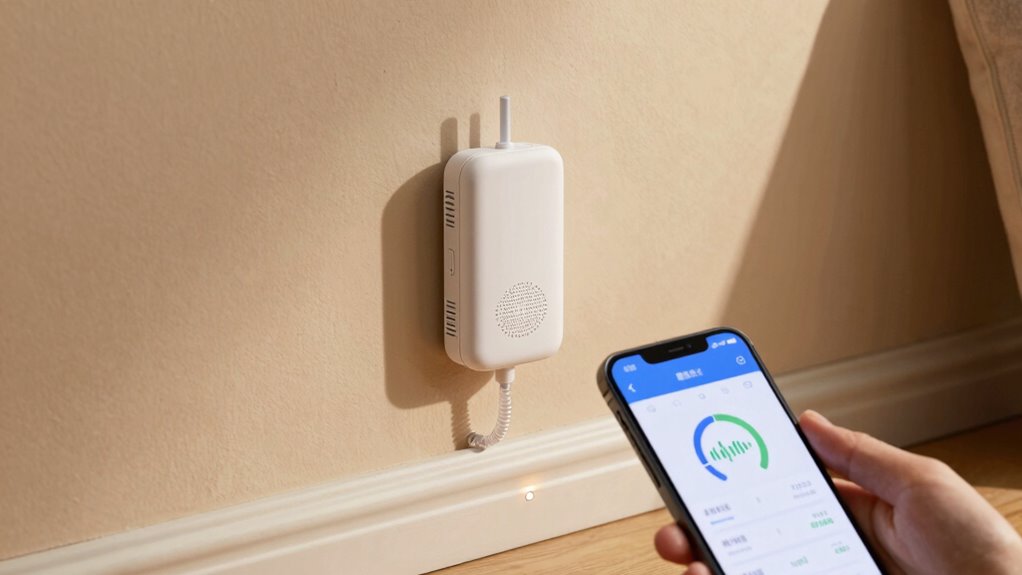
Despite proper setup, hearing loop systems can sometimes encounter issues that disrupt sound quality or connection. One common problem is ambient noise, which can interfere with clarity and make it harder to focus on the conversation. To troubleshoot, check for sources of background noise nearby and try to minimize them. Another issue is speaker placement; if the loop wire isn’t positioned correctly or if speakers are too close or too far apart, sound may be uneven or weak. Ensure the loop wire runs smoothly around the room’s perimeter and that speakers are aligned properly. Testing the system with different devices can also help identify whether the problem lies with the loop or the hearing aids. Regular maintenance and careful setup are key to resolving these common issues.
Is a Home Hearing Loop the Right Solution for You? Pros and Cons

Deciding whether a home hearing loop is right for you depends on your specific needs and living situation. A hearing loop can markedly improve sound clarity, but it’s essential to weigh the pros and cons.
Choosing a home hearing loop depends on your needs and living situation, balancing benefits and potential drawbacks.
Pros include enhanced hearing comfort, discreet operation, and potential privacy benefits since it limits sound transmission outside your home. However, consider the cons: some may find the installation intrusive or worry about privacy concerns if signals aren’t secure. Aesthetic considerations also matter—loops can be visible or require modifications that alter your home’s appearance.
Before deciding, ask yourself:
- Do I prioritize discreet, secure listening solutions?
- Will installation affect my home’s aesthetics?
- Am I comfortable with potential privacy concerns?
Frequently Asked Questions
Can Hearing Loops Be Used With All Types of Hearing Aids?
Hearing loops are compatible with many hearing aids, but not all. You need to check your hearing aid’s hearing aid compatibility and whether it has a telecoil (T-coil) feature, which is essential for loop systems. Be aware of loop system limitations; some may not work well with certain devices or settings. Always consult your audiologist to ensure your hearing aid can connect seamlessly to the loop system.
How Discreet Are Home Hearing Loop Installations?
A home hearing loop installation is as discreet as a whisper, blending seamlessly into your decor. With a discreet design, it’s barely noticeable, like a shadow in the corner. The installation visibility is minimal, often hidden behind furniture or within walls, so it doesn’t disrupt your space’s aesthetic. You’ll enjoy improved sound clarity without sacrificing style, making it an unobtrusive solution tailored to your needs.
Are There Any Safety Concerns With Hearing Loop Systems?
There are minimal safety concerns with hearing loop systems if installed properly. Just guarantee the system complies with fire safety regulations and use quality components to prevent electrical hazards. Avoid overloading circuits and keep wiring neat and away from moisture. Regular maintenance and professional installation help mitigate risks, so you can enjoy clear sound without worrying about fire safety or electrical issues.
How Long Does It Take to Install a Home Hearing Loop?
Installing a home hearing loop is so quick, it’s almost like magic—usually just a few hours! The installation process involves setting up the wire around your room and connecting it to your sound system, which can be done in a single day or less. Most setups are straightforward, so you won’t need to clear your schedule for weeks. Before you know it, you’ll be enjoying crystal-clear sound effortlessly!
Can I Upgrade My Existing Audio System to Include a Hearing Loop?
Yes, you can upgrade your existing audio system to include a hearing loop. You’ll need to add a loop driver and guarantee wireless connectivity is compatible. This upgrade enhances sound quality by transmitting clear, consistent audio directly to your hearing aids or assistive listening devices. Most systems are straightforward to integrate, so you can enjoy improved hearing without replacing your entire setup. Consult a professional for a seamless, effective upgrade.
Conclusion
A home hearing loop can substantially improve your listening experience, but it’s not for everyone. If you worry about installation or compatibility, know that many systems are straightforward and work seamlessly with modern hearing aids. Don’t let technical concerns hold you back—proper setup and testing ensure you get the benefits. With the right information, you can decide if a hearing loop is your solution for clearer, more comfortable hearing at home.
Halloween Picks
halloween
As an affiliate, we earn on qualifying purchases.