
If you have hearing loss, TV headphones often provide clearer sound by isolating external noise and allowing precise volume control, helping you catch dialogue better and protect your hearing. They also reduce background noise and offer comfort for everyday use. However, TV speakers are more social and easier to set up but may not deliver the same clarity for hearing-impaired listeners. To find out which option suits your needs best, consider the benefits of each as you explore your options further.
Key Takeaways
- Headphones offer superior sound clarity and noise isolation, making dialogue easier for those with hearing loss.
- TV speakers provide a shared listening experience, suitable for social interaction and group viewing.
- Headphones allow precise volume and tone adjustments tailored to individual hearing needs.
- Speakers reduce ear fatigue and are more comfortable for extended use without direct contact.
- The choice depends on personal preferences: headphones for clarity and isolation, speakers for social and convenience reasons.
As an affiliate, we earn on qualifying purchases.
What Is Hearing Loss and How Does It Affect TV Listening?
Hearing loss can substantially impact how you experience TV shows and movies. When your hearing isn’t sharp, you might struggle to understand dialogue or catch subtle sounds, making viewing frustrating. Many people with hearing loss turn to hearing aids, which can markedly improve clarity and overall enjoyment. Visiting audiology clinics helps determine the extent of your hearing loss and find the best solution tailored to your needs. Without proper assistance, you may find yourself constantly adjusting the volume or missing important parts of a scene. Understanding your hearing health is vital, as untreated hearing loss can lead to social isolation and reduced quality of life. Proper audio equipment can also enhance your listening experience and help compensate for hearing difficulties. Using specialized TV listening devices can significantly improve clarity and comfort during viewing. Selecting the right hearing assistance ensures you can enjoy your favorite entertainment without straining or missing out. Additionally, being aware of hearing aid options and their features can help you choose the most effective device for your specific needs. Furthermore, understanding the different types of hearing devices can help you make an informed decision that best suits your lifestyle and hearing requirements.
How TV Headphones Enhance Sound Clarity and Protect Hearing
TV headphones give you a personalized sound experience, making dialogue and details clearer. They also help protect your hearing by reducing background noise and volume levels. With this, you can enjoy better audio quality while keeping your ears safe. Additionally, using free floating technology can improve comfort during extended listening sessions. Proper ventilation and wiring basics are important considerations to ensure safe and reliable operation of your headphone setup. Being mindful of sound isolation can further enhance listening quality and hearing protection. Incorporating energy-efficient design principles can also contribute to sustainable usage and lower power consumption. To choose the best setup, considering vetted options like high-quality headphones and reliable wiring can ensure long-term satisfaction and safety.
Personalized Sound Experience
Using TV headphones allows you to customize your sound experience, delivering clearer audio tailored to your preferences. With personalized sound, you can adjust volume levels, balance, and tone to suit your hearing needs. This level of customized listening ensures you hear every detail without distortion or background noise interference. Additionally, many headphones offer equalizer settings to fine-tune audio further. This personalization not only improves clarity but also protects your hearing by preventing the need for excessively loud volumes. Here’s a quick overview:
| Feature | Benefit | Ideal For |
|---|---|---|
| Volume control | Prevents sudden loud sounds | Sensitive ears |
| Equalizer settings | Enhances specific frequencies | Hearing aid users |
| Noise isolation | Blocks background noise | Quiet listening environment |
Enjoy a tailored, clearer sound with headphones designed for your unique hearing needs.
Hearing Protection Benefits
Personalized sound settings on headphones not only enhance audio clarity but also play a vital role in protecting your hearing. Noise cancellation reduces background noise, allowing you to focus on the dialogue and audio details without raising the volume excessively. This feature minimizes the risk of hearing damage caused by loud, prolonged exposure to high volume levels. Sound personalization lets you adjust the audio to your specific hearing needs, ensuring clarity without the need to turn up the volume. By blocking out external noise and tailoring sound levels, headphones help preserve your hearing health while providing a more immersive experience. Additionally, using hydrotherapy techniques such as aquatic exercises can promote overall ear health and reduce strain. Incorporating hearing protection strategies into your routine further supports long-term hearing preservation. Understanding how sound amplification devices work can also help you make informed choices about hearing health. Being aware of the manufacturer warranties for audio devices is crucial to ensure your equipment is protected and to avoid costly repairs or replacements. Educating yourself about proper device maintenance can extend the lifespan of your headphones and speakers. Ultimately, these benefits make TV headphones a smarter choice for better sound quality and long-term hearing protection.
Benefits of Using TV Speakers for Hearing Health and Social Watching

Watching with built-in speakers can considerably benefit your hearing health and enhance social experiences. Speakers allow you to enjoy sound at comfortable levels without risking further hearing damage. Plus, they promote group viewing, making conversations easier and more natural. Modern TV speakers often feature wireless connectivity, reducing cable clutter and simplifying setup. Sound customization options let you adjust audio settings to suit your environment and personal preferences, ensuring clarity for everyone. This setup encourages shared experiences and reduces isolation caused by headphones. Using speakers also minimizes ear fatigue and maintains your overall hearing health. Additionally, audio personalization features enable fine-tuning of sound to accommodate different listening needs, supporting overall hearing preservation. Incorporating ergonomic workspace principles into your entertainment setup can further enhance comfort and reduce strain during extended viewing sessions. Moreover, choosing the right audio equipment can optimize your listening experience while safeguarding your hearing. Implementing proper acoustic treatment can also improve sound quality and reduce background noise, creating a more enjoyable environment for all viewers.
Which Offers Better Sound Quality: Headphones or Speakers?
When comparing sound quality, you’ll notice that headphones often provide clearer sound and more precise volume control. Speakers, on the other hand, tend to fill the room with sound but may be affected by ambient noise. Considering these points can help you decide which option delivers the better listening experience for your needs. Additionally, understanding home audio setup options can help optimize your overall sound quality. For individuals with hearing loss, personal audio devices like specialized headphones may offer a significant advantage by customizing sound profiles to suit specific hearing needs. Exploring different audio enhancement features can further improve clarity and comfort during extended listening sessions. Incorporating adaptive audio technology can also tailor sound delivery to your environment, enhancing clarity even further. For example, choosing headphones designed with noise-canceling technology can significantly improve listening experiences in noisy settings.
Sound Clarity Differences
Headphones generally deliver superior sound clarity compared to TV speakers because they isolate you from external noise and provide a direct audio path. This focused delivery enhances the detail and sharpness of dialogue, music, and sound effects. With headphones, you experience better surround sound immersion, making it easier to catch subtle audio cues. They also often have a more precise bass response, enriching the depth and richness of low frequencies. In contrast, TV speakers may produce a more diffuse sound, which can diminish clarity, especially in complex audio scenes. Overall, if clarity is your priority, headphones tend to outperform speakers by delivering a clean, detailed audio experience free from environmental interference. Additionally, art care and living principles highlight the importance of maintaining sound quality to preserve audio equipment and enhance listening experiences.
Volume Control Precision
While both headphones and TV speakers allow you to adjust volume levels, headphones generally offer more precise control over sound quality at various volumes. With headphones, you can fine-tune your volume customization to match your hearing needs, ensuring *ideal* audio precision. This means you can set a comfortable volume without sacrificing clarity or risking distortion. TV speakers, on the other hand, often provide broader volume adjustments but lack the detailed control headphones provide.
| Feature | Headphones | TV Speakers |
|---|---|---|
| Volume Adjustment | Highly precise | Less precise |
| Audio Clarity | Better at fine-tuning | More general adjustments |
| Hearing Loss Suitability | Ideal for customized sound | Less adaptable |
| User Control | Individualized | Group-oriented |
Ambient Noise Levels
Ambient noise levels considerably impact your overall sound quality, and choosing between headphones and speakers depends on how well they isolate or transmit these sounds. Background noise can drown out dialogue or music, making it harder to enjoy content or communicate effectively. Headphones often provide better isolation from ambient sound, allowing you to focus on the audio without interference from background noise. This can result in clearer sound, especially in noisy environments. Conversely, speakers transmit ambient sound into the room, which can be beneficial if you want to stay aware of your surroundings but may reduce audio clarity. If hearing loss is a concern, headphones can help you experience better sound quality by minimizing external noise, making them a preferable choice in noisy settings.
Are TV Headphones or Speakers More Comfortable for Daily Use?
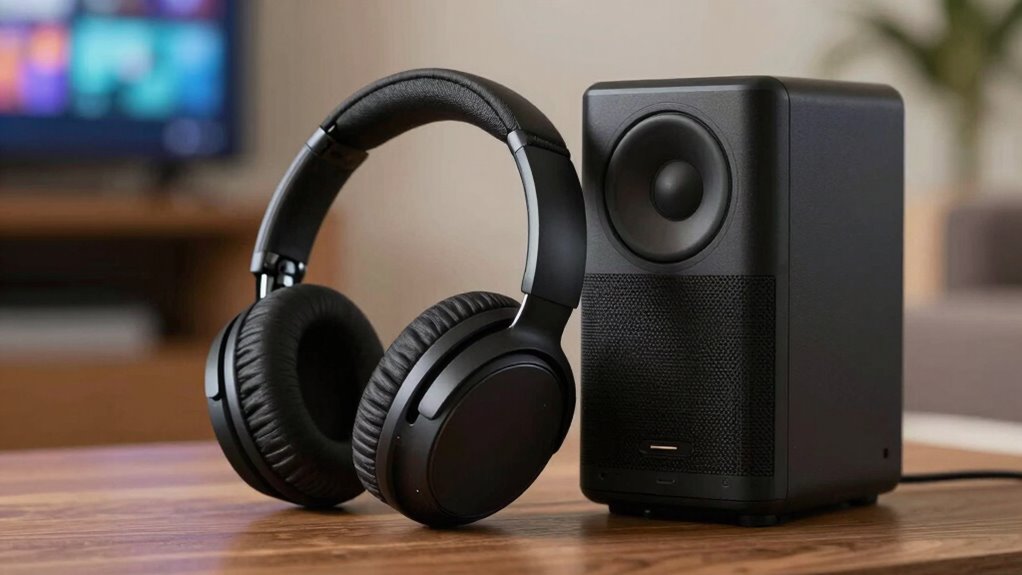
Choosing between TV headphones and speakers for daily use largely depends on comfort, as each option offers different advantages. For comfort comparison, headphones provide a snug fit, which can be ideal for long periods, but might cause discomfort or sweating over time. Speakers, on the other hand, allow you to relax without any contact with your head or ears, making them more suitable for extended daily wear. Consider this table:
| TV Headphones | TV Speakers |
|---|---|
| Snug fit, can cause pressure | No contact, more natural feel |
| Better for personal listening | Suitable for shared use |
| May cause ear fatigue | Less fatigue over time |
Ultimately, your comfort depends on personal preference and how long you plan to use the device daily.
How Much Should You Spend on TV Audio Devices?
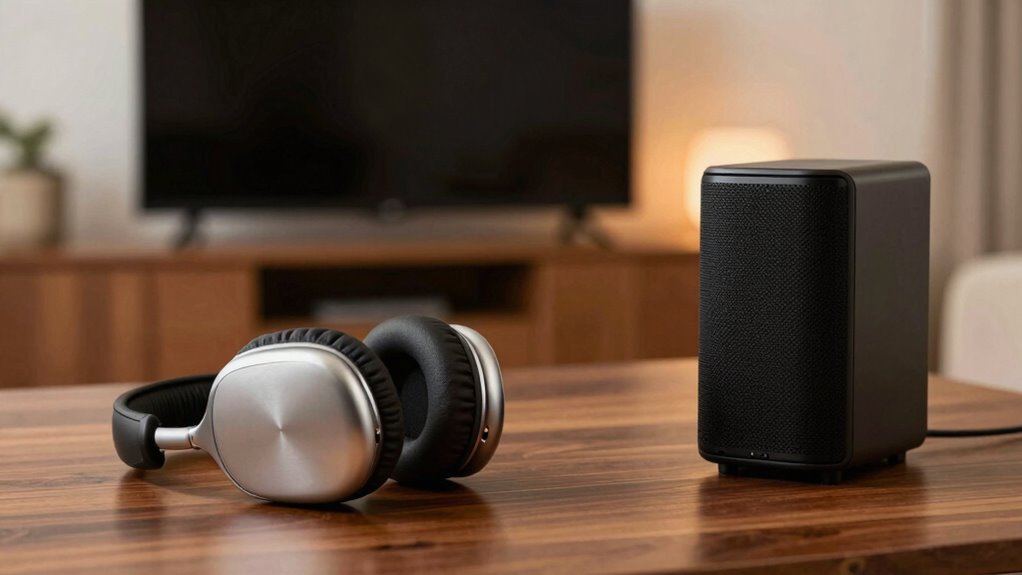
Deciding how much to spend on TV audio devices depends on your priorities and budget. If you want basic sound quality, budget options can be affordable and effective, often costing under $50. For better sound clarity and comfort, mid-range devices between $50 and $150 are worth considering. If hearing loss is a concern, investing in higher-end models with advanced features might be justified. When evaluating costs, compare brands to ensure you’re getting reliable quality and durability. Brand comparisons can help you identify which manufacturers offer the best value for your money, whether you’re choosing headphones or speakers. Remember, spending more doesn’t always mean better sound, so weigh your needs carefully to find a device that provides the best audio experience within your budget.
Troubleshooting Common Hearing and Sound Issues With TV Setups

Many common hearing and sound issues with TV setups can be quickly identified and fixed with some simple troubleshooting steps. First, check wireless connectivity if you’re using wireless headphones or speakers; ensure they’re properly paired and within range. If sound drops or crackles, try disconnecting and reconnecting the devices to improve signal stability. Device compatibility can also cause issues—verify that your headphones or speakers are compatible with your TV model and audio outputs. Adjust your TV’s audio settings, such as switching between different output modes, to see if that resolves the problem. Sometimes, updating your device firmware or resetting your audio devices can fix persistent issues. These steps help optimize sound clarity and guarantee your hearing aids or headphones work seamlessly with your TV setup.
How to Choose the Best TV Audio Setup for Your Hearing Needs
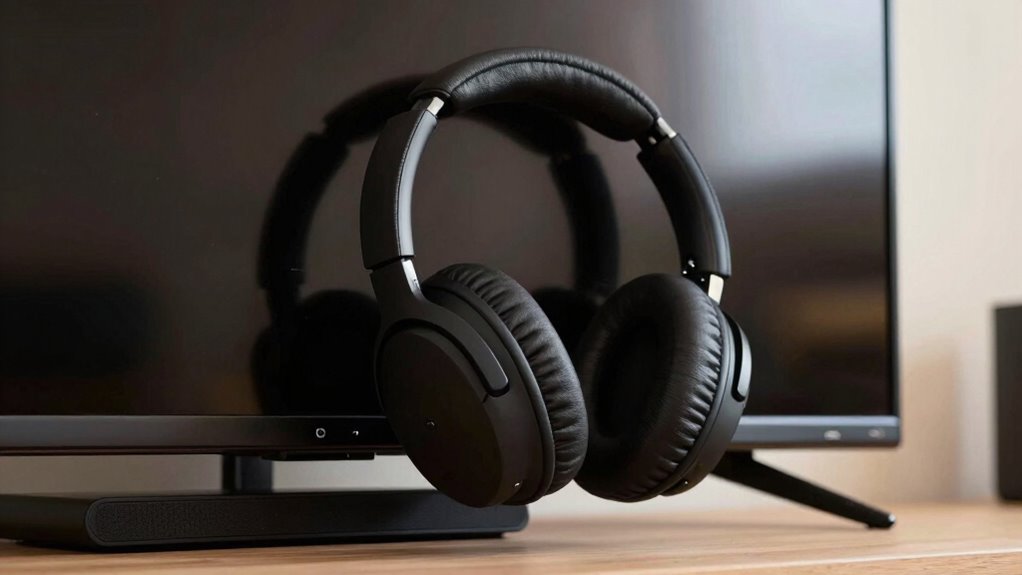
Finding the right TV audio setup is essential for ensuring you hear sounds clearly and comfortably, especially if you have hearing challenges. Start by considering wireless connectivity options, which offer flexibility and reduce clutter from cables. Wireless headphones or speakers can easily connect to your TV, providing clear, direct sound. Additionally, look for devices with an ergonomic design that fits comfortably for long periods, reducing fatigue. Choose setups with adjustable volume controls and sound modes tailored for hearing loss. Compatibility with your TV’s audio outputs is vital, so check connections before purchasing. Prioritize ease of use, comfort, and sound quality to create a personalized listening environment that enhances your viewing experience without straining your ears.
Frequently Asked Questions
Can TV Headphones Cause Ear Fatigue Over Long Periods?
Yes, TV headphones can cause ear fatigue over long periods if you don’t take breaks or choose the right fit. Wearing headphones for extended sessions may lead to discomfort and strain, affecting long-term comfort. To mitigate ear fatigue, opt for lightweight, well-cushioned headphones and take regular breaks. This helps protect your ears and ensures a more enjoyable viewing experience without discomfort.
Are Wireless TV Headphones More Suitable for Hearing-Impaired Users?
Wireless TV headphones are more suitable for hearing-impaired users, offering wireless convenience that lets you move freely without tangled cords. Imagine the crisp, clear sound wrapping around you like a cozy blanket, enhancing sound quality while reducing background noise. With these headphones, you can focus on dialogue and music, making your TV experience more immersive and comfortable, especially if hearing loss makes traditional speakers less effective.
How Do Background Noises Affect Headphone Versus Speaker Listening?
Background noises impact your listening experience differently with headphones and speakers. With headphones, noise isolation helps block out distractions, enhancing audio clarity so you hear details clearly. Speakers, however, can let in ambient sounds, making it harder to focus on dialogue or music. If you’re concerned about background noise, headphones with good noise isolation give you better control, ensuring you enjoy crisp, clear sound without interruption.
Do Specialized Hearing Assistive Devices Integrate With TV Audio Systems?
Specialized hearing assistive devices are like bridges connecting your hearing aids to your TV audio system. Many modern TVs and assistive listening devices feature hearing aid compatibility, making it easy to stream sound directly. You can enjoy clearer dialogue and better sound quality without extra equipment. Check your devices for assistive listening options, ensuring seamless integration for an enhanced viewing experience tailored to your hearing needs.
What Safety Features Should I Look for in TV Audio Devices?
When choosing TV audio devices, look for safety features like adjustable volume control to prevent sudden loud sounds that could damage your hearing. Noise cancellation is also vital, as it reduces background noise, helping you hear clearly without turning up the volume excessively. These features protect your ears, enhance your listening experience, and guarantee your hearing remains safe during extended TV sessions.
Conclusion
Choosing between TV headphones and speakers is like finding the perfect pair of shoes—comfort and fit matter. Headphones can be your private oasis, shielding you from background noise, while speakers open up the room like a welcoming embrace. Think about your hearing needs and lifestyle. Whichever you pick, make sure it brings your TV experience into focus, turning every show into a vivid, crystal-clear adventure you won’t want to miss.