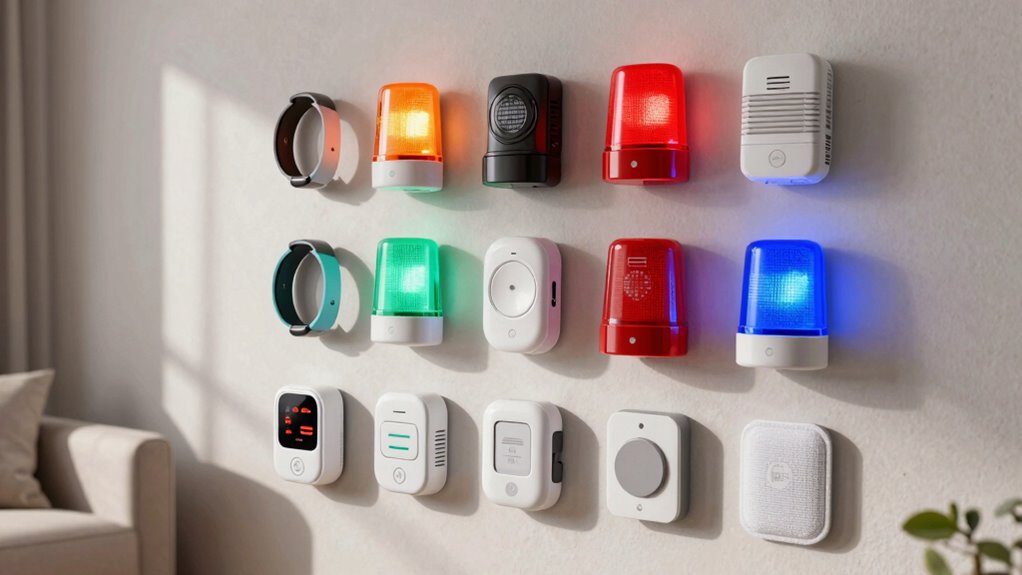

The best emergency alert devices for hard of hearing make important signals noticeable through light, vibration, or amplified sound—not sound alone. My best overall pick is the Sonic Alert HomeAware II Basic Starter Kit, since it can listen for existing smoke and carbon monoxide alarms and add a strobe, display, and bed shaker. For portable alerts, the Bellman & Symfon Pager Receiver stands out as a wearable option, while the Bellman Flash Receiver offers a simpler visual notification approach. The main tradeoffs are coverage, portability, setup, and whether you need alerts for emergencies, calls, or caregiver check-ins. Read on for the full breakdown and help matching a system to your hearing loss, home, and daily routine.

Get everyday helpers delivered free with Prime
- Fast, free delivery on millions of items
- Prime Video, Amazon Music and more included
- Member-only deals all year
Key Takeaways
- Emergency coverage separates the HomeAware II from the rest: it is the listed option that listens for existing smoke and carbon monoxide alarms and pairs alerts with a bed shaker, strobe, and display.
- Wearable notification and room-based notification solve different problems: the Bellman & Symfon Pager Receiver is suited to moving around, while the Bellman Flash Receiver focuses on visible alerts in a set location.
- The CallToU kit emphasizes caregiver reach: four call buttons and two receivers support multiple alert points, but a caregiver pager is not a substitute for smoke or CO warning equipment.
- The Bellman & Symfon Push Button system adds sensory choices at a call point: vibration, flashing light, and a bed shaker can help when one alert type is easy to miss.
- The Renny amplifier is a narrow-purpose pick: its loud ring and LED flash target incoming cell phone calls, not household hazards or general caregiver alerts.


| emergency alert devices for hard of hearing | Power source | Mounting type |
|---|---|---|
| Bellman Flash Receiver | Battery powered | Wall mount |
| CallToU Portable Vibrating Car | Battery powered | Tabletop |
| Bellman & Symfon Push Button N | — | — |
| Sonic Alert HomeAware II Basic | Corded electric | — |
| Bellman & Symfon Pager Receive | Battery powered | Tabletop mount |
| Renny Loud Cell Phone Ringer A | — | — |
More Details on Our Top Picks
Bellman Flash Receiver – Bright Notification Device for Hearing Loss
I’d choose the Bellman Flash Receiver when the main need is a conspicuous visual alert at home, especially for someone with hearing loss who may not notice sound-based alarms. Its bright flashing lights and LED signals provide a different kind of notice than the Bellman & Symfon Pager Receiver, which adds wearable vibration for alerts on the move. This receiver can also keep working on battery backup during a power outage, a useful safeguard when connected to a compatible Visit Smart Home setup.
The tradeoff is that it is not a standalone alarm: transmitters are required to send alerts, so the full system needs additional components. It also offers visual notifications without vibration or audible alerts, making it less flexible than the CallToU Portable Vibrating Caregiver Pager. I’d rank it for buyers who already use Visit devices and want a fixed, bright alert point.
Pros:- Bright flashing lights and LED signals offer clear visual notification for deaf and hard-of-hearing users.
- Integrates with the Visit Smart Home System when paired with compatible transmitters.
- Battery backup can keep the receiver operating during a power outage.
- Encrypted radio communication provides a secure connection within its compatible system.
Cons:- Requires separate transmitters and is not a standalone alert system.
- Provides visual alerts only, without vibration or audible notification.
- Its usefulness depends on compatibility with the Visit system.
Best for: People with hearing loss who already own compatible Visit transmitters and want a bright, fixed visual alert, including battery-backed notification during power outages.
Not ideal for: Buyers who need a complete alert system in one purchase, wearable vibration, or alerts from devices outside the compatible Visit system.
- Power source:Battery powered
- Battery type:Alkaline
- Compatible device:Smartphone
- Control method:Remote
- Mounting type:Wall mount
- Sensor technology:Contact sensor
- Alert type:Bright flashing light notifications
Our verdict“Choose this receiver if you already have a compatible Visit setup and want battery-backed flashing alerts, but skip it if you need an all-in-one device or tactile notification.”
CallToU Portable Vibrating Caregiver Pager, 4 Call Buttons, 2 Receivers, 500FT Range
For a household that needs several ways to call for help, I’d favor the CallToU Portable Vibrating Caregiver Pager over the receiver-only Bellman options: it includes four call buttons and two receivers, so caregivers can place buttons in multiple locations and carry or position receivers where alerts will be noticed. Its flash and vibration alerts give hard-of-hearing users alternatives to sound, while adjustable volume and a stated 500-foot range add flexibility around the home.
That range makes it more practical for multi-room care than the fixed Bellman Flash Receiver, but it is still a wireless system with a stated limit, not a guarantee across every property or obstruction. Call buttons are waterproof, though the system still depends on batteries that need replacement. Setup may also take more effort than the compact, single-button Bellman & Symfon Push Button Notification System. I’d pick CallToU when multiple call points matter more than a streamlined setup.
Pros:- Four call buttons and two receivers support multiple alert points and caregivers.
- Flash and vibration alerts provide non-audible ways to notice a call.
- Stated 500-foot wireless range allows flexible placement around a home.
- Waterproof, portable call buttons suit varied caregiving locations.
Cons:- Wireless range may not cover larger properties or all layouts.
- Battery-powered components require ongoing battery replacement.
- Setup may be more involved than a compact single-button alert system.
Best for: Families or home-care providers supporting a hard-of-hearing person who needs multiple call buttons and alert receivers across a typical home.
Not ideal for: People who need coverage across a large property beyond the stated wireless range, or who want a simple single-button system with minimal setup.
- Power source:Battery powered
- Battery type:Alkaline
- Receivers included:2
- Call buttons included:4
- Maximum stated range:500 feet
- Alert modes:Sound, flash, and vibration
- Maximum stated audible level:110 dB
- Mounting type:Tabletop
Our verdict“Choose CallToU for a hard-of-hearing household that needs several call points and receivers, but look elsewhere if the property exceeds its range or simplicity is the priority.”
Bellman & Symfon Push Button Notification System – Wireless Caregiver Call Button with Vibrations, Flash, and Bed Shaker
The Bellman & Symfon Push Button Notification System is my pick for a hard-of-hearing person who needs a direct way to summon help and receive alerts in bed. Its included bed shaker adds tactile notice at night, while the receiver’s flash provides a visual cue during the day. The wearable lanyard and portable button also make it more adaptable than the wall-oriented Bellman Flash Receiver, which is aimed at visual alerts rather than bedside vibration.
This kit is a focused call-and-notification setup, not a broad home alarm network. It can expand with additional transmitters and receivers, but a larger home may require more units; the CallToU Portable Vibrating Caregiver Pager already includes four buttons and two receivers. Bellman’s kit includes the core push-button and bed-shaker components, but it still relies on batteries and does not provide audible notifications. I’d choose it for a simple bedside call path rather than whole-home coverage.
Pros:- Bed shaker provides tactile alerts that can be noticed while sleeping.
- Receiver flash adds a visual alert channel for hearing-impaired users.
- Includes a wearable lanyard and portable push-button transmitter.
- Expandable with additional transmitters and receivers as needs grow.
Cons:- Battery operation means components need ongoing battery replacement.
- Larger homes may require additional transmitters or receivers.
- The system focuses on visual and tactile alerts and has no audio notification.
Best for: Hard-of-hearing adults or caregivers who need a bedside call button, a tactile bed-shaker alert, and a portable transmitter for nearby use.
Not ideal for: Households seeking a complete multi-room system out of the box, audible alerts, or broad coverage without adding more devices.
- System type:Wireless notification system
- Included transmitter:Push-button transmitter
- Included receiver:Receiver with flash
- Tactile alert:Bed shaker
- Included accessories:Batteries, lanyard, screws, and Velcro tape
- Expandability:Supports additional transmitters and receivers
Our verdict“Choose this Bellman kit for a hard-of-hearing user who needs a bedside shaker and direct call button, but choose CallToU for more call points included in the box.”
Sonic Alert HomeAware II Basic Starter Kit – Alerting System for Deaf, Hard of Hearing, Heavy Sleepers – Listens to Existing Smoke & CO Alarms – Bed Shaker, Strobe, Display, Caller ID
For a hard-of-hearing person who may sleep through a standard alarm, I’d put the Sonic Alert HomeAware II Basic Starter Kit ahead of call-button systems when the priority is noticing existing smoke and carbon monoxide alarms. It listens acoustically for those alarms and relays alerts through a strobe, bed shaker, and loud tones, combining visual, tactile, and audio signals. Phone connectivity and caller ID display also give it a broader notification role than the bedside-focused Bellman & Symfon Push Button Notification System.
Its key limitation is the listening approach: this kit does not detect smoke or CO itself, and it needs to be placed in the same room as the existing alarms for proper operation. That makes placement and the underlying alarm system part of the safety setup. It is also corded electric, unlike the battery-powered Bellman receivers. I’d choose it for relay alerts and sleep support, not as a replacement for smoke or CO detectors.
Pros:- Relays existing smoke and CO alarm sounds to visual, tactile, and audio alerts.
- Includes a bed shaker and strobe for users who may not hear an alarm.
- Phone connectivity and caller ID add notifications beyond emergency alarms.
- Combines sleep alerts and household alarm relay in one starter kit.
Cons:- Does not detect smoke or carbon monoxide directly; it relies on existing alarms.
- Needs to be placed in the same room as the alarms it listens for.
- Corded electric power limits placement compared with battery-powered receivers.
Best for: Deaf or hard-of-hearing people, including heavy sleepers, who have existing smoke and CO alarms and need visual and tactile alerts relayed in the same room.
Not ideal for: Buyers who need a standalone smoke or CO detector, cannot place the unit near existing alarms, or need a battery-powered portable receiver.
- Power source:Corded electric
- Alarm sensor type:Acoustic
- Product style:Alarm clock
- Alert features:Strobe, bed shaker, display, and loud tones
- Phone feature:Bluetooth caller ID and phone alerts
- Dimensions:5 in D × 6 in W × 6.5 in H
- Weight:1.8 lb
- Model number:HA360MBK
Our verdict“Choose HomeAware II if a hard-of-hearing or impaired sleeper needs alerts relayed from existing smoke and CO alarms, but do not treat it as a detector itself.”
Bellman & Symfon Pager Receiver – Wearable Alert Device for Hearing Loss Support
The Bellman & Symfon Pager Receiver suits a hard-of-hearing user who wants to carry alerts rather than wait near a fixed receiver. It combines visual LED signals with vibration, so calls, door activity, or alarms can be noticed without relying on hearing. Compared with the stationary Bellman Flash Receiver, this pager is better for moving around the home or workplace; compared with the CallToU Portable Vibrating Caregiver Pager, it is a wearable receiver rather than a kit that supplies multiple call buttons and receivers.
The tradeoff is its reliance on the Bellman Visit system: transmitters are sold separately, so this is not a complete alert setup by itself. Its role is also narrow—it receives alerts, rather than detecting events or providing the broader alarm-relay features of the Sonic Alert HomeAware II. I’d pick it for mobility and tactile notification if compatible Visit transmitters are already in place, and skip it if a complete kit is needed.
Pros:- Combines vibration with visual LED signals for tactile and visual awareness.
- Wearable form supports movement around the home or workplace.
- Pairs with existing Visit transmitters for calls, door activity, or alarms.
- Offers a portable alternative to a fixed visual receiver.
Cons:- Visit transmitters are not included and must be acquired separately.
- Provides alert reception only, with no additional detection or alarm-relay function.
- Its usefulness depends on compatibility with the Visit system.
Best for: People with hearing loss who already use compatible Visit transmitters and want to feel and see alerts while moving around at home or work.
Not ideal for: Buyers who need a complete alert system, event detection, or multiple call buttons and receivers included in one kit.
- Power source:Battery powered
- Size:One size
- Color:Pager receiver
- Package quantity:1
- Mounting type:Tabletop mount
- Alert modes:Visual LED signals and vibration
- System compatibility:Requires compatible Visit transmitters
Our verdict“Choose this pager if you already have compatible Visit transmitters and need wearable vibration and LED alerts, but skip it if you need a ready-to-use multi-button kit.”
Renny Loud Cell Phone Ringer Amplifier & LED Flasher, 117 dB, Bluetooth
For someone with hearing impairment who most often misses calls, the Renny puts a phone alert in a more noticeable form: an adjustable ringer rated at 117 dB, a flashing LED, and Talking Caller ID. It connects to compatible phones over Bluetooth and can alert for calls, texts, and apps, so the phone can stay silent or be in another room. Compared with the Bellman Flash Receiver, which is designed as a broader notification device, the Renny is more specifically centered on phone alerts. Its 150-foot stated range and automatic connection suit a home where the listener moves between rooms, but walls and layout may affect practical coverage. The tradeoffs are a required wall outlet, no internal battery, and pairing with just one phone at a time; it also is not a substitute for smoke- or CO-alarm alerting.
Pros:- Combines a loud adjustable ringer with a flashing light for two distinct call cues.
- Talking Caller ID can identify incoming callers without relying on the ringtone alone.
- Bluetooth range is listed at up to 150 feet, allowing placement apart from the phone.
- Can alert for texts and apps as well as calls.
Cons:- Must remain plugged into a wall outlet and has no internal battery.
- Pairs with one phone at a time, limiting use in households that need alerts from several phones.
- Audio limitations make it unsuitable for streaming music.
Best for: People with hearing impairment who need prominent alerts for calls and phone notifications at home and can keep the unit near a wall outlet.
Not ideal for: Anyone needing a portable or battery-backed alert, coverage for multiple phones, or a device that relays smoke and carbon monoxide alarms.
- Bluetooth range:Up to 150 feet
- Maximum ringer level:117 dB
- Ringtone options:5
- Operating modes:Ring & Music
- Compatibility:Most newer Bluetooth-enabled phones under 3 years old
- Dimensions:5.7 x 5.5 x 5.7 inches
- Weight:5 ounces
- Warranty:5 years
Our verdict“Choose the Renny if phone calls and notifications are the main alerts you miss and you want loud sound plus flashing light, but skip it if you need a portable, multi-phone, or whole-home safety alert system.”

How We Picked
I ranked these devices by how directly they address hearing-related alert access: whether they offer visual or tactile signals, which situations they cover, and whether the alert can reach someone who is asleep or away from the receiver. I also weighed usability factors such as the number of call buttons and receivers, portability, and the setup demands suggested by each product’s design. A device that supports smoke and CO alerts ranks ahead of one aimed only at calls because the stakes and use cases differ.
The order reflects breadth of use, not a claim that every buyer needs the same system. The HomeAware II leads for its combination of household hazard listening and multiple alert outputs; the Bellman options follow for specific visual, wearable, and call-button needs. The CallToU kit is a practical multi-point caregiver choice, while the Renny ranks lower because its stated role is limited to phone ringing. None of these product descriptions establishes that a device replaces code-compliant smoke or CO alarms, so buyers should verify compatibility and keep required alarms in place.
| emergency alert devices for hard of hearing | Power source | Mounting type |
|---|---|---|
| Bellman Flash Receiver | Battery powered | Wall mount |
| CallToU Portable Vibrating Car | Battery powered | Tabletop |
| Bellman & Symfon Push Button N | — | — |
| Sonic Alert HomeAware II Basic | Corded electric | — |
| Bellman & Symfon Pager Receive | Battery powered | Tabletop mount |
| Renny Loud Cell Phone Ringer A | — | — |
Factors to Consider When Choosing Emergency Alert Devices For Hard Of Hearing
Before choosing, map the alerts you need to receive and where you need to receive them. A system that works well for a phone call may not warn you about smoke, and a strong bedroom alert may be of little use when you are elsewhere in the house.
Match the device to the alert source
Write down every signal you need to notice: smoke or CO alarms, phone calls, door or caregiver calls, or a personal check-in. Many devices handle only one of these jobs, so a familiar label such as “alert” does not mean broad emergency coverage. A phone ringer amplifier can make calls easier to detect, but it should not be treated as a fire warning. If you need alerts from existing alarms, check exactly how the device detects them and which alarm types it supports. For life-safety needs, confirm local requirements and retain approved smoke and CO alarms.
Plan for sleep as well as waking hours
Hearing loss can make an audible alarm unreliable, and ordinary room lighting may not wake someone who is asleep. Consider whether you need a bed shaker, a flash visible from the bed, or both; tactile alerts can matter when a person does not see a strobe. Think through where the receiver and shaker will sit, whether cords or placement could be inconvenient, and who will set them up. A bedroom-focused alert may not reach someone sleeping in another room. Avoid assuming that a device’s loudness alone solves nighttime alerting.
Choose between fixed coverage and portability
A receiver placed in one room can suit someone who spends most of the day there, while a wearable pager may make alerts easier to receive while moving around. Portability only helps if the device is comfortable to wear, charged or powered as required, and within its working range. A stated range is not a guarantee for every home because walls, floors, and interference can affect wireless performance. Consider where alerts must travel, including between floors or into a garden, and check return or trial options if coverage is uncertain. Some households may need several receivers rather than one portable unit.
Prioritize signals the intended user can notice
Visual alerts, vibration, and amplified sound are not interchangeable: each depends on the person’s vision, sensation, sleep habits, and surroundings. Someone with both hearing and vision impairment may need a tactile signal rather than a bright flash. A person who can hear some frequencies may still benefit from vibration or visual backup, especially in noisy rooms. If several people will use the system, choose alerts that are understandable without relying on one person to interpret a display. When possible, involve the intended user in setup and test whether they notice each signal from their usual positions.
Check the full system, not just the main device
Alert products often rely on compatible transmitters, receivers, buttons, or accessories, and a starter kit may not cover every room or signal source. Before buying, confirm what is included and whether additional units are sold for the same system. Check power needs, backup behavior during an outage, setup steps, and how the system indicates a low battery or lost connection. A simple device may be easier to maintain, but a larger system can cover more alert types. Do not assume products from different brands will pair unless compatibility is stated.
Separate caregiver convenience from emergency protection
Caregiver call buttons can help someone request assistance, but they do not automatically alert emergency services or detect a fall. Decide who receives the signal, how they will respond, and what happens if that person is unavailable. For someone living alone, consider whether the setup offers a reliable way to summon help beyond household receivers. A multi-button kit may help across rooms or between a caregiver and resident, yet its value depends on someone hearing or feeling the receiver. Treat communication aids and life-safety alarms as related but distinct parts of a home safety plan.
Frequently Asked Questions
Which option on this list is intended to alert someone to smoke or carbon monoxide alarms?
The Sonic Alert HomeAware II Basic Starter Kit is the listed option described as listening to existing smoke and CO alarms, with alerts through a bed shaker, strobe, and display. That makes it the clearest match here for a home hazard alert. Verify that it works with the alarms already installed in your home and follow the manufacturer’s placement instructions. Keep required smoke and CO alarms operating; an alerting add-on should not be assumed to replace them. If you need coverage in several rooms, check whether one kit is enough for your layout.
Can a caregiver pager replace an emergency alarm system?
No. A caregiver pager or call button is generally for signaling a person who can respond, while a smoke or CO alarm warns of a specific household danger. The CallToU kit and Bellman & Symfon Push Button system address caregiver or personal calling, not every emergency source. Before relying on one, identify who carries the receiver and what they will do when it activates. For fire and carbon monoxide protection, maintain appropriate alarms and choose a compatible alerting solution if sound alone is not accessible.
Should I choose a wearable receiver or a stationary visual alert?
Choose based on where the user needs to receive alerts, not simply on which format sounds more convenient. A wearable receiver such as the Bellman & Symfon Pager Receiver is a better fit when alerts need to follow someone around, while a flash receiver can work for a person who stays near a known location. Wearables can be missed if they are not worn, need charging, or fall outside the system’s range. A stationary alert can be easier to keep in place but may not reach someone in another room. For a larger home, assess coverage room by room before deciding.
What should I do if the person has both hearing and vision impairment?
Give tactile alerts priority, since flashing lights may not be visible and sound may not be accessible. Check whether a device provides a bed shaker or another vibration signal, and confirm that the intended user can feel it while awake and asleep. The Bellman & Symfon Push Button system and HomeAware II list tactile alert components, but the right choice depends on which signal sources they cover. Test placement and signal awareness with the user rather than assuming vibration will be noticeable. If the person has reduced sensation, ask a qualified accessibility or health professional for help choosing and setting up alerts.
Is a phone ringer amplifier enough for someone who misses calls?
A phone ringer amplifier such as the Renny may help with the specific problem of noticing incoming cell phone calls through louder sound and an LED flash. It is not a general alert system for caregiver buttons, smoke alarms, or CO alarms. Check that it works with the person’s phone and that the light and sound are noticeable in the intended room. If calls need to be noticed while away from the amplifier, a portable alert solution may fit better. Choose a separate, appropriate system for household hazards.
Conclusion
For the broadest stated home safety role, I recommend the Sonic Alert HomeAware II Basic Starter Kit as best overall, particularly for a hard-of-hearing or hearing-impaired person who needs visual and tactile support for existing smoke and CO alarms. For best value in caregiver calling, the CallToU Portable Vibrating Caregiver Pager offers multiple call buttons and two receivers, though it does not replace hazard alerts. For a more specialized multi-signal call setup, the Bellman & Symfon Push Button Notification System is the premium-style pick; confirm the complete system and accessories meet your needs. The Bellman Flash Receiver is the simplest visual-alert choice for beginners who need notifications in a particular place, while the Bellman & Symfon Pager Receiver best suits someone who needs alerts while moving around. Choose the Renny only for the specific need of noticing cell phone calls. Match the device to the signal source and the user’s accessible alert type, then verify coverage and compatibility before relying on it.
Fall Picks
fall essentials
As an affiliate, we earn on qualifying purchases.