Yes, your Reserve or National Guard service can support a hearing claim if you have detailed records of noise exposure, duty periods, and medical history linking your hearing loss to military activities. Documentation of training, deployments, and any treatment received strengthens your case. Accurate records help establish the connection between your service and hearing damage. Continuing further will reveal how proper record-keeping can boost your chances of a successful claim and maximum benefits.
Key Takeaways
- Reserve and National Guard service records can establish exposure to noise hazards relevant to hearing loss claims.
- Documentation of training, deployments, and duties during reserve service supports service connection.
- Medical records and audiograms from reserve periods can substantiate hearing impairment linked to service.
- Continuous record-keeping during reserve service strengthens the evidence for a hearing loss disability claim.
- VA recognizes reserve and National Guard service as valid for hearing loss disability benefits when properly documented.

If you’re filing a hearing claim based on Reserve or National Guard service, understanding how your service record supports your case is essential. Your military training, assignments, and duty periods can all play a pivotal role in establishing service connection for hearing loss or other disabilities. The VA looks closely at your military background to determine whether your hearing issues are related to your time in service, and having detailed documentation can make a significant difference.
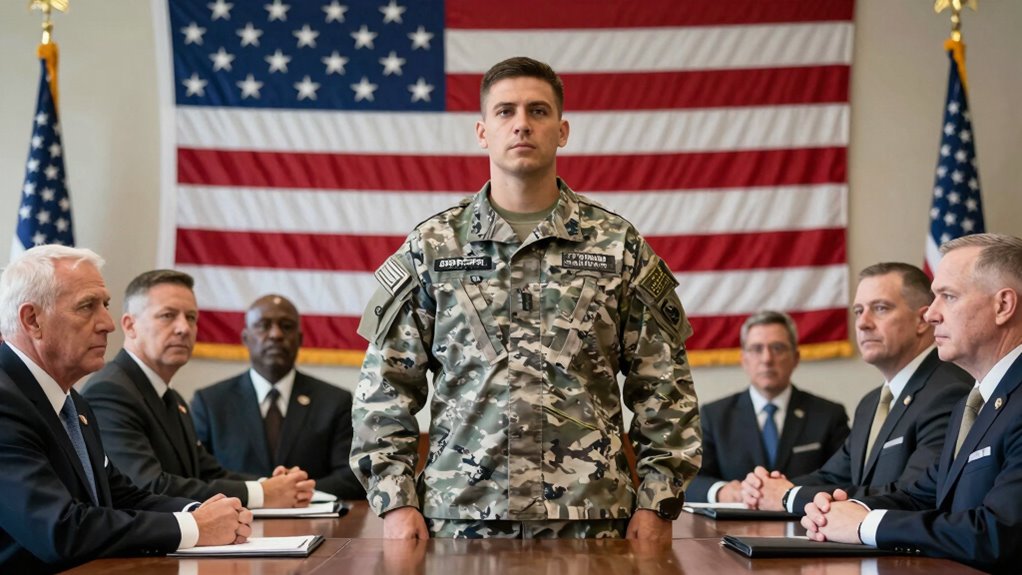
Your military training is especially relevant because it often involves exposure to loud noises, such as gunfire, artillery, or machinery, which can cause hearing damage over time. If you participated in training exercises that exposed you to high decibel levels, this information can support a claim that your hearing loss is service-related. It’s important to gather records of your training schedules, unit assignments, and any incident reports that document noise exposure. These records help establish a link between your service and your current hearing condition.
Document training exercises and noise exposure to strengthen your claim for service-related hearing loss.
In addition to noise exposure, your service record provides evidence of your duty periods, deployments, and the specific roles you held. This information can demonstrate the likelihood of noise hazards during your service. For Reserve and National Guard members, it’s essential to provide documentation showing your active duty periods, training events, and any combat or hazardous duty experiences. These details help the VA connect your hearing loss directly to your military service, which is indispensable for securing disability benefits. Accurate record-keeping can greatly strengthen your claim by providing comprehensive evidence of your service history.
The VA also considers whether you sought medical treatment during or after your service. If you reported hearing issues or underwent audiological testing while in service, this documentation bolsters your claim. Be sure to submit medical records, treatment notes, and any audiograms that indicate hearing loss. Such evidence helps prove that your disability is linked to your military service, increasing the chances of approval for disability benefits.
Furthermore, understanding how noise exposure during your service can lead to hearing loss emphasizes the importance of detailed record-keeping. Ultimately, your service record forms the backbone of your hearing claim. By thoroughly documenting your military training, noise exposure, and medical history, you provide the VA with clear evidence of your disability’s connection to service. This detailed record can make a significant difference in the success of your claim, ensuring you receive the disability benefits you deserve. Remember, the more complete and accurate your service documentation, the stronger your case will be when seeking benefits for hearing loss or related disabilities.

BBTO Banded Earplugs for Shooting Range Band Ear Plugs Lightweight Silicone Earplugs for Hearing Protection, Noise Reduction, Work, Construction, Sleeping, Concerts, Sports Racing(Orange,4 Pcs)
Safety material: made of quality silicone with plastic banded, this band earplug is soft and comfortable to wear,…
As an affiliate, we earn on qualifying purchases.
As an affiliate, we earn on qualifying purchases.
Frequently Asked Questions
How Does Active Duty Differ From Reserve Service Regarding Hearing Claims?
Active duty service often involves more consistent military training and noise exposure, which can lead to hearing issues. Reserve service, while less continuous, still includes training events and drills with noise exposure that may support hearing claims. Your claim depends on documenting exposure during both types of service. Whether you’re on active duty or reserve, it’s essential to provide detailed records of your military training and noise exposure to strengthen your case.
Can I Claim Hearing Loss if I Served Only in the National Guard?
Yes, you can claim hearing loss if you served only in the National Guard, especially if your military training involved significant noise exposure. The VA recognizes noise exposure during guard service as a valid basis for hearing loss claims. Be sure to document any incidents or periods of intense noise exposure, like firearm training or equipment use, to support your claim. Your service in the National Guard can qualify you for compensation.
What Documentation Is Needed to Prove Reserve Service for a Hearing Claim?
Imagine your service journey etched into your records—your medical records and service documentation. To prove reserve service for a hearing claim, you need those detailed medical records showing treatments or diagnoses, along with official service documentation like DD Form 214 or unit records. These documents serve as your proof, demonstrating your active or inactive reserve status during service, helping establish your eligibility for hearing loss benefits.
Are Reserve and Guard Members Eligible for VA Hearing Aid Benefits?
Yes, Reserve and Guard members are eligible for VA hearing aid benefits if their hearing loss is connected to military service. Your military training and hearing conservation efforts are considered during eligibility assessments. If your hearing issues are related to active duty or training, the VA can provide hearing aids to help improve your quality of life. Be sure to submit the necessary documentation to support your claim.
How Does Deployment Location Affect Hearing Loss Claims?
Deployment location acts like a double-edged sword for your hearing loss claim. If you’re in a noisy environment—like a combat zone or during military training—your noise exposure increases, making it easier to connect your hearing issues to service. Documenting specific locations and noise levels during deployment helps substantiate your claim. The more you can link your hearing loss to those loud, hazardous environments, the stronger your case becomes.

Decibel Meter, RISEPRO® Digital Sound Level Meter 30 – 130 dB Audio Noise Measure Device Backlight MAX/MIN, Data Hold Auto Power Off Dual Ranges HT-80A
USEFUL TOOL IN YOUR WORK & LIFE – This sound level meter is a great tool for checking,…
As an affiliate, we earn on qualifying purchases.
As an affiliate, we earn on qualifying purchases.
Conclusion
If you’ve served in the Reserve or National Guard, don’t overlook their potential support for your hearing claim. Your service can be a key piece of the puzzle, helping to shed light on your condition like a lighthouse guiding you through foggy waters. With proper documentation and understanding, you can turn your service into a powerful ally in your claim process. Remember, your service history is your story—make sure it speaks loud and clear.

Floriogra 2 Pack 34dB Noise Canceling Headphones For Shooting, Hearing Protection Earmuffs, Ear Protection Headphones, Thickened Headband Ear Muff For Noise Reduction for Shooting, Construction,Mowing
Efficient Hearing Protection: These noise canceling headphones are equipped with a double-layer sound-dampening foam and a composite housing…
As an affiliate, we earn on qualifying purchases.
As an affiliate, we earn on qualifying purchases.

Ahh Hah! Organizer Kit for Medical Records – Professionally Printed Tabs for USE in a Three Ring Binder
15 Professionally Pre-Printed Index Tabs (please view pictures)
As an affiliate, we earn on qualifying purchases.
As an affiliate, we earn on qualifying purchases.