

To prepare for a higher-level review of your hearing issues, gather all relevant medical records, audiology exams, and treatment history. Clearly describe how hearing difficulties impact your daily life, including work and social interactions. Collect statements from family, friends, or coworkers to support your claim. Organize your documents neatly and practice explaining your challenges confidently. Staying focused and prepared will strengthen your case, and if you continue, you’ll discover how to make your appeal even more effective.
Key Takeaways
- Gather and organize all medical records, audiology exams, and diagnoses related to hearing difficulties.
- Prepare detailed statements from yourself and supportive witnesses describing hearing impact on daily life.
- Research current hearing aid options and VA programs to demonstrate proactive engagement in solutions.
- Practice clear, direct explanations of how hearing issues affect work and social interactions.
- Stay organized, confident, and focused on specific benefits, emphasizing the need for a higher disability rating.
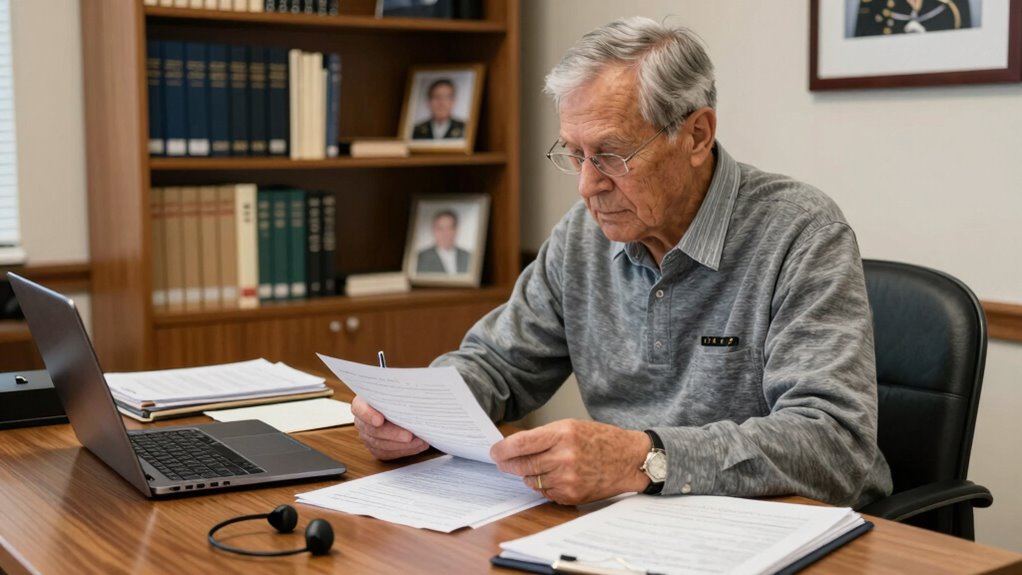
Are you ready to face your hearing review with confidence? Preparing for a higher-level review on hearing issues can feel overwhelming, but taking the right steps makes all the difference. As a veteran, understanding your options and being well-organized will help you present your case effectively. Veteran communication is a key aspect of this process, so it’s essential to clearly articulate how your hearing difficulties impact your daily life. Think about specific instances where your hearing has affected your ability to work, socialize, or perform routine tasks. Document these experiences to support your claim. The more detailed your account, the better your chances of a favorable review.
Equally important is being familiar with your hearing aid options. If you already use hearing aids, gather documentation about your device and how it has or hasn’t helped with your hearing challenges. If you’re considering hearing aids, research different models and features suited to your needs. During the review, showing that you’re actively exploring all available hearing solutions demonstrates your commitment to improving your quality of life. Be prepared to discuss your current hearing aids, including their effectiveness and any issues you’ve experienced. If you don’t have hearing aids yet, knowing what options are available to you through VA programs can help strengthen your case for assistance.
Gather all relevant medical records, including audiology exams, prior diagnoses, and treatment history. These documents support your claim by providing objective evidence of your hearing issues. Make copies and organize them neatly for easy reference during the review. Don’t forget to include any statements from family members, friends, or coworkers who have observed the impact of your hearing difficulties. Their testimonies can add credibility and context to your personal account. Additionally, understanding how biodiversity and conservation efforts impact overall health and well-being can reinforce the importance of supporting veterans’ health needs. Recognizing the connection between health and medical evidence can also strengthen your case, so be sure to include relevant health information. Furthermore, being aware of how veteran communication plays a role in effectively conveying your concerns can make a significant difference in your review. Developing your communication skills in advance can help ensure your message is understood clearly.
Practicing your explanation beforehand can boost your confidence. Be clear and direct about how your hearing loss affects your daily activities, and emphasize the need for support or equipment like hearing aids. Know the specific benefits you’re seeking, whether it’s a higher disability rating or access to specialized services. Being prepared to answer questions thoroughly and calmly will help you make your case convincingly.
Finally, approach the review with a positive attitude. Remember, this is your opportunity to advocate for yourself and ensure you receive the benefits you deserve. By staying organized, understanding your communication needs, and being knowledgeable about hearing aid options, you’ll be better equipped to navigate the process successfully. Confidence and preparation are your best tools for a successful hearing review.

OTC Hearing Aids for Seniors with Noise Cancelling, 100 Hours Battery Life
- Noise Cancelling Technology: Filters background noise for clear sound
- User-Friendly Operation: One-button control with five volume levels
- Long Battery Life: Up to 100 hours of use
As an affiliate, we earn on qualifying purchases.
As an affiliate, we earn on qualifying purchases.
Frequently Asked Questions
How Long Does a Higher-Level Review Typically Take?
A higher-level review usually takes about 3 to 5 months, but timelines can vary. To help speed up the process, you should meet appeal deadlines and submit strong medical evidence to support your case. Be sure to respond promptly to any requests from the VA. Staying organized and providing complete, updated medical proof can make the review go more smoothly and possibly shorten the wait.
Can I Submit New Evidence During the Review Process?
Yes, you can submit new evidence during the review process, but it’s like adding fuel to a fire—timing matters. Make certain your medical evidence or expert testimony arrives before the review concludes, ideally within the designated timeframe. Providing relevant medical evidence or expert testimony strengthens your case, so gather and submit compelling documentation early to maximize your chances of a favorable outcome.
Do I Need a Lawyer for the Hearing Review?
You don’t need a lawyer for a hearing review, but legal representation can be helpful if you’re unfamiliar with the process or want someone to advocate on your behalf. Proper review preparation involves understanding the evidence and issues, which a lawyer can assist with. Ultimately, it’s your choice—if you feel confident in handling the review yourself, you can proceed without legal help, but consider seeking advice if needed.
What Are Common Reasons for Claim Denial After Review?
Coincidences happen, but claim denials often stem from overlooked details. After review, common reasons include insufficient medical evidence or failure to demonstrate ongoing hearing issues. To strengthen your appeal, focus on solid appeal strategies and provide all-encompassing medical evidence that clearly links your hearing problems to your service. Be thorough, timely, and proactive—these steps can make all the difference in overcoming denial and securing the benefits you deserve.
How Can I Track the Progress of My Review?
You can track the progress of your Higher-Level Review by regularly checking the VA’s online portal or calling the VA directly. Keep an eye on your appeal deadlines to guarantee you don’t miss any important dates. The VA will update you with review outcomes, so staying proactive helps you stay informed. Make certain your contact information is current to receive all notifications promptly.
Conclusion
As you stand on the threshold of your higher-level review, remember it’s your lighthouse guiding your rightful benefits through the fog. Gather your evidence, stay steady like a seasoned captain, and navigate the process with confidence. Every document is a star in your constellation of proof, illuminating your case. With preparation as your compass, you’re poised to steer toward clarity and justice — your rightful treasure waiting just beyond the horizon.