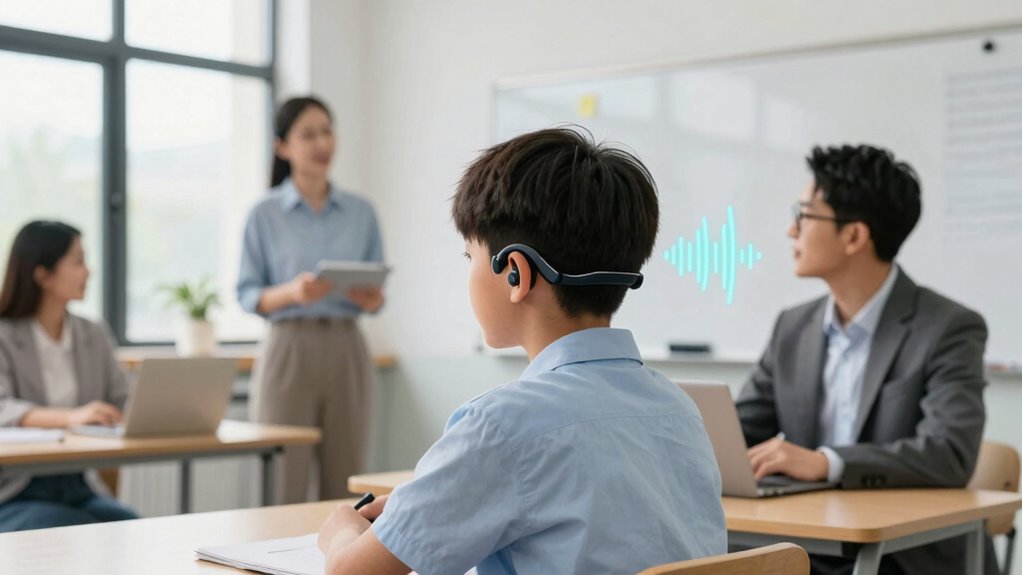

Hearing technology can greatly improve your communication at work and school by amplifying sounds and filtering out background noise. Devices like hearing aids or cochlear implants help you stay engaged and responsive during conversations or lectures. Creating an environment with sound-absorbing materials and strategic seating can boost clarity even further. Smart technology advances also make devices more discreet and adaptable to different settings. Keep exploring to discover how these innovations can make your daily interactions easier and more effective.

Get everyday helpers delivered free with Prime
- Fast, free delivery on millions of items
- Prime Video, Amazon Music and more included
- Member-only deals all year
Key Takeaways
- Assistive devices amplify and filter sounds to improve clarity in noisy work and school environments.
- Optimized room acoustics reduce echo and background noise, enhancing hearing effectiveness.
- Sound-absorbing materials create listener-friendly spaces, supporting better communication.
- Smart technology integration enables adaptive, seamless hearing experiences across different settings.
- Environment modifications and technology together promote inclusive, accessible communication for all users.

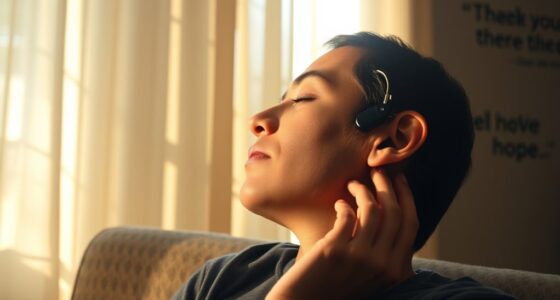
Have you ever wondered how technology is transforming the way people with hearing loss participate in work and school environments? One of the most notable advancements is the development of assistive devices that make communication clearer and more manageable. These devices, such as hearing aids, cochlear implants, and personal amplifiers, are designed to amplify sounds and filter out background noise, allowing you to focus on conversations or lectures. They work seamlessly with your existing hearing capabilities, providing a customized listening experience that adapts to different settings. Whether you’re in a noisy classroom or a busy office, assistive devices help you stay engaged and responsive, making it easier to follow along and contribute.
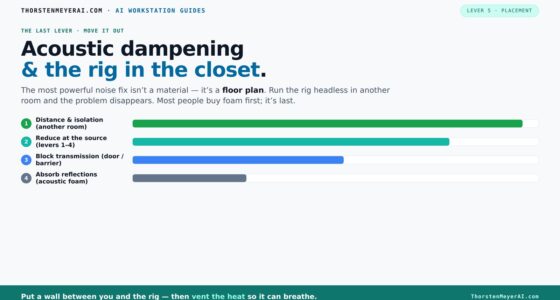
However, technology isn’t just about the devices you wear; it also involves optimizing acoustic environments. The way a room is set up can *considerably* affect how well you hear. For example, reducing echo and background noise can make a huge difference in clarity. Many workplaces and schools are now incorporating sound-absorbing materials, such as carpets, curtains, and acoustic panels, to create more listener-friendly spaces. These modifications help minimize distracting sounds, allowing your assistive devices to work more effectively. Additionally, strategic seating arrangements—such as sitting closer to the speaker or in a quieter corner—can enhance your listening experience. It’s about creating an environment where your assistive technology can perform at its best, so you don’t have to strain to catch every word. Incorporating sound-absorbing materials can significantly improve the overall acoustic quality of a space, making it easier for assistive devices to function optimally. Advances in smart technology have further enhanced how assistive devices function within diverse acoustic environments, providing more seamless and adaptive hearing experiences. Ongoing innovations in hearing technology are making these devices more discreet and user-friendly, further supporting effective communication in various settings.
hearing aids with noise filtering
As an affiliate, we earn on qualifying purchases.
As an affiliate, we earn on qualifying purchases.
Frequently Asked Questions
Can Hearing Technology Be Used for All Types of Hearing Loss?
Hearing technology can be adapted for many hearing loss types, but not all. For sensorineural loss, devices like cochlear implants work well, while conductive loss may require different solutions. Your hearing needs influence technology adaptability, so visiting an audiologist guarantees you get customized options. While most devices help a broad range of hearing loss types, some severe cases might need specialized interventions. Always consult a professional for the best fit.
How Discreet Are Modern Hearing Devices for Work and School?
Modern hearing devices are surprisingly discreet, blending seamlessly with your appearance thanks to their sleek, discreet design. You’ll hardly notice them, and neither will your coworkers or classmates, making everyday usability effortless. It’s ironic how something so small can have such a big impact—helping you hear better without drawing attention. Whether at work or school, these devices keep you focused, confident, and discreet, proving size really doesn’t matter.
Do Hearing Aids Require Special Maintenance or Charging?
Hearing aids do require regular maintenance, like hearing aid cleaning to keep them in proper condition, and battery replacement when the power runs out. Most modern devices have rechargeable batteries, so you can simply recharge them overnight. For non-rechargeable models, you’ll need to replace the batteries periodically. Regular cleaning and timely battery replacements ensure your hearing aids work efficiently, providing clear sound and comfort throughout your day.
Are There Financial Assistance Options for Hearing Technology?
Financial assistance options for hearing technology are available to help you bridge the gap. You might find insurance coverage that offsets costs, or explore government grants designed for hearing health. Think of these options as a safety net, catching you when expenses seem overwhelming. It’s worth researching specific programs in your area, and consulting your audiologist or insurance provider to discover what support you qualify for.
How Quickly Can Hearing Technology Be Adapted to New Environments?
Hearing technology can adapt quite quickly to new environments, often within minutes to hours. Your device uses environment adaptation features that automatically adjust settings based on your surroundings. With technology customization, you can personalize these adjustments for specific environments like work or school. This seamless adaptation helps guarantee clear sound quality and comfort, so you can focus on your tasks without constantly fiddling with your hearing aids.
Conclusion
So, with all this hearing tech, you’d think noise would be a thing of the past. Instead, you find yourself in a quiet room, desperately trying to hear your own thoughts over the buzzing of your hearing aids. Ironically, these devices meant to clarify sound sometimes make the simplest conversations feel like decoding secret messages. But hey, at least you’re trying — even if the world still feels just a little too loud or too quiet.
Fall Picks
fall essentials
As an affiliate, we earn on qualifying purchases.