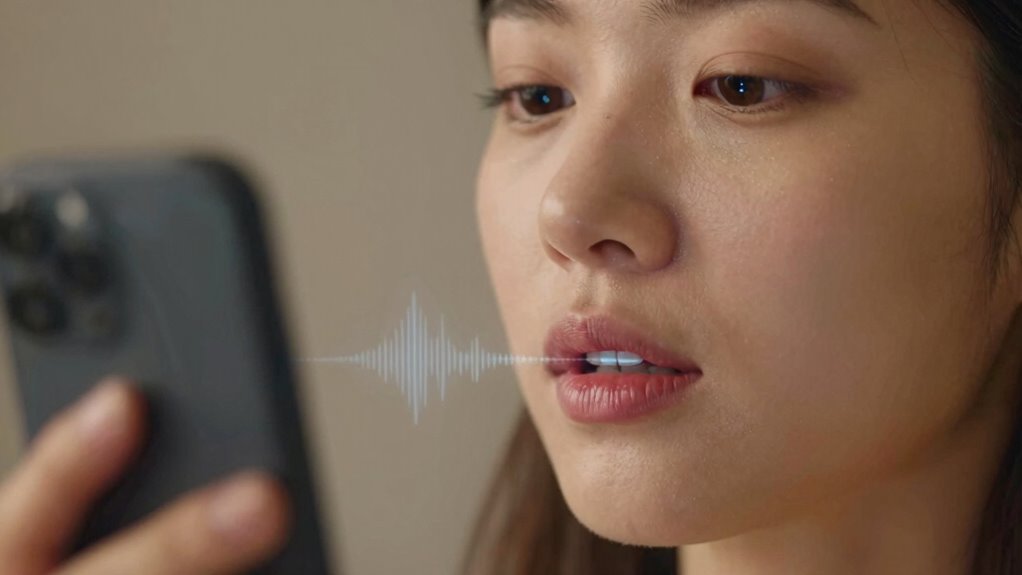

Low-latency audio helps you with lipreading and captions by syncing sound and visuals, so everything feels more natural and easier to understand. When audio is synchronized, you don’t get confusing delays that cause frustration or miscommunication. This makes it simpler to match what you see with what you hear, especially in noisy environments. Improved timing also benefits captioning, making transcripts more accurate and helpful. Keep exploring to discover how technology continues to enhance your communication experience.
Key Takeaways
- Low-latency audio ensures synchronized sound and lip movements, improving lipreading accuracy.
- It minimizes delays, making captions more aligned with spoken words for real-time understanding.
- Reduces cognitive load by providing immediate audio-visual cues, aiding comprehension in noisy environments.
- Enhances the clarity and fidelity of digital audio, supporting better communication for hearing-impaired individuals.
- Facilitates seamless integration of captions and audio, improving accessibility during conversations and media consumption.
In today’s fast-paced digital world, low-latency audio systems are essential for seamless communication, especially when combined with lipreading technology. When you’re trying to understand speech through lip movements, even a slight delay between audio and visual cues can cause confusion. That’s where audio synchronization becomes critical. By minimizing latency, the audio and visual signals arrive simultaneously, allowing your brain to process both streams as one cohesive message. This synchronization enhances speech intelligibility, making it easier for you to comprehend conversations without needing to strain or ask for repetitions.
Low-latency audio ensures synchronized sound and visuals for better understanding and natural communication.
Low-latency audio plays a vital role in improving the effectiveness of lipreading, particularly in noisy or complex environments. When the audio is delayed, your ability to match sounds to lip movements diminishes, leading to frustration and miscommunication. By reducing latency, systems ensure that sound and lip movements align perfectly, supporting your natural lipreading skills. This precise timing helps your brain decode speech more efficiently, especially for those with hearing impairments or relying heavily on visual cues. Additionally, advancements in audio processing technology have contributed to reducing latency and improving overall sound quality. A critical aspect of these improvements is the reduction of audio delay, which directly impacts how well visual and auditory cues are synchronized. Furthermore, understanding the importance of synchronization in digital communication emphasizes the significance of low-latency systems in creating a more accessible environment.
Moreover, low-latency audio enhances captioning systems by providing near real-time transcripts that match spoken words with minimal lag. When captions appear promptly alongside the speaker’s lips, it reinforces understanding and reduces cognitive load. You’re able to follow conversations more effortlessly, whether during meetings, video calls, or multimedia content. This immediate feedback loop between audio and text ensures that comprehension remains high, even in fast-paced exchanges.
In addition, advances in audio technology have optimized speech intelligibility in digital communications. Clear, synchronized audio helps eliminate distortions or echoes that can obscure words, allowing you to focus solely on the content. When audio quality is crisp and timely, you don’t have to work as hard to interpret what’s being said, which is especially beneficial for individuals with hearing difficulties or language learners. The combination of low latency and high audio quality creates an inclusive environment where understanding isn’t compromised by technical delays. Furthermore, ongoing innovations continue to refine these systems, making seamless communication more accessible to everyone.
Ultimately, investing in low-latency audio systems enhances your ability to lipread and comprehend speech with greater ease. It bridges the gap between spoken words and visual cues, ensuring that communication remains fluid and natural. By prioritizing audio synchronization and speech clarity, these technologies empower you to participate more fully in conversations, whether in person or through digital platforms. In a world where instant understanding is crucial, low-latency audio becomes an invaluable tool for clear, effective communication.
As an affiliate, we earn on qualifying purchases.
Frequently Asked Questions
How Does Low-Latency Audio Impact Hearing Aid Performance?
Low-latency audio greatly improves your hearing aid performance by reducing delays between sound input and output. This enhancement helps your hearing aid technology synchronize better with real-time sounds, making auditory processing more natural. You’ll notice clearer conversations and less confusion, especially in dynamic environments. Faster audio delivery guarantees you catch speech promptly, improving overall communication. This seamless experience allows you to engage confidently, knowing your hearing aids are optimized for accurate, timely sound perception.
Can Low-Latency Audio Improve Real-Time Communication in Noisy Environments?
Yes, low-latency audio can greatly improve real-time communication in noisy environments. By reducing delay, it helps you better distinguish speech from background noise, enhancing speech clarity. This means you can follow conversations more easily, even when surrounding noise is high. You’ll experience less frustration and miscommunication, making interactions smoother and more natural. Low-latency audio ensures that your listening experience remains clear and connected, no matter how loud the environment gets.
What Are the Technical Challenges in Achieving Ultra-Low Latency Audio?
Achieving ultra-low latency audio is a real piece of cake, right? The main challenges lie in digital synchronization and signal processing. You need precise timing to keep audio and video perfectly aligned, but digital delays and jitter disrupt this harmony. Signal processing must be lightning-fast, yet complex algorithms often introduce latency. Balancing speed and quality becomes a relentless quest, making ultra-low latency a technical marvel rather than a routine feat.
How Does Low-Latency Audio Influence the User Experience for Deaf-Blind Individuals?
Low-latency audio greatly enhances your experience by improving sensory integration, making communication more natural and immediate. For deaf-blind individuals, it means they can better synchronize sounds with tactile or visual cues, boosting accessibility design. This quick response reduces frustration, helps you stay engaged, and allows for smoother interactions, ultimately fostering independence and confidence in managing conversations or environments where timing is essential.
Are There Specific Devices Optimized for Low-Latency Audio and Lipreading Support?
Think of devices as the bridge between your ears and eyes, crafted for seamless speech synchronization. Many are specifically optimized for low-latency audio, ensuring your lipreading experience isn’t a choppy puzzle but a smooth flow. These devices prioritize compatibility, delivering real-time sound that aligns perfectly with visual cues. With such technology, you gain a clearer, more natural connection to conversations, making communication feel like a dance in perfect harmony.
Conclusion
By embracing low-latency audio, you can considerably improve lipreading accuracy and the effectiveness of captions, making communication clearer and more accessible. Did you know that even a delay of just 100 milliseconds can disrupt comprehension? This highlights how essential real-time audio is for those relying on visual cues. When technology minimizes lag, you create a more inclusive environment, ensuring everyone stays connected and understands each other seamlessly.