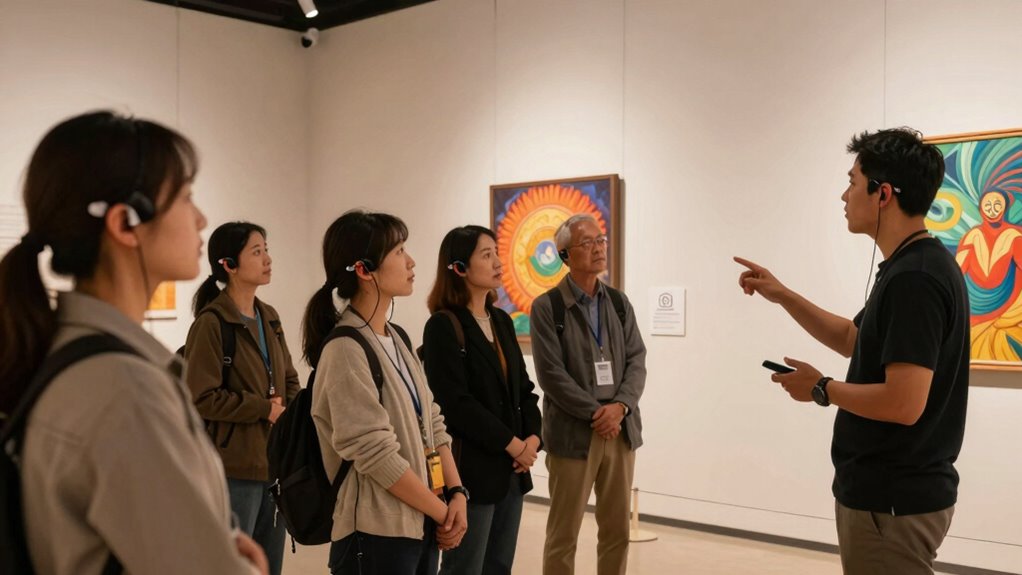

Guided tour systems enhance access for hard of hearing guests by offering real-time captions, sign language videos, and augmented reality features that deliver visual and multisensory information. These tools reduce dependence on spoken words, allowing you to follow along more easily and engage actively. They promote independence and confidence during your visit, making the experience more inclusive. If you want to discover how these innovations can transform your experience, keep exploring further.
Key Takeaways
- Augmented reality overlays provide real-time captions and sign language videos, making spoken content accessible without relying solely on audio.
- Interactive displays deliver visual descriptions and multimedia content, reducing dependence on auditory explanations.
- Digital tools enable visitors to explore information at their own pace, ensuring understanding regardless of hearing ability.
- Proper implementation and staff training ensure reliable access to assistive features during guided tours.
- Advancements in accessible technology make these systems more affordable and widespread, enhancing inclusivity for hard of hearing guests.
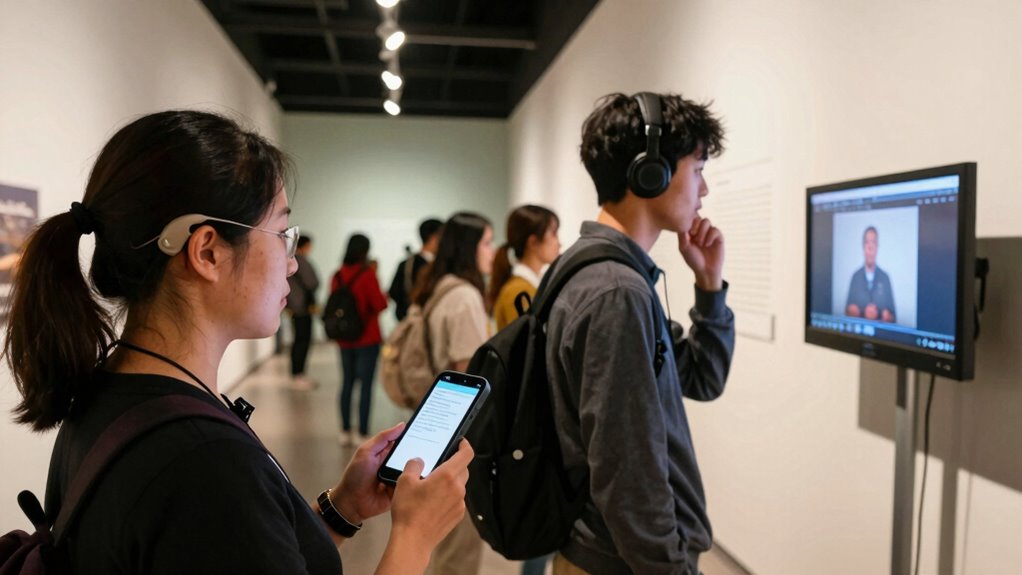
For many hard of hearing guests, traditional guided tours can feel inaccessible or isolating. You might find yourself missing key information or feeling disconnected from the experience. That’s where guided tour systems that utilize augmented reality and interactive displays come into play. These innovative tools transform the way you engage with a site, making the experience more inclusive and immersive. Augmented reality, in particular, overlays digital content onto the physical environment through smartphones or specialized devices, providing real-time captions, sign language videos, or visual explanations that you can access as you move through the tour. This technology guarantees you don’t have to rely solely on spoken commentary, which can often be difficult to hear or follow. Additionally, ensuring proper VR gear safety and maintenance is essential to keep these systems functioning effectively and safely throughout your experience. Proper training for staff on how to operate and troubleshoot these systems also plays a crucial role in ensuring a seamless experience for all participants. Moreover, the development of accessible technology continues to advance, making these tools more intuitive and user-friendly for diverse needs. Recognizing the importance of these advancements can help organizations better serve all visitors, especially those with hearing impairments. As these technologies evolve, they become more affordable and widespread, allowing more venues to implement accessible solutions.
Augmented reality enhances accessibility by overlaying digital content, providing real-time captions and sign language videos during tours.
Interactive displays further enhance accessibility by offering touchscreens or projection panels at key points within the tour. These displays present information visually, allowing you to explore exhibits at your own pace. For example, when approaching a historical artifact, you can tap on the display to see detailed descriptions, images, or videos that explain its significance. This immediate access to visual content minimizes misunderstandings and helps you stay engaged with the narrative. Plus, many systems are designed to be user-friendly, with clear icons and simple interfaces, so you’re not overwhelmed by complicated technology. Instead, you’re empowered to control what information you want to see and when.
Together, augmented reality and interactive displays create a dynamic, multisensory experience tailored to your needs. They bridge the gap that traditional tours sometimes leave unaddressed, allowing you to participate fully in the cultural or educational journey. Instead of feeling left behind or dependent on other guests’ interpretations, you gain independence and confidence as you navigate the tour. These systems also facilitate better communication with guides, who can provide supplementary content through digital means, ensuring that no detail is missed. You’re no longer limited by sound, and instead, you’re actively involved, making the experience more engaging and memorable. Incorporating assistive technology into these systems ensures a more comprehensive approach to accessibility, broadening participation for all visitors.
In essence, guided tour systems that incorporate augmented reality and interactive displays are changing the way hard of hearing guests experience new environments. They prioritize accessibility and interaction, transforming what might have been a passive observation into an active exploration. With these tools, you can enjoy a richer, more inclusive adventure—one that respects your needs and enhances your understanding of the world around you.
real-time captioning device for guided tours
As an affiliate, we earn on qualifying purchases.
As an affiliate, we earn on qualifying purchases.
Frequently Asked Questions
How Do Guided Tour Systems Accommodate Different Types of Hearing Impairments?
You’ll find that guided tour systems accommodate different hearing impairments through features like sign language integration, allowing deaf guests to follow along comfortably. Visual cue enhancements, such as subtitles and flashing lights, guarantee everyone stays engaged, regardless of hearing ability. These systems are designed to be flexible, providing clear, accessible communication that caters to diverse needs, making your experience inclusive and enjoyable for all guests.
Are Guided Tour Systems Compatible With Personal Hearing Aids?
They say, “The proof of the pudding is in the eating,” and guided tour systems are often compatible with personal hearing aids. You’ll find personalization options that tailor sound to your needs, enhancing your experience. Keep battery life considerations in mind, as some systems may require charging or replacement. Overall, many systems are designed to work seamlessly with personal hearing aids, making your visit more accessible and enjoyable.
What Is the Cost Difference Between Standard and Advanced Guided Tour Systems?
The cost difference between standard and advanced guided tour systems varies, primarily due to equipment costs and features. Standard systems typically start around a few hundred dollars, offering basic audio transmission. Advanced systems, with enhanced sound quality and extra features like noise-canceling microphones, can range from $1,000 to several thousand dollars. Tour system pricing depends on the equipment’s complexity, durability, and additional functionalities, impacting your overall investment.
How Do Guided Tour Systems Ensure Privacy During Audio Transmission?
Guided tour systems guarantee privacy during audio transmission through robust privacy protocols and audio encryption. You can trust that your communications stay secure, as the system encrypts audio signals, preventing unauthorized access. Additionally, privacy protocols regulate data handling and transmission, safeguarding your conversations. This combination guarantees that your audio remains confidential, allowing you to enjoy the tour without concerns about eavesdropping or data breaches.
Can Guided Tour Systems Be Customized for Specific Venue Layouts?
Yes, guided tour systems can be customized for specific venue layouts. You can adjust the system settings to optimize sound quality based on venue acoustics, ensuring clear audio for guests. Additionally, you can select durable equipment designed to withstand the environment’s conditions. Customization helps improve accessibility and enhances the overall visitor experience by tailoring the system to fit unique venue features and durability requirements.
Conclusion
By incorporating guided tour systems, you substantially enhance accessibility for hard of hearing guests, making cultural experiences more inclusive. These systems can boost visitor satisfaction and engagement, creating a welcoming environment for everyone. Did you know that nearly 15% of the world’s population has some form of hearing impairment? Implementing these systems not only benefits your visitors but also demonstrates your commitment to accessibility, ensuring no one misses out on the enriching stories and sights you offer.