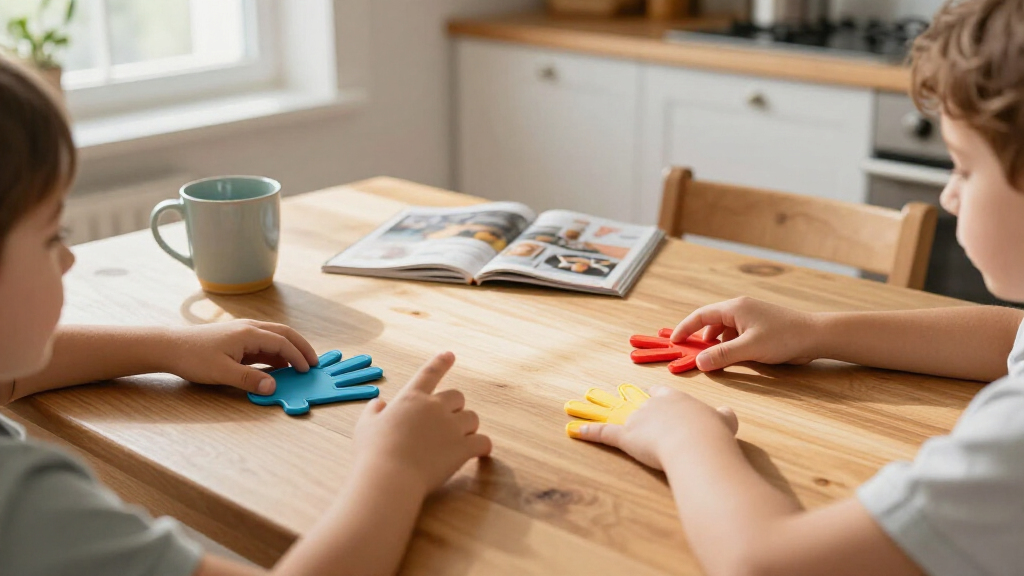

The best sign language learning toys make it easier to practice signs through play, shared reading, or quick visual reference. I’d put Uncle Goose American Sign Language Learning Blocks first for hands-on play, with The Very Hungry Caterpillar’s First Signs standing out for young children and Key Education ASL Flash Cards for structured card practice. The main tradeoff is between tactile, playful formats and larger reference sets that offer more signs but can feel less focused. Age, image clarity, and whether a child learns best by handling, reading, or matching materials matter as much as card count. Read on for the full breakdown of all 14 picks and how I’d match them to different learners.

Get everyday helpers delivered free with Prime
- Fast, free delivery on millions of items
- Prime Video, Amazon Music and more included
- Member-only deals all year
Key Takeaways
- Blocks and books serve different learning moments: Uncle Goose blocks support hands-on play, while The Very Hungry Caterpillar’s First Signs gives caregivers a shared-reading route into early vocabulary.
- More cards do not automatically mean better practice: the 500-card YIYDONG set offers breadth, while smaller themed or beginner sets may be easier to use in short sessions.
- Visual scale changes usability: Aizweb’s large 240-card format may suit group viewing, while compact card sets are easier to carry and sort.
- There are two distinct block options: Uncle Goose and Yousoontic both offer 28-piece alphabet blocks, so buyers should compare their design and intended play fit rather than treating them as different learning formats.
- Display and activity products fill a different role from flash cards: the Teacher Created Resources mat and YIYDONG poster set can keep signs visible, but they do not replace interactive practice or feedback.
| Uncle Goose American Sign Language Learning Blocks – 28 Piece Set |  | Best Tactile Learning Pick | Brand: Uncle Goose | Material: Basswood | Piece count: 28 blocks | VIEW LATEST PRICE | See Our Full Breakdown |
| Sign Language Flash Cards |  | Best for Guided Group Practice | Brand: Teacher Created Resources | Model number: EP62076 | Age range: 4 years and up | VIEW LATEST PRICE | See Our Full Breakdown |
| The Very Hungry Caterpillar’s First Signs: ASL That Babies & Toddlers Can Use |  | Best Character-Led First Introduction | Format: First-sign language resource | Featured character: The Very Hungry Caterpillar | Language: American Sign Language (ASL) | VIEW LATEST PRICE | See Our Full Breakdown |
| Teacher Created Resources Sign Language Learning Mat |  | Best Reusable Practice Surface | Brand: Teacher Created Resources | Model: TCR21029 | Dimensions: 17.25 x 11.13 x 0.06 inches | VIEW LATEST PRICE | See Our Full Breakdown |
| My First Book of Sign Language |  | Best Simple Book-Format Starter | Format: Book | Stated purpose: First introduction to sign language | Age range: Not provided | VIEW LATEST PRICE | See Our Full Breakdown |
| Iconoglyph American Sign Language Game Tiles |  | Best for Learning Through Play | Material: Wood | Included components: 100 ASL game tiles and 2 blank wild-card tiles | Recommended age: 8 years | VIEW LATEST PRICE | See Our Full Breakdown |
| Key Education American Sign Language Flash Cards for Kids, 160 Cards |  | Best for Early-Grade Sign Practice | Number of cards: 160 | Language: American Sign Language (ASL) | Intended grades: Preschool through 2nd grade | VIEW LATEST PRICE | See Our Full Breakdown |
| Yousoontic American Sign Language Alphabet Blocks, 28-Piece Set |  | Best for Tactile Alphabet Practice | Quantity: 28 blocks | Material: Wood | Block size: 1.75 inches (4.45 cm) per side | VIEW LATEST PRICE | See Our Full Breakdown |
| Carson Dellosa American Sign Language Flash Cards, 105 Cards with 122 ASL Signs |  | Best for Topic Variety | Card count: 105 double-sided cards | ASL signs: 122 | Age range: 4+ years | VIEW LATEST PRICE | See Our Full Breakdown |
| Aizweb Large American Sign Language Flash Cards for Beginners, 240 Cards |  | Best for Structured Home or Classroom Practice | Card count: 240 | Themes: 5 color-coded packs | Card size: 5.71 x 3.94 inches | VIEW LATEST PRICE | See Our Full Breakdown |
| ASL Kids Flash Cards: 200 American Sign Language Cards for Children and Beginners |  | Best for Broad Beginner Practice | Brand: Springtime Education | Card count: 200 double-sided cards | Card size: 3.75 x 5 inches | VIEW LATEST PRICE | See Our Full Breakdown |
| YIYDONG ASL Flash Cards, 500-Card American Sign Language Learning Set |  | Best for High-Volume Vocabulary Practice | Brand: YIYDONG | Card count: 500 | Pack format: 10 packs of 50 cards | VIEW LATEST PRICE | See Our Full Breakdown |
| YIYDONG 24-Piece Boho American Sign Language Poster Set for Kids |  | Best for Visual Room Displays | Quantity: 24 posters | Poster dimensions: 13 x 17 inches | Material: Paper with PET lamination | VIEW LATEST PRICE | See Our Full Breakdown |
| Antonietta My First ASL Family Kit: 48 American Sign Language Flash Cards for Kids |  | Best for Everyday Family Communication | Brand: Antonietta | Card count: 48 | Language: English | VIEW LATEST PRICE | See Our Full Breakdown |
| sign language learning toy | Material |
|---|---|
| Uncle Goose American Sign Lang | Basswood |
| Sign Language Flash Cards | Paper |
| The Very Hungry Caterpillar’s | — |
| Teacher Created Resources Sign | — |
| My First Book of Sign Language | — |
| Iconoglyph American Sign Langu | Wood |
| Key Education American Sign La | — |
| Yousoontic American Sign Langu | Wood |
| Carson Dellosa American Sign L | Glossy cardstock |
| Aizweb Large American Sign Lan | 350 gsm laminated cardstock |
| ASL Kids Flash Cards: 200 Amer | 300 gsm card with matte laminate |
| YIYDONG ASL Flash Cards | 350 gsm laminated cardstock |
| YIYDONG 24-Piece Boho American | Paper with PET lamination |
| Antonietta My First ASL Family | — |
More Details on Our Top Picks
Uncle Goose American Sign Language Learning Blocks – 28 Piece Set
Debossed hand signs give these blocks a tactile advantage over the flat images on Sign Language Flash Cards: children can trace the shapes while handling and stacking them. The set also pairs signs with lettering, so it can support early alphabet recognition alongside ASL practice. Made from Michigan basswood and sized at 1.75 inches, the cubes suit hands-on play for children aged two and up. Compared with the Teacher Created Resources Sign Language Learning Mat, these are easier to incorporate into open-ended play, but they offer less guided writing practice. The main tradeoff is scope: 28 blocks provide a focused introduction rather than broad vocabulary coverage. They also lack interactive audio or digital features, so an adult or other ASL resource may be needed to model signs accurately.
Pros:- Debossed signs invite children to trace hand shapes by touch.
- Combines ASL signs with lettering for added alphabet practice.
- Handcrafted from sustainable Michigan basswood.
- Designed for children aged 24 months and up.
Cons:- The 28-piece set provides less vocabulary breadth than larger card collections.
- No audio or digital guidance is included for modeling signs.
- The listed orange and blue color options may not suit every preference.
Best for: Families with toddlers who want a durable, hands-on introduction to ASL and alphabet recognition during play.
Not ideal for: Buyers seeking a large vocabulary set, guided lessons, or digital interaction; these 28 blocks offer a focused, manual learning experience.
- Brand:Uncle Goose
- Material:Basswood
- Piece count:28 blocks
- Block size:1.75 inches
- Item dimensions:7.3 x 7.2 x 3.6 inches
- Age range:24 months and up
- Model number:SGN28
Our verdict“Choose these blocks for tactile toddler play and skip them if your priority is broad ASL vocabulary or guided instruction.”
Sign Language Flash Cards
For a child ready to work with individual signs, these 56 double-sided cards provide a more structured activity than the play-led Uncle Goose American Sign Language Learning Blocks. Teacher instructions and activity ideas give adults a starting point for practice, while blank cards allow families or classrooms to add their own prompts. A punched hole and uniquely shaped corner help keep the deck together and make orientation easier during group activities. Compared with the Teacher Created Resources Sign Language Learning Mat, the cards are simpler to pass around and sort, but they do not offer a reusable surface for writing. The tradeoff is familiar to paper learning tools: frequent handling can wear the cards, and 56 cards are better suited to basic practice than an expansive vocabulary curriculum. The age guidance starts at four.
Pros:- 56 full-color, double-sided cards support focused practice.
- Teacher instructions and activity ideas help adults lead sessions.
- Blank cards allow users to create custom prompts.
- Ring hole and shaped corner help with storage and orientation.
Cons:- Paper cards may show wear with frequent classroom or family use.
- The set focuses on basic vocabulary rather than advanced or extensive coverage.
- Age guidance starts at four, making it less suited to very young toddlers.
Best for: Parents and educators of children aged four and up who want portable, structured ASL practice for one learner or a small group.
Not ideal for: Families seeking a toddler-first tactile toy, extensive vocabulary coverage, or a wipe-clean activity surface.
- Brand:Teacher Created Resources
- Model number:EP62076
- Age range:4 years and up
- Card count:56
- Card size:3⅛ x 5⅛ inches
- Material:Paper
- UPC:882319017692
Our verdict“Pick this deck for organized, shareable beginner practice, but choose a reusable mat or tactile blocks for a different learning style.”
The Very Hungry Caterpillar’s First Signs: ASL That Babies & Toddlers Can Use
Familiar character appeal is the defining strength here: this resource introduces ASL through The Very Hungry Caterpillar, which may give caregivers an easy starting point with babies and toddlers. That makes it a different kind of entry point from Uncle Goose American Sign Language Learning Blocks, which invites tactile play, and Sign Language Flash Cards, which are aimed at older children and more structured practice. The available details identify it as an ASL resource for young children, but do not specify format, page count, included signs, or interactive features. I would treat it as a gentle companion for shared early learning rather than a stand-alone curriculum or a broad vocabulary tool. Buyers who need a clearly described set of activities or a known sign count may prefer one of the better-documented options in this roundup.
Pros:- Designed specifically for babies and toddlers.
- Uses The Very Hungry Caterpillar as a familiar character connection.
- Focused on American Sign Language.
- Offers a different early-learning format from cards and blocks.
Cons:- Available details do not state how many signs are included.
- Format and activity features are not specified in the supplied product information.
- May be too introductory for children ready for structured vocabulary practice.
Best for: Caregivers of babies and toddlers who want a character-linked way to begin sharing ASL concepts.
Not ideal for: Buyers who need a specified vocabulary list, hands-on blocks, flash-card activities, or detailed product information before choosing.
- Format:First-sign language resource
- Featured character:The Very Hungry Caterpillar
- Language:American Sign Language (ASL)
- Intended audience:Babies and toddlers
- ASIN:0593890205
- Product title:The Very Hungry Caterpillar’s First Signs: ASL That Babies & Toddlers Can Use
Our verdict“Choose this for a character-led first ASL introduction for a very young child, not for a defined or extensive learning program.”
Teacher Created Resources Sign Language Learning Mat
The double-sided write-on/wipe-off surface makes this mat the most reusable practice option in this group. It suits children who benefit from tracing or repeating activities, while Sign Language Flash Cards are better for sorting and quick recall and the Uncle Goose blocks favor tactile play. At 17.25 x 11.13 inches and just over three ounces, the mat is easy to carry between home and other learning settings. Its main limitation is tool compatibility: it requires dry-erase crayons, which are not included, and ordinary crayons, markers, and dry-erase markers are listed as unsuitable. That extra supply requirement can interrupt an activity if the right materials are not already on hand. Cleaning is straightforward, but this is a practice surface rather than a self-guided sign reference.
Pros:- Double-sided surface supports repeated activities.
- Can be wiped clean and reused.
- Portable size and low weight suit home or travel use.
- BPA-free construction with rounded corners.
Cons:- Dry-erase crayons are not included.
- Ordinary crayons, markers, and dry-erase markers are not suitable.
- A mat offers less card-by-card reference and sorting practice than the flash-card set.
Best for: Families and educators who want a portable, reusable surface for repeated sign-language practice with dry-erase crayons.
Not ideal for: Buyers who want a complete ready-to-use kit, a tactile toy, or a self-guided reference deck without sourcing compatible crayons.
- Brand:Teacher Created Resources
- Model:TCR21029
- Dimensions:17.25 x 11.13 x 0.06 inches
- Weight:3.04 ounces
- Surface:Double-sided write-on/wipe-off
- Compatible writing tools:Dry-erase crayons
- Cleaning:Cloth or paper towel; soap and warm water with a non-abrasive sponge
- Features:BPA-free with rounded corners
Our verdict“Choose the mat for repeatable, portable practice if you have compatible dry-erase crayons; otherwise, the cards are a more ready-to-use option.”
My First Book of Sign Language
Book format gives this pick a straightforward role for families who would rather share a sign-language introduction together than manage loose cards or blocks. The available product information only identifies it as a first book introducing sign language, so I cannot confirm its vocabulary, age range, illustrations, or whether it specifically teaches ASL. That uncertainty matters when comparing it with The Very Hungry Caterpillar’s First Signs, which is explicitly described as ASL for babies and toddlers, or the Sign Language Flash Cards, which list their count and target age. This book may suit a buyer seeking a simple starting point, but the sparse details make it difficult to judge how much practice or guidance it provides. I would not choose it as the sole resource when a defined set of signs is a priority.
Pros:- Book format offers a simple shared-reading entry point.
- Presented as an introductory sign-language resource.
- Does not require cards, blocks, or compatible writing tools.
- Can complement more specified ASL materials such as the flash cards or learning blocks.
Cons:- The supplied information does not confirm whether it teaches ASL specifically.
- No age range, sign count, or activity details are provided.
- Its learning scope is hard to compare with the better-documented products in this roundup.
Best for: Families looking for a book-format introduction to sign language and willing to check the edition or contents before buying.
Not ideal for: Buyers who require confirmed ASL coverage, a stated age range, known vocabulary, or interactive practice features.
- Format:Book
- Stated purpose:First introduction to sign language
- Age range:Not provided
- Language variety:Not specified in supplied product details
- Vocabulary count:Not provided
- ASIN:0439635829
Our verdict“Consider this book as a basic shared introduction only if its contents meet your needs, and choose a more fully specified ASL resource for structured learning.”
Iconoglyph American Sign Language Game Tiles
Iconoglyph’s wooden tiles turn ASL alphabet practice into a game-like activity rather than a card-drilling session. The set has 100 numbered tiles and two blank wild cards, so learners can handle and arrange signs while practicing; it can also be used for crafts or display. Compared with the Yousoontic American Sign Language Alphabet Blocks, these tiles are smaller and designed to work with standard game boards, rather than offering larger blocks with recessed letters to trace. The tradeoff is that no board is included, and the listing identifies one player, so families wanting a ready-made group game may need another activity or extra components. I’d choose this for learners who enjoy tile games and tactile alphabet practice, not as a broad vocabulary resource.
Pros:- Provides 100 ASL alphabet tiles plus two blank wild cards
- Wooden tiles give learners a hands-on alternative to flash cards
- Compatible with standard game boards
- Can also be used for crafts or display
Cons:- Game board is not included
- Listed for one player, limiting its ready-to-play group use
- Alphabet-focused tiles offer less vocabulary breadth than the Carson Dellosa flash cards
Best for: ASL beginners aged eight and up who enjoy tabletop activities and want a tactile way to practice the alphabet at home or in class
Not ideal for: Families seeking a complete multiplayer game or lessons covering everyday ASL vocabulary, since the board is not included and the set focuses on alphabet tiles
- Material:Wood
- Included components:100 ASL game tiles and 2 blank wild-card tiles
- Recommended age:8 years
- Number of players:1
- Educational objective:Teach and reinforce American Sign Language
- Compatibility:Standard game boards
- Game board:Not included
- Item dimensions:0.71 x 0.16 x 0.79 inches
Our verdict“Choose Iconoglyph for tactile, game-based ASL alphabet practice if you already have a compatible board or another way to play.”
Key Education American Sign Language Flash Cards for Kids, 160 Cards
Key Education’s 160 illustrated cards are aimed at preschool through second grade, making this a straightforward pick for young learners who benefit from seeing a sign represented visually. Compared with the Carson Dellosa American Sign Language Flash Cards, the provided details emphasize a larger card count and a younger-school focus, while Carson Dellosa specifies 122 signs across topics such as animals, feelings, and everyday words. Key Education’s description does not identify its vocabulary range, activity prompts, card dimensions, or storage method, so I can’t judge how varied or easy to organize the set will be. That makes it a sensible fit for basic guided practice, but a less transparent choice for buyers seeking a defined curriculum or a clearly documented spread of vocabulary. Its value rests on age targeting and signing illustrations, not stated extras.
Pros:- Includes 160 cards
- Designed for preschool through second grade
- Signing illustrations support visual learning
- Flash-card format is easy to use for short practice sessions
Cons:- The supplied product details do not state how many distinct signs are covered
- No activity guide or storage accessories are specified
- Offers less documented topic breadth than the Carson Dellosa set
Best for: Parents and early-grade teachers looking for illustrated ASL practice cards suited to preschool through second grade
Not ideal for: Buyers who want a specified vocabulary list, activity instructions, or detailed card and storage information before choosing a set
- Number of cards:160
- Language:American Sign Language (ASL)
- Intended grades:Preschool through 2nd grade
- Format:Flash cards with signing illustrations
- Product type:Educational ASL flash cards
- Sign presentation:Illustrations showing signs
Our verdict“Pick Key Education for age-targeted illustrated card practice, but choose a set with a stated sign list if vocabulary coverage matters most.”
Yousoontic American Sign Language Alphabet Blocks, 28-Piece Set
Yousoontic’s 28 wooden blocks pair sign-language patterns with recessed letters, giving children two surfaces to explore: the visual sign and a letter they can trace. Each block measures about 1.75 inches per side, a practical size for small hands and portable practice. Compared with Iconoglyph’s ASL Game Tiles, these are larger, easier to grip, and tactile in a different way; Iconoglyph is better suited to tile-based play with a compatible board. The main limitation is the set’s 28-block count, which may not map neatly to the full English alphabet despite the description’s alphabet coverage language. It also teaches alphabet associations rather than the wider everyday vocabulary found in Carson Dellosa’s cards. I’d favor these for hands-on letter recognition, not as a standalone ASL course.
Pros:- Recessed letters invite tactile tracing alongside visual sign practice
- Wooden blocks are easy to grip
- Compact 1.75-inch size supports portable use
- Combines ASL patterns with letter recognition
Cons:- The 28-piece count may not correspond neatly to the full English alphabet
- Alphabet-centered practice covers less vocabulary than the Carson Dellosa flash cards
- The product details do not specify an activity guide or additional learning materials
Best for: Families with children aged six and up who want portable wooden pieces for tracing letters and practicing ASL alphabet patterns
Not ideal for: Learners seeking broad conversational vocabulary or buyers who need a clearly complete, one-block-per-letter alphabet set
- Quantity:28 blocks
- Material:Wood
- Block size:1.75 inches (4.45 cm) per side
- Design:Sign language patterns with recessed letters
- Recommended age:6 years and up
- Included components:28 wooden alphabet blocks
Our verdict“Choose Yousoontic for portable, tactile ASL alphabet practice, but verify the block coverage if you need a complete alphabet set.”
Carson Dellosa American Sign Language Flash Cards, 105 Cards with 122 ASL Signs
Carson Dellosa’s 105 double-sided cards cover 122 signs, spanning the alphabet, numbers, people, animals, feelings, and everyday words. That stated range makes this a more clearly mapped vocabulary set than the Key Education 160-card pack, whose supplied details do not specify the signs covered. Colorful illustrations and printed words support matching each image to its meaning, while the included resource card adds activities for home or classroom practice. At 3 x 5.9 inches, the cards provide a substantial viewing area but take up more room than a compact deck. The set is designed mainly for beginners, so it is not a progression into advanced ASL or a substitute for learning how signs move in real conversation. I’d choose it when breadth across basic topics matters more than portability or hands-on blocks.
Pros:- Covers 122 signs across a range of everyday topics
- Double-sided cards pair illustrations with words
- Resource card includes games and activities
- Rounded corners make cards easier to sort and flip
Cons:- Primarily intended for beginners and basic ASL practice
- Card dimensions are larger than a compact flash-card format
- No manufacturer warranty is specified
Best for: Parents and preschool or classroom educators who want a defined starter vocabulary across everyday topics and simple practice activities
Not ideal for: Learners past beginner material or families who need a small, pocketable set for carrying around
- Card count:105 double-sided cards
- ASL signs:122
- Age range:4+ years
- Card dimensions:3 x 5.9 inches
- Material:Glossy cardstock
- Included components:Flash cards and resource card
- Recommended setting:Preschool, classroom, or home
Our verdict“Choose Carson Dellosa for well-defined beginner vocabulary and activity prompts, especially when topic range matters more than compact size.”
Aizweb Large American Sign Language Flash Cards for Beginners, 240 Cards
Aizweb’s 240 large cards offer the most detailed practice format in this group: five color-coded packs cover practical themes, and the visual guides include written directions for handshape, location, and movement. That added instruction may help a beginner study how a sign is formed, rather than simply match a picture to a word. Compared with Carson Dellosa’s 105-card set, Aizweb provides more cards and wipe-clean laminated stock, while Carson Dellosa has a clearly stated count of 122 signs and an activity resource card. Aizweb’s cards are 5.71 x 3.94 inches, so they are easier to read during guided sessions but less convenient to carry than a compact deck. The quantity also doesn’t establish how many distinct signs are included. This is a better fit for organized practice than quick on-the-go drills.
Pros:- 240 cards are divided into five color-coded themed packs
- Written cues cover handshape, location, and movement
- Laminated cards are described as wipe-clean and tear-resistant
- Binder rings and a storage box help organize the set
Cons:- Large card format is less convenient to carry than compact flash cards
- The supplied details do not state how many distinct signs the 240 cards cover
- More pieces and accessories may take up extra storage space
Best for: Families and teachers who want large, organized beginner cards with written formation cues for repeated practice at home or in class
Not ideal for: Buyers seeking a compact travel deck or a clearly stated count of distinct signs covered
- Card count:240
- Themes:5 color-coded packs
- Card size:5.71 x 3.94 inches
- Material:350 gsm laminated cardstock
- Included accessories:5 metal binder rings and storage box
- Language:English
- Recommended age:3 years and up
- Manufacturer part number:ASL-01
Our verdict“Pick Aizweb for organized, reusable practice with formation cues, but choose a smaller or more precisely documented deck for travel or sign-count clarity.”
ASL Kids Flash Cards: 200 American Sign Language Cards for Children and Beginners
For families or teachers who want more than an alphabet introduction, these 200 double-sided cards span practical categories including numbers, emotions, animals, colors, and greetings. Illustrations paired with signing instructions give learners a visual prompt and a guide for practice, while color-coded tabs and memory hints help sort the material into manageable sessions. Compared with the smaller Antonietta My First ASL Family Kit, this set offers much wider vocabulary coverage, but that extra breadth can feel like too much for a young child just starting out. Four packs of 50 provide a way to break up the set, though the listing does not describe a progression or lesson plan. I’d choose it for guided, repeatable card practice—not as a substitute for instruction in ASL grammar or conversation.
Pros:- Covers a wide range of everyday vocabulary and learning topics
- Double-sided cards pair illustrations with signing instructions
- Color-coded tabs and memory hints support sorting and recall
- Four packs of 50 make the large collection easier to divide into sessions
Cons:- The 200-card volume may overwhelm beginners without adult-led selection
- Cards provide vocabulary practice rather than a stated structured ASL curriculum
Best for: Parents, preschool teachers, or tutors who want a broad set of illustrated ASL vocabulary cards and can guide practice in smaller groups.
Not ideal for: Families seeking a very small first set for a toddler; 200 cards may be more material than they can use at once.
- Brand:Springtime Education
- Card count:200 double-sided cards
- Card size:3.75 x 5 inches
- Material:300 gsm card with matte laminate
- Age recommendation:3 years and up
- Organization:4 packs of 50 cards with color-coded tabs
- Learning topics:Alphabet, numbers, people, animals, emotions, seasons, colors, and greetings
Our verdict“Choose this set for guided beginner practice across many topics; pick the Antonietta kit instead if you want a smaller, family-routine-focused introduction.”
YIYDONG ASL Flash Cards, 500-Card American Sign Language Learning Set
This is the broadest card-based option in this group: 500 cards across 10 color-coded packs cover foundational subjects and everyday vocabulary, with self-checking answers for independent review. The included rings and storage box offer more organization than the 200-card Springtime Education set, making it easier to keep selected packs together or take a portion of the collection to class. The tradeoff is scale: at 3.7 pounds, this is a substantial kit rather than a light starter deck. The description also does not say whether signs are shown through illustrations, photographs, or another format, so buyers who need a specific visual teaching style should verify that before choosing it. I’d favor this for adults or educators who will sort the cards into focused practice sets, not families looking for a simple first exposure.
Pros:- 500 cards cover a wide range of practical vocabulary and themes
- Ten color-coded packs support sorting and focused practice
- Self-checking answers can support independent review
- Storage box and 10 metal rings help organize selected cards
Cons:- The 500-card set and 3.7-pound weight make it bulky to store or carry
- The description does not specify whether signs use illustrations, photographs, or both
- The large collection may be difficult for beginners to work through without adult selection
Best for: ASL teachers, tutors, and families who want a large vocabulary bank that can be divided into focused practice packs.
Not ideal for: Buyers who need a compact beginner deck or want confirmation that signs are demonstrated with a particular kind of visual.
- Brand:YIYDONG
- Card count:500
- Pack format:10 packs of 50 cards
- Card dimensions:4.3 x 2.8 inches
- Material:350 gsm laminated cardstock
- Included components:10 metal rings and a storage box
- Recommended age:12 months and up
- Item weight:3.7 pounds
Our verdict“Pick this for maximum card-based vocabulary and organized practice; choose the smaller Springtime Education set if you want a less imposing starting collection.”
YIYDONG 24-Piece Boho American Sign Language Poster Set for Kids
Unlike the flash-card sets in this roundup, these 24 wall posters keep ASL references visible in a room, so learners can revisit topics without taking out a deck. Each 13-by-17-inch sheet covers material such as the alphabet, numbers, colors, and everyday themes; the double-sided PET lamination also allows reuse with erasable water-based dry-erase markers. That makes this a better fit for a classroom, tutoring space, or dedicated learning corner than for a family that wants portable, hands-on practice. Compared with the Antonietta family kit, the posters offer broader display coverage but less of a compact, routine-oriented format. They arrive unframed and need wall space, and a displayed reference is not the same as instruction or feedback on signing. I’d choose them as a visual prompt to support practice, not as a stand-alone learning program.
Pros:- Twenty-four posters cover a broad range of ASL topics
- Double-sided lamination is designed for water and tear resistance
- Can be reused with erasable water-based dry-erase markers
- Suitable for home, classroom, and tutoring displays
Cons:- Posters are unframed, so display may require extra materials
- The full set needs wall or display space
- Wall references do not provide the portability or card-by-card practice of flash-card sets
Best for: Teachers, tutors, or families with a learning area who want persistent visual ASL references and reusable poster surfaces.
Not ideal for: Buyers short on wall space or looking for portable cards and guided, interactive practice.
- Quantity:24 posters
- Poster dimensions:13 x 17 inches
- Material:Paper with PET lamination
- Finish:Glossy
- Color and style:Boho rainbow
- Orientation:Portrait
- Frame:Unframed
- Mounting type:Wall mount
Our verdict“Choose this set to keep ASL references visible in a learning space; choose the Antonietta cards if you need compact practice centered on family routines.”
Antonietta My First ASL Family Kit: 48 American Sign Language Flash Cards for Kids
With just 48 cards focused on routines, emotions, needs, and common interactions, this kit keeps the learning goal close to daily family life: practicing signs that can support communication at home. Its small scope is a strength for families introducing ASL to young children, since it asks less of a beginner than the 200-card Springtime Education set or YIYDONG’s 500-card collection. The tradeoff is limited breadth; this is an introductory tool, not a wide-ranging vocabulary resource or a described course in ASL. It is listed for ages 12 months to 5 years and for home, preschool, or therapy settings, which makes it a fit for repeated adult-child practice. I’d choose it when usable everyday signs matter more than a large topic list, and skip it if the goal is a substantial classroom reference.
Pros:- Focuses on signs for routines, emotions, needs, and common interactions
- Small 48-card set is approachable for early learners
- Designed for repeated practice with families
- Suitable for home, preschool, and therapy settings
Cons:- Limited to basic everyday vocabulary rather than broad topic coverage
- The product details do not specify card dimensions or material
- Offers less range for extended study than the Springtime Education and YIYDONG card sets
Best for: Families with babies or preschoolers who want a small set of practical signs to practice during everyday routines.
Not ideal for: Teachers or learners seeking broad vocabulary coverage, a large classroom deck, or comprehensive ASL instruction.
- Brand:Antonietta
- Card count:48
- Language:English
- Age range:12 months–5 years
- Recommended setting:Preschool
- Educational objectives:Language development, communication skills, early learning, and cognitive skills
- Included components:48 ASL flash cards for kids
- Set name:My First ASL Family Kit
Our verdict“Choose this for a young child’s first family-focused signs; select a larger flash-card set when vocabulary breadth is the priority.”
How We Picked
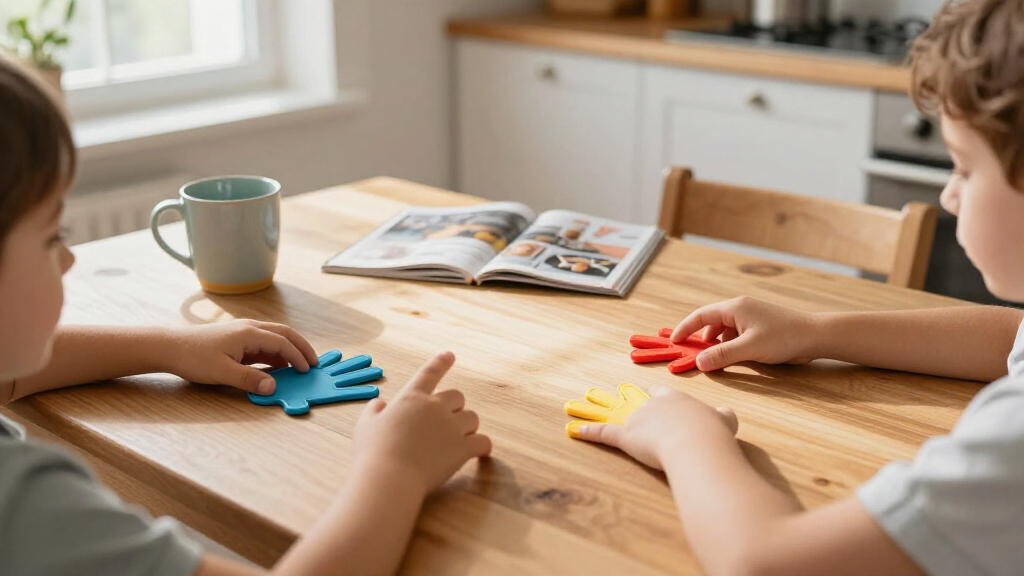
I compared these 14 options by how directly they support learning and practicing signs, rather than by quantity alone. I looked at format, age fit, ease of use, visual access, portability, and whether the materials invite repeated interaction. A toy or book can make practice approachable, while a large card collection can provide breadth; neither works equally well for every household.
The ranking gives priority to useful learning routines and clear buyer fit. Uncle Goose leads for its tactile play format, while focused books, manageable flash-card sets, and beginner kits rank well for learners who need a clearer starting point. Larger sets remain useful for families seeking wider vocabulary, but their size earns value only if buyers can organize and use the cards. Posters and mats are ranked as visual supports, not substitutes for practice. Product descriptions provide a basis for comparison; I do not treat them as proof of instructional accuracy or classroom performance.
Factors to Consider When Choosing Sign Language Learning Toys
Before choosing among sign language learning toys, decide how the learner will encounter signs during an ordinary day. The format should fit the child’s attention span, the adult’s ability to practice alongside them, and the purpose for learning. These broader checks can prevent a large or appealing set from ending up unused.
Choose a format that fits the learning routine
Start with when you expect to practice: during play, reading, travel, or a planned lesson. Blocks and tiles can prompt hands-on exploration, while books create a natural cue to look at signs together. Flash cards are more flexible for drills and matching, but they need someone to guide the activity. A mat or poster keeps visual prompts in a room, though a display alone does not create practice. A common mistake is buying the format an adult prefers rather than one a child will return to. Pick one primary format first, then add another only if it serves a different routine.
Match vocabulary breadth to the learner’s next step
A large sign collection can be appealing, but its size is useful only when the learner can work through it in manageable groups. Beginners often benefit from a small, relevant set they can revisit, while a teacher or family already practicing ASL may want wider vocabulary. Check whether the set has a clear organizing approach, such as themes, alphabet, or everyday words. Without one, sorting cards and finding a sign again can take more effort than the activity itself. Avoid assuming that a high card count means deeper instruction or a complete course. Choose breadth to support a learning plan, not as a substitute for one.
Check how clearly signs can be seen
Sign learning depends on visual details, so inspect the product images and descriptions for how the handshape and movement are shown. A single still image may be easier to scan, but it can leave motion unclear; a sequence or demonstration may communicate more. Larger cards can help when several people are viewing together, while compact cards suit bags and small tables. Make sure illustrations are not crowded by decorative elements or small labels. For a young learner, a caregiver may need to model the movement alongside the printed reference. If the product listing does not show enough detail to judge clarity, do not infer instructional quality from its title alone.
Treat age fit as a question of supervision and use
Age suitability is not just a label: it affects whether the learner can handle the pieces, follow the activity, and use the material safely. Blocks may invite open-ended play but can require adult participation to connect play with signs. Books may work well for shared attention, while card sets can be adapted to a learner’s pace. Think about whether small pieces could be a concern in your home and check the maker’s guidance before buying. Another common error is expecting a toy to teach independently; many children learn more when an adult signs along and repeats the words in context. Choose a resource that fits the support you can provide.
Look beyond the package count to organization and upkeep
Before choosing a set, consider how its pieces will be stored, sorted, and brought back out. A high-volume card collection needs a practical way to keep categories together; loose pieces can make short practice sessions harder to start. Blocks and tiles are easier to reuse as play materials, but they still need a place where pieces will not get lost. Posters and mats need visible wall or floor space and may be less convenient to move between rooms. Check product details for materials and care guidance rather than assuming every item can be wiped clean or used outdoors. The easiest set to maintain is often the one a family uses most consistently.
Know when to add a book, card set, or learning support
A toy can encourage interest, but it should not be mistaken for a full ASL curriculum or a replacement for interaction with fluent signers. If your goal is communication at home, prioritize a resource that helps caregivers practice alongside the child. If the goal is classroom exposure, choose materials that can be seen and shared by a group. Pairing a book with a small card set may be more useful than buying several overlapping decks. For detailed instruction, seek learning materials or teachers that explain movement and usage in context. Paying for extra pieces makes sense when they expand a real routine, not simply when they make a box look more complete.
Frequently Asked Questions
Are flash cards or blocks better for a child who is just starting ASL?
It depends on how the child engages: blocks invite play and handling, while cards make it easier to focus on one sign at a time. For a child who enjoys building, blocks can create a low-pressure way to revisit signs with an adult. Cards are a better fit when you want to sort vocabulary or repeat a small group of signs. Neither format teaches movement fully through a static picture, so demonstrate signs and practice together. If you are uncertain, choose the format that fits an existing play or learning routine.
Should I choose a 500-card set over a smaller beginner deck?
Choose the larger set if you already have a plan for organizing and introducing vocabulary over time. A broad collection can support ongoing practice, but sorting and choosing cards may overwhelm a new learner or caregiver. A smaller deck makes it easier to repeat a focused group of useful signs and notice progress. Check what the cards cover, how they are arranged, and whether the visuals suit your needs rather than relying on the total count. You can always add a broader set later when the learner is ready for more variety.
Can a sign language toy teach my child ASL without an adult?
These products can prompt interest and provide visual references, but they should not be treated as stand-alone instruction. Printed materials may not show movement or context clearly, and children often benefit from seeing signs modeled in conversation. An adult can practice alongside the child, repeat signs during daily routines, and check a trusted learning source when a sign is unclear. For sustained learning, consider classes or instruction from fluent signers. A toy works best as a practice aid, not as a substitute for interaction.
What should I check before buying ASL materials for a classroom or group?
For a group, prioritize visual access, ease of sharing, and a format that supports participation rather than quiet reference alone. Large cards, a mat, or a poster may be easier for several learners to view, while small pieces can work well at stations. Check whether the images are clear from a distance and whether the materials can be organized between activities. Ask how the resource will fit your lesson plan and whether it represents the signs in a way you can verify. A classroom resource should support guided practice, not carry the entire lesson.
Are alphabet blocks enough if I want to teach everyday signs?
Alphabet blocks focus attention on letters and hands-on play, so they are not the same as a broad set of everyday vocabulary. They may suit a learner interested in letters or a family looking for a tactile introduction, but they will not cover every communication goal. Pair them with a book or carefully chosen cards if you want to practice signs for routines, people, or common needs. Check the product details to confirm what the blocks actually represent before buying. For broader communication, choose materials that match the signs you plan to use day to day.
Conclusion
For the most versatile hands-on choice, I’d select Uncle Goose American Sign Language Learning Blocks as the best overall pick. The best value in learning breadth is YIYDONG’s 500-card set for buyers who will organize and use a large collection; it is not the easiest starting point for everyone. For beginners, The Very Hungry Caterpillar’s First Signs offers a shared-reading entry point, while Key Education’s flash cards suit more structured practice. My premium-style choice for broad, group-friendly reference is Aizweb’s large 240-card set, especially when larger visuals matter more than portability. For specific needs, choose the Teacher Created Resources mat or YIYDONG poster set for visible room prompts, or the Antonietta My First ASL Family Kit for a family-focused card format. Match the resource to how you will practice, and treat every pick as a learning aid rather than a complete ASL course.
Halloween Picks

Haunted Hill Farm 4.6-Ft. Spinning Beatrix Halloween Animatronic

6-Foot Jason Voorhees Animatronic Halloween Decoration

Panefright Halloween Window Projector – Scary Projector for Spooky Decor
As an affiliate, we earn on qualifying purchases.