

You blend technology and human support by using assistive tools like screen readers, braille displays, and adaptive interfaces that learn your preferences. When tech falls short or tasks are complex, you turn to family, friends, or professionals for guidance and reassurance. Voice assistants handle routine commands, while humans help interpret gestures or troubleshoot. This mix gives you independence, confidence, and full participation in life. Keep exploring, and you’ll discover even more ways to make this combination work best for you.
Key Takeaways
- Users leverage assistive tools like screen readers combined with human guidance for complex tasks and troubleshooting.
- Adaptive interfaces learn user preferences, while humans provide personalized support and emotional reassurance.
- Voice assistants manage routine commands, with humans assisting for nuanced or detailed instructions.
- The hybrid approach maintains user dignity, control, and confidence in accessing information and participating fully.
- Combining technology and human support creates inclusive, personalized systems that enhance independence and social engagement.
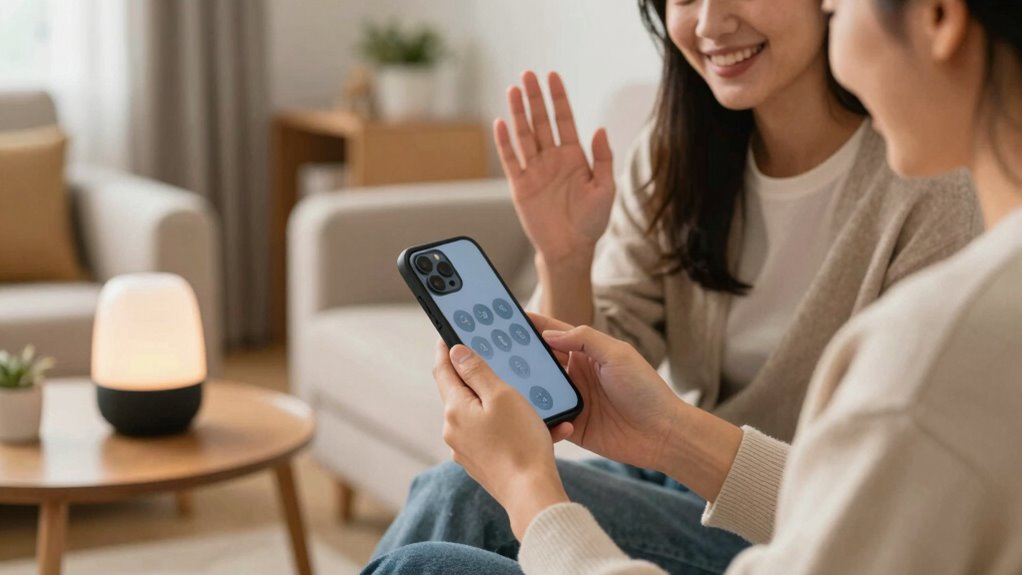
For blind and low vision users, combining technological innovations with human support creates a more effective and personalized experience. You understand that technology alone can’t always address every challenge you face, which is why blending assistive communication tools with human assistance makes your daily navigation smoother and more reliable. Modern devices equipped with adaptive interfaces can adjust to your preferences, making interactions more intuitive. For example, voice-activated commands allow you to control your smartphone or smart home devices without needing visual cues, but sometimes, a human touch is needed to clarify complex instructions or troubleshoot unexpected issues.
Assistive communication plays a crucial role in this balance. You might use screen readers, braille displays, or audio-based apps that read text aloud, helping you access information quickly. These tools are designed to be flexible, often adjusting to your specific needs, which is where adaptive interfaces come in. They learn your habits and preferences over time, providing a more seamless experience. This means your devices become more than just tools—they become extensions of your daily routine, empowering you to communicate, work, and socialize more effectively. Additionally, understanding the importance of biodiversity can inspire sustainable choices that support inclusive communities and accessible environments for all.
Assistive tools adapt to your needs, transforming devices into seamless extensions of your daily life.
Yet, technology has its limits. While adaptive interfaces can customize experiences, they might sometimes misinterpret commands or struggle with complex tasks. That’s where human support steps in. Whether it’s a family member, friend, or a professional support worker, having someone available to assist with tasks that require nuanced understanding or emotional support makes a significant difference. Human support can interpret gestures, provide guidance during unfamiliar situations, or help troubleshoot when tech falls short. Recognizing the importance of accessible technology can encourage ongoing improvements and innovations to better serve users with diverse needs. Furthermore, ongoing user feedback is vital for developers to refine these tools and enhance their effectiveness for everyone.
You leverage the synergy between tech and humans by using each to complement the other. For instance, you might rely on a voice assistant for routine commands but turn to a human for detailed instructions or emotional reassurance. This hybrid approach ensures you’re not just dependent on technology but also empowered by human understanding and empathy. This hybrid support model highlights the importance of collaboration between users and developers to create truly inclusive solutions. Combining assistive communication, adaptive interfaces, and human support allows you to navigate your environment with greater independence and confidence. It’s about creating a system that adapts to your unique needs, blending the efficiency of technology with the warmth of human interaction. This approach helps you overcome barriers, access information, and participate fully in all facets of life, all while maintaining control and dignity.
screen reader for blind users
As an affiliate, we earn on qualifying purchases.
As an affiliate, we earn on qualifying purchases.
Frequently Asked Questions
How Do Users Choose Between Tech and Human Support?
You choose between assistive technology and human support based on your preferences and the task at hand. If tech provides quick, reliable assistance, you’ll rely on it. But when tasks require personalized understanding or emotional support, you turn to human help. Your decision depends on your comfort, the complexity of the situation, and what feels most effective. Balancing both options helps you stay independent while accessing the support you need.
What Are Common Challenges in Integrating Tech With Human Assistance?
You face challenges like assistive device compatibility, where tech may not work seamlessly with existing tools. Training and education are vital but often insufficient, leaving you unsure how to maximize tech benefits. Additionally, syncing real-time human assistance with automated systems can be tricky, causing delays or miscommunication. Overcoming these hurdles requires ongoing support, better device integration, and accessible training to guarantee smooth collaboration between technology and human help.
How Affordable Is Combined Tech and Human Support?
Sure, combining tech and human support is a budget-friendly dream—if your dream involves endless crowdfunding. Assistive device affordability varies wildly; some options are surprisingly accessible, while others could make your wallet cry. Technology accessibility is improving, but it’s still a patchwork. Expect to pay a premium for seamless integration, though discounts and community programs can sometimes soften the blow. In short, affordability remains a mixed bag, with some wins and plenty of gaps.
Are There Privacy Concerns With Human Support Services?
Yes, privacy concerns exist with human support services, especially regarding data security and consent management. When you rely on support staff, your personal information and usage data could be at risk if proper safeguards aren’t in place. It’s essential to guarantee that support providers follow strict privacy policies, implement secure data handling practices, and obtain clear consent before accessing or sharing your information. Staying informed helps protect your privacy effectively.
How Do Support Options Vary Across Different Regions?
Support options are like a mosaic, shaped by regional disparities and cultural influences. In some areas, advanced technology and specialized human support paint a vibrant picture, while others rely on more traditional methods. You might find cutting-edge tools in urban centers, but rural regions often depend on community-based assistance. These regional nuances influence how seamlessly you can blend tech and human support, shaping your experience based on where you are.

Braille Learning Training Translation Machine – Interactive Braille Trainer & Converter for Visually Impaired, Educators & Beginners
All-in-One Braille Learning Tool — Combines Braille education, hands-on training, and translation functions in one compact device —…
As an affiliate, we earn on qualifying purchases.
As an affiliate, we earn on qualifying purchases.
Conclusion
As you navigate the evolving landscape of technology and human support, one thing becomes clear: the future holds unexpected possibilities. Will these innovations seamlessly blend to empower you even more, or will new challenges emerge? The answer isn’t set in stone. What’s certain is that your journey—shaped by both ingenuity and human touch—continues to unfold. Stay tuned, because what’s coming next could change everything you thought you knew about accessibility forever.
voice assistant for visually impaired
As an affiliate, we earn on qualifying purchases.
As an affiliate, we earn on qualifying purchases.
adaptive interface assistive technology
As an affiliate, we earn on qualifying purchases.
As an affiliate, we earn on qualifying purchases.