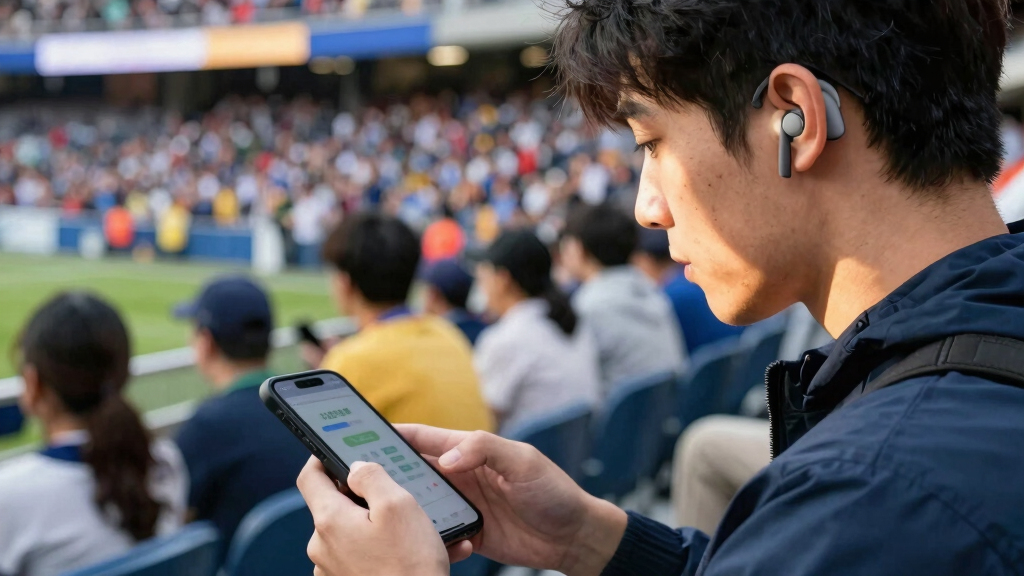
For assistive listening devices for sports events, I would start with the Avantree AuraPlex MX as the best overall pick because it balances Auracast hearing-aid support, a 10-receiver bundle, expandability, and enough published range for gyms, club venues, and many school fields. The Retekess TT119 stands out when distance matters more than hearing-aid-native streaming, while the Williams Sound Pocketalker Ultra is the cleaner choice for one listener who needs nearby speech amplified instead of a venue-wide feed. The big choice is whether the event needs broadcast-style audio from an announcer or PA, a portable tour-guide-style kit, or a personal amplifier. Range, receiver count, hearing-aid compatibility, charging logistics, and latency separate the strongest picks from the ones that only work in narrow settings. Keep reading for the full breakdown so you can match the system to the venue, the listener, and the way sound is actually delivered at the game.
Key Takeaways
- I put Avantree AuraPlex MX first because it combines Auracast compatibility, 10 included receivers, expansion room, and range that fits many school or club sports venues.
- I would use Retekess field kits for broader outdoor coverage, especially the TT119, T130S, and T130 charging-case kit when distance and receiver volume beat hearing-aid-native streaming.
- I separate personal amplification from event systems: the Williams Sound Pocketalker Ultra helps one listener near a speaker, but it is not a substitute for a venue feed.
- I would keep neckloops in the mix because telecoil users may get a better result from the 10-person neckloop kit than from generic headphones or starter receiver bundles.
- I see small Auracast kits as the easiest entry point: the Venucast AuraPlex M3 fits suites, family groups, or small venues, while the Avantree AuraPlex MX scales better.


More Details on Our Top Picks
4-Person Assistive Listening System with Premium Headphones and US Warranty
I rank the 4-Person Assistive Listening System as my small-group pick because it starts with the basics sports venues often mishandle: sturdy over-ear headphones, reinforced cables, an ADA plaque, and US phone support. Compared with the Avantree AuraPlex MX, it is less future-facing and covers far fewer listeners out of the box, but it is simpler for a booster club, press room, suite, or ticket office that needs four dependable listening sets instead of a 10-receiver broadcast kit. The 5-pound build is easier to move than the 14-pound neckloop system, though the missing case hurts portability. I would treat it as a reliable starting point, not a full bleacher-section solution.
Pros:- I like the reinforced headphone cables for shared event use
- US-based 3-year warranty and phone support reduce admin risk
- Expandable receiver count gives small venues room to grow
- ADA plaque helps with front-desk visibility
Cons:- Four included users will be too few for many game-day setups
- No carrying case by default, so transport needs another purchase
- Over-ear headphones may not suit listeners who prefer hearing-aid neckloops
Best for: I would buy this for small stadium offices, booster clubs, and VIP suites that need four shared listening sets with support behind them.
Not ideal for: I would skip it for large seating areas unless there is budget for extra receivers and a separate case.
- ASIN:B0F2JN6WZ7
- Included Capacity:4 listeners
- Weight:5 pounds
- Headphone Type:Over-the-head foldable headphones
- Speaker Type:HiFi speakers
- Cable Design:Reinforced cables
- Warranty:3-year US-based warranty
- Included Signage:ADA plaque
- Expansion:Additional receivers supported
Bottom line: I would choose it when support, simplicity, and a small listener count matter more than advanced wireless features.
Avantree AuraPlex MX – Auracast Assistive Listening System for Church, Works with Auracast Hearing Aids, 1 Transmitter & 10 Receiver Devices, Expandable, 328ft Range for Events & Classrooms
The Avantree AuraPlex MX earns my Auracast role because it can serve venue receivers and compatible Auracast hearing aids from the same transmitter, which is a real advantage for indoor sports halls trying to reduce checkout lines. Compared with the Avantree Audiplex MX, it gives up multi-channel control but feels better suited to mixed crowds where some fans bring supported hearing aids or devices. I would rank it ahead of the Venucast AuraPlex M3 for larger spectator groups because it includes 10 receivers instead of 3. The tradeoff is coverage discipline: the 328-foot line-of-sight range is aimed at medium indoor venues, not open stadium bowls or seats blocked by concrete, glass, or crowd barriers.
Pros:- I like the blend of 10 included receivers and BYOD Auracast support
- Bluetooth LE Audio can keep a shared venue broadcast synchronized
- 328 ft line-of-sight range suits many gyms and pre-game meeting rooms
- Expandable design helps venues add more listeners later
Cons:- Only select Auracast hearing aids are supported, so compatibility must be checked before game day
- Not recommended for stadiums, outdoor events, or obstructed spaces
- Single-channel broadcast is less flexible than Audiplex MX for separate feeds
Best for: I would buy this for indoor gyms, field houses, and club venues that want Auracast hearing-aid compatibility plus loaner receivers.
Not ideal for: I would skip it for outdoor stadiums, metal-heavy arenas, or venues that cannot verify guests have compatible Auracast hearing aids.
- ASIN:B0G48QTQF4
- Kit Size:1 transmitter and 10 receiver devices
- Broadcast Standard:Auracast / Bluetooth LE Audio
- Range:Up to 100 m / 328 ft line of sight
- Hearing Aid Support:Select Auracast-enabled hearing aids
- BYOD Support:Compatible Auracast devices and hearing aids
- Expansion:Expandable system
- Recommended Venue Scale:Medium venues with seating up to about 300 people
- Use Limitation:Not recommended for stadiums, outdoor events, or heavily obstructed spaces
Bottom line: I would choose it for indoor sports venues that want a modern Auracast path without giving up loaner receivers.
Avantree Audiplex MX – Multi-Channel Assistive Listening Devices for Schools & Churches, 1 Transmitter & 10 Clip-on Receivers, 100ms Low-Latency Wireless Audio System for Groups & Multilingual Events
I place the Avantree Audiplex MX above simpler 10-receiver kits when a sports venue needs separate audio feeds, such as home commentary, visiting-language support, or a coach-led clinic. Its selectable channel setup gives it an edge over the Avantree AuraPlex MX for controlled group listening, while the listed low latency helps keep speech close to scoreboard video or live announcements. It is less friendly to fans with Auracast hearing aids, though, and the included wired earbuds feel more basic than the premium headphones in the 4-Person Assistive Listening System. The storage bag and charging dock make group handling easier, but this is still a managed kit for staff, not a casual handout system.
Pros:- I like the selectable channels for separate commentary or interpretation feeds
- Low-latency wireless audio helps match speech with live action and screens
- 10 clip-on receivers, charging dock, and storage bag suit staff-managed checkout
- Bluetooth, Optical, and AUX inputs cover common AV sources
Cons:- Wired earbuds are less polished than over-ear headphone kits
- No direct Auracast hearing-aid path like AuraPlex MX
- Open-area range may drop in crowded venues with walls or metal structures
Best for: I would buy this for schools, training facilities, and indoor sports events that need multiple listening groups under one staff-managed system.
Not ideal for: I would skip it for venues centered on hearing-aid BYOD access, since AuraPlex MX is the stronger Auracast route.
- ASIN:B0FPX7RCM6
- Connectivity Technology:2.4G RF
- Compatible Devices:Phones, tablets, PCs, TVs, mixers, laptops, and microphones
- Audio Inputs:Bluetooth, Optical, AUX
- Kit Contents:1 transmitter, 10 clip-on receivers, 10-slot charging dock, cables, charger, and storage bag
- Range:Up to 100 m in open areas
- Selectable Channels:Up to 4 group channels
- Listed Latency:30 ms low latency in product bullets
- Item Weight:1200 grams
Bottom line: I would choose it when channel control matters more than direct Auracast hearing-aid access.
Assistive Listening System with Neckloops and Carrying Case for 10 People – Lifetime Warranty
The Assistive Listening System with Neckloops and Carrying Case is my pick for venues serving hearing-aid users who prefer neckloop checkout over shared headphones. Compared with the 4-Person Assistive Listening System, it supports more listeners immediately and arrives with a case, so it fits traveling athletic departments better. Compared with the Avantree AuraPlex MX, it avoids the narrower supported-hearing-aid list, but it also lacks Auracast BYOD appeal. The 55-hour AAA runtime is a strong fit for tournaments, doubleheaders, and weekend meets where charging logistics get messy. The cost of that ruggedness is bulk: at 14 pounds, this is not the kit I would hand to a single volunteer who already carries other event gear.
Pros:- I like the neckloop focus for many hearing-aid users with telecoil support
- Carrying case makes the 10-person kit easier to store and issue
- 55-hour battery life can cover long tournament weekends
- US-based lifetime limited warranty and free tech support reduce ownership worry
Cons:- 14-pound kit can feel heavy for frequent transport
- AAA batteries must be purchased and tracked separately
- Less BYOD-friendly than Auracast systems
Best for: I would buy this for athletic departments and venue managers who need 10 neckloop-ready sets in a case for recurring games.
Not ideal for: I would skip it for mobile staff working alone or venues that prefer rechargeable receivers over buying AAA batteries.
- ASIN:B0FTMX8NHF
- Capacity:For 10 people
- Item Weight:14 pounds
- Battery Life:55 hours per receiver
- Battery Type:2 AAA batteries per receiver
- Warranty:US-based lifetime limited warranty
- Included Storage:Carrying case
- Wearing Options:Belt clip, Velcro armband, or neck strap
- Support:Free tech support
Bottom line: I would choose it for recurring sports events that need a durable, neckloop-centered 10-person checkout kit.
Retekess T130S (2nd Gen T130) Assistive Listening System, Upgraded Longer Range, Simultaneous Interpretation Equipment, Easier to Use, Whisper System for Church School (2 TX 18 RX)
I rank the Retekess T130S highest for large staff-led groups in this batch because it includes 2 transmitters and 18 receivers, more listening hardware than the Avantree AuraPlex MX or the 10-person neckloop kit. For sports events, that means one feed can support a tour, accessibility desk, or sideline briefing while another group runs separately. The 49-channel VHF setup gives it more separation than the Audiplex MX when several groups share a venue. Its limits are just as clear: it is not an Auracast path for compatible hearing aids, and VHF performance can depend on the event site. The 20-hour runtime and charging case suit long days, but the 19.6-inch case is still a piece of gear to plan around.
Pros:- I like the 2-transmitter, 18-receiver bundle for bigger groups
- 49 channels help separate multiple teams, tours, or interpretation feeds
- One-click mute and receiver shutdown reduce staff cleanup time
- Charging case can refuel up to 32 units in 4 to 5 hours
Cons:- No Auracast hearing-aid compatibility
- VHF systems may need more channel management around interference
- Large case and 4718 g listed weight make it less pocketable
Best for: I would buy this for large school tournaments, stadium tours, and staff-led fan groups that need many receivers and two presenters.
Not ideal for: I would skip it for venues whose priority is direct hearing-aid compatibility, since AuraPlex MX is the cleaner Auracast choice.
- ASIN:B0DX1T6DP1
- Kit Size:2 transmitters and 18 receivers
- Connectivity Technology:VHF
- Connector Type:Aux, USB
- Working Range:Up to 328 ft / 100 m
- Number of Channels:49
- Receiver Runtime:Up to 20 hours
- Charging Case:Refuels up to 32 units in 4 to 5 hours
- Item Weight:4718 grams
Bottom line: I would choose it when group size and channel separation matter more than hearing-aid BYOD support.
Retekess T130 Tour Guide System with 2 Wireless Mics and 32-Slot Charging Case
I rank the Retekess T130 as the high-capacity pick because it solves a sports-event problem that smaller kits do not: getting the same play-by-play, tour commentary, or venue instructions to a full group at once. Its 30 receivers and 32-slot charging case make it more practical for team tours and VIP fan sections than the Hamilton Buhl ALS700, which only includes six receivers. Compared with the Retekess TT119, though, the T130 trades range for scale; 60 meters is useful around bleachers, training fields, and indoor arenas, but it is not a whole-stadium coverage tool. I also give extra weight to the two headset-or-handheld mics for two speakers, while the lack of automatic translation and the sponge-removal charging step make it less smooth for multilingual event crews.
Pros:- Large 30-receiver setup suits bigger fan, student, or tour groups
- 32-slot case charges transmitters and receivers together
- 99 channels help reduce interference in busy event spaces
- Two mics can be used as headsets or handheld units
Cons:- 60-meter range is shorter than long-range event systems
- No automatic translation support
- Charging requires removing receiver sponges first
Best for: I would buy this for school athletic departments, venue tour teams, or club organizers who need audio for 20-30 listeners from two presenters.
Not ideal for: I would skip it for a spread-out stadium crowd or multilingual broadcast team that needs built-in translation automation.
- ASIN:B07SYHNMDF
- Battery Life:12-18 hours
- Channels:99
- Transmitters Included:2
- Receivers Included:30
- Charging Case Slots:32
- Transmission Distance:60 meters
- Transmitter Weight:56 grams
- Receiver Weight:46 grams
Bottom line: I would choose the T130 when receiver count matters more than stadium-wide range.
Retekess TT119 Assistive Listening System with Mute Function and 300m Range
The Retekess TT119 earns my long-range role because its 300m/984ft coverage fits the sports settings where a transmitter may sit near a press table, scorer’s booth, or announcer feed while listeners are spread across a large stand. That gives it a reach advantage over the Retekess T130 and Retekess TT106S, both of which are better for contained groups. The tradeoff is capacity and bulk: it includes 10 receivers, so it serves a focused accessibility group rather than a large fan section, and the 3.86 kg transmitter is less convenient than the pocket-size pieces in the T130 kit. I would choose it when range matters more than receiver count, especially with XLR, AUX, RCA, and USB inputs for venue audio sources.
Pros:- 300m/984ft range suits large seating areas
- XLR, AUX, RCA, and USB inputs support many venue audio feeds
- One-click mute gives presenters quick control
- Automatic pairing reduces setup friction
Cons:- Only 10 receivers are included per transmitter
- 3.86 kg transmitter is cumbersome for mobile use
- AA transmitter batteries add an extra supply requirement
Best for: I would buy this for stadium staff, courtside event teams, or athletic venues that need a strong transmitter across a large seating area.
Not ideal for: I would skip it for fan clubs that need more than 10 receivers or portable presenters who cannot manage a 3.86 kg transmitter.
- Model Number:TT119
- Range:300m/984ft
- Channels:17
- Transmitter Battery:AA
- Receiver Battery Life:10 hours
- Transmitter Weight:3.86 kg
- Receiver Weight:90g
- Connectivity:Wireless FM
- Input Ports:XLR, AUX, RCA, USB
Bottom line: I would pick the TT119 for distance-first sports-event listening where the audience group is limited but spread out.
Hamilton Buhl ALS700 Dual Frequency Assistive Listening System
I place the Hamilton Buhl ALS700 as the simple wired pick for sports venues that want controlled listening at a table, booth, or small indoor event without managing a fleet of wireless receivers. Compared with the Retekess T130, it is far smaller in scale, with six receivers instead of 30, but wired connectivity can be easier to keep stable in RF-crowded gyms or arenas. It is also less specialized than the Pocketalker Ultra because it is built for a group rather than one listener. The drawback is mobility: a wired 1/4-inch input setup ties the system to the audio source, and some scoreboards, mixers, or phones may need adapters before game-day audio can feed it cleanly.
Pros:- Wired connection can provide stable signal in crowded RF environments
- Includes six receivers, earbuds, and a carry case
- Simple power controls suit low-complexity setups
- Works for fixed booths, teaching spaces, and small group listening
Cons:- No wireless option for mobile sports-event use
- Only six receivers are included
- Adapters may be needed for modern audio sources
Best for: I would buy this for small gyms, school booths, and training rooms where six listeners can stay near a fixed audio source.
Not ideal for: I would skip it for outdoor bleachers, roaming guides, or users who need wireless freedom during a game.
- ASIN:B014G56V5W
- Frequency Design:Dual frequency
- Microphone Input:1/4-inch jack
- Line Input:1/4-inch jack
- Power Output:3 dBm
- Connectivity Type:Wired
- Receivers Included:6
- Included Accessories:Earbuds and carry case
Bottom line: I would choose the ALS700 for small, fixed-location listening rather than roaming stadium coverage.
Williams Sound Pocketalker Ultra Hearing Amplifier for Seniors with Headphones
The Williams Sound Pocketalker Ultra is my personal-listening pick, not a venue broadcast system, and that distinction matters at sports events. It makes the most sense for a single fan who wants nearby speech, a companion’s voice, or commentary from a close source brought forward while background noise is reduced. Compared with the Retekess T130 or TT119, it cannot distribute audio to a group, but it is much simpler than managing transmitters, pairing, and charging cases. Against the Avantree Oasis Aura, the Pocketalker is also less dependent on hearing-aid compatibility because it works with included earbuds or headphones. Its up to 200-hour AAA battery life is a major convenience, while its tradeoff is fewer modern broadcast features and ongoing battery replacement for heavy users.
Pros:- Simple controls suit seniors and nontechnical users
- Up to 200 hours of battery life from standard AAA batteries
- Volume and tone controls allow personal adjustment
- Includes earbuds, headphones, microphone, batteries, and lanyard
Cons:- Does not broadcast audio to a group
- Heavy users will need replacement batteries
- Lacks modern wireless and venue-feed features
Best for: I would buy this for an older fan who needs one-on-one amplification in seats, concourses, or watch-party spaces.
Not ideal for: I would skip it for venues that need to broadcast PA audio to multiple guests at once.
- ASIN:B003IQN8WA
- Battery Type:2 AAA alkaline batteries included
- Battery Life:Up to 200 hours
- Controls:Adjustable volume and tone
- Noise Handling:Amplifies desired sounds while reducing background noise
- Warranty:5-year warranty
- Included Accessories:Microphone, earbuds, headphones, batteries, lanyard
- Power Style:Replaceable batteries, no recharging required
Bottom line: I would choose the Pocketalker Ultra for one fan who needs close-range speech help, not for a venue-wide assistive listening plan.
Avantree Oasis Aura Auracast Hearing Aids Transmitter
I give the Avantree Oasis Aura the Auracast transmitter role because it points toward the cleanest future for assistive listening at sports watch parties, club rooms, and small public venues: one audio feed sent directly to compatible hearing aids, headphones, or speakers. Compared with the Retekess TT119, its 100m/328ft line-of-sight range is shorter, but the one-to-many Auracast format can be neater when listeners bring their own compatible devices. It also differs from the Pocketalker Ultra by sending venue or TV audio directly rather than amplifying nearby sound. The catch is compatibility. Regular Bluetooth headphones are out, many hearing aids still lack Auracast, and corded power makes this a fixed-location choice rather than a roaming stadium kit.
Pros:- Broadcasts one audio source to many Auracast-compatible devices
- Optical, 3.5 mm AUX, and Bluetooth inputs cover common TV and venue sources
- Can stream directly to select Auracast-enabled hearing aids
- 100m/328ft line-of-sight range suits small to mid-size spaces
Cons:- Does not work with regular Bluetooth headphones or earbuds
- Hearing-aid compatibility must be checked before purchase
- Corded power and limited range make it a poor fit for large stadiums
Best for: I would buy this for small sports bars, classrooms, clubhouses, or home TV rooms serving guests with Auracast-ready hearing aids.
Not ideal for: I would skip it for stadium operators, AirPods users, or anyone whose hearing aids do not support Auracast.
- ASIN:B0G48P297C
- Transmission Type:Auracast one-to-many broadcast
- Range:Up to 100m/328ft line of sight
- Audio Inputs:Optical, 3.5 mm AUX, Bluetooth
- Audio Output:Auracast
- Compatible Devices:Auracast-enabled hearing aids, headphones, and speakers
- Power Source:Corded electric
- Installation Type:Wired
- Warranty:24 months with product registration
Bottom line: I would choose the Oasis Aura only when the listeners already have Auracast-ready devices and the sports setting is small to mid-size.
Venucast AuraPlex M3 Auracast Assistive Listening System
I place the Venucast AuraPlex M3 here because it brings Auracast broadcasting into a smaller, ready-to-run package: one transmitter, three receivers, and support for select Auracast hearing aids. For sports events, that makes the most sense in club rooms, school gyms, press areas, and smaller bleacher sections, where a venue wants cleaner PA feed access without handing out a large receiver fleet. Compared with the Avantree AuraPlex MX, it is less suited to big groups because it includes only three receivers, but it is easier to justify when attendance needs are modest. The big limitation is venue size: the listed 328-foot line-of-sight range is useful, but this is not the pick I would choose for stadium bowls, outdoor tournaments, or heavily obstructed seating.
Pros:- Auracast support works with select modern hearing aids
- Includes transmitter, three receivers, charging base, and key audio cables
- 328-foot line-of-sight range fits many small indoor sports settings
- BYOD compatibility can reduce the number of receivers a venue must manage
Cons:- Only three included receivers, so larger assisted-listening sections need expansion
- Hearing-aid compatibility is limited to listed Auracast models
- Not recommended for stadiums, outdoor events, or heavily obstructed areas
Best for: Small sports venues, booster clubs, and school gyms that want Auracast support for a few assisted-listening seats plus compatible hearing-aid users.
Not ideal for: Large stadiums or outdoor events, because the product data warns that coverage can drop in open or obstructed spaces.
- Brand:Venucast
- Model:BTTC-500K
- Included System:1 Oasis Aura transmitter, 3 AuraClip receivers, 3-slot charging base
- Wireless Technology:Auracast / Bluetooth LE Audio
- Range:Up to 100 m / 328 ft line of sight
- Inputs:3.5 mm audio cable, optical audio cable, dual 6.35 mm TS to 3.5 mm TRS adapter
- Compatible Devices:Select Auracast hearing aids plus Bluetooth, optical, and AUX source devices
- Weight:706 g
- Warranty:2 years
Bottom line: This is the Auracast pick I would choose for small indoor sports venues that want modern hearing-aid compatibility without buying a 10-receiver kit.
Retekess TT106S Assistive Listening System
The Retekess TT106S earns its spot as the long-range choice because its 656-foot range, six receivers, and claimed 50-hour receiver battery life fit roaming sports settings better than many compact church-style systems. It is closer in spirit to the Retekess TT119 and Retekess T130S than to the Venucast AuraPlex M3: this is a tour-guide style voice system, not an Auracast hearing-aid broadcast setup. That difference matters. For a coach briefing, arena tour, sideline volunteer group, or interpreted commentary in a smaller sports complex, the earhook receivers keep setup simple and avoid in-ear pressure. Buyers who need direct compatibility with Auracast hearing aids should skip it. The many-channel design is handy when several groups share one venue, but managing channels can feel less polished than a single broadcast system.
Pros:- 656-foot range gives more freedom for moving groups than many 328-foot systems
- Receiver battery life is listed at up to 50 hours
- Earhook receiver design avoids the sealed feel of traditional earbuds
- 9999 channels help separate multiple groups in the same venue
Cons:- Not an Auracast system and not built for direct hearing-aid broadcast use
- Includes six receivers, so bigger fan sections will need add-ons
- Channel setup may be less simple for casual users than fixed single-feed systems
Best for: Event staff, interpreters, venue tour leaders, and volunteer coordinators who need long-range spoken audio for small groups around a sports complex.
Not ideal for: Fans who want audio sent straight to Auracast hearing aids, because this system relies on its own transmitter and earhook receivers.
- Brand:Retekess
- System Configuration:1 transmitter, 6 receivers
- Range:Up to 200 m / 656 ft
- Receiver Battery Life:Up to 50 hours
- Receiver Battery:450 mAh
- Charging Time:About 3 hours
- Channels:9999 channels
- Volume Levels:0-9 receiver volume levels, with level 0 as mute
- Audio Input:AUX input
Bottom line: This is the pick I would use for mobile staff, tour, or interpretation groups at sports events, not for hearing-aid-first fan seating.
How We Picked
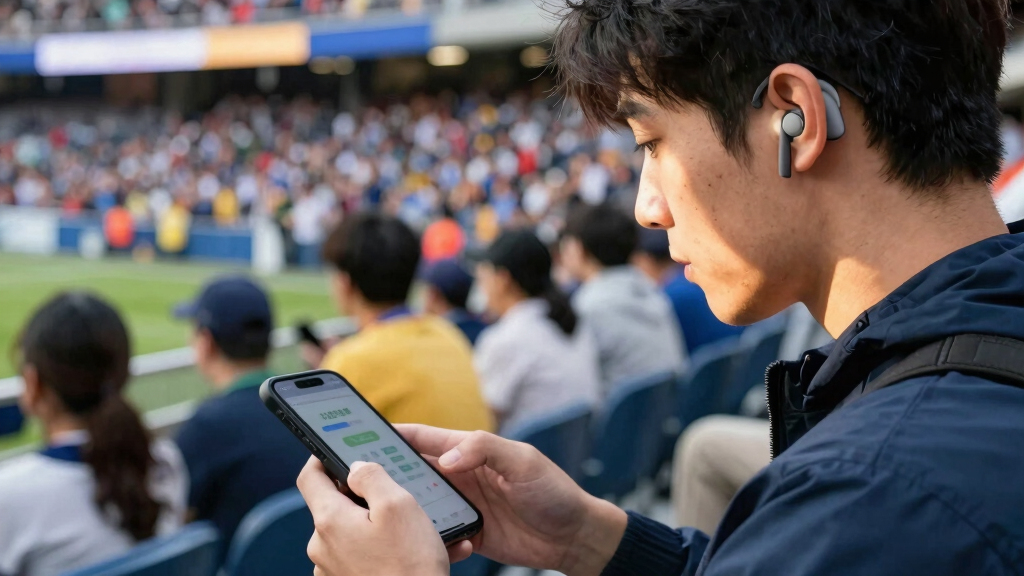
I evaluated this lineup through a sports-event lens: how audio reaches the listener, how far the signal needs to travel, how many people can be served, and how easy the setup is for volunteers or family members. I gave higher placement to systems that fit noisy bleachers, school gyms, club fields, press boxes, and temporary event tables rather than quiet rooms only. Hearing-aid compatibility carried extra weight because many sports venues need to support fans who already use hearing aids, while receiver bundles and charging mattered for teams and organizers handing out gear at every game.
The ranking favors systems with a clear event workflow: connect a mic or venue feed, distribute receivers, keep latency low enough for live action, and pack everything away without a long reset. Auracast picks such as the Avantree AuraPlex MX and Venucast AuraPlex M3 ranked higher for future-facing accessibility, while Retekess systems gained ground for range, receiver counts, and field-friendly kits. Personal amplifiers such as the Williams Sound Pocketalker Ultra ranked differently because they help one listener nearby, not a crowd spread across a venue.
Factors to Consider When Choosing Assistive Listening Devices For Sports Events
Choosing assistive listening devices for sports events is less about the longest feature list and more about the event job: who needs audio, where they sit, what source feeds the sound, and who manages the gear. I would separate personal listening needs from venue-wide accessibility before comparing prices. A family at a youth game, a school athletic department, and a public arena should not buy the same setup. The guide below explains the tradeoffs that change the purchase, especially range, compatibility, receiver handling, and audio source.
Start With The Audio Source
I would decide what sound the listener actually needs before comparing kits. If the goal is announcer audio, referee calls, or play-by-play from a booth, a transmitter that can accept a PA, mic, AUX, or optical feed matters more than headphone style. The Avantree Oasis Aura makes sense when there is a clean source feed, while handheld-mic kits like the Retekess TT106S fit sideline instruction, school events, or translated commentary. A common mistake is buying a personal amplifier when the listener is too far from the speaker or PA; that only makes nearby crowd noise louder. For sports, I would treat the audio source as the starting line because it decides whether the system solves the real problem.
Match Range To The Venue Shape
Published range is only part of the story because stadium concrete, bodies, fencing, and metal bleachers can shrink real-world coverage. For open fields, the Retekess TT119 and other long-range Retekess kits are better matched to spread-out listeners than compact starter systems. In a gym or small arena, 328ft Auracast-style coverage may be plenty if the transmitter is placed high and close to the sound source. I would avoid buying only for maximum distance if the listeners will sit in one section, since a simpler kit may be easier to hand out and monitor. The better question is whether the system covers the actual seating pattern, not the largest number on the box.
Plan For Receivers, Charging, And Staff Time
Sports events create a different workload than a meeting room because receivers get passed out, returned, charged, wiped down, and packed fast. A bundle like the Retekess T130 with 32-slot charging case is less about raw audio quality and more about keeping staff from chasing dead batteries. Smaller sets such as the 4-Person Assistive Listening System or Venucast AuraPlex M3 fit families, suites, or small fan groups where every receiver is easy to track. I would pay more for organized charging when the gear will be used every week, since a low-cost kit can become expensive if batteries and missing receivers cause game-day delays. Receiver count should match the busiest realistic event, with a spare or two for late requests.
Choose Headphones, Earbuds, Or Neckloops By Listener
Hearing-aid compatibility can matter more than volume because many listeners want direct audio without bulky headphones over hearing aids. The Neckloops and Carrying Case system has a clear role here, especially for telecoil users who prefer their own hearing-aid processing. Auracast options such as the Avantree AuraPlex MX and Avantree Oasis Aura point toward a newer path where compatible hearing aids can receive a broadcast signal. The tradeoff is that not every listener owns Auracast-ready hearing aids yet, so bundled receivers still matter. I would choose a mixed setup for public events: neckloops or Auracast support for hearing-aid users, plus simple headphones for guests who need a loaner device.
Treat Latency And Channels As Game-Day Features
Latency is easy to ignore until the audio trails the whistle, the announcer, or a coach’s instruction. The Avantree Audiplex MX earns attention for its low-latency, multi-channel design, which is useful when a sports event offers separate feeds such as home commentary, visitor commentary, or translation. Multi-channel systems add flexibility, but they also ask more from volunteers because channels must be labeled and checked before fans arrive. For a simple high school game, the Hamilton Buhl ALS700 may be easier than a channel-rich kit if the only goal is one clear feed. I would spend extra on low delay and channel control only when the event actually uses those features.
Know When A Personal Amplifier Is Enough
A personal amplifier belongs in the conversation, but it solves a narrower problem than a group assistive listening system. The Williams Sound Pocketalker Ultra can make sense for one listener sitting near a companion, usher, or small speaker, especially when there is no access to the venue’s PA. It is weaker for loud stands because the microphone can pick up crowd noise along with the voice the listener wants. Compared with the Avantree AuraPlex MX or Retekess TT119, it is easier to carry but much less suited to serving several fans at once. I would choose it for personal speech support, not as a replacement for an event broadcast system.
Frequently Asked Questions
Should I Choose Auracast Or A Traditional Receiver System For A Sports Event?
I would choose Auracast when the venue wants a cleaner path for compatible hearing aids and may expand accessibility over time. The Avantree AuraPlex MX and Venucast AuraPlex M3 both make more sense than older receiver-only kits when hearing-aid-native listening is part of the plan. A traditional receiver system is still the safer bet when every listener needs a loaner device and the audience may not own compatible hearing aids. Retekess and Hamilton Buhl style kits also feel simpler for temporary outdoor events because the organizer controls every receiver. For many sports venues, the strongest answer is a hybrid approach: broadcast-ready tech plus enough receivers for guests who arrive without compatible devices.
Is The Williams Sound Pocketalker Ultra Enough For A Game?
The Williams Sound Pocketalker Ultra is enough when one person needs closer speech, such as a conversation with a companion or staff member in a quieter section. It is not the same as a stadium assistive listening feed because it does not distribute announcer audio across a venue. In loud bleachers, a personal microphone can lift crowd noise along with speech, which may make listening tiring. I would pick it over the Avantree AuraPlex MX only when portability and one-person use matter more than range or group coverage. For organized events, a transmitter-and-receiver kit is usually the better match.
How Many Receivers Should I Buy For Sports Events?
I would size the kit around the busiest realistic day, not the average game. A 3- or 4-person set works for a family, suite, or small booster group, while 10-receiver bundles like the Avantree AuraPlex MX or Avantree Audiplex MX fit small venues with several requests. Larger operations should look at kits such as the Retekess T130 with 32-slot charging case, since charging and storage become part of the purchase. Buying too few receivers creates awkward handoffs when late arrivals ask for help after kickoff. I would keep at least one spare receiver ready because batteries, headphones, and checkouts rarely behave perfectly on event day.
Do Sports Events Need Long Range Or Low Latency More?
It depends on the sport layout, but I would give range priority for open fields, tracks, and spread-out seating. The Retekess TT119 is more appealing in that setting than a compact starter kit because coverage is the first failure point. In indoor arenas or gyms, low latency may matter more because listeners can see the announcer, scoreboard, or action closely and delayed sound feels distracting. The Avantree Audiplex MX is better suited to that live-feed problem than many tour-guide-style systems. If the audience sits close together and the audio source is stable, I would choose clarity and simple operation over the longest range claim.
Are Neckloops Still Useful Now That Auracast Exists?
Yes, neckloops are still useful because many hearing-aid users have telecoil support but may not have Auracast-ready devices yet. A neckloop-based kit gives those listeners a familiar way to receive audio through their own hearing aids, which can feel more natural than loaner headphones. Auracast systems such as the Avantree Oasis Aura are more future-facing, especially for venues planning several seasons ahead. The tradeoff is compatibility: Auracast is promising, but it is not universal across all hearing aids in the stands. I would choose based on the real audience: telecoil-heavy groups should keep neckloops in play, while newer venues can add Auracast as part of a broader accessibility setup.
Conclusion
If I were choosing one system for the broadest mix of sports-event needs, I would choose the Avantree AuraPlex MX as Best Overall because it combines Auracast support, a 10-listener bundle, expandability, and practical range. For budget-minded organizers, the Retekess TT106S as Best Value makes sense for smaller groups that need a simple mic-and-receiver setup without a large charging operation. For venues building around a feed from a PA, TV, or AV booth, the Avantree Oasis Aura as Best Premium is the more forward-looking pick, especially when compatible hearing aids are part of the plan.
For beginners, I would point to the Venucast AuraPlex M3 because it gives a smaller Auracast starter kit without forcing a 10-receiver purchase. For long outdoor coverage, the Retekess TT119 is the cleaner fit, while the Retekess T130 with 32-slot charging case is better for teams or venues that lend gear often. For hearing-aid users who rely on telecoil, the neckloop-based 10-person system deserves its own lane, and for a single listener the Williams Sound Pocketalker Ultra is the simplest personal option. The right pick depends on whether the event needs a venue broadcast, long-range field coverage, hearing-aid compatibility, or one-person speech support; matching that job to the device is how I would make the final call.