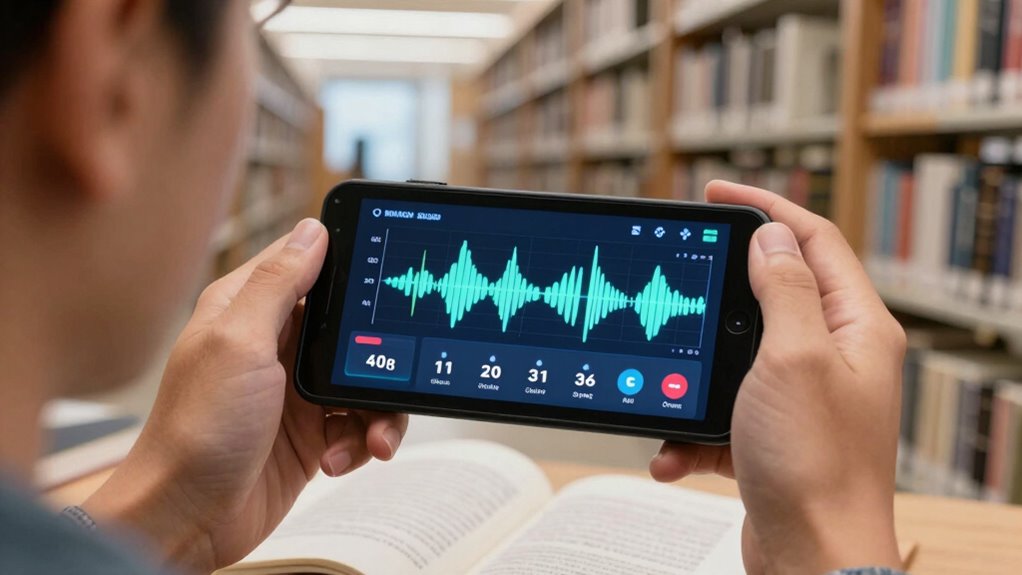

AI is revolutionizing how you access printed information by providing real-time, speech-based interpretations of text, signs, and complex layouts. With AI-powered devices, you can easily scan, interpret, and listen to printed content, boosting your independence. These tools are becoming more affordable and portable, making it easier to navigate your environment. Staying informed about these advances will help you discover even more ways to overcome traditional barriers—continue on to learn how this technology can truly empower you.

Get everyday helpers delivered free with Prime
- Fast, free delivery on millions of items
- Prime Video, Amazon Music and more included
- Member-only deals all year
Key Takeaways
- AI-powered assistive devices enable real-time reading of printed content through speech, improving independence for low vision users.
- Advanced OCR and AI enhance accuracy in recognizing complex layouts, handwriting, and diverse printed materials.
- Digital literacy skills help users operate and customize AI devices for better accessibility and navigation.
- Portable, affordable AI tools allow low vision individuals to access printed information anywhere, fostering greater participation.
- Continuous AI innovations and training support users in overcoming traditional barriers to printed content access.
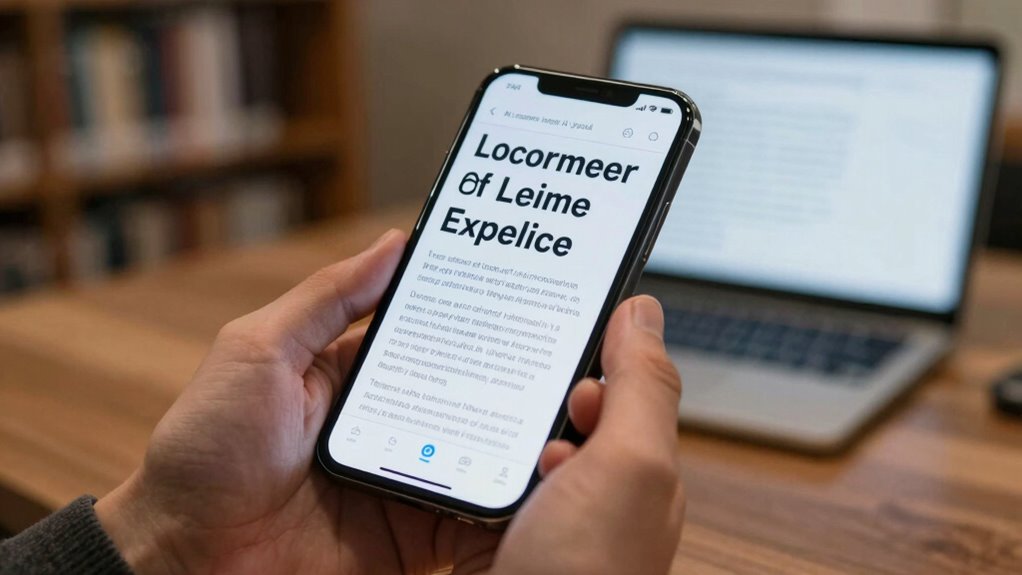
For low vision users, accessing printed information has traditionally posed significant challenges, but advances in artificial intelligence are transforming this experience. AI-powered assistive technology is now making printed content more accessible than ever before. Devices equipped with AI can scan, interpret, and convert printed text into speech in real-time, allowing you to understand written materials without needing perfect vision. This technology acts as a bridge, helping you navigate environments filled with printed signs, labels, books, and documents. It eliminates many barriers that once made reading and information retrieval frustrating or impossible.
AI helps low vision users access printed content by reading and interpreting text in real-time.
As these tools become more sophisticated, your digital literacy plays an essential role. Learning how to operate AI-driven assistive devices optimizes your ability to access printed information efficiently. Whether it’s a smartphone app, a portable scanner, or a dedicated device, understanding how to use these tools empowers you to take control of your environment. Many of these technologies are designed to be user-friendly, with voice commands and intuitive interfaces, but familiarizing yourself with their functionalities enhances their effectiveness. As your digital literacy improves, you’ll find it easier to troubleshoot issues, customize settings, and integrate these tools into your daily routines. Additionally, ongoing training and support can help you maximize the benefits of these innovations.
AI in assistive technology doesn’t just read text aloud; it interprets complex layouts, identifies objects, and even reads handwriting. This means you can receive detailed descriptions of printed materials, navigate menus, or access labels on medication bottles with minimal effort. The speed and accuracy of AI-powered OCR (Optical Character Recognition) systems continue to improve, making printed information more accessible in various contexts. Additionally, advancements in assistive technology are expanding the range of printed content that can be processed, offering greater independence. The incorporation of context-aware AI further enhances the precision of these tools in different environments, making them more adaptable to individual needs. Incorporating accessible design principles into these tools further enhances their usability for low vision users. These advancements are not only convenient—they are essential in promoting independence, allowing you to participate more fully in educational, professional, and social settings.
Furthermore, AI-driven assistive tools are becoming more affordable and portable, enabling you to carry solutions wherever you go. As these innovations become mainstream, your ability to adapt and develop digital literacy skills will directly influence how much you benefit from them. Staying informed about new developments and practicing their use will help you maximize your independence and confidence in accessing printed information. The integration of machine learning techniques ensures these tools become smarter over time, providing more accurate and personalized assistance. Overall, AI is revolutionizing accessibility, transforming printed materials from obstacles into manageable, even navigable, sources of knowledge. The synergy between assistive technology and your growing digital literacy creates a powerful avenue for overcoming traditional barriers and engaging with the printed world more fully.
AI-powered OCR scanner for low vision
As an affiliate, we earn on qualifying purchases.
As an affiliate, we earn on qualifying purchases.
Frequently Asked Questions
How Affordable Are AI Tools for Low Vision Users?
AI tools for low vision users are becoming increasingly affordable, with a focus on user affordability. When you compare costs, many AI devices and apps are now priced lower than traditional assistive technologies, making them more accessible. As technology advances, the cost comparison shows that these tools are more budget-friendly, helping you gain better access to printed information without breaking the bank.
Are AI Solutions Customizable for Different Types of Visual Impairments?
Yes, AI solutions are customizable for different types of visual impairments. You can explore various personalization options, such as adjusting contrast, magnification, and color filters, to suit your specific needs. Additionally, these tools are designed for device compatibility, ensuring you can use them seamlessly across smartphones, tablets, or dedicated assistive devices. This customization helps you access printed information more comfortably and effectively, regardless of your unique visual challenges.
How Secure Is My Personal Information With AI Reading Tools?
Your personal information with AI reading tools is generally secure, but data privacy varies by provider. Reputable companies prioritize user trust by implementing strong encryption and privacy policies to protect your data. However, always review the privacy settings and data handling practices of each tool. Being cautious and choosing trusted providers helps guarantee your information stays private, giving you peace of mind while benefiting from AI-enhanced reading assistance.
Can AI Assist With Tactile or Braille-Based Printed Materials?
Yes, AI can assist with tactile enhancements and Braille integration. It creates tactile maps, raised symbols, and textured graphics, making printed materials more accessible. AI-powered devices can convert text into Braille, allowing you to read swiftly and independently. These innovations provide a richer, more interactive experience, bridging the gap between visual and tactile information, and empowering you to access printed content with greater ease and confidence.
What Is the Learning Curve for Using Ai-Based Reading Devices?
The learning curve for AI-based reading devices varies, but with proper user training, you can adapt quickly. Most devices are designed for seamless technology integration, making them user-friendly. You might need some initial guidance to understand features, but once familiar, you’ll find them intuitive. Regular practice and support from training resources help reduce any challenges, enabling you to confidently access printed information and make the most of AI advancements.
Conclusion
AI is transforming how you access printed information, breaking down barriers like a rising tide that lifts all boats. With these innovations, you’re no longer stranded in a sea of unreadable text but are guided smoothly toward understanding. As AI continues to evolve, it will be your steadfast bridge, turning what once seemed impossible into a clear, navigable path. Embrace these changes, for they’re opening doors you never thought possible.
Fall Picks
fall essentials
As an affiliate, we earn on qualifying purchases.