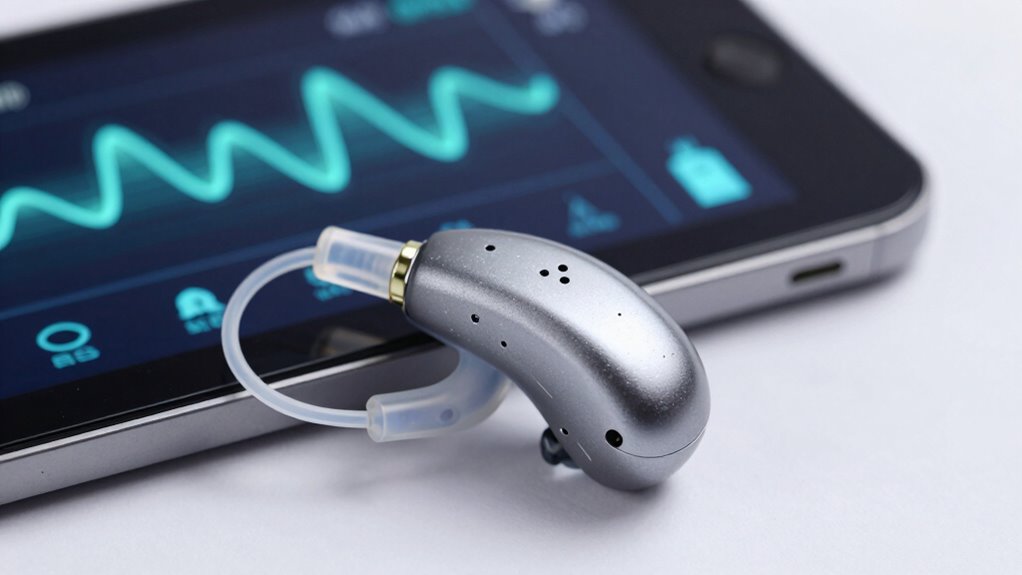

AI-powered hearing aids analyze incoming sounds in real time to improve speech clarity. They focus on speech frequencies while suppressing background noise, making conversations easier to follow. These devices learn from your listening habits and environments, automatically adjusting settings for peak performance. They can distinguish speech from other sounds and adapt to your preferences over time. Keep exploring how these smart devices continuously enhance your hearing experience for better understanding and comfort.

Get everyday helpers delivered free with Prime
- Fast, free delivery on millions of items
- Prime Video, Amazon Music and more included
- Member-only deals all year
Key Takeaways
- AI analyzes incoming sounds in real time to emphasize speech frequencies and suppress background noise for clearer understanding.
- Machine learning distinguishes speech from environmental sounds, boosting speech signals while damping distractions.
- Cochlear processing is enhanced to better interpret sounds and adapt to individual hearing profiles.
- Devices learn from user habits and environments to personalize sound processing and improve speech clarity.
- Continuous feedback allows AI to fine-tune responses, making speech comprehension more natural and tailored to users.
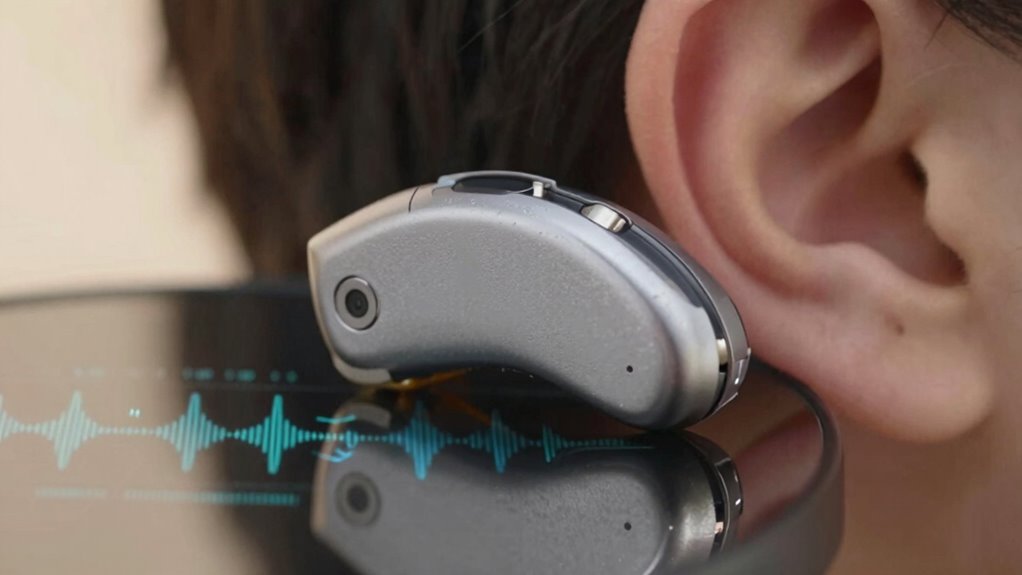
Artificial intelligence is revolutionizing hearing aids, making it easier for you to understand speech in noisy environments. These advanced devices leverage AI to mimic how your brain naturally processes sounds, offering a more seamless listening experience. One key aspect of this technology is how it enhances cochlear processing, which is the way your ears and brain work together to interpret sound signals. Traditional hearing aids amplify all sounds equally, often making it difficult to focus on speech amidst background noise. In contrast, AI-powered hearing aids analyze incoming sounds in real time, selectively emphasizing speech frequencies while suppressing background noise. This targeted approach improves clarity, allowing you to follow conversations more comfortably.
AI hearing aids enhance cochlear processing, making speech clearer amid background noise for a more natural listening experience.
Central to these improvements is neural adaptation—your brain’s ability to adjust to new auditory signals. When you start wearing AI-enabled hearing aids, the devices learn from your listening habits and the environments you frequently encounter. Over time, they adapt their processing algorithms to better match your unique hearing profile, helping your brain to interpret sounds more naturally. This process is dynamic; as your environment or preferences change, the hearing aids continue to fine-tune their responses, reducing listening fatigue and enhancing speech intelligibility. Neural adaptation ensures that the device’s assistance becomes more personalized, making conversations feel less strained and more effortless. Additionally, the integration of adaptive learning algorithms allows these devices to improve their performance even further with continued use. Moreover, advancements in sound processing techniques have enabled these devices to better distinguish subtle differences in environmental sounds, further optimizing your listening experience. These improvements are made possible by the integration of machine learning, which continuously refines sound classification and processing. The ongoing development of context-aware processing further enhances the device’s ability to adapt to complex environments and user needs.
AI algorithms also play a significant role in real-time sound classification. They can distinguish between speech and other environmental sounds, such as sirens, music, or crowds. When you’re in a bustling restaurant or walking through a busy street, the hearing aid identifies the speech signals you want to focus on, boosting them while damping down distracting noises. This intelligent filtering is powered by machine learning models that constantly improve with usage, becoming more accurate in different settings. As a result, you don’t have to manually tweak the device; it intuitively adapts to your needs. Furthermore, these devices utilize digital security measures to protect your hearing data from unauthorized access, ensuring your privacy while enhancing functionality.
Additionally, these hearing aids incorporate feedback mechanisms that monitor your listening experience. If you find certain sounds difficult to interpret, the device can learn from your feedback and adjust its processing strategies accordingly. Over time, this continuous learning process deepens the device’s understanding of your hearing preferences, making speech comprehension more natural and less effortful. In summary, AI-driven hearing aids serve as a personalized auditory assistant, constantly refining their performance through cochlear processing and neural adaptation to help you connect with the world around you more clearly and comfortably.
As an affiliate, we earn on qualifying purchases.
Frequently Asked Questions
How Do AI Hearing AIds Differ From Traditional Models?
AI-powered hearing aids differ from traditional models through advanced technology integration and user customization. You benefit from smarter sound processing that adapts to your environment in real-time, filtering out background noise and enhancing speech clarity. Unlike basic devices, AI hearing aids learn your preferences over time, offering tailored amplification. This personalized approach guarantees a more natural listening experience, making it easier for you to understand conversations and enjoy sounds comfortably.
What Is the Cost Comparison Between AI and Non-Ai Hearing AIds?
You might think AI hearing aids are too costly, but a thorough cost analysis shows they’re often more affordable than you expect. When comparing affordability, AI models tend to have higher upfront prices but offer advanced features that can reduce long-term expenses through better performance and durability. While traditional hearing aids may seem cheaper initially, AI-powered devices often deliver better value by improving speech clarity and user satisfaction over time.
Are Ai-Powered Hearing Aids Suitable for All Hearing Loss Types?
AI-powered hearing aids aren’t suitable for all hearing loss types. Your hearing aid compatibility depends on your specific condition and the device’s features. These aids excel with AI customization, adapting to your environment and personal preferences, but may struggle with severe or complex hearing loss. It’s best to consult an audiologist to determine if AI technology fits your needs, ensuring you get the most effective hearing solution.
How Long Does It Take to Adapt to AI Hearing AIds?
You might feel an adjustment period when using AI hearing aids, typically taking a few days to a few weeks. During this time, your user comfort improves as the device’s customization adapts to your environment and hearing needs. At first, sounds may seem unfamiliar or overwhelming, but with continued use, your brain learns to interpret the enhanced audio, making the shift smoother and more natural.
What Maintenance Is Required for Ai-Powered Hearing Aids?
You need to regularly clean your AI-powered hearing aids and check the batteries to guarantee maximum battery longevity. Keep an eye on software updates from your provider, as they often include improvements and new features. It’s also essential to store your devices in a safe, dry place when not in use. By following these steps, you’ll maintain your hearing aids’ performance and longevity effectively.
Conclusion
As AI-powered hearing aids continue to evolve, they’re transforming how you experience speech in noisy environments. By adapting in real-time, they help you focus on conversations and connect more confidently. Remember, “A little knowledge is a dangerous thing,” so embracing this technology can open new doors for clearer communication. With AI guiding your hearing journey, you’ll find it easier to stay engaged and enjoy life’s sounds to the fullest.
Fall Picks
fall essentials
As an affiliate, we earn on qualifying purchases.