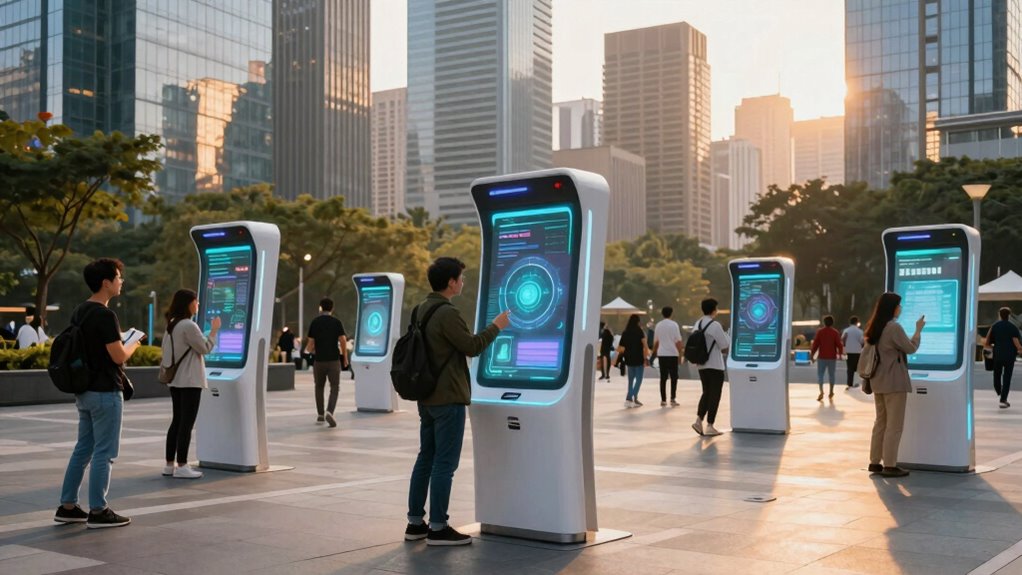

AI can greatly improve communication in public spaces by delivering real-time alerts, personalized updates, and accessible interfaces that cater to diverse needs. It helps you stay informed during emergencies, navigate crowded areas smoothly, and access information easily through voice commands or visual aids. These advances make public spaces more responsive and inclusive. If you want to explore how these innovations work and their potential benefits, keep exploring what AI has to offer.
Key Takeaways
- AI provides real-time translation and personalized assistance, enhancing communication for diverse users.
- Dynamic signage and location-based alerts improve information flow and emergency responses.
- AI-driven kiosks and voice commands support accessibility for individuals with disabilities.
- Transparent data policies and ethical design foster trust in AI-mediated communication.
- AI enables more interactive, inclusive, and responsive public spaces for better user engagement.

Artificial intelligence is transforming how we communicate in public spaces, creating new opportunities for engagement and interaction. As AI integrates into areas like parks, plazas, and transit hubs, you might wonder if these advancements truly enhance your experience or raise concerns. One significant factor is privacy concerns. With AI-powered cameras and sensors gathering data to improve services, you could feel wary about your personal information being collected and analyzed. It’s vital for developers and city officials to strike a balance—ensuring AI systems serve public interests without infringing on individual privacy. Transparent policies and data protections can help build trust so you can enjoy smarter public spaces without feeling surveilled.
AI in public spaces offers new engagement but requires transparency and privacy protections to build trust and ensure safety.
At the same time, AI’s potential to boost accessibility enhancements is remarkable. For example, you might encounter real-time translation services at busy transit stations, breaking down language barriers and making interactions smoother for everyone. Similarly, AI-driven kiosks can offer voice commands and visual aids, aiding those with disabilities or limited mobility. These tools can make public spaces more inclusive, allowing you to navigate and participate more comfortably, regardless of language or physical ability. As AI continues to evolve, it could personalize your experience—adapting information and services to your specific needs, making public spaces more welcoming for all users. Additionally, the integration of AI and public space communication can streamline information flow, making it more responsive and tailored to individual circumstances. Incorporating ethical AI design principles is also crucial to prevent biases and ensure fair treatment for all users. Furthermore, ongoing research into privacy-preserving AI techniques can help address concerns about data security and misuse, fostering greater public confidence. Understanding the potential for bias in AI systems is essential to ensure equitable treatment and prevent discrimination. Developing trustworthy AI frameworks is key to gaining public acceptance and ensuring these technologies benefit everyone equally.
Moreover, AI can facilitate more efficient communication during emergencies or public events. Imagine receiving instant alerts tailored to your location or needs, helping you stay informed and safe. AI-powered signage and information systems can dynamically adjust to crowd flows, reducing congestion and enhancing safety. This improves overall communication, ensuring you get timely updates and guidance when you need it most. However, for these systems to work effectively, they must be designed transparently and ethically, respecting privacy and avoiding misuse of data.
While AI offers promising benefits, it’s essential to acknowledge the challenges. Privacy concerns remain a significant hurdle, especially when data collection becomes extensive. You should be aware of how your information is used and have access to clear privacy policies. Likewise, accessibility enhancements should be thoughtfully implemented, ensuring no one is left behind due to poorly designed systems or technological gaps. When these issues are addressed, AI can genuinely transform public spaces into more interactive, inclusive, and efficient environments—making your experience safer, more connected, and more engaging.
As an affiliate, we earn on qualifying purchases.
Frequently Asked Questions
How Does AI Handle Language Barriers in Diverse Public Spaces?
AI handles language barriers in diverse public spaces through multilingual translation tools that instantly interpret conversations across different languages. It also emphasizes cultural sensitivity, ensuring translations respect local customs and nuances. You can rely on AI to facilitate smoother communication, making interactions more inclusive and understanding. This technology bridges gaps efficiently, helping people connect more easily regardless of language differences, and promotes a more harmonious public environment.
What Privacy Concerns Arise From AI Monitoring Public Interactions?
You might worry about privacy concerns when AI monitors public interactions, as it raises questions about data privacy and surveillance ethics. AI systems can collect and analyze conversations, potentially infringing on personal privacy. It is crucial to establish clear guidelines that protect individuals’ rights, ensuring data isn’t misused. Balancing the benefits of improved communication with respecting privacy is key to responsibly integrating AI into public spaces.
Can AI Adapt to Cultural Differences in Communication Styles?
AI can adapt to cultural differences in communication styles by integrating cultural sensitivity into its algorithms, allowing it to recognize diverse communication paradigms. You benefit from AI systems that understand regional gestures, language nuances, and social norms, making interactions more respectful and effective. This adaptability fosters better public interactions, reducing misunderstandings, and creating inclusive environments where everyone feels valued and understood, regardless of their cultural background.
How Cost-Effective Is Implementing AI for Public Space Communication?
Implementing AI for public space communication can be quite cost-effective when you conduct a thorough cost analysis and optimize budget allocation. It reduces long-term expenses by automating information delivery and minimizing the need for extensive staffing. While initial setup costs might be high, the efficiency gains and improved accessibility can lead to significant savings over time, making AI a valuable investment for enhancing public communication.
What Are the Potential Risks of Over-Reliance on AI in Public Interactions?
Relying too much on AI in public interactions can lead to ethical dilemmas, such as privacy violations and biased decision-making. You might also develop a human dependency, reducing genuine human connections and empathy. These risks threaten the authenticity of communication, making it essential to balance AI use with human oversight. Staying aware of these issues helps make certain that technology supports, rather than replaces, meaningful public engagement.
Conclusion
Imagine walking through a busy city square where AI-powered kiosks instantly translate conversations, helping strangers connect despite language barriers. By integrating AI into public spaces, you can foster understanding, reduce misunderstandings, and create more inclusive environments. For example, a real-world park in Barcelona uses AI to offer multilingual information, making visitors feel welcome and informed. Embracing AI’s potential in public spaces isn’t just about technology—it’s about building communities where everyone feels heard and understood.