

AI voice tools can make accessibility easier by simplifying device control, messaging, and searches, especially when they’re customizable to your needs. You’ll find it helpful when these tools feel natural, reducing complexity and allowing faster task completion. However, they can feel intrusive if they constantly listen or share your data without clear privacy controls. To truly benefit, you need transparency and control over your data and commands—exploring these aspects further can lead to a more comfortable experience.
Key Takeaways
- Customizable voice commands enhance accessibility and make device interactions feel natural and seamless.
- Transparent data policies and control options help users trust AI voice tools and reduce privacy concerns.
- Constant listening features can feel intrusive, so user control over activation improves comfort.
- Personalization of commands and responses increases usability but must be balanced with privacy safeguards.
- Clear communication about data collection and usage fosters trust and helps users feel secure using voice tools.
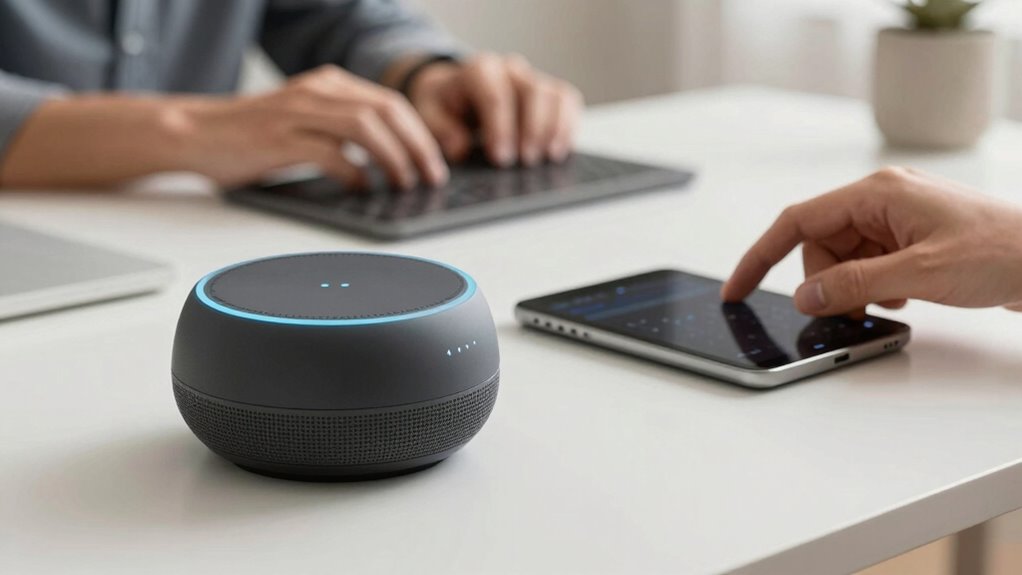
AI voice tools are transforming accessibility by making technology easier to use for people with disabilities. They give you the power to control devices, send messages, or search the web simply by speaking, which can be a game-changer if traditional interfaces are challenging. But as you start to rely more on these tools, you might notice how the ability to customize voice commands becomes essential. When you can tailor commands to your specific needs, tasks become more seamless and natural. For example, you might set a personalized phrase to activate your smart home system or adjust the way the AI responds to your requests. Customization helps these tools feel less invasive and more like an extension of your own abilities, making interactions smoother and less frustrating.
AI voice tools improve accessibility by allowing seamless, personalized control of devices through speech.
However, as you explore voice command customization, privacy concerns often come into focus. Many AI voice tools require constant listening or data collection to function effectively, which can make you wary of what data is being gathered and how it’s used. You might worry about sensitive information being stored or shared without your explicit consent. These privacy concerns can sometimes feel intrusive, especially if you’re not fully aware of the data policies or if the technology seems to listen in even when you don’t intend it to. Striking a balance between convenience and privacy becomes essential. You want the benefits of voice command customization—like faster communication or hands-free control—without feeling exposed or vulnerable to misuse. Additionally, understanding the importance of privacy policies can help you better navigate these concerns.
The helpfulness of AI voice tools is often measured by how well they adapt to your needs. When they recognize your voice commands accurately and respond appropriately, they can make daily tasks more accessible and less draining. This sense of empowerment is what makes these tools invaluable for many users. But if the technology feels overly invasive or if privacy concerns overshadow the convenience, it can quickly turn from helpful to intrusive. You might hesitate to speak openly, fearing eavesdropping or data breaches, which diminishes the trust needed for these tools to truly serve you. Recognizing the role of data collection in improving AI accuracy can help you make more informed choices. Being aware of how data is used can also reassure you that your information is handled responsibly. Moreover, transparency about data handling practices fosters a sense of trust and confidence in adopting these technologies.
Ultimately, the key to making AI voice tools feel helpful rather than intrusive lies in how well they can be customized to your preferences while respecting your privacy. When you’re given control over your voice command settings and informed about how your data is handled, you’re more likely to feel comfortable and confident using these tools. They can then become reliable allies for accessibility, empowering you without sacrificing your sense of security or privacy. Understanding user control and data transparency as part of responsible AI development is crucial for fostering trust and ensuring these tools truly serve your needs.
AI voice assistant with privacy controls
As an affiliate, we earn on qualifying purchases.
As an affiliate, we earn on qualifying purchases.
Frequently Asked Questions
How Do AI Voice Tools Handle Privacy Concerns?
AI voice tools handle privacy concerns by prioritizing data encryption and requiring user consent before collecting or sharing any information. You’re typically asked for permission upfront, and your data is encrypted to prevent unauthorized access. Developers also regularly update security measures to protect your privacy. By being transparent about data use and giving you control, these tools aim to balance helpfulness with respect for your privacy.
Can AI Voice Tools Be Customized for Individual Needs?
Imagine your AI voice tool as a tailor, stitching itself to fit your unique needs. Yes, you can customize it through personalization options, adjusting responses and settings. You hold the key to user control, guiding the tool to better serve you. Whether it’s speech speed, vocabulary, or interaction style, these options make the AI more like a helpful partner, adapting seamlessly to your daily rhythm and preferences.
What Are the Cost Implications for Accessibility Features?
The cost implications for accessibility features vary based on your needs, but a thorough cost analysis helps you understand potential expenses. You should consider budget considerations, including initial setup costs and ongoing maintenance or updates. While some AI voice tools offer free or low-cost options, advanced features may require additional investment. Balancing affordability with effectiveness guarantees you select accessibility solutions that meet your needs without exceeding your budget.
How Do Voice Tools Support Users With Speech Impairments?
Voice tools support users with speech impairments through advanced speech recognition, allowing you to communicate more easily. Adaptive interfaces adjust to your unique needs, providing tailored assistance that makes tasks more manageable. You can speak naturally, and the technology translates your words into text or commands, reducing frustration. These features empower you to navigate digital environments confidently, fostering independence and ensuring your voice is heard without feeling intrusive.
Are There Any Legal Regulations Guiding AI Voice Accessibility?
You should know that legal frameworks like the ADA in the U.S. set accessibility standards for AI voice tools. For example, a company was fined for not providing speech recognition options for users with disabilities, highlighting regulations’ importance. These laws guide developers to create inclusive features, ensuring AI voice tools are accessible and compliant. Staying informed about such legal regulations helps you design tools that serve all users effectively.
Conclusion
While AI voice tools can greatly enhance accessibility, some worry they might feel intrusive or overwhelming. But remember, these tools are designed to empower you, not replace your independence. When used thoughtfully, they can streamline daily tasks and provide support exactly when you need it. So, instead of fearing intrusion, see them as helpful companions tailored to your needs—making accessibility truly work for you, without sacrificing comfort or control.