

To keep your home safe, test your alert systems monthly. Press the test button on smoke and CO detectors to guarantee they sound. Replace batteries if alarms don’t activate, and clean devices regularly to prevent dust buildup. Also, review emergency plans, check fire extinguishers, and confirm escape routes are accessible. Consistent testing and maintenance help avoid surprises and protect your loved ones—stay with us to learn more about effective safety routines.
Key Takeaways
- Conduct monthly tests by pressing the alarm test button or using testing spray for smoke and CO detectors.
- Replace batteries biannually and verify alarms respond properly during each test.
- Inspect and clean devices regularly to prevent dust or debris from impairing sensor performance.
- Review and practice emergency escape plans with all household members monthly.
- Ensure detectors are properly placed for optimal coverage and early warning capabilities.

Home Safeguard 25S 2.5-Oz. Smoke Detector Tester Spray
Product Feature
As an affiliate, we earn on qualifying purchases.
As an affiliate, we earn on qualifying purchases.
Why Regular Testing Matters for Home Safety

Regularly testing your home alert system is vital because it guarantees everything functions correctly when you need it most. Consistent testing plays a crucial role in fire prevention by ensuring alarms activate promptly during a fire emergency. It also boosts your emergency preparedness, giving you confidence that your system will alert you and your loved ones to potential dangers. Over time, batteries can weaken, and devices may malfunction, reducing their effectiveness. By performing routine tests, you identify issues early and fix them before a real emergency occurs. This proactive approach helps protect your home and keeps everyone safe. Regular testing isn’t just about compliance; it’s about being prepared and ensuring your alert system provides reliable protection when it matters most. Understanding the importance of system reliability can help you prioritize regular checks and maintain optimal performance of your safety devices.

First Alert Smoke Alarm, Battery-Operated Detector with Test & Silence Button, SMI100, 1-Pack
First Alert's Precision Detection advanced sensing technology complies with new industry standards to reduce cooking nuisance alarms and…
As an affiliate, we earn on qualifying purchases.
As an affiliate, we earn on qualifying purchases.
Step-by-Step Guide to Testing Smoke and Carbon Monoxide Detectors

Testing your smoke and carbon monoxide detectors is a straightforward process that guarantees they function properly and will alert you in an emergency. Start by pressing the test button on each device; you should hear a loud alarm. If not, replace the batteries or the detector itself. Use a test spray or smoke to verify smoke detectors, and a carbon monoxide test kit for CO alarms. Remember, regular testing is crucial for fire safety and detector maintenance. To help you stay organized, follow this plan:
| Month | Detector Type | Action |
|---|---|---|
| January | Smoke | Test with spray or smoke |
| February | CO | Use test kit |
| March | Smoke | Replace batteries if needed |
| April | CO | Check for proper operation |
Additionally, be aware that proper placement of detectors is vital for optimal coverage and early warning. Consistent testing ensures your detectors stay reliable when it counts most.

Chunful Fire Extinguisher Inspection Tags Set Including 2025-2028 Maintenance Plastic Tamper Seals Fire Extinguisher Pull Pins Numbered Security Tags with Handheld Hole Puncher(151 Pieces)
Large Quantity: the package consists of 50 fire extinguisher tags, 50 disposable tamper seals, 50 fire extinguisher pins…
As an affiliate, we earn on qualifying purchases.
As an affiliate, we earn on qualifying purchases.
Additional Safety Checks to Include in Your Monthly Routine
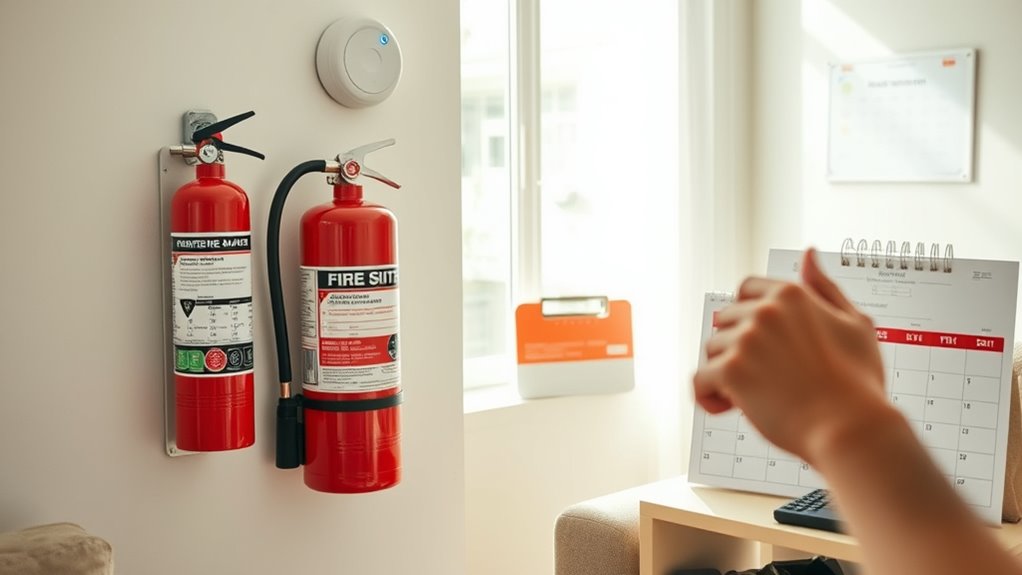
In addition to testing your detectors, there are several safety checks you should perform each month to guarantee your home remains secure. First, review and practice your emergency plan with everyone in your household, including a fire drill to ensure everyone knows how to respond quickly. Check that escape routes are clear and accessible, and confirm that all family members understand where to meet outside. Inspect your fire extinguishers to ensure they’re in good condition and easily reachable. Also, verify that windows and doors open smoothly for quick evacuation. Regularly updating your emergency plan and practicing fire drills help reinforce safety habits. Developing creativity in your safety routines can lead to more innovative and effective emergency responses. These simple checks keep your home prepared and reduce risks during an emergency.

Ready America 70380 72 Hour Emergency Kit, 4-Person, 3-Day Backpack, Includes First Aid Kit, Survival Blanket, Emergency Food Portable Disaster Preparedness Go-Bag for Earthquake, Fire, Flood
Emergency kit or disaster preparedness: Stay prepared for emergency situations everywhere you go. Ready America emergency survival kits…
As an affiliate, we earn on qualifying purchases.
As an affiliate, we earn on qualifying purchases.
Tips for Maintaining and Replacing Your Safety Devices
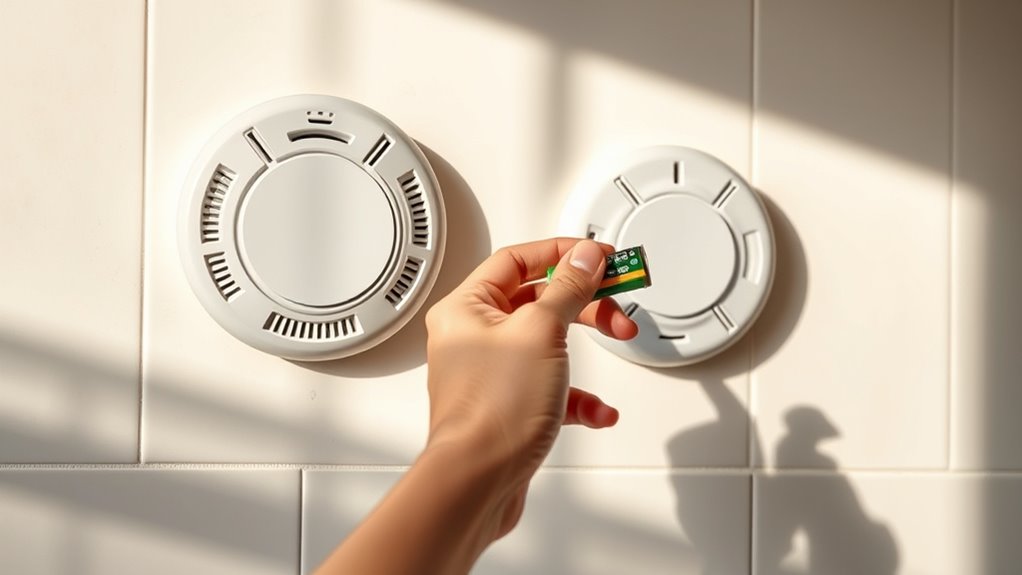
Maintaining and replacing your safety devices is key to guaranteeing they work effectively when you need them most. Regular device maintenance helps prevent failures during emergencies. Here are three essential tips:
- Schedule battery replacement twice a year to ensure alarms remain functional.
- Test your devices monthly to confirm they activate correctly and respond to signals.
- Clean your devices regularly to prevent dust or debris from impairing sensors or signals.
- Be aware of recognizing toxic relationships to ensure your emotional wellbeing and maintain a safe environment at home.
Frequently Asked Questions
How Often Should I Replace Batteries in My Detectors?
You should replace batteries in your detectors every six months to guarantee peak performance. Battery lifespan varies, so it’s important to monitor them regularly as part of detector maintenance. Even if your alarms seem to work fine, changing batteries periodically prevents failures during emergencies. Make it a habit to check and replace batteries on schedule, so your detectors stay reliable and keep your household safe at all times.
What Signs Indicate My Safety Devices Need Replacement?
Ever wonder what signals your safety device might be failing? You should watch for signs like frequent false alarms, dim or dead batteries, or physical damage. These are clear indicators that your detector maintenance is overdue, and your safety device longevity may be compromised. Regularly inspecting your detectors helps guarantee they work properly when needed. Don’t ignore these signs—prompt replacement keeps your home safe and your alert system reliable.
Are There Specific Brands Recommended for Reliable Detectors?
When choosing detectors, you should look for reputable brands known for reliability, like Nest, First Alert, or Kidde. These brands often guarantee device compatibility with smart home systems, making it easier to integrate and monitor. Reliable detectors give you peace of mind, and sticking with trusted brands helps avoid false alarms or missed alerts. Always check reviews and specifications to confirm they meet your household’s safety needs.
Can False Alarms Be a Sign of Detector Malfunction?
False alarms can indicate detector malfunction, often caused by dust, humidity, or electrical issues. If you experience frequent false alarms, it’s a sign you need to verify your detector’s maintenance. Regularly clean and test your detectors to guarantee they’re functioning properly. Ignoring false alarms can compromise safety, so addressing these signs promptly helps keep your household protected and prevents false alarms from becoming a safety concern.
How Do I Ensure Detectors Are Properly Installed?
Getting your detectors right is the first step to safety. Think of proper installation as laying a strong foundation—it’s key to avoiding false alarms. Follow installation tips like mounting detectors on ceilings or high on walls, away from drafts or heat sources. Correct detector placement ensures they’re sensitive enough to alert you promptly. Double-check that each unit is securely connected and facing the right way to keep your home safe and sound.
Conclusion
Testing your alert system monthly keeps your home safe and your family protected. Did you know that smoke detectors reduce fire deaths by about 50%? Regular checks guarantee they work when you need them most. By sticking to your routine, you minimize risks and stay ahead of potential hazards. Make these quick tests a habit—you’ll have peace of mind knowing your safety devices are always ready to alert you in an emergency.