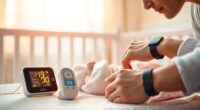
The evolution of baby cry monitors for deaf parents has moved from simple audio alerts to advanced visual and smart home integrations. Now, you can rely on flashing lights, vibrations, or notifications on your phone to alert you instantly when your baby needs attention. These innovations also connect with smart devices, offering greater independence and responsiveness. If you’re curious about how these technologies can enhance your caregiving experience, there’s more to discover ahead.

Get everyday helpers delivered free with Prime
- Fast, free delivery on millions of items
- Prime Video, Amazon Music and more included
- Member-only deals all year
Key Takeaways
- Modern baby cry monitors now include visual alerts like flashing lights and vibrations, making them accessible for deaf parents.
- Integration with smartphones and smart home devices enables instant notifications and centralized monitoring systems.
- Customizable alert options allow deaf parents to select the most effective cues for their caregiving needs.
- Technology fosters community engagement through apps and online platforms, providing support and shared resources.
- Overall, these advancements enhance responsiveness, safety, and peace of mind for deaf parents caring for their babies.
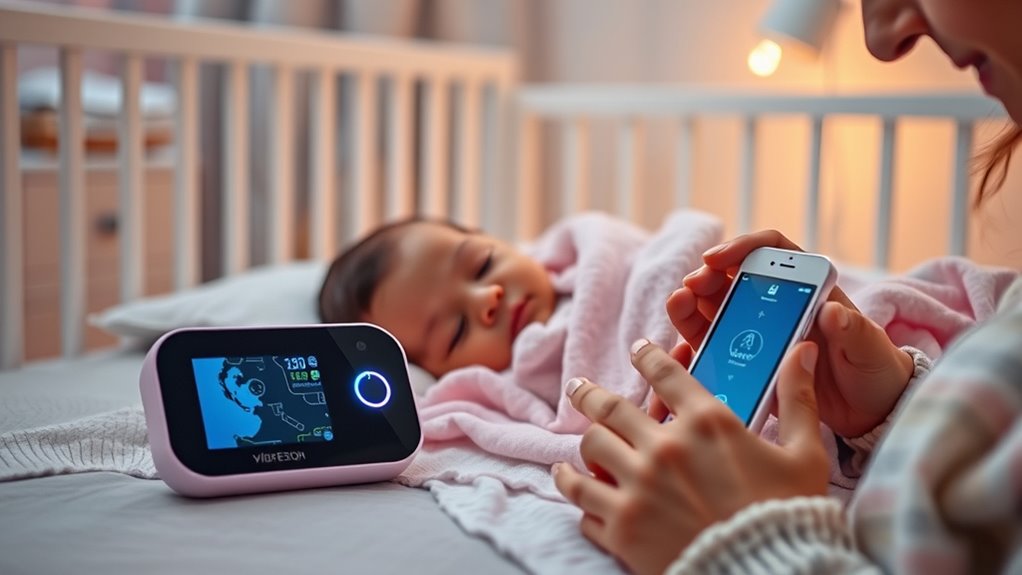
For deaf parents, traditional baby monitors often fall short in providing the reassurance they need to care for their little ones effectively. These monitors typically rely on audio cues, which aren’t accessible if you’re deaf or hard of hearing. Thankfully, technology has evolved to meet your needs, offering innovative solutions that prioritize visual alerts and seamless connectivity. Today’s baby cry monitors are increasingly integrated with smart home systems, allowing you to customize alerts through visual signals like flashing lights, vibrations, or even notifications on your smartphone. This integration creates a more reliable and responsive environment, ensuring you’re immediately aware of your baby’s needs regardless of your hearing ability.
Smart home integration transforms how you monitor your child. Instead of relying solely on standalone devices, you can connect your baby monitor with other smart devices in your home—like lights, doorbells, or security cameras—creating a centralized system that alerts you instantly. For example, when your baby cries, a smart light can flash in your living room or bedroom, or a vibration alert can notify your wristband or smartphone. This setup not only increases your responsiveness but also streamlines your caregiving routine, giving you more confidence and peace of mind. With these advanced systems, you can monitor your baby from anywhere, whether you’re in another room or outside running errands, making your day-to-day life more manageable.
Moreover, the evolution of baby cry monitors has strengthened the role of parental support networks. Many devices now offer features that connect you with other parents or caregivers through apps or online communities. These networks provide shared tips, troubleshooting advice, and emotional support, helping you navigate the challenges of parenting as a deaf parent. Some monitors even allow for real-time video sharing with trusted family members or support groups, so you’re never alone in caring for your child. This sense of community is essential, especially when technology bridges gaps and offers reassurance that your child is safe and well-cared-for. Additionally, understanding city dynamics and local resources can further empower deaf parents to access support and services tailored to their needs.
Frequently Asked Questions
How Do Baby Cry Monitors Connect to Smartphones?
You connect baby cry monitors to your smartphone through wireless connectivity, usually Wi-Fi or Bluetooth. Once paired, the monitor transmits audio alerts to your device. App integration allows you to monitor your baby’s cries directly on your phone, providing real-time notifications and controls. Simply install the compatible app, follow setup instructions, and guarantee your device is connected to the same network for seamless communication.
Are There Specific Monitors Designed for Deaf Parents?
Did you know that over 90% of deaf parents find traditional baby monitors inadequate? Yes, there are monitors specifically designed for you, featuring visual alert systems and vibration notifications. These devices ensure you don’t miss your baby’s cries by alerting you visually or through vibrations. They’re tailored to meet your needs, helping you stay connected and responsive, no matter the noise level or environment.
What Safety Standards Do Baby Cry Monitors Adhere To?
You should know that baby cry monitors adhere to strict safety standards through safety certifications and regulatory compliance. These devices meet industry requirements to ensure they’re safe for your baby and your family. Manufacturers typically undergo rigorous testing and certification processes, such as FCC or CE approval, to confirm they don’t interfere with other electronics and operate safely. Always check for these certifications before choosing a monitor to guarantee safety and reliability.
Can These Monitors Detect Subtle Infant Distress Signals?
You might wonder if these monitors can detect subtle infant distress signals. Many models now feature advanced sound sensitivity, allowing you to pick up on quiet changes in your baby’s cry or breathing patterns. They analyze baby sleep patterns closely, alerting you to even faint signs of discomfort. With improved sound detection, you stay connected to your baby’s needs, giving you peace of mind while responding promptly to their distress signals.
How Long Do Battery Charges Typically Last on These Devices?
Did you know that most baby cry monitors offer a battery life of around 8 to 12 hours? You’ll want to focus on power management features to maximize usage, especially during long nights. Typically, these devices come with rechargeable batteries, so keeping an eye on battery life helps avoid interruptions. Proper charging habits guarantee your monitor stays reliable, giving you peace of mind while you care for your little one.
Conclusion
As a deaf parent, these innovative baby cry monitors have revolutionized how you connect with your little one. They’re not just devices—they’re lifelines that bridge the silence, turning every cry into a symphony of reassurance. With each technological leap, you gain more confidence and peace of mind, making parenthood feel like a walk in the park—even in the midst of the most deafening chaos. Truly, these monitors are a game-changer that transform silence into boundless love.
Halloween Picks
halloween
As an affiliate, we earn on qualifying purchases.