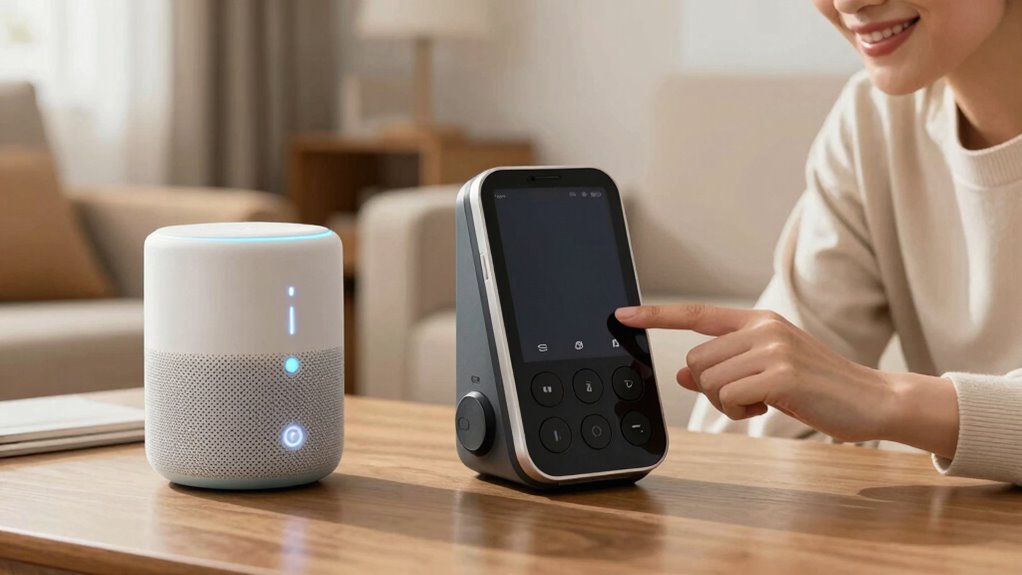

Convenience tech aims to make your daily routines easier by offering features that save time, like smart home controls or wearables, designed for broad use. Accessibility tech, on the other hand, is built specifically to break down barriers for people with physical, sensory, or cognitive challenges, offering adaptive tools and inclusive design. While they sometimes overlap, understanding their primary goals helps you see how each serves different needs—exploring further reveals just how these differences shape innovative tech solutions for everyone.

Get everyday helpers delivered free — and shop member deals
- Fast, free delivery on millions of items
- Access to Prime Big Deal Days deals on October 6–7
- Prime Video, Amazon Music and more included
Key Takeaways
- Convenience tech aims to simplify routines for broad users, while accessibility tech specifically supports individuals with disabilities or challenges.
- Convenience features focus on comfort and efficiency; accessibility tools emphasize removing barriers for inclusive access.
- Many convenience devices are designed for aesthetic appeal and ease of use, unlike accessibility tech, which prioritizes adaptability and universal design.
- Overlapping features may exist, but accessibility tech includes adaptive options tailored to specific needs.
- Differentiating these categories guides developers to create more inclusive, universally accessible technologies.

In today’s rapidly evolving tech landscape, it’s easy to confuse convenience features with accessibility tools, but understanding their true differences is essential. Convenience tech, like wearable devices and smart home systems, aims to make everyday life easier and more efficient. These innovations often focus on enhancing comfort, saving time, and adding fun or luxury to routines. For example, a smartwatch can give you quick notifications or track your fitness, but its primary purpose is convenience rather than addressing specific accessibility needs. Similarly, a smart home system allows you to control lights, thermostats, or security cameras with a tap or voice command, making daily tasks more seamless. While these features benefit many users, they aren’t primarily designed to help individuals with disabilities or impairments. Recognizing the design intentions behind these technologies can help differentiate their primary functions. Additionally, many convenience features are developed with a broad user base in mind, sometimes overlooking the needs of those requiring inclusive design principles. Incorporating universal design considerations can ensure these technologies are more accessible to everyone.
Convenience tech simplifies daily routines but isn’t specifically designed to support individuals with disabilities or impairments.
Accessibility tech, on the other hand, is specifically built to empower people who face barriers in their daily lives due to physical, sensory, or cognitive challenges. These tools are designed to bridge gaps and provide equal access. For instance, speech-to-text apps assist those with hearing impairments, while screen readers enable visually impaired users to navigate digital content. When it comes to wearable devices, accessibility features might include haptic feedback for those with hearing loss or enlarged icons for users with limited dexterity. Smart home devices with accessibility in mind might include voice-activated controls that allow users with mobility challenges to operate appliances without physical effort. The goal here is to remove obstacles, not just add convenience.
Many people assume that because a device offers a sleek, user-friendly experience, it automatically qualifies as an accessibility tool. However, convenience features often enhance usability for the majority without considering those with specific needs. Accessibility tools, meanwhile, are intentionally designed to be inclusive, providing options that adapt to diverse abilities. When you understand this distinction, you realize that accessibility tech isn’t just about making things easier for some; it’s about ensuring everyone has equal opportunities to engage with technology. This difference shapes how developers prioritize features—while convenience tech might focus on aesthetic appeal and intuitive design, accessibility tech emphasizes flexibility, adaptability, and universal design principles.
In essence, convenience tech and accessibility tech serve different purposes, even if they sometimes overlap. Recognizing this helps you appreciate the importance of inclusive design, ensuring that innovations like wearable devices and smart home systems truly serve all users—not just those seeking convenience but also those needing essential support. Additionally, understanding the inclusive design principles behind accessibility tech can inspire more thoughtful and equitable innovation across the tech industry.
smart home voice control devices
As an affiliate, we earn on qualifying purchases.
As an affiliate, we earn on qualifying purchases.
Frequently Asked Questions
How Do Companies Decide Which Tech to Prioritize for Accessibility Versus Convenience?
You decide which tech to prioritize by weighing priority dilemmas and innovation trade-offs. Companies assess user needs, focusing on inclusivity for accessibility tech, even if it requires extra resources. For convenience tech, they consider market demand and profitability. Balancing these factors involves evaluating long-term benefits versus immediate gains, ensuring that accessibility isn’t compromised for convenience, and vice versa, ultimately aligning with their mission to serve diverse user needs effectively.
Are Accessibility Features Always Beneficial for All Users?
Did you know that 15% of the world’s population has some form of disability? Accessibility features aren’t always universally beneficial; they depend on individual needs. By applying Universal Design and practicing user empathy, you can create tech that genuinely serves diverse users. While many benefits overlap, some features may be unnecessary or even intrusive for others. Always consider user context to make sure your innovations truly enhance everyone’s experience.
What Are the Biggest Challenges in Developing Accessibility Technology?
You face challenges like balancing Universal Design principles with inclusive innovation, ensuring technology benefits diverse users without adding complexity. Developing accessible tech requires understanding varied needs, which can complicate design and increase costs. You also need to stay ahead of evolving standards and user expectations. Overcoming these hurdles involves prioritizing universal usability from the start, fostering collaboration, and continuously refining your approach to create truly inclusive solutions that serve everyone effectively.
Can Convenience Tech Improve Accessibility for Disabled Users?
Yes, convenience tech can improve accessibility for disabled users by incorporating assistive innovation and inclusive design. When you develop such technology with these principles in mind, you create products that are easier for everyone to use, regardless of ability. By focusing on features like voice commands, customizable interfaces, and easy-to-navigate layouts, you make daily tasks more accessible, fostering independence and enhancing quality of life for disabled users.
How Is User Feedback Incorporated Into Designing Both Tech Types?
You involve users early by gathering their feedback through interviews, surveys, and usability tests. This user involvement guides design iterations, ensuring the tech meets real needs. Developers continuously refine features based on feedback, addressing challenges and enhancing usability. For both convenience and accessibility tech, incorporating user insights creates more effective, inclusive solutions that truly serve diverse needs, making technology more intuitive and accessible for everyone.
Conclusion
So, next time you tap your phone or use a voice command, remember—what seems like simple convenience might hide a deeper purpose. Accessibility tech quietly transforms lives, often unseen, yet profoundly impactful. It’s more than just ease; it’s about creating a world where everyone has a chance. The real difference isn’t just in the tech itself, but in what it promises for the future—one where no one’s left behind. Are you ready to see it?
Fall Picks
fall essentials
As an affiliate, we earn on qualifying purchases.