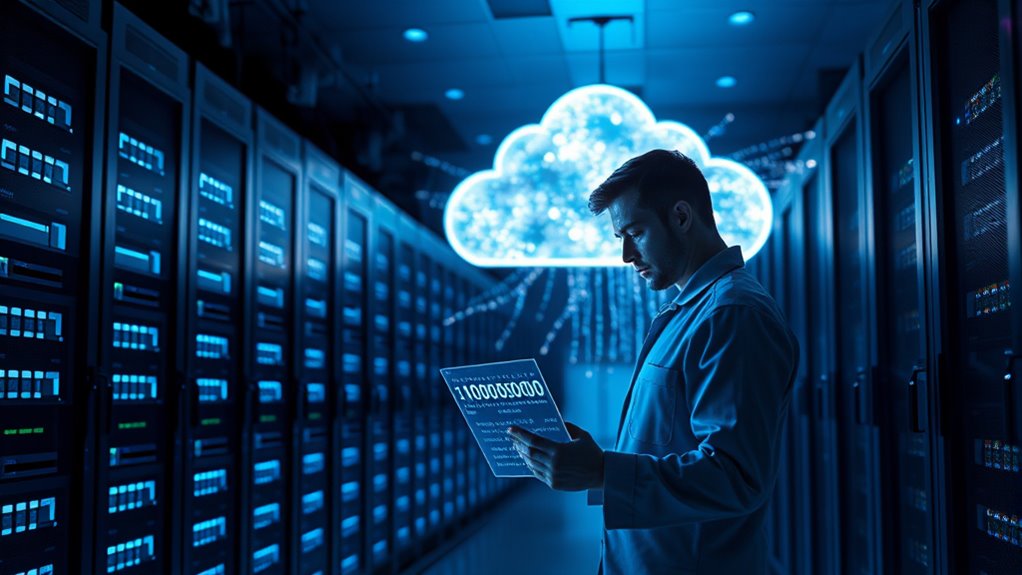

When choosing between edge and cloud captioning, consider your privacy and latency needs. Edge captioning keeps data locally, reducing exposure risks and ensuring sensitive info stays secure, which is ideal for privacy concerns. It also offers lower latency since processing happens nearby, enabling real-time responses. Cloud captioning, while scalable, involves transferring data over networks, which can increase latency and pose security challenges if not managed properly. To discover how these factors might impact your specific situation, keep exploring further.
Key Takeaways
- Edge captioning processes data locally, enhancing privacy by minimizing data transmission and reducing exposure risks.
- Cloud captioning involves transmitting data over the internet, requiring robust security measures to protect sensitive information.
- Edge offers lower latency through on-site processing, ideal for real-time captioning needs.
- Cloud captioning may experience higher latency due to data transfer, potentially affecting immediate response requirements.
- Privacy depends on security protocols; edge provides greater control, while cloud relies on provider security measures.

As the demand for real-time captioning grows, organizations face an essential choice between edge and cloud solutions. Your decision hinges on how well each option aligns with your priorities for data security and scalability. Edge captioning processes data closer to its source, meaning it handles sensitive information locally. This setup can considerably enhance data security because it minimizes the risk of transmitting unencrypted or confidential data over networks. You don’t have to worry about data breaches hitting centralized servers, especially if you handle sensitive content like medical or legal information. Plus, since data stays on-site, you’re in control of security protocols, access, and compliance measures, making it easier to meet strict industry standards. Incorporating gears and mechanical elements, which are characteristic of Steampunk design, can symbolize the intricate and precise nature of edge processing systems.
On the other hand, cloud captioning offers impressive scalability. As your organization grows or your demand for captioning increases, cloud solutions can easily adapt to handle more data without the need for heavy investments in physical infrastructure. Cloud providers typically have vast resources and cloud-native features that allow you to expand capacity smoothly, ensuring seamless service during peak times or large events. This scalability is essential when your captioning needs fluctuate or you’re managing multiple locations simultaneously. Cloud solutions also often come with robust security measures, but because data traverses the internet to reach centralized servers, your organization must implement strong encryption and access controls to safeguard sensitive information.
edge captioning device
As an affiliate, we earn on qualifying purchases.
As an affiliate, we earn on qualifying purchases.
Frequently Asked Questions
How Does Edge Captioning Impact Device Battery Life?
Edge captioning can slightly impact your device’s battery life because it requires local processing, which may lead to increased battery drain. However, it generally improves power efficiency compared to constant data transmission to the cloud. By handling tasks on the device, you minimize network usage, saving energy. While there’s some drain, optimized edge solutions aim to balance accurate captioning with minimal impact on your device’s battery life.
Can Cloud Captioning Adapt to Real-Time Language Changes?
Imagine you’re a language wizard in the age of dial-up, and yes, cloud captioning can adapt to real-time language changes. It leverages advanced language models for instant updates, ensuring captions stay current. With seamless language adaptation and real-time updates, cloud captioning responds swiftly to slang, new terms, or context shifts. This makes it highly effective for dynamic conversations, enhancing clarity and inclusivity in live settings.
What Are the Costs Associated With Edge Versus Cloud Captioning?
You’ll find that cloud captioning often costs less upfront due to minimal infrastructure investment, making it more cost-efficient for many users. However, edge captioning can incur higher costs because of the need for dedicated infrastructure, hardware, and ongoing maintenance at each location. While cloud solutions may save money initially, consider your specific needs for privacy, latency, and long-term expenses to choose the most cost-effective option for you.
How Do Privacy Laws Influence Captioning Choices?
Think of privacy laws as a fortress guarding your castle. They demand you respect data sovereignty and obtain user consent, influencing your captioning choices. If laws are strict, you might choose edge captioning, keeping data local and secure. If they’re more lenient, cloud captioning could work, but always guarantee you prioritize user privacy, respecting legal boundaries. Your goal is to protect your audience’s trust and comply with regulations.
Is Hybrid Captioning a Viable Solution for Privacy and Latency?
Yes, hybrid captioning is a viable solution for balancing data privacy and latency. By combining edge and cloud systems, you can process sensitive data locally to protect privacy while leveraging cloud resources for efficiency. However, you should consider system complexity, as managing both components requires careful integration and security measures. With proper planning, hybrid captioning offers a flexible way to meet privacy standards without sacrificing performance.
![WavePad Free Audio Editor – Create Music and Sound Tracks with Audio Editing Tools and Effects [Download]](https://m.media-amazon.com/images/I/B1HPw+BmlXS._SL500_.png "Edge vs. Cloud Captioning: Privacy and Latency 4")
WavePad Free Audio Editor – Create Music and Sound Tracks with Audio Editing Tools and Effects [Download]
Easily edit music and audio tracks with one of the many music editing tools available.
As an affiliate, we earn on qualifying purchases.
As an affiliate, we earn on qualifying purchases.
Conclusion
Imagine standing at the crossroads of innovation, where your choices shape privacy and speed. Edge captioning keeps your data close, like a trusted friend, ensuring privacy and quick responses. Cloud captioning, on the other hand, offers vast resources but feels like sending your data on a journey across the sky. Weigh what matters most—speed near your fingertips or safeguarding your privacy—and decide where your comfort truly lies in this digital landscape.
real-time captioning hardware
As an affiliate, we earn on qualifying purchases.
As an affiliate, we earn on qualifying purchases.
privacy-focused captioning solutions
As an affiliate, we earn on qualifying purchases.
As an affiliate, we earn on qualifying purchases.