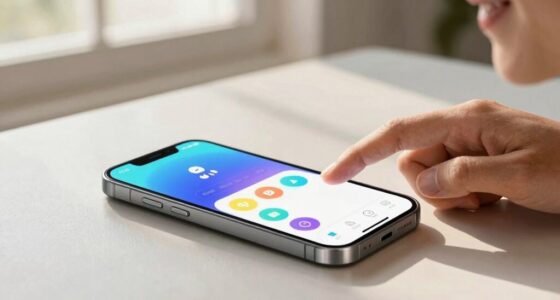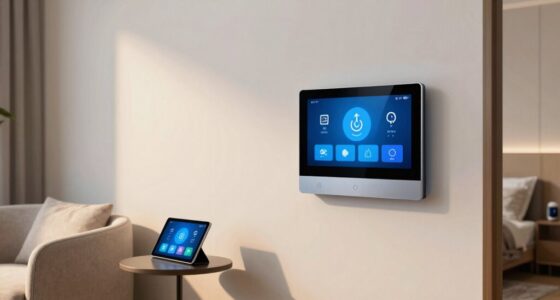

Smart home gear can boost your accessibility by making daily tasks easier and reducing physical and mental strain. Voice activation lets you control lights, locks, and appliances hands-free, saving time and effort. Adaptive technologies respond to your needs automatically, like lighting that adjusts to your presence. Designed to be simple and user-friendly, these systems help you stay independent without adding complexity. Keep exploring to discover how smart homes can truly transform your everyday life.

Get everyday helpers delivered free with Prime
- Fast, free delivery on millions of items
- Prime Video, Amazon Music and more included
- Member-only deals all year
Key Takeaways
- Voice activation allows hands-free control, simplifying daily tasks and reducing physical effort.
- Adaptive technologies tailor the environment to individual needs, enhancing independence.
- Inclusive design ensures smart systems are intuitive and easy for everyone to use.
- Modular setups enable gradual upgrades, avoiding complexity and overhauls.
- User-friendly devices require minimal maintenance and tech knowledge, making smart homes accessible for all.
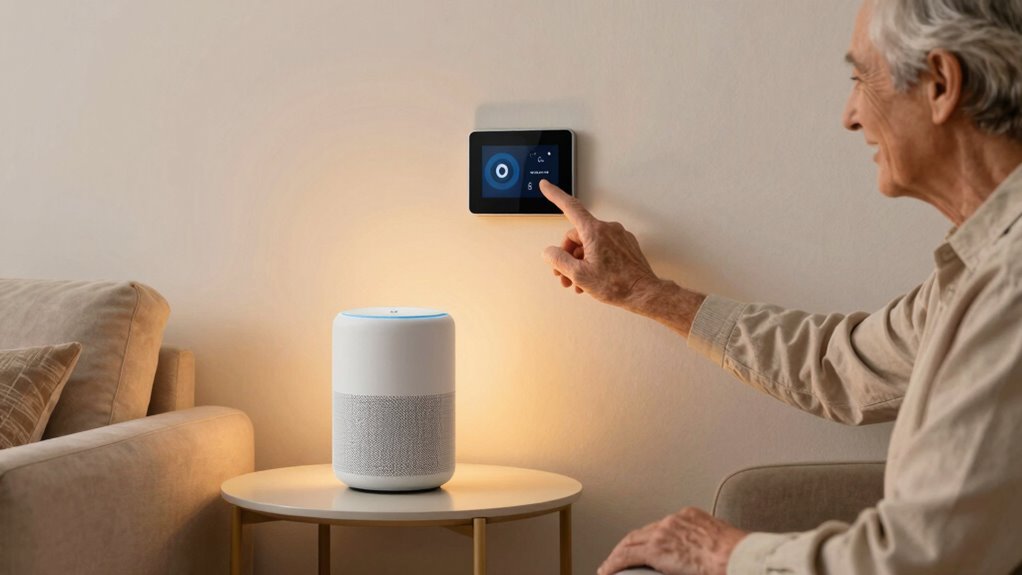
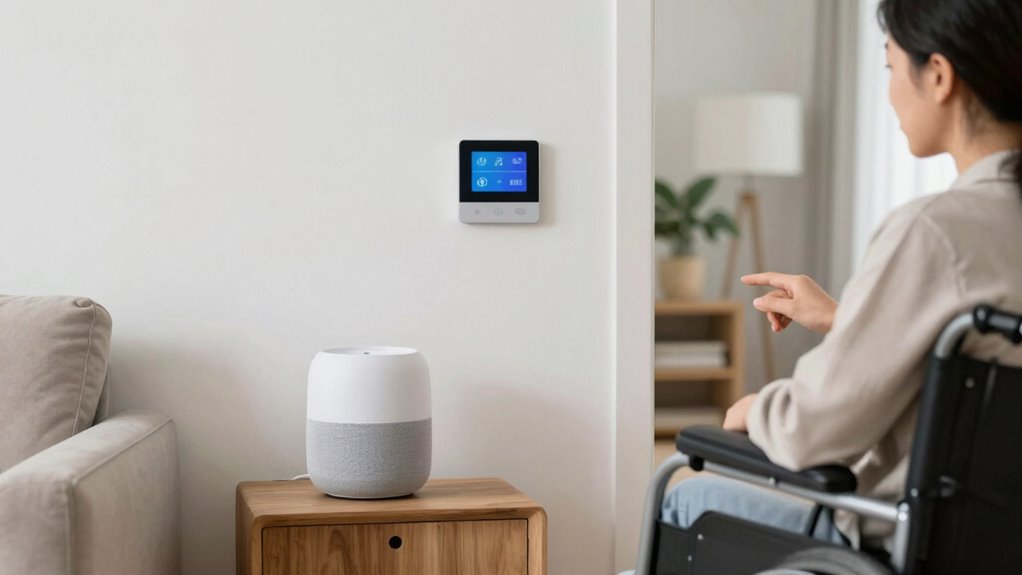
Smart home gear has the potential to transform everyday living for people with disabilities or mobility challenges, making independence more attainable. When you incorporate voice activation into your home setup, you gain a hands-free way to control lights, thermostats, locks, and appliances. Instead of fumbling with switches or relying on others, you simply speak, and your commands are executed instantly. This seamless interaction reduces frustration and saves time, allowing you to focus on what truly matters. Voice activation isn’t just about convenience; it’s about empowering you to manage your environment more freely, without the physical strain of traditional controls.
Adaptive technologies are at the heart of making smart homes accessible. These tools are designed to respond to your specific needs, whether that’s through custom voice commands, motion sensors, or automated routines. For example, adaptive lighting systems can turn on or dim automatically based on your presence, eliminating the need to reach for switches. Similarly, smart locks can be operated remotely or via voice commands, providing both security and ease of access. These technologies adapt to your lifestyle, reducing barriers and enhancing your ability to live independently. Incorporating adaptive technology can help tailor your smart home setup to better suit your individual needs, and understanding how home automation works can further optimize your environment. Additionally, integrating accessible design principles ensures the system remains intuitive and easy to use for everyone. Recognizing that user-friendly interfaces are crucial helps ensure these systems remain accessible and easy to operate. Employing universal design principles can also make these technologies more inclusive for all users.
What makes smart home gear particularly effective is its simplicity and integration. You don’t need to overhaul your entire home to benefit from these innovations. Instead, you can start small—installing a voice-activated assistant in your living room or adding sensors to key entry points. Over time, you can expand your system, linking devices together to create a cohesive environment that responds intuitively to your needs. This modular approach keeps things straightforward, avoiding the complexity that often comes with more elaborate setups.
Most importantly, smart home gear doesn’t overcomplicate your life. It’s designed to be user-friendly, with intuitive interfaces and minimal maintenance. You don’t need to be tech-savvy to get started; many devices come with clear instructions and support. The goal is to enhance your independence without adding stress or confusion. By leveraging voice activation and adaptive technologies, you create a home environment that works for you—making daily activities easier and your life more manageable.
In the end, this technology isn’t about replacing human interaction but about giving you more control and freedom. Smart home gear offers practical solutions that fit seamlessly into your routine, empowering you to live more independently and comfortably. It’s about transforming your space into a personalized environment that responds to your needs and preferences, all while keeping things simple and accessible.
voice activated smart home assistant
As an affiliate, we earn on qualifying purchases.
As an affiliate, we earn on qualifying purchases.
Frequently Asked Questions
Can Smart Home Devices Be Customized for Individual Accessibility Needs?
Yes, smart home devices can be customized for your individual accessibility needs. You can use voice customization to set commands that suit your preferences, making controls easier. Device adaptability allows you to modify settings, such as font size or sound alerts, so they fit your needs. This flexibility guarantees your smart home works seamlessly for you, enhancing convenience and independence without adding complexity to your daily routine.
What Are the Initial Costs of Installing Smart Home Accessibility Features?
The initial costs of installing smart home accessibility features vary widely, depending on the devices you choose. A cost comparison shows that basic systems, like smart speakers or automated lighting, are affordable and simple to install, often involving a straightforward setup process. More advanced solutions, such as motorized doors or custom integrations, may require professional installation and higher expenses, but they considerably enhance accessibility without overly complicating your daily routine.
How Secure Is My Personal Data With Smart Home Accessibility Devices?
Your personal data with smart home accessibility devices stays secure through data encryption, which protects your information during transmission. It’s also essential to review privacy policies, so you understand how your data is used and stored. While no system is completely risk-free, choosing reputable brands and regularly updating software greatly enhances your security. Staying informed and cautious helps ensure your data remains private while enjoying the benefits of smart home technology.
Are Smart Home Gadgets Compatible With Existing Home Systems?
Oh, absolutely, your smart gadgets are probably just waiting to mingle with your existing home systems. Thanks to advanced device integration and voice control, compatibility is less of a mystery and more of a promise. Modern smart home gear is designed to sync effortlessly, so you can command your lights or thermostat with a simple voice command, no fuss, no drama — just smooth, integrated living.
What Training or Support Is Available for New Users With Disabilities?
You’ll find plenty of assistive technology companies offer user training to help you get started with smart home gear. Support might include in-person tutorials, online guides, or customer service hotlines tailored for users with disabilities. These resources aim to simplify setup and daily use, ensuring you feel confident operating your devices without added stress. Taking advantage of these training options helps you maximize your smart home’s accessibility benefits effortlessly.
Conclusion
So, here’s the irony: all this smart home gear promises to make your life easier, yet sometimes it feels like it’s just another puzzle to solve. But if you choose the right devices, they actually simplify your routines and boost independence without turning your home into a high-tech maze. Ironically, the best gadgets are the ones that work quietly in the background, proving that accessibility doesn’t have to come with a steep learning curve—just a little smart thinking.
Halloween Picks
halloween
As an affiliate, we earn on qualifying purchases.