
Smart reading devices help you manage daily tasks more independently by using text-to-speech, tactile feedback, and voice controls. You can easily access documents, set reminders, and search online without assistance. These devices are designed with accessibility and personalization in mind, making navigation simple and tailored to your needs. They also connect with smartphones and smart home systems, boosting your independence. Keep exploring to discover how these features can improve your everyday experience.
Key Takeaways
- Convert written content into audio or tactile formats for easy access to daily information.
- Use voice commands and gesture controls to navigate and operate devices independently.
- Customize settings to match individual preferences, enhancing comfort and usability.
- Assist with managing schedules, reminders, and online searches for everyday tasks.
- Connect with smartphones and smart home systems to increase autonomy and streamline routines.
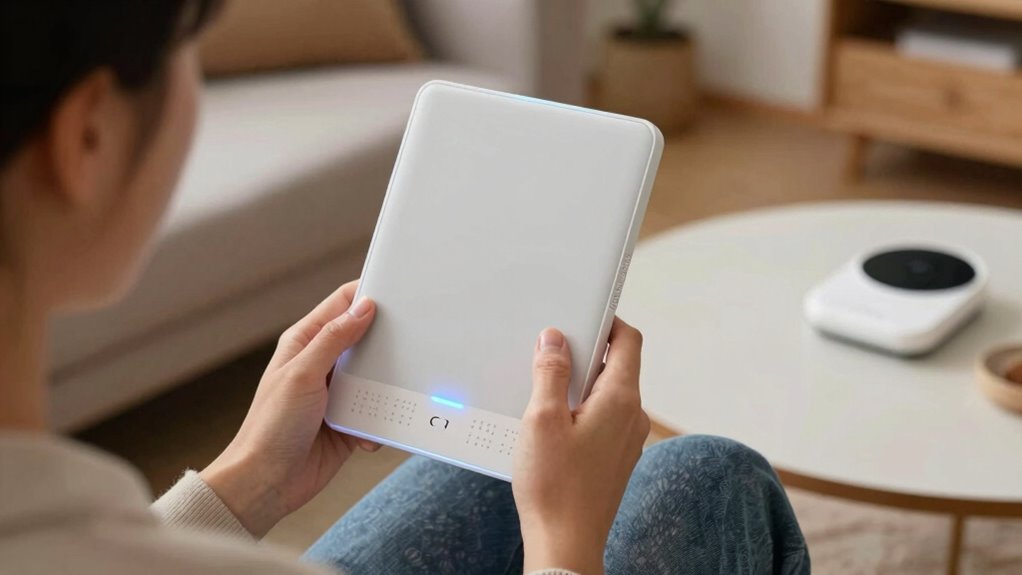
Supporting blind users requires a combination of accessible technology and thoughtful design. When it comes to daily tasks, smart reading devices play a pivotal role, offering independence and convenience. These devices are built with assistive technology that transforms written content into audio or tactile formats, making information accessible without requiring sight. Accessibility features are carefully integrated to guarantee that users like you can navigate, read, and interact with content seamlessly. For instance, text-to-speech capabilities allow you to listen to books, articles, and emails, so you stay connected and informed throughout your day. The voice output adapts to your preferences, adjusting speed and pitch, which enhances comfort and comprehension.
Smart reading devices often include features like tactile feedback or Braille displays, further supporting your ability to read printed or digital text. These tactile displays convert digital text into Braille, enabling you to feel the content without relying on sight. This technology is especially useful for reading documents, labels, or menus on the go. You can quickly get the information you need, whether you’re in a meeting, at a restaurant, or shopping. You can also customize accessibility features to better suit your individual needs, ensuring a more personalized experience. The devices also come equipped with navigation tools that help you find specific sections or pages, making the reading experience more efficient. Voice commands and gesture controls simplify operation, so you don’t need to struggle with complex menus or buttons. Additionally, understanding assistive technology can help you maximize the benefits of these devices for your daily routines.
Furthermore, these devices are designed with user-centered design principles to make sure they are intuitive and easy to operate, even for those with little prior experience with technology. Incorporating adaptive features allows the device to respond to your specific preferences, making it more comfortable and efficient to use. By integrating these accessibility features, designers ensure that the technology remains inclusive and usable for everyone. Beyond just reading, these devices assist with everyday tasks like managing schedules, setting reminders, or searching for information online. The integration of accessibility features means you can activate functions with simple voice commands or taps, reducing dependency on others. Many devices also support connectivity with smartphones or smart home systems, broadening your control over your environment. This interconnectedness contributes to a more autonomous lifestyle, allowing you to perform tasks that might have once required assistance. Additionally, updates and customization options ensure that the device adapts to your evolving needs, providing a tailored experience.
smart reading device for blind users
As an affiliate, we earn on qualifying purchases.
As an affiliate, we earn on qualifying purchases.
Frequently Asked Questions
How Affordable Are Smart Reading Devices for Blind Users?
Smart reading devices vary in cost, but they’re generally becoming more affordable due to increased market availability and competitive options. You can find devices across a range of prices by comparing costs and features. While some high-end models may be pricey, many budget-friendly options exist, making these tools accessible. Doing a thorough cost comparison helps you find a device that fits your needs and budget, ensuring you get the best value for your money.
Are There Training Programs for New Users?
Yes, there are training programs designed for new users of smart reading devices. These programs often include user onboarding sessions that teach you essential training techniques, helping you get comfortable with the device’s features and functions. You might find workshops, tutorials, or one-on-one guidance offered by manufacturers or community organizations. These resources aim to guarantee you quickly adapt to using the device effectively in your daily tasks.
Can Devices Be Customized for Individual Needs?
Yes, devices can be customized for your individual needs. You can explore personalization options and accessibility settings to tailor the device’s features, like voice speed, font size, and contrast, to suit you best. These options help make reading easier and more comfortable. By adjusting these settings, you guarantee the device works efficiently for your specific preferences, enhancing your daily tasks and overall experience.
What Is the Battery Life of These Devices?
The battery life of smart reading devices varies, but most offer impressive battery durability, lasting several hours on a single charge. Power optimization features help extend usage, ensuring you can rely on your device throughout the day. Regularly managing settings and utilizing power-saving modes can further enhance battery life. Overall, these devices are designed to keep up with your daily routines, providing dependable performance when you need it most.
How Do Devices Handle Different Languages?
Think of these devices as linguistic chameleons, seamlessly blending into your world. They handle different languages through advanced language recognition and multilingual support, allowing you to switch effortlessly between languages. Whether you’re reading in English, Spanish, or Chinese, the device adapts instantly. This flexibility guarantees you stay connected and informed, no matter the language, making daily tasks smoother and more accessible for you.
Conclusion
Smart reading devices truly transform daily life for blind users, making tasks more accessible and independent. With over 85% of users reporting increased confidence in completing everyday activities, these devices prove their value. By providing instant access to books, labels, and instructions, you’ll find yourself more empowered and connected than ever before. Embrace these technologies, and you’ll discover a world of possibilities right at your fingertips, enhancing your independence every single day.