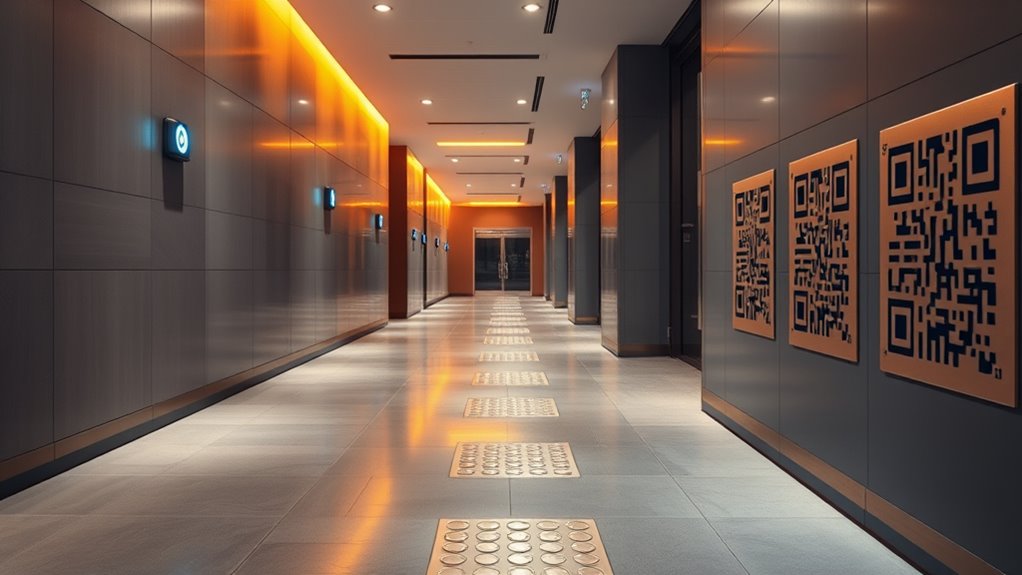

Accessible wayfinding combines tactile cues, QR codes, and beacon technology to help you navigate environments safely and independently. Tactile maps and raised symbols let you feel the layout, while QR codes provide instant access to detailed info. Beacons emit signals your smartphone or assistive devices can detect, offering audio or haptic feedback. Together, these tools create a seamless experience, empowering you to explore spaces confidently—if you want to learn more, keep exploring how these innovations work together.
Key Takeaways
- Beacons enable real-time, location-based audio or haptic feedback to assist visually impaired users in navigation.
- QR codes provide quick access to detailed, accessible maps and directions via smartphones or assistive devices.
- Tactile cues, such as raised lines and textured symbols, help users feel environmental layouts and identify key points.
- Combining beacons, QR codes, and tactile cues creates multi-sensory environments that enhance independence and safety.
- Integrating these technologies supports inclusive, accessible wayfinding for diverse users in complex spaces.
Have you ever struggled to find your way in a new place? Whether you’re steering through a busy airport, a hospital, or a public park, feeling lost can be frustrating and even intimidating. That’s where accessible wayfinding comes into play, making environments easier to understand and traverse for everyone, especially those with visual impairments. One effective method is blind navigation, which relies on tools like tactile maps and other sensory cues to guide you confidently through unfamiliar spaces. Tactile maps, in particular, are invaluable because they allow you to feel the layout of a space with your fingertips. By feeling the contours, textures, and symbols, you can develop a mental map of the area, helping you orient yourself and plan your route without needing sighted assistance. These maps are often placed at key points, such as entrances or intersections, so you can access them easily and get a sense of the environment before moving forward. They’re designed with raised lines and braille labels, which provide clear and accessible information, making navigation more intuitive for those who rely on touch.
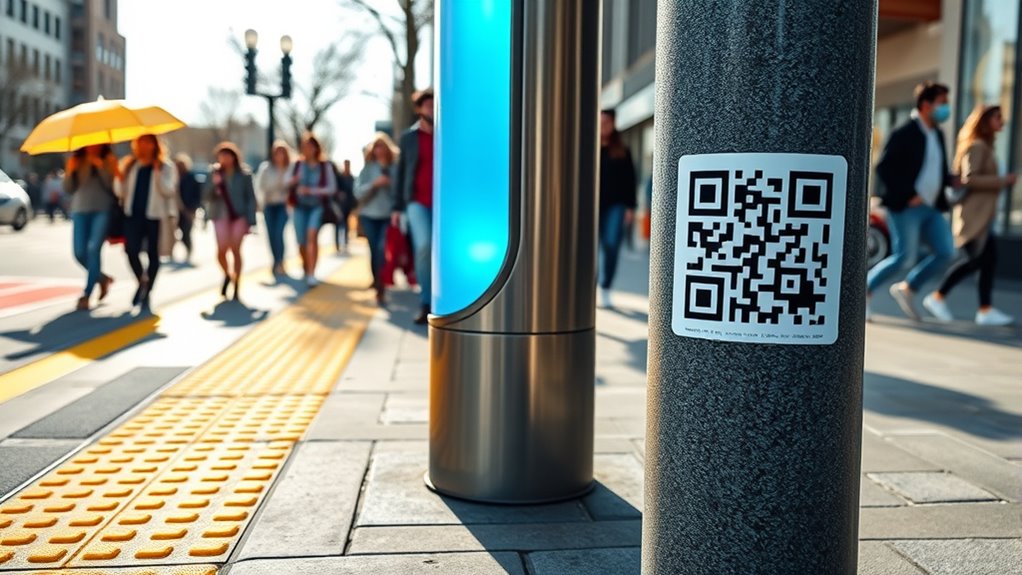
Beyond tactile maps, other cues are integrated into accessible wayfinding solutions. Beacons, for example, are small devices that emit signals detectable by smartphones or specialized assistive devices. When you approach a beacon, your device can provide audio or haptic feedback, alerting you to nearby points of interest or directions. This technology is particularly helpful in complex buildings or outdoor spaces, where visual signage might be limited or confusing. Similarly, QR codes placed at strategic locations serve as quick access points for detailed information. When scanned with your smartphone, these codes can deliver audio descriptions, maps, or step-by-step instructions, allowing you to gather essential navigation details on the spot. This combination of physical cues and digital information creates a seamless, multi-sensory environment that supports independent movement. Incorporating accessible technology into wayfinding solutions further enhances the experience by providing real-time updates and personalized guidance.
All these elements work together to create an inclusive environment where everyone can navigate confidently and independently. Whether it’s feeling the textured surfaces of tactile maps, guided by beacons, or scanning QR codes for instant information, these innovations empower you to explore new spaces without relying solely on others. They reduce anxiety, increase safety, and foster a sense of autonomy. As technology advances and awareness of accessibility grows, these tools become more sophisticated and widespread, making public spaces more welcoming and navigable for all. By integrating tactile cues, beacons, and QR codes into environment design, we’re building a world where everyone can move freely and confidently, regardless of sensory limitations.
Frequently Asked Questions
How Do Beacons Enhance Navigation for Visually Impaired Users?
Beacons enhance your navigation by providing real-time auditory cues and haptic feedback, guiding you effectively through spaces. When you approach a beacon, it triggers your device to deliver clear, spoken directions, reducing confusion. The haptic signals, like vibrations, alert you to turns or important points, making your experience more independent and safe. This combination helps you navigate complex environments confidently, using your senses to stay oriented and on track.
Are QR Codes Effective for Indoor and Outdoor Wayfinding?
QR codes are quite effective for indoor and outdoor wayfinding, acting like trusty signposts guiding you through complex spaces. Their durability ensures they withstand weather and wear, while indoor visibility allows quick scanning in well-lit areas. However, outdoor conditions like rain or dirt can obscure them, so placement and protection matter. Overall, when properly maintained, QR codes serve as reliable, accessible tools that help you navigate confidently wherever you go.
What Materials Are Best for Tactile Cues in Public Spaces?
You should choose materials with a durable texture, like vinyl, rubber, or metal, for tactile cues in public spaces. These materials withstand frequent contact and environmental wear, ensuring longevity. Opt for textures that are easily distinguishable by touch, such as raised patterns or contrasting surfaces. Prioritize options that combine durability with clear tactile feedback, making navigation accessible for everyone while standing up to heavy use and outdoor conditions.
How Do Privacy Concerns Impact Beacon and QR Code Usage?
Imagine it’s 1999, and you’re exploring a new city. Privacy concerns with beacons and QR codes revolve around data encryption and user consent. You need to trust that your location data stays secure, and that you’re informed before sharing it. Companies must prioritize encryption and clear consent processes to protect your privacy. Without these safeguards, users might hesitate to engage, limiting the accessibility and effectiveness of wayfinding systems.
Can Accessible Wayfinding Solutions Be Integrated With Existing Infrastructure?
Yes, you can integrate accessible wayfinding solutions with existing infrastructure. You’ll need to address compatibility challenges, ensuring that beacons, QR codes, and tactile cues work seamlessly with current systems. By collaborating with infrastructure experts and choosing adaptable technology, you’ll streamline the integration process, making navigation easier for everyone. This approach helps you create a more inclusive environment without costly overhauls, leveraging what’s already in place.
Conclusion
By embracing beacons, QR codes, and tactile cues, you can turn wayfinding into a guiding light for everyone. Think of these tools as your trusty compass, leading all travelers safely and confidently through any space. When accessibility becomes your map, you create an environment where no one feels lost in the dark. Together, you can transform navigation into an empowering journey—bright, clear, and inclusive for all.