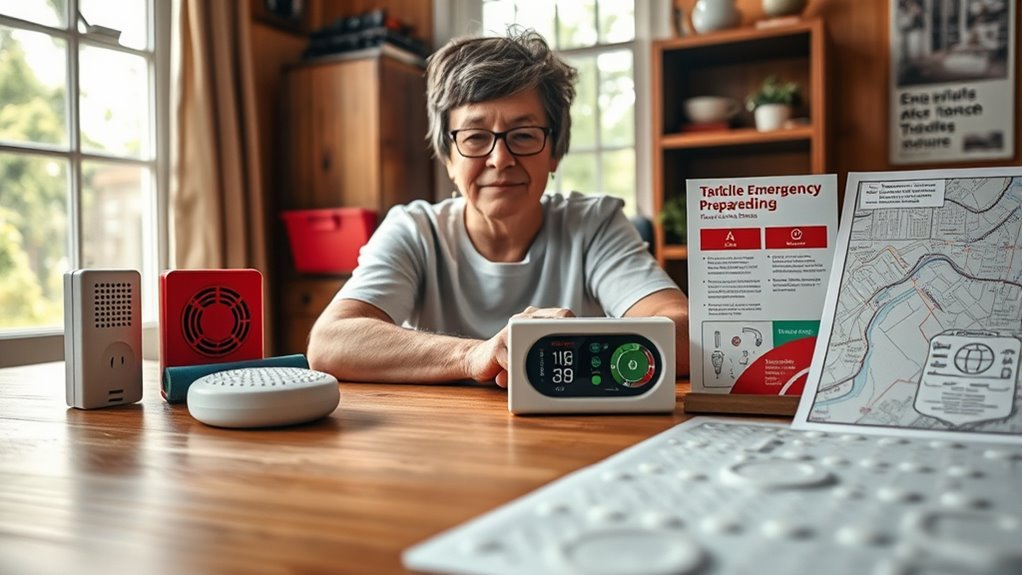

To prepare for emergencies as a DeafBlind individual, create a clear plan that includes assistive technology like vibrating alerts or flashing lights, and communicate it with trusted friends and local responders. Connect with community resources and organizations for support, and regularly practice emergency procedures. Staying informed and maintaining your devices help guarantee safety during crises. If you’re ready, learn more about customized strategies to enhance your emergency preparedness and stay safe in tough situations.

Get everyday helpers delivered free with Prime
- Fast, free delivery on millions of items
- Prime Video, Amazon Music and more included
- Member-only deals all year
Key Takeaways
- Develop a personalized emergency plan incorporating assistive devices, community contacts, and accessible communication methods.
- Use specialized alert systems like vibrating devices and flashing lights to receive timely emergency notifications.
- Connect with local organizations and emergency responders to access tailored resources and support networks.
- Regularly practice emergency procedures and ensure all assistive technology is functional and accessible.
- Build strong community relationships and stay informed about emergency resources and safe practices during crises.

Emergency preparedness is crucial for DeafBlind individuals, who face unique communication and mobility challenges during crises. You need to have a clear plan that accounts for these obstacles, making certain you can receive alerts and access assistance quickly. One of the best ways to do this is by leveraging assistive technology. Devices such as vibrating alert systems, flashing lights, or specialized alert apps can notify you of emergencies like fires, severe weather, or alarms. These tools help bridge the communication gap that traditional warning systems often overlook for DeafBlind individuals. Incorporating assistive technology into your emergency plan means you won’t have to rely solely on auditory or visual cues, which might be inaccessible during critical moments. Instead, you’ll be empowered with tools designed to deliver timely alerts directly to you, making your response faster and more effective.
Community outreach plays a vital role in enhancing your safety. Connecting with local organizations, emergency services, and community groups that understand DeafBlind needs ensures you’re not navigating emergencies alone. These groups often provide training sessions, resource sharing, and direct communication support tailored specifically for DeafBlind individuals. By participating in community outreach programs, you gain access to vital information about available resources, accessible shelters, and local emergency procedures designed for your needs. Building relationships within your community also means that during an emergency, people are more likely to recognize your specific requirements and respond appropriately. This network provides an extra layer of security, ensuring you’re included in safety measures and that your unique communication methods are understood. Additionally, understanding the importance of safe fruits and their role in a balanced diet can help you make better nutritional choices during emergencies when access to fresh foods might be limited.
Creating an emergency plan that integrates assistive technology and community outreach doesn’t have to be complicated, but it does require proactive effort. Start by identifying the assistive devices that work best for you, such as vibrating alert bracelets or tactile communication tools, and keep them charged and accessible. Reach out to local organizations or emergency responders to understand what resources they offer and how they can support your needs. Share your emergency plan with trusted friends, family, or community members so they know how to assist you effectively. Regularly practicing your plan ensures you’re familiar with the steps to take during a crisis, reducing anxiety and confusion. Remember, your safety depends on preparation, technology, and strong community connections. Staying informed and connected makes a significant difference in how quickly and effectively you can respond during emergencies.
vibrating alert systems for emergencies
As an affiliate, we earn on qualifying purchases.
As an affiliate, we earn on qualifying purchases.
Frequently Asked Questions
How Can Deafblind Individuals Receive Emergency Alerts via Mobile Devices?
You can receive emergency alerts on your mobile device through tactile alert systems and Braille emergency apps. These tools send haptic notifications or display essential information in Braille, ensuring you stay informed during emergencies. Make sure your device is compatible with these systems, and keep the apps updated. By setting up these features, you’ll receive timely alerts tailored to your needs, helping you respond quickly and stay safe.
What Specialized Training Is Available for Deafblind Emergency Responders?
You can access specialized training for deafblind emergency responders that focuses on tactile communication and sensory adaptation. These programs teach responders how to effectively communicate through touch, such as tactile signing or vibrations, and adapt to sensory limitations. This training enhances their ability to assess situations quickly, relay essential information, and provide assistance, ensuring deafblind individuals receive timely, respectful, and effective emergency support.
Are There Community Resources Specific to Deafblind Emergency Planning?
Think of community resources as a lifeline, anchoring your emergency planning efforts. You’ll find organizations offering accessible training tailored for deafblind individuals, fostering community integration and resilience. These resources include local agencies, non-profits, and support groups that provide essential information and hands-on practice. By tapping into them, you build a network that understands your unique needs, ensuring you’re prepared and confident to act swiftly during any emergency.
How Can Family Members Effectively Assist Deafblind Individuals During Crises?
You can effectively assist deafblind individuals during crises by maintaining clear family communication through tactile and visual methods, ensuring they understand what’s happening. Offer consistent emotional support to help them stay calm and focused. Use familiar cues or signals to communicate quickly, and stay close to provide reassurance. Your active presence and patience foster trust, making it easier for them to navigate emergencies safely and confidently.
What Affordable Assistive Technologies Support Deafblind Emergency Communication?
Like Helen Keller’s resilience, you can find hope in affordable devices that support deafblind emergency communication. Tactile communication tools, such as vibrating alert systems and simple braille displays, are budget-friendly options that keep you connected during crises. These devices empower you to receive alerts, relay essential information, and stay safe. With accessible technology, you turn vulnerability into strength, ensuring you’re prepared and resilient in any emergency.
Conclusion
Being prepared for emergencies is your lifeline in times of chaos. By understanding your needs and creating a personalized plan, you turn uncertainty into confidence. Think of your preparedness as a steady anchor in a storm, holding you firm through the turbulence. Remember, you’re not alone—support is out there. With the right tools and awareness, you can navigate emergencies safely, transforming challenges into opportunities for resilience and strength.
Halloween Picks
halloween
As an affiliate, we earn on qualifying purchases.