

Perkins keyboards are essential on Braille devices because they provide tactile feedback that confirms your input, building confidence and accuracy. Their ergonomic design and optimized layout support easy, efficient use, even for users with varying dexterity levels. These keyboards meet strict accessibility standards, promoting independence in navigation and communication. By integrating with digital tools, they help bridge gaps between sighted and non-sighted users. To discover how Perkins keyboards continue to shape accessible technology, keep exploring.
Key Takeaways
- Perkins keyboards provide tactile feedback, enhancing user confidence and accuracy in Braille input and navigation.
- They are designed to meet global accessibility standards, ensuring ease of use for diverse users.
- Integration with assistive technology promotes independent access to digital environments and information.
- Perkins keyboards support seamless control over communication, education, and leisure activities for Braille users.
- Their user-friendly, ergonomic design fosters inclusion and equal opportunities for non-sighted individuals.
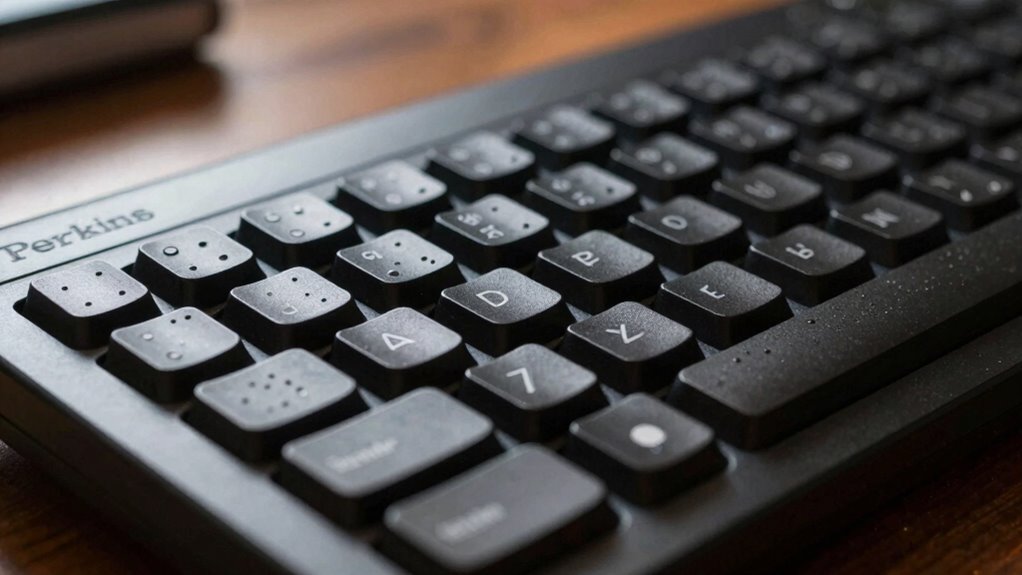
Perkins keyboards are a vital component of Braille devices, enabling users to efficiently read and write in tactile Braille. These keyboards are designed specifically to support the unique needs of individuals who are blind or visually impaired, ensuring they can communicate, access information, and steer the world more independently. One of the key reasons Perkins keyboards matter is their ability to provide tactile feedback, which is essential for effective Braille reading and writing. When you press the keys, you receive immediate physical sensations that confirm your input, helping you stay oriented and confident in your interactions with the device. This tactile feedback is essential because it mimics the natural feel of Braille dots, making the shift between reading and writing seamless and intuitive.
Perkins keyboards provide tactile feedback essential for confident, seamless Braille reading and writing.
Moreover, Perkins keyboards are built with adherence to strict accessibility standards, guaranteeing they meet the diverse needs of users everywhere. These standards emphasize ease of use, durability, and ergonomic design, so you can operate the device comfortably for extended periods. The layout of the keys is optimized for efficiency, allowing you to quickly input and access information without unnecessary strain or confusion. These standards also guarantee that the device remains accessible to users with varying levels of dexterity, ensuring everyone can benefit from its features. Additionally, the integration of Perkins keyboards with digital accessibility features ensures that users can navigate complex digital environments more effectively. Incorporating assistive technology into the design of these keyboards continues to enhance how they support independent living and learning. Furthermore, ongoing innovations in accessible design are vital to keeping these devices relevant and effective for future generations of users.
The importance of Perkins keyboards extends beyond simple input; they serve as an essential tool for fostering independence. When you use a Braille device equipped with a Perkins keyboard, you gain direct control over your communication and information access. This control is empowering, especially when steering complex digital environments or reading lengthy texts. Additionally, the compatibility of Perkins keyboards with various Braille devices means you can choose options that best fit your lifestyle and preferences, whether for education, work, or leisure.
In the broader scope of accessibility, Perkins keyboards uphold the principles of universal design by making digital content more reachable. They help bridge the gap between sighted and non-sighted users, ensuring equal opportunities for learning and participation. The tactile feedback provided by these keyboards not only improves accuracy but also enhances your confidence in using Braille technology. As technology advances, the continued focus on accessibility standards ensures that Perkins keyboards remain reliable, user-friendly, and capable of meeting the evolving needs of the visually impaired community. Ultimately, their role in making digital information accessible underscores their significance in promoting independence, inclusion, and equal access for all.
As an affiliate, we earn on qualifying purchases.
Frequently Asked Questions
How Do Perkins Keyboards Differ From Standard Computer Keyboards?
Perkins keyboards differ from standard computer keyboards primarily in their key layout, designed for Braille input. You’ll notice a specialized arrangement of keys that allow you to easily produce Braille characters, instead of traditional alphanumeric input. This layout makes it simpler for you to learn, read, and write in Braille efficiently, making Perkins keyboards essential for accessible communication. Their design prioritizes ease of use for Braille users like you.
Are Perkins Keyboards Compatible With All Braille Device Models?
Perkins keyboards are generally compatible with most braille device models, but you should check their specific accessibility features and compatibility details. Some models might have compatibility issues due to different connection types or software requirements. Always verify with the device manufacturer or user manual to guarantee seamless integration. Your goal is to maximize accessibility, so understanding compatibility issues beforehand helps you choose the right Perkins keyboard for your braille device.
What Training Is Needed to Effectively Use a Perkins Keyboard?
To use a Perkins keyboard effectively, you need training focused on tactile feedback and ergonomic design. You’ll learn how to feel for key positions and develop muscle memory, ensuring accurate typing. Practicing with the device helps you adapt to its tactile cues, while understanding its ergonomic features reduces strain. With consistent practice and guidance, you’ll become confident in steering the Perkins keyboard, maximizing your efficiency and comfort.
Can Perkins Keyboards Be Customized for Individual User Preferences?
Yes, Perkins keyboards can be customized to suit your individual preferences, enhancing accessibility features and user comfort. You can adjust key sensitivity, layout, and even add personalized shortcuts, making your experience more intuitive. Customization allows you to optimize the device for your specific needs, ensuring you navigate Braille devices efficiently and comfortably. This tailored approach helps you stay independent and confident in using your Perkins keyboard daily.
What Maintenance Do Perkins Keyboards Require Over Time?
A stitch in time saves nine, and that’s true for Perkins keyboards too. Over time, you should check the keyboard’s durability and follow simple maintenance routines like cleaning key contacts and avoiding moisture. Regular inspections help prevent wear and tear, ensuring the device stays reliable. With proper care, your Perkins keyboard remains responsive, providing consistent support for your needs, proving that good maintenance truly extends its lifespan.
Conclusion
In the end, Perkins keyboards truly revolutionize how you experience Braille devices, making reading and writing more intuitive and accessible. You might feel like you’ve stepped into a sci-fi movie, but it’s real—technology bridging gaps and opening worlds. So, when you think about the future of Braille, remember that these keyboards are the trusty steed, helping you navigate with confidence, no matter if you’re in a library or a spaceship.