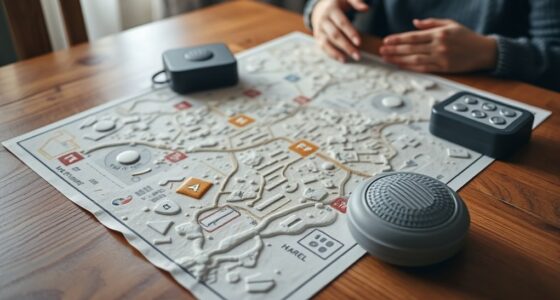
Public transportation can be accessible for DeafBlind riders when systems use assistive technology like vibrating alerts, tactile maps, and real-time communication apps, helping you navigate routes, stops, and delays confidently. Well-trained staff can offer effective assistance, guiding you safely through stations and providing clear communication. When technology and staff are coordinated, your travel experience becomes safer and more independent. Explore further to discover ways transportation systems are improving access for DeafBlind individuals.
Key Takeaways
- Implement assistive technologies like vibrating alerts and tactile maps to provide real-time, accessible route, stop, and delay information.
- Train transit staff to effectively communicate, recognize tactile cues, and assist DeafBlind riders safely throughout their journey.
- Collaborate between transit agencies and communities to seamlessly integrate assistive devices and ensure consistent accessibility features.
- Use multiple information formats—tactile sign language, visual displays, and assisted devices—to enhance travel independence and safety.
- Promote inclusive practices that prioritize DeafBlind riders’ rights, fostering respectful, accessible, and empowering public transportation experiences.
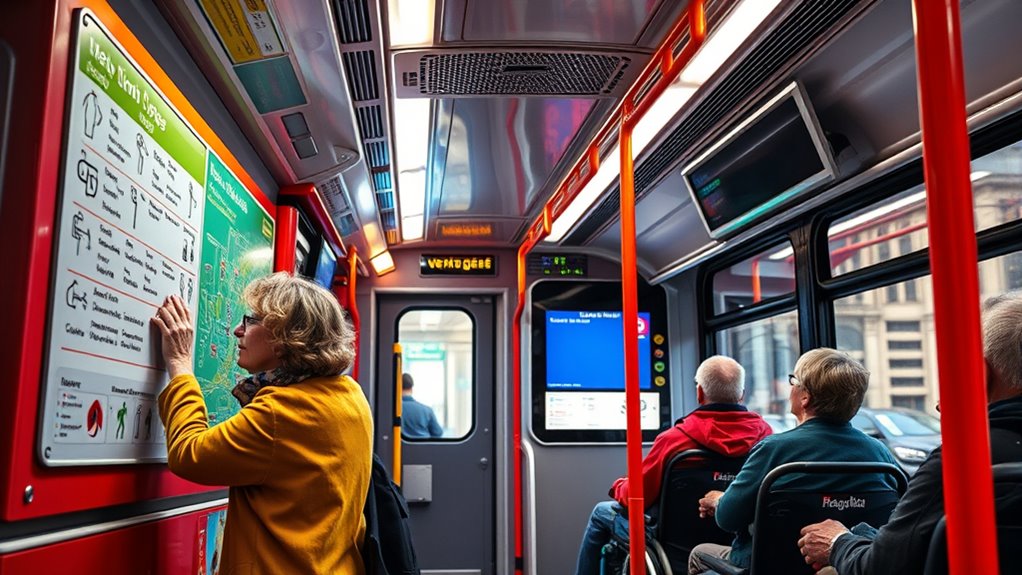
Public transportation plays a crucial role in guaranteeing mobility for everyone, but for DeafBlind riders, access often remains limited. Exploring public transit can be challenging without proper support, but advancements in assistive technology are making a significant difference. Devices like vibrating alert systems, tactile signage, and real-time communication apps help bridge gaps, allowing DeafBlind individuals to receive essential information about routes, stops, and delays. These tools empower you to travel more independently and confidently. However, technology alone isn’t enough; staff training is equally critical. When transit staff are educated about DeafBlind needs, they can offer more effective assistance, whether that’s guiding you safely through stations or providing clear, accessible communication. Properly trained staff understand how to use assistive devices, interpret tactile signals, and communicate with you in ways that respect your unique needs.
In many transit systems, implementing assistive technology requires a coordinated effort between agencies and communities. As a rider, you benefit from these innovations when they’re integrated seamlessly into daily operations. For example, tactile maps at stations help you orient yourself, while vibrating alerts notify you of upcoming stops. When staff are trained to recognize and respond to these cues, your travel experience becomes smoother and less stressful. They can help you access information in multiple formats—whether through tactile sign language, visual displays, or assisted communication devices—making sure you’re never left guessing or stranded.
Staff training also extends to understanding the importance of patience and clear communication strategies. When you approach a transit worker, their ability to respond effectively can transform a potentially confusing situation into a positive experience. Well-trained staff can facilitate boarding and disembarking, assist with orientation, and ensure that your needs are prioritized without making you feel rushed or overlooked. This level of support fosters a more inclusive environment, encouraging independence while providing safety nets when needed.
Ultimately, the combination of assistive technology and extensive staff training creates a more accessible public transportation system for DeafBlind riders. It’s about more than just compliance; it’s about recognizing and respecting your right to move freely and confidently through the city. When transit agencies invest in these areas, they’re not only improving accessibility but also promoting a culture of inclusion. As a DeafBlind rider, you deserve a transportation system that understands your needs and actively works to meet them—making every journey safer, easier, and more empowering.

CallToU Wireless Caregiver Pager, Waterproof SOS Call Button for Elderly at Home, Life Saver Alert System for Stroke/Parkinson/Patient, 500ft Range Vibrating Receiver for Hard of Hearing (2+2 Pack)
【Never Miss a Call with Dual-Receiver System】The caregiver call button set for total home coverage. Features 1 battery-powered…
As an affiliate, we earn on qualifying purchases.
As an affiliate, we earn on qualifying purchases.
Frequently Asked Questions
How Do Deafblind Riders Request Real-Time Assistance?
You can request real-time assistance by using tactile signage or Braille announcements on public transportation. When you need help, tap or touch the tactile signage to signal your request, or listen for Braille announcements that provide updates or instructions. Many systems also have designated staff or communication boards; use these tools to communicate your needs clearly. This way, you guarantee your needs are met promptly and effectively.
Are There Specific Training Programs for Transit Staff?
Imagine a transit agency implementing specialized staff training and awareness programs that focus on DeafBlind communication needs. These programs teach staff how to effectively assist riders using tactile sign language or other methods. Yes, many transit systems now offer targeted training to improve staff awareness, ensuring they understand DeafBlind riders’ unique needs. This proactive approach helps create a more inclusive environment and enhances overall accessibility for all passengers.
What Technologies Are Used to Assist Deafblind Commuters?
You’ll find that assistive devices like vibrating alerts, tactile maps, and braille displays are essential for deafblind commuters. Communication strategies such as tactile sign language, electronic braille note-takers, and real-time text messaging help you stay connected and navigate effectively. Transit staff often use these technologies and strategies to provide better support, ensuring you can access transportation safely and independently.
How Is Emergency Communication Handled for Deafblind Riders?
Emergency communication for deafblind riders involves tactile signage and clear emergency protocols. You can tap or feel tactile signs that provide instructions, and transit staff are trained to assist with personalized communication methods. During emergencies, protocols include visual alerts combined with tactile signals or vibrations, ensuring you’re informed and safe. These systems are designed to facilitate quick, effective communication, helping you navigate emergencies confidently and securely.
Are There Regional Differences in Accessibility Services?
Regional disparities definitely affect accessibility services for deafblind riders, meaning your experience can vary greatly depending on where you travel. Some regions have robust policies and specialized training, ensuring better support, while others lack these resources. These disparities highlight important policy implications, emphasizing the need for standardized accessibility regulations nationwide. You may find that advocacy and funding can help bridge these gaps, improving access and safety for all deafblind transit users.

NOWMAP Waterproof USA Map Poster 24×36 Folded – Double Sided United States Travel Map with Pin Stickers – Tear Resistant Wall Map
FOLDS FOR TRAVEL, LOOKS GREAT ON YOUR WALL Worried about crease lines? Unlike regular paper maps, our mineral…
As an affiliate, we earn on qualifying purchases.
As an affiliate, we earn on qualifying purchases.
Conclusion
Ensuring public transportation is accessible for deafblind riders isn’t just a goal—it’s a necessity. Did you know that over 80% of deafblind individuals face significant barriers daily? By implementing better communication systems and tactile signage, you can make a real difference. Your efforts can create an inclusive environment where everyone feels empowered to travel independently. Accessibility benefits all, transforming transportation into a truly universal service that respects and meets everyone’s needs.

4 Pack Portable AAC Communication Devices for Autism Individuals with Communication Difficulties, Communication Device for Nonverbal Kids, Voice Recording Buttons for Schools, Home, Treatment Courses
AAC Device for People of All Ages: Our voice recording buttons are an effective communication tool for individuals…
As an affiliate, we earn on qualifying purchases.
As an affiliate, we earn on qualifying purchases.

ADA CENTRAL SIGNS – 6" X4" Escalator Sign – ADA Compliant Tactile Graphics Grade 2 Braille Text | Wall Signs for Stores, Malls, Airports, Transit Systems, Hotels, Arenas, Stadiums, & Public Buildings
↗️ IDEAL ESCALATOR SIGNAGE: ADA Central Signs are 100% ADA compliant and have a non-glare finish for improved…
As an affiliate, we earn on qualifying purchases.
As an affiliate, we earn on qualifying purchases.