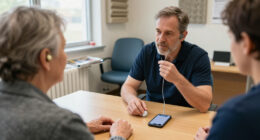

To make your home safer and more navigable for a DeafBlind person, incorporate tactile cues like textured flooring, guide strips, and tactile door handles, along with scent markers for orientation. Use assistive technology such as tactile alert systems and motion-activated lights to enhance safety. Make certain furniture is arranged to keep pathways clear and install grab bars in key areas. By combining these strategies, you create a more accessible environment. Keep exploring to discover additional practical tips for fostering independence.

Get everyday helpers delivered free with Prime
- Fast, free delivery on millions of items
- Prime Video, Amazon Music and more included
- Member-only deals all year
Key Takeaways
- Install tactile alert systems and sensory cues to signal doorbells, alarms, and calls effectively.
- Use textured flooring, tactile markers, and scent cues to aid orientation and hazard identification.
- Incorporate contrasting textures, tactile door handles, and motion-activated lighting for easier room navigation.
- Ensure furniture placement creates clear, unobstructed pathways, and add grab bars in key areas for safety.
- Design home layouts with strategic sensory modifications to promote safe, confident movement and independence.
Designing homes for DeafBlind users requires innovative solutions that prioritize accessibility and independence. To achieve this, you need to focus on integrating assistive technology that caters specifically to their needs. These tools can bridge communication gaps and enhance safety, making daily living more manageable. For example, installing tactile alert systems can notify users of doorbells, alarms, or calls through vibrations or textured signals. These devices are essential for ensuring DeafBlind individuals stay aware of their environment without relying solely on sight or sound.
Innovative assistive tech, like tactile alerts, enhances safety and independence for DeafBlind home living.
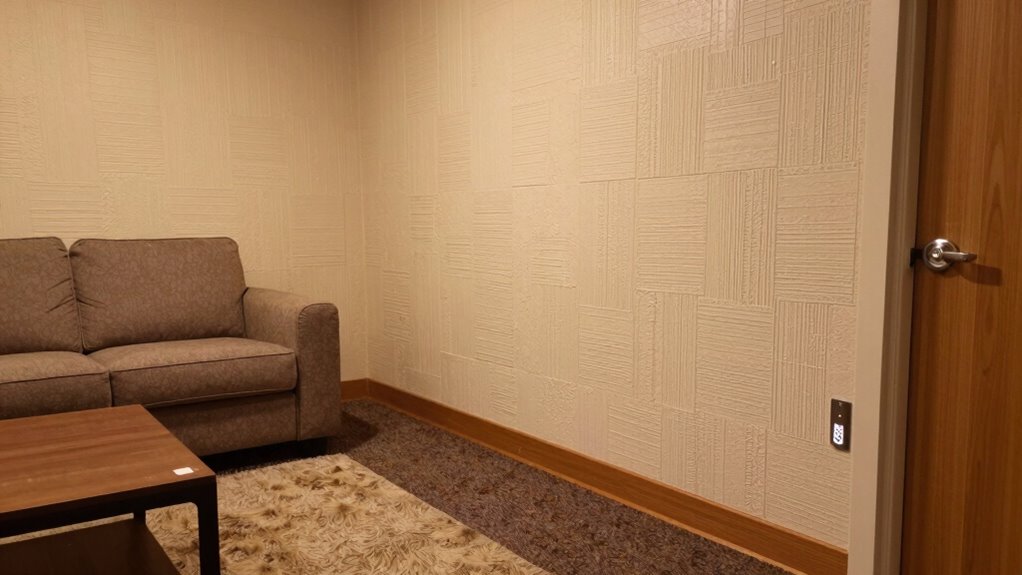
Sensory adaptation plays a critical role in creating a safe and navigable home. You should consider modifying the environment to engage other senses, such as touch and smell. Using textured flooring or tactile markers can help users identify different areas or hazards within the house. For instance, placing a specific textured mat near the kitchen entrance or bathroom can serve as a cue, guiding users safely through spaces. Additionally, incorporating scent markers—like a particular aroma near the laundry area—can help them orient themselves without visual cues. These adaptations make the environment more intuitive and reduce the risk of accidents. Incorporating sensory cues into home design can further enhance safety and independence for DeafBlind users.
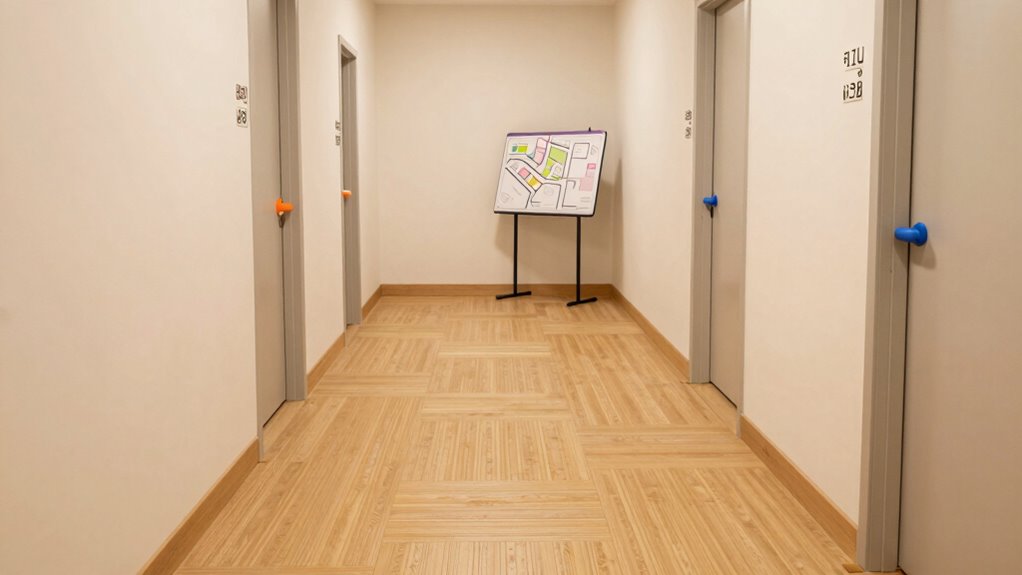
Lighting, or the lack thereof, is another important aspect to address. While visual cues may be limited, you can incorporate contrasting textures and colors for tactile identification. For example, different colored or textured door handles can help users distinguish rooms without needing to see them. Installing motion-activated lights with tactile switches can also provide additional cues, especially if the user has some residual hearing or can feel vibrations. These modifications, combined with assistive technology, help create a more predictable and safer environment. Also, considering environmental modifications that support sensory engagement can significantly improve the overall safety and comfort of the home. Incorporating multisensory strategies can further promote independence and confidence in navigating the home.
You should also consider the importance of clear pathways free of obstacles. Using tactile floor indicators and guiding strips can help users navigate confidently. Make sure furniture placement allows for easy movement, and avoid clutter that could pose tripping hazards. Installing grab bars and handrails in strategic locations enhances safety, especially in areas like bathrooms and stairways. The goal is to design a space that not only accommodates sensory limitations but actively promotes independence. Ensuring that home layout is thoughtfully planned can make a substantial difference in daily safety and ease of navigation. Creating a safe environment with well-planned sensory cues and modifications is essential for supporting DeafBlind individuals in their daily routines.
Frequently Asked Questions
How Can I Identify Hazards Specific to Deafblind Individuals?
You can identify hazards specific to deafblind individuals by observing how they rely on auditory cues and visual indicators. Pay attention to areas where sounds signal danger, like the kitchen or staircases, and add tactile markers or textured surfaces for better navigation. Walk through your home carefully, noting potential obstacles or inconsistent signage, and consider consulting with a deafblind person for insights to guarantee all hazards are addressed effectively.
What Are the Best Tactile Signaling Methods for Safety?
You should use tactile communication techniques and signaling devices for safety. Tactile signals like textured doorbells or vibration alerts can effectively notify you of emergencies. Incorporate signaling devices such as vibrating alarm systems or tactile warning strips along pathways. These tools guarantee you’re aware of essential safety information through touch, making your environment more secure and navigable. Regularly update and maintain these devices to keep their effectiveness reliable.
How Can Technology Improve Navigation in a Home for Deafblind Users?
You can improve navigation by integrating technology that employs assistive communication and sensory substitution. Use devices like haptic feedback systems, which translate visual cues into tactile sensations, guiding you safely through your home. Smart home systems can alert you to hazards or doorbell sounds via vibrations or voice prompts. These tools enhance independence, allowing you to better perceive your environment and navigate confidently with real-time, tailored sensory information.
Are There Specific Materials Recommended for Tactile Flooring?
You might think rubber is the best tactile surface, but concrete or vinyl can also work well due to their durability. For tactile flooring, go for materials that are both durable and provide clear texture cues, aiding navigation. High-quality rubber or textured vinyl often strike the right balance, offering long-lasting surfaces that resist wear while giving distinct tactile feedback. Guarantee the material’s texture is consistent to help DeafBlind users navigate confidently.
How Do I Train Family Members to Assist Deafblind Residents Effectively?
You should train family members to use clear communication strategies, like tactile signals or consistent touch cues, to assist deafblind residents effectively. Encourage patience and active listening, offering emotional support as they learn. Practice regularly to build confidence and guarantee they understand how to guide, alert, and communicate respectfully. By fostering open, empathetic interactions, you help create a safe, supportive environment that promotes independence and comfort for deafblind individuals.
Conclusion
Creating a safer, more navigable home for deafblind users is like planting a well-tended garden—each thoughtful touch, from tactile markers to sound alerts, helps them flourish. Imagine Sarah, who once struggled with unfamiliar spaces, now confidently moving through her home thanks to these adaptations. Just as a gardener nurtures growth, your efforts can cultivate independence and safety for deafblind individuals, transforming their environment into a sanctuary of comfort and confidence.
Halloween Picks
halloween
As an affiliate, we earn on qualifying purchases.