
Childhood hearing testing differs from adult testing because children often can’t communicate their hearing experiences clearly, so tests use specialized equipment and techniques like visual reinforcement audiometry and conditioned play to engage them. Young kids rely on objective assessments like OAEs and ABR, which don’t need active responses. The equipment is designed to fit smaller ears and make testing easier and less stressful. Keep exploring to discover how these methods guarantee accurate results and early detection.

Get everyday helpers delivered free with Prime
- Fast, free delivery on millions of items
- Prime Video, Amazon Music and more included
- Member-only deals all year
Key Takeaways
- Children often cannot verbally describe their hearing experiences, requiring specialized behavioral and objective tests.
- Testing equipment is adapted for smaller ear canals and developmental stages of children.
- Visual reinforcement and conditioned play audiometry engage children and motivate responses during assessments.
- Objective tests like OAEs and ABR do not require active participation, suitable for young children.
- Early diagnosis and parental support are crucial for effective intervention and developmental outcomes.
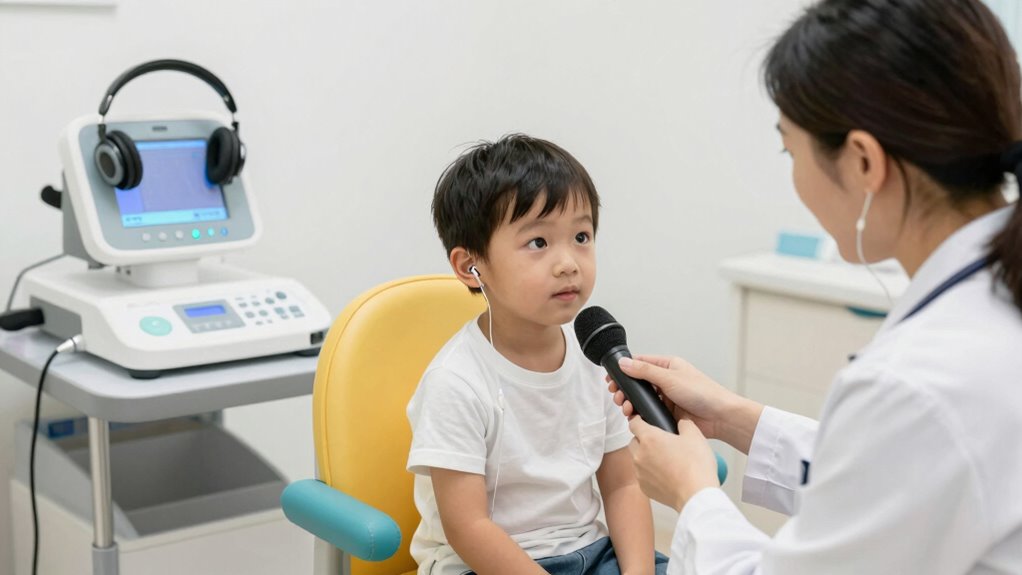
Childhood hearing testing differs markedly from adult assessments because young children often cannot communicate their hearing experiences effectively. Unlike adults, who can typically describe what they hear or don’t hear, children rely on professionals to interpret their responses through specialized methods. During testing, your child’s auditory development plays a critical role, as their ability to respond to sounds depends heavily on their age and developmental stage. Early in life, their auditory pathways are still maturing, which means testing must account for these developmental nuances to accurately identify any hearing issues.
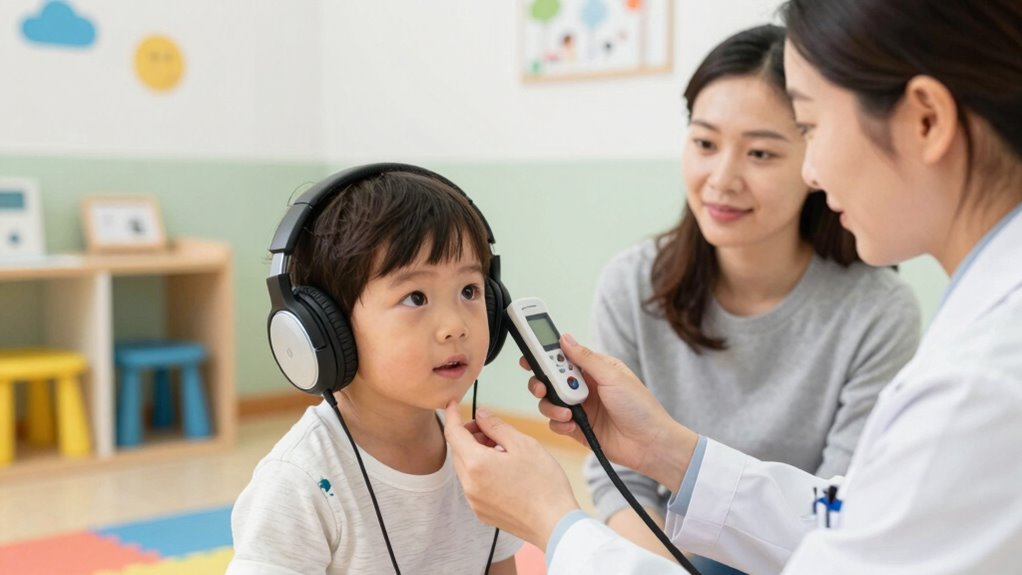
Because children may not understand or follow instructions, audiologists use a variety of testing equipment designed specifically for young ears. These tools are often more sophisticated and adaptable compared to adult testing devices. For example, visual reinforcement audiometry (VRA) and conditioned play audiometry are common techniques that use engaging stimuli to keep children motivated and responsive during testing. These methods require specialized testing equipment that can deliver sounds at different frequencies and intensities while maintaining the child’s interest. The equipment is calibrated to accommodate the smaller ear canal sizes and the unique responses of young children, ensuring precise results. Additionally, the calibration of testing equipment is essential to account for the differences in ear canal size and auditory response, which can vary significantly between children and adults.
Specialized, engaging equipment ensures accurate hearing tests tailored for young children’s needs.
In addition to behavioral testing, audiologists may employ objective measures that don’t require active participation from the child. Tests like otoacoustic emissions (OAEs) and auditory brainstem response (ABR) use advanced testing equipment to measure cochlear function and neural pathways. These procedures are particularly useful for infants or children who cannot reliably respond to traditional hearing tests. The equipment used in these assessments is sensitive enough to detect even subtle hearing impairments and provides valuable information about auditory development at an early age. Advances in diagnostic technology continue to improve the precision and comfort of these assessments, making early detection more accessible. Furthermore, modern testing equipment often includes features that make the testing process less intimidating and more child-friendly, which can lead to more accurate results.
Furthermore, technological advancements have led to the development of specialized testing equipment that enhances accuracy and comfort for young children. The use of innovative diagnostic tools has significantly improved early detection of hearing issues, enabling more timely interventions. These technological improvements are also making the process more child-centered, aiming to reduce anxiety and improve cooperation during testing. The goal of childhood hearing testing is to identify any hearing loss as early as possible so intervention can begin promptly. Since young children’s auditory development is still evolving, early diagnosis can substantially influence speech, language, and social skills development. The testing equipment and methods are tailored specifically to these needs, ensuring that audiologists gather accurate, reliable data. Your role as a parent or caregiver is essential in supporting this process, as encouraging cooperation and understanding what each test entails can help make the experience less stressful for your child. Ultimately, the specialized equipment and techniques used in childhood hearing assessments are designed to adapt to the unique challenges posed by young children’s limited communication skills, allowing for a more effective evaluation of their auditory health.
As an affiliate, we earn on qualifying purchases.
Frequently Asked Questions
What Are the Signs of Hearing Loss in Young Children?
You may notice signs of hearing loss in young children if they have delayed speech development, frequently ask for repetition, or turn up the volume on devices unusually loud. During hearing screenings, professionals look for these signs to identify potential issues early. If your child isn’t reaching speech milestones or seems unresponsive during conversations, it’s important to seek a hearing evaluation to confirm their hearing health and support proper speech development.
How Early Should Children Have Their First Hearing Test?
You should have your child’s first hearing screening by age 3, or earlier if you notice developmental delays or signs of hearing issues. Early testing helps guarantee they meet developmental milestones like speech and language skills. Regular hearing assessments are vital, especially if there’s a family history of hearing loss. Catching issues early allows for timely intervention, supporting your child’s overall growth and communication abilities.
Are There Different Types of Hearing Tests for Children?
Imagine a toolbox tailored for every need—children’s hearing tests are just as diverse. You’ll find behavioral audiometry, otoacoustic emissions, and auditory brainstem response tests suited for different ages and abilities. An audiologist with specialized qualifications guides you through hearing aid options and testing methods, ensuring your child receives the most effective care. This personalized approach helps detect issues early, making sure your child’s hearing health stays on the right track.
How Do Testing Methods Accommodate Non-Verbal Children?
You use specialized testing methods to accommodate non-verbal children, focusing on their auditory development and addressing testing challenges. Techniques like visual reinforcement audiometry (VRA) or play audiometry engage children through sounds and visual cues, encouraging responses without requiring speech. These methods help assess hearing accurately, even when children can’t communicate verbally, ensuring early detection and intervention to support healthy auditory development.
What Can Parents Do to Prepare Their Child for Testing?
Did you know that early preparation can boost your child’s cooperation during testing? To help, talk about hearing tests in a positive way, explaining they’re quick and painless. Show enthusiasm about hearing aid options if needed, and emphasize how good hearing supports speech development. You might also practice simple listening games beforehand. This prep reduces anxiety, making the experience smoother and encouraging your child’s confidence in their hearing journey.
Conclusion
Understanding the differences in hearing tests between children and adults helps you appreciate the tailored approach needed for each age group. While children require more engaging, playful methods, adults can often handle standard procedures. Remember, catching hearing issues early is essential—don’t let it slip through the cracks. By staying attentive and proactive, you can guarantee better hearing health for those you care about. After all, it’s better to be safe than sorry when it comes to your loved ones’ well-being.
Halloween Picks
halloween
As an affiliate, we earn on qualifying purchases.