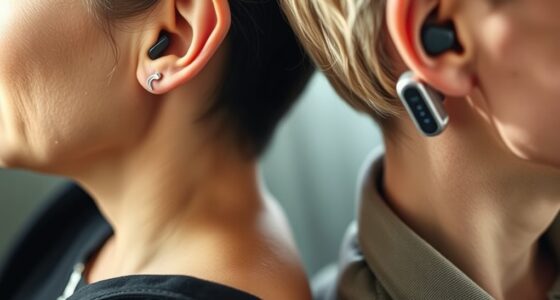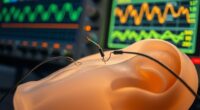
Electrocochleography measures electrical signals from your inner ear and auditory nerve in response to sound, helping identify issues like Meniere’s disease or nerve problems. During the test, small electrodes pick up signals generated by stimuli like clicks or tone bursts, focusing on responses from different cochlear regions. Accurate electrode placement and understanding your ear’s anatomy are key to reliable results. If you keep exploring, you’ll discover how decoding these potentials offers crucial insights into your hearing health.
Key Takeaways
- ECoG measures electrical responses from cochlear hair cells and auditory nerve to assess inner ear function.
- Proper electrode placement near or inside the ear canal is crucial for accurate detection of ear potentials.
- Stimuli like clicks or tone bursts activate different cochlear regions, revealing specific electrophysiological responses.
- Key potentials include cochlear microphonics, summating potential, and action potential, indicating ear and nerve health.
- Analyzing amplitude and timing of these potentials helps diagnose inner ear disorders such as Meniere’s disease or auditory neuropathy.
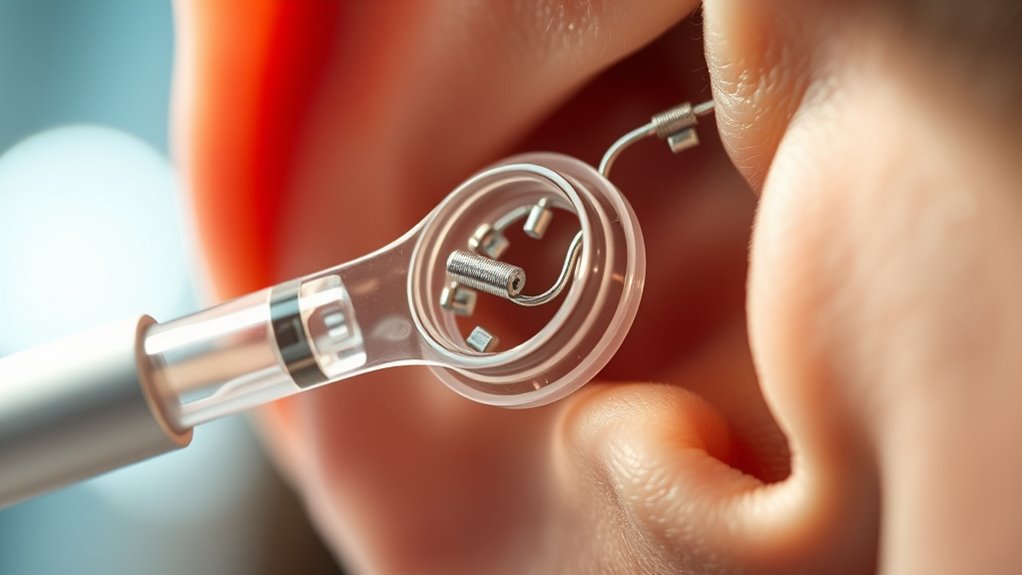
Electrocochleography (ECoG) is a diagnostic test that measures electrical activity generated in the inner ear and auditory nerve in response to sound stimulation. When you undergo this procedure, you’re essentially capturing the tiny electrical signals produced by your inner ear structures during auditory processing. This test is an indispensable part of inner ear diagnostics because it helps identify abnormalities that might be causing hearing loss, tinnitus, or balance issues. To perform ECoG effectively, understanding the ear canal anatomy is vital, as the proper placement of electrodes depends on the ear’s delicate structure. The ear canal acts as a pathway for sound and provides a secure route for electrode placement, usually near the eardrum or within the ear canal itself, allowing for accurate measurement of cochlear and auditory nerve responses.
During the test, small electrodes are placed either on the surface of your ear, near the eardrum, or sometimes inside the ear canal, depending on the specific protocol. These electrodes detect electrical signals generated when sound waves stimulate your inner ear structures. Because the ear canal is shaped uniquely for each person, the anatomy can influence the quality of the recordings. A properly fitted electrode guarantees minimal noise and ideal signal detection, making the data more reliable. You might notice some discomfort from electrode placement, but it’s generally mild and temporary. The sound stimuli used during ECoG are typically clicks or tone bursts, which activate different parts of your cochlea.
The measurements obtained through ECoG primarily focus on three key components: the cochlear microphonic, the summating potential, and the action potential. These signals reflect various aspects of cochlear function and the auditory nerve’s response. By analyzing their amplitude and timing, audiologists can determine if the inner ear is functioning correctly or if there are signs of conditions like Meniere’s disease or auditory neuropathy. Since the ear canal anatomy varies among individuals, the anatomy can influence the quality of the recordings. A properly fitted electrode guarantees minimal noise and ideal signal detection, making the data more reliable. Additionally, understanding the contrast ratio of the equipment can help in optimizing the signal-to-noise ratio for clearer results. The test’s non-invasive nature makes it a preferred choice for evaluating patients who cannot undergo more invasive procedures.
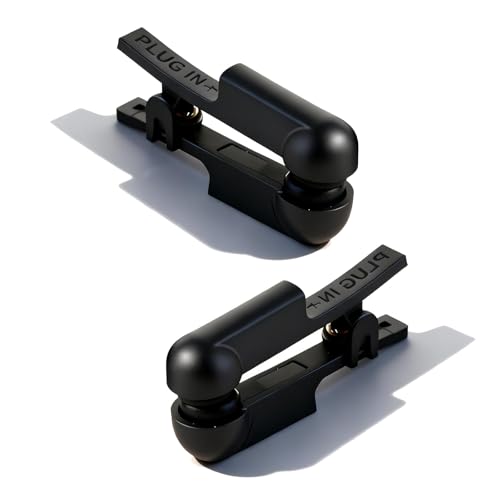
Ear Clip Electrodes,Rubber Ear Clip Accessories Compatible for Tens 7000,(Black)
Usage Notes:Please keep the surface of the earlobe moist when using this ear clip electrode
As an affiliate, we earn on qualifying purchases.
As an affiliate, we earn on qualifying purchases.
Frequently Asked Questions
How Does Electrocochleography Compare to Other Diagnostic Tests?
When comparing electrocochleography to other diagnostic tests, you’ll find it has unique advantages. Its thorough accuracy shines in detecting inner ear issues like Meniere’s disease, offering detailed insights into cochlear and auditory nerve function. Its diagnostic scope is broader than simple audiometry, making it valuable for early diagnosis. However, it’s less extensive than MRI or CT scans for structural problems. Use it alongside other tests for a full picture.
What Are the Common Challenges During Electrocochleography Procedures?
Imagine trying to catch whispers in a noisy room—that’s what electrode placement feels like during electrocochleography. You might struggle with precise positioning, and patient movement can send those delicate signals scattering like leaves in the wind. Staying still and ensuring electrodes are firmly placed are your best allies. These challenges test your patience, but with steady hands and calm, you can capture clear, valuable inner ear potentials.
Can Electrocochleography Detect Early-Stage Inner Ear Disorders?
You wonder if electrocochleography can detect early-stage inner ear disorders. It offers promising potential for early detection, as it measures subtle inner ear signals, which can indicate initial dysfunctions. While its diagnostic accuracy improves with experience, it’s a valuable tool for identifying problems early, enabling timely intervention. If you use electrocochleography correctly, you can enhance early diagnosis and improve patient outcomes considerably.
What Is the Patient Preparation Required for Electrocochleography?
Think of preparing for an electrocochleography test as setting the stage for a symphony; every detail matters. You should fast for a few hours before the procedure to guarantee clear results, and arrive with a clean, dry ear. During the audiological assessment, stay relaxed and follow your technician’s instructions. Proper preparation helps your inner ear’s whispers be heard loud and clear, guiding accurate diagnosis and effective treatment.
Are There Any Risks or Side Effects Associated With Electrocochleography?
You might experience minor discomfort during the procedure, but it’s generally well tolerated. Risks are minimal, mainly involving a small chance of infection at the electrode site. Proper sterilization and careful technique help mitigate this risk. Overall, electrocochleography is a safe diagnostic tool, and serious side effects are rare. If you have concerns, discuss them with your healthcare provider beforehand to ensure you’re comfortable with the process.

Ellman 7-Piece Electrode Kit for Dental Soft Tissue Applications
Ellman Standard Electrode Set for Precision Dental Procedures
As an affiliate, we earn on qualifying purchases.
As an affiliate, we earn on qualifying purchases.
Conclusion
Electrocochleography offers a fascinating glimpse into your inner ear’s electrical activity. Did you know that it can detect early signs of hearing loss with over 85% accuracy? By understanding these potentials, you can catch issues before they become serious. So, next time you consider hearing health, remember that this powerful technique helps decode your ear’s signals, ensuring you stay tuned to what matters most—your hearing. Stay proactive and informed about your inner ear health!

Bionic Ear Parabolic Microphone – Long Range 300FT Listening Device for Bird Recording & Observing – Sound Amplifier Telescope
Experience exceptional audio with our advanced parabolic design, capturing even the faintest whispers for clear and crisp sound….
As an affiliate, we earn on qualifying purchases.
As an affiliate, we earn on qualifying purchases.

6 Pack 2mm Extended Needle Test Probes, 600V/10A Non-Destructive Multimeter Test Leads, Versatile Replacement Probe Tips for Electronics Circuit Testing, High Precision Sharp Needle Probes
versatile multimeter needle probes, compatible with Fluke TL71/TL75 test leads. Feature ultra-sharp, non-destructive tips for safe automotive diagnostics…
As an affiliate, we earn on qualifying purchases.
As an affiliate, we earn on qualifying purchases.