

When diagnosing hearing loss, imaging helps pinpoint the exact cause. A CT scan is typically used first to view bone structures, detect malformations, or abnormalities in the temporal bone. An MRI provides detailed images of soft tissues, nerve issues, tumors, or inflammation within the inner ear. Often, both scans are recommended to get a full picture of the problem, helping you understand your options better as you explore further.
Key Takeaways
- CT scans are used to identify bony malformations of the temporal bone and inner ear structures.
- MRI is preferred for assessing soft tissue issues, nerve integrity, and tumors like vestibular schwannomas.
- Both imaging techniques are often combined for comprehensive evaluation of hearing loss causes.
- CT provides detailed images of bony abnormalities that may affect hearing, such as cochlear malformations.
- MRI detects inflammation, nerve damage, or soft tissue lesions not visible on CT scans.
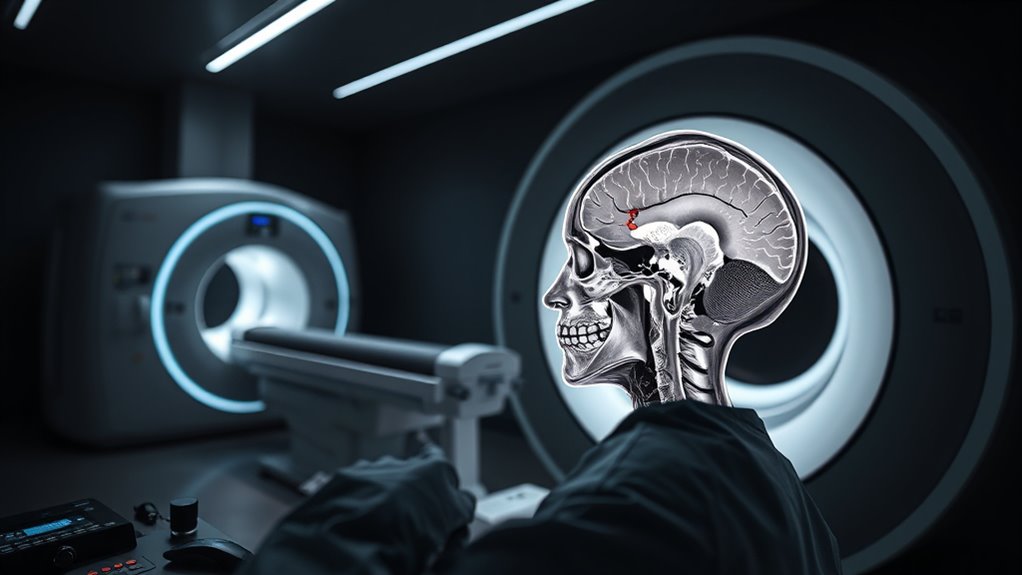
Have you ever wondered how imaging techniques help diagnose hearing loss? When you suspect a person has a hearing impairment, especially if it’s difficult to determine the cause through standard hearing tests alone, imaging becomes an essential tool. It allows clinicians to visualize the inner ear structures and surrounding bone, providing detailed insights into potential anomalies or pathologies that might be interfering with hearing. Two common imaging modalities used are CT (computed tomography) scans and MRI (magnetic resonance imaging). Each offers specific advantages depending on what the clinician is looking for, particularly when it comes to identifying inner ear anomalies or temporal bone pathology.
If you’re investigating inner ear anomalies, imaging can reveal a range of congenital or acquired irregularities. These anomalies might include malformed cochleas, abnormal semicircular canals, or other structural deformities that could contribute to hearing loss. CT scans excel at providing high-resolution images of the bony structures of the inner ear, making them ideal for detecting bony malformations or abnormalities in the temporal bone. This is especially important because many inner ear anomalies involve the bones that house the delicate sensory structures. When you review a CT image, you can identify issues like cochlear hypoplasia, enlarged vestibular aqueduct, or other congenital deformities that might not be apparent through clinical examination alone.
Imaging reveals congenital and acquired inner ear anomalies, aiding in accurate diagnosis of hearing loss.
On the other hand, MRI offers superior visualization of soft tissue structures within the inner ear. If you’re searching for signs of inflammation, tumors, or nerve-related issues, MRI becomes the preferred modality. For example, it can show the status of the cochlear nerve, detect vestibular schwannomas, or identify inflammatory processes affecting the inner ear. When temporal bone pathology is suspected—such as cholesteatomas, infections, or trauma-related damage—MRI provides detailed soft tissue contrast that can pinpoint these issues. It’s especially useful when the cause of hearing loss involves nerve damage or soft tissue abnormalities that aren’t visible on CT scans.
In many cases, your healthcare provider might recommend both imaging techniques to get a thorough picture. CT scans will clarify the bony anatomy and reveal any outer or middle ear issues, while MRI can uncover soft tissue or nerve-related problems within the inner ear. This combined approach ensures a detailed assessment, allowing for precise diagnosis and tailored treatment plans. Ultimately, imaging plays a critical role in uncovering the underlying causes of hearing loss, guiding effective interventions, and improving patient outcomes. Furthermore, understanding the differences between CT and MRI enhances the accuracy of diagnosis and subsequent management strategies.
Frequently Asked Questions
How Do CT and MRI Differ in Diagnosing Hearing Loss?
You use a CT scan to get detailed images of the inner ear structures and detect anomalies like congenital malformations or ossification issues. An MRI, on the other hand, is better for identifying soft tissue abnormalities, such as an acoustic neuroma. It provides clearer images of the inner ear nerves, helping you determine if a tumor or other soft tissue problem causes hearing loss. Both tools are essential, depending on your diagnostic needs.
Are There Risks Associated With Hearing Loss Imaging Scans?
Think of hearing loss imaging scans as a double-edged sword; they reveal vital details but come with risks. You might be exposed to radiation during CT scans, which could increase cancer risk over time. MRI scans typically avoid radiation but may involve contrast agents that carry allergy or kidney risks. Always discuss these concerns with your doctor to weigh benefits against potential dangers before proceeding.
When Is Imaging Recommended Over Initial Hearing Tests?
You should consider imaging when initial hearing tests don’t clarify the cause, especially in pediatric cases or if symptoms persist. Keep in mind, cost and accessibility can influence your decision. Imaging like CT or MRI helps detect structural issues or tumors that tests might miss. If your child’s hearing loss is unexplained or worsening, consult your healthcare provider about whether imaging is appropriate to get a clearer diagnosis.
How Long Does a Typical CT or MRI Scan Take?
A typical CT scan takes about 10 to 30 minutes, while an MRI usually lasts 30 to 60 minutes. During the procedure, you’ll lie still on a table that moves into the scanner, and you’ll be asked to hold still to guarantee clear images. The exact scan duration depends on the procedure steps, the area being imaged, and your specific medical needs. Staying still helps get accurate, high-quality images quickly.
Can Imaging Identify All Causes of Hearing Loss?
Think of imaging like a detective’s toolkit—while it can uncover many clues, it doesn’t catch every suspect. CT and MRI can identify causes like ossicle abnormalities or inner ear issues, but some conditions, such as nerve damage or functional hearing problems, may escape detection. So, imaging is a valuable piece, but not a complete picture, and your doctor will consider other tests to determine the full cause.
Conclusion
Think of imaging like a map guiding you through a maze—you need the right tool to find your way. When you suspect hearing loss, choosing between CT or MRI is vital, just like picking the right compass. For example, a small tumor can be hidden like a needle in a haystack, but proper imaging helps you spot it. With the right imaging, you’re better equipped to uncover the cause and restore the clarity you deserve.