
Otoscopic AI assistants analyze ear images to help diagnose ear conditions, but their accuracy depends on factors like image quality, lighting, and proper technique. Variability in images, limited diverse data, and environmental issues can cause false positives or negatives. These tools are valuable but still face challenges that affect reliability in real-world settings. To understand how these limitations impact their effectiveness and what future improvements are being made, keep exploring.
Key Takeaways
- AI assistants analyze ear images in real-time, highlighting abnormalities to support accurate diagnosis.
- Variability in image quality, lighting, and technician skill can limit AI accuracy.
- Limited and biased datasets restrict AI system generalization across diverse populations.
- Technical issues like poor focus and illumination reduce image clarity, affecting diagnostic reliability.
- Ethical considerations, including patient privacy and informed consent, are essential for responsible AI deployment.

Remmie 4 AI-Powered Digital Otoscope with Light for Home Use – Ear Infection Checker for Kids & Adults – Nose Scope Video Camera with Telemedicine-Enabled App – FDA-Registered
[Safety and quality recommended by doctors and FDA-registered] Remmie 4 is an AI powered FDA-registered camera and ear…
As an affiliate, we earn on qualifying purchases.
As an affiliate, we earn on qualifying purchases.
How Otoscopic AI Assistants Function
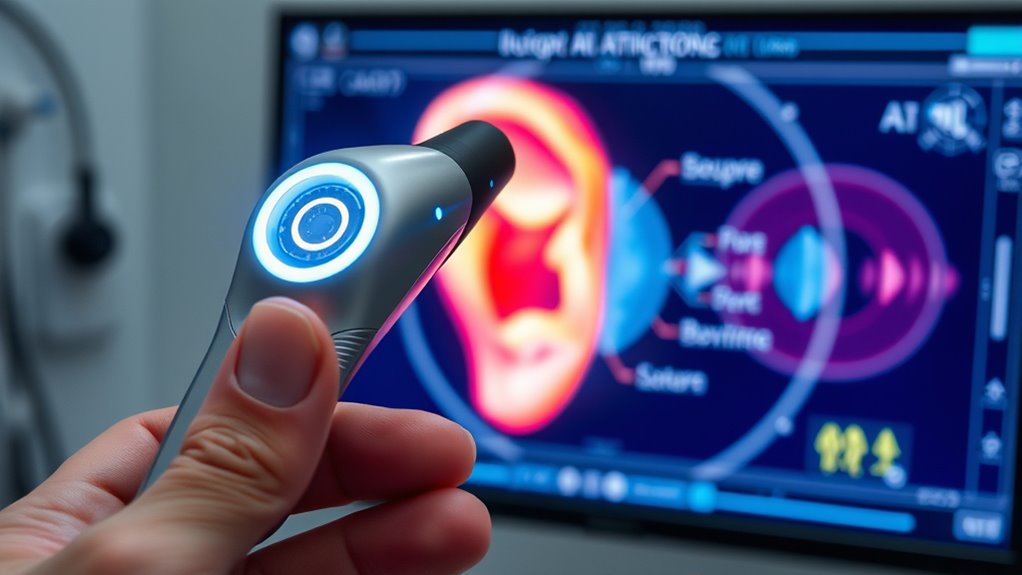
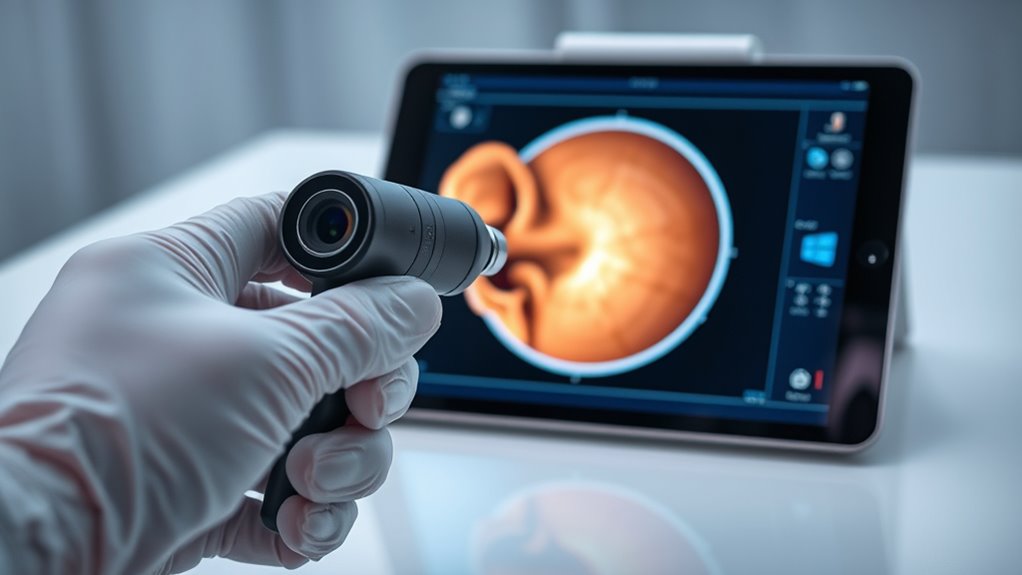
Otoscopic AI assistants work by analyzing images captured during ear examinations to help identify abnormalities. When you use an otoscope, the AI processes the visual data of your ear canal and tympanic membrane in real-time. It examines features like color, texture, and structure to detect issues such as infections, perforations, or blockages. The AI’s algorithms compare the captured images to vast datasets of normal and abnormal ear anatomy, enabling it to highlight areas of concern quickly. This process assists healthcare providers in making more accurate diagnoses. The system’s ability to accurately interpret the details of the ear canal and tympanic membrane streamlines the examination, providing a clearer understanding of your ear health. It’s a precise, efficient tool that supports clinicians during ear assessments. Additionally, advancements in image analysis technology are continually improving the AI’s ability to differentiate between subtle variations in ear structures.

BEBIRD R1 Wax Removal Tool for Ear – Spade Ear Canal Cleaner with Camera 1080P Earscope, Wax Remove Ear Picker with Vari Replacement Tips, Camera with 6LED Light for Ear/Nose/Throat Examination, Black
Wide Angle & 1080P HD Camera: Bebird R1 earscope has a 3 million pixels high precision lens with…
As an affiliate, we earn on qualifying purchases.
As an affiliate, we earn on qualifying purchases.
Evaluating the Diagnostic Precision of AI Tools
Evaluating the diagnostic precision of AI tools is vital to determine how reliably they can identify ear abnormalities. You need to look at validation studies that compare AI assessments with expert diagnoses to guarantee accuracy. Regulatory approval is essential, as it confirms the tool has met safety and effectiveness standards. Keep in mind, the AI’s performance depends heavily on proper user training; inadequate training can lead to misinterpretation of results. Consistent calibration and validation against clinical benchmarks help maintain high diagnostic accuracy. When assessing these tools, consider both sensitivity and specificity to gauge their ability to detect true positives and avoid false negatives. Vetted – Mother Baby Kids ensures that the products and tools used are safe and effective for delicate populations. Ultimately, thorough evaluation ensures the AI assistant provides trustworthy support in otoscopic examinations.

ScopeAround Digital Otoscope w/Built-in Screen, Manual-Focus Digital Otoscope with Light for Home Use, No App Needed, Easy Viewing for Everyday Ear Checks, Otoscope Camera, White
FSA HSA Eligible Item
As an affiliate, we earn on qualifying purchases.
As an affiliate, we earn on qualifying purchases.
Challenges in Real-World Application
You’ll face challenges like inconsistent image quality, which can affect AI accuracy. Different clinical settings also introduce variables that complicate reliable performance. Additionally, many AI tools struggle to adapt across diverse populations and environments. Furthermore, the variability in cultural breakfast traditions highlights the broader challenge of ensuring AI tools are culturally competent and adaptable to different regional practices.
Variability in Image Quality
Despite advancements in AI technology, the variability in image quality remains a significant obstacle for real-world otoscopic applications. Standardization issues mean that images captured can differ greatly depending on equipment and techniques. Poor lighting, improper focus, or inconsistent angles can compromise image clarity, making AI analysis less reliable. Technician training plays a vital role here; without proper instruction, you might struggle to obtain consistent, high-quality images. Variability in how images are captured hampers the AI’s ability to accurately diagnose or assist. To improve outcomes, you need standardized protocols for image acquisition and exhaustive technician training. Addressing these factors helps guarantee the AI receives clear, uniform images, ultimately increasing the reliability and accuracy of otoscopic assessments in diverse clinical settings. Incorporating consistent imaging techniques ensures that the AI can better handle the variability inherent in real-world environments.
Diverse Clinical Environments
Diverse clinical environments present a significant challenge for implementing otoscopic AI assistants effectively. Variations in lighting, equipment, and patient demographics can impact image quality and diagnostic accuracy. To address this, you need robust training protocols that account for these differences, ensuring the AI can handle real-world variability. Additionally, clinician oversight remains essential, especially in settings where environmental factors may hinder AI performance. You must remain vigilant, verifying AI suggestions and adjusting workflows accordingly. Without proper adaptation, the AI might misinterpret images or offer unreliable assessments. Overcoming these environmental challenges requires continuous data collection from multiple clinical settings and ongoing refinement of the AI system, so it remains effective across different practice environments. Ethical Hacking can provide insights into security vulnerabilities, which, while seemingly unrelated, emphasize the importance of thorough testing and validation in deploying AI systems in diverse environments.
Limited Generalizability
Limited generalizability remains a significant obstacle for otoscopic AI assistants when applied across different clinical settings. You may find that models perform well in controlled environments but struggle with diverse populations, affecting cross population applicability. Variations in patient age, ethnicity, and ear conditions can impact accuracy. Additionally, cross device consistency poses challenges; different otoscope models, image qualities, and lighting conditions can alter AI performance. When deploying AI tools broadly, these inconsistencies can lead to unreliable diagnoses or missed pathologies. To improve real-world effectiveness, developers need to ensure their algorithms adapt to varied populations and are compatible across multiple devices. Ensuring model robustness to different environments and conditions is essential for creating AI assistants that are genuinely useful, accurate, and reliable in everyday clinical practice.

Mini Ear Otoscope, Bysameyee Magnification Diagnostic Ear Scope with LED Direct Illumination Light, Ear Healthy Tool for Doctors Nurses Adults Kids Baby Elder Pets Animals
Adjustable 3X Magnifier: Offer you wider vision with 3X magnifying glass, the magnification glass is adjustable. Bysameyee ear…
As an affiliate, we earn on qualifying purchases.
As an affiliate, we earn on qualifying purchases.
Limitations Due to Data and Imaging Quality
Your AI assistant’s accuracy depends heavily on the quality of otoscopic images. Low resolution, poor lighting, and inconsistent clarity can hinder its ability to identify problems correctly. Additionally, limited data diversity makes it harder for the system to recognize a wide range of conditions accurately. Ongoing research into biases and vulnerabilities highlights the importance of robust safety measures to improve AI reliability.
Image Resolution Constraints
Image resolution plays a essential role in the accuracy of otoscopic AI assistants, yet it often faces limitations stemming from both data quality and imaging devices. Low-resolution images can obscure critical details of the ear canal and eardrum, reducing the AI’s ability to accurately identify abnormalities. When image resolution is insufficient, diagnostic accuracy drops because the AI cannot reliably detect subtle signs or differentiate between normal and pathological tissues. Variations in camera quality and lighting conditions also impact resolution, leading to inconsistent results. You might find that even minor improvements in image clarity can enhance AI performance, but hardware constraints often limit these gains. Ultimately, poor image resolution constrains the AI’s capacity to provide precise diagnoses, highlighting the need for high-quality imaging to optimize diagnostic outcomes.
Data Diversity Challenges
Despite advances in otoscopic AI technology, the variety and quality of data remain significant hurdles. You may encounter challenges due to cultural differences that influence how images are captured and interpreted, leading to inconsistencies in data sets. These differences can affect algorithm training, making it harder for AI to perform reliably across diverse populations. Additionally, regulatory hurdles often restrict access to large, diverse datasets, limiting exposure to the full spectrum of ear conditions and imaging conditions. As a result, the AI’s accuracy may be compromised when applied in new settings or populations. Overcoming these data diversity challenges requires international collaboration and regulatory adjustments, but until then, your AI system’s ability to Personality Test generalize remains constrained by limited and culturally biased data.
Illumination and Clarity
Illumination and clarity are crucial factors that directly impact the effectiveness of otoscopic AI systems. Lighting variability can cause inconsistent image quality, making it difficult for AI algorithms to accurately analyze ear structures. Poor illumination often results in low contrast, obscuring details essential for diagnosis. Focus issues also pose a challenge, as blurry or out-of-focus images reduce the AI’s ability to identify key features. Variations in lighting and focus can lead to false negatives or positives, compromising reliability. These limitations stem from inconsistent data and imaging conditions, which hinder the system’s capacity to deliver precise assessments. Improving lighting uniformity and implementing autofocus techniques are essential steps toward enhancing image clarity and, consequently, the overall performance of otoscopic AI assistants. Additionally, image quality plays a significant role, as high-resolution images enable more accurate analysis and reduce the likelihood of misinterpretation.
Ethical and Practical Considerations
As otoscopic AI assistants become more prevalent in clinical settings, addressing ethical and practical concerns is crucial. You need to guarantee patient privacy is protected, especially since AI systems handle sensitive medical data. Clear policies must be in place to prevent data breaches or misuse. Informed consent is equally important; patients should understand how the AI functions and what data it collects. Transparency about AI capabilities helps build trust and allows patients to make informed choices about their care. Additionally, practical considerations like device accuracy, clinician training, and integration into existing workflows are essential. You must balance technological benefits with ethical responsibilities, ensuring that AI augmentation enhances patient care without compromising privacy or autonomy. Proper management of user consent is vital to uphold ethical standards in AI-assisted healthcare.
Future Directions and Improvements
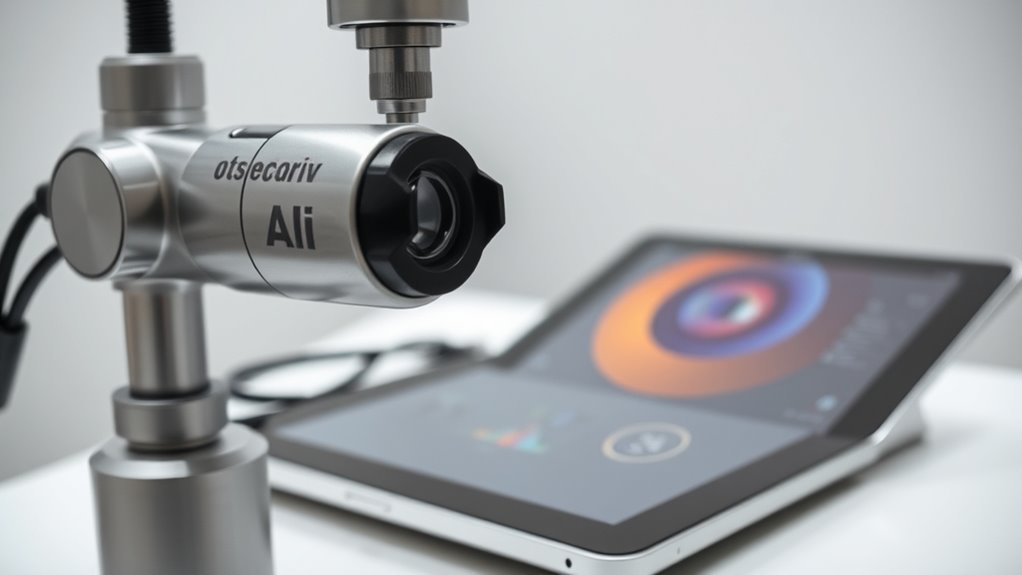
Future advancements in otoscopic AI assistants aim to enhance accuracy, usability, and integration within clinical workflows. To achieve this, ongoing algorithm refinement will improve diagnostic precision and reduce errors. Enhancing the user interface ensures ease of use, encouraging wider adoption by clinicians. Future developments should focus on seamless integration with electronic health records and real-time feedback for practitioners. Consider the following areas:
| Focus Area | Goal |
|---|---|
| Algorithm refinement | Increase diagnostic accuracy and reduce false positives |
| User interface | Simplify operation and improve user experience |
| Workflow integration | Enable smooth incorporation into existing systems |
| Data security | Protect patient information and ensure compliance |
These improvements will position otoscopic AI as a essential, reliable tool in future clinical practice.
Frequently Asked Questions
How Do AI Assistants Compare to Experienced ENT Specialists?
You might wonder how AI assistants compare to experienced ENT specialists. While AI tools offer impressive diagnostic accuracy and can assist in clinical integration, they don’t replace the nuanced judgment of a seasoned professional. AI can support your decision-making and improve consistency, but ultimately, an ENT specialist’s expertise is vital for thorough diagnosis and personalized care. Combining both ensures better outcomes for your ear health.
Can AI Identify Rare Ear Conditions Accurately?
When it comes to rare condition detection, you might wonder if AI can match human expertise. While AI can assist in identifying common ear issues, its diagnostic reliability for rare conditions is still evolving. You need to know that AI’s ability to accurately spot unusual ear problems varies, and it may miss subtle signs. So, relying solely on AI for rare condition detection isn’t advisable; always consult a specialist for thorough diagnosis.
What User Training Is Required to Operate These AI Tools?
When operating otoscopic AI tools, you need proper user training to guarantee effective use. Focus on skill development by learning how to correctly position the otoscope, interpret AI feedback, and understand device limitations. Hands-on practice enhances your confidence and accuracy. Regular training updates help you stay current with new features and protocols, making you more proficient. Ultimately, investing in user training improves your diagnostic efficiency and patient outcomes.
How Do Patient Privacy Concerns Impact AI Data Collection?
Imagine your personal diary locked away—patient privacy concerns act like this lock. You must guarantee data encryption to protect sensitive info and use consent management to respect patient autonomy. These measures prevent unauthorized access and build trust. When collecting AI data, you’re responsible for safeguarding privacy, just like keeping secrets safe. This approach maintains ethical standards and complies with regulations, ensuring patient rights are prioritized in AI data collection efforts.
Are There Regulatory Approvals for Commercial Otoscopic AI Devices?
You should know that commercial otoscopic AI devices are charting regulatory hurdles, which include strict approval processes. Regulatory agencies like the FDA review these devices to ensure safety and effectiveness before they hit the market. While some AI otoscopic tools have gained approval, others are still undergoing evaluation. Staying updated on approval statuses helps you understand which devices are legally available and meet necessary standards for clinical use.
Conclusion
As you explore otoscopic AI assistants, remember that while they offer promising accuracy—like having a modern-day stethoscope—they’re not infallible. Limitations in data quality and real-world challenges mean you should use them as an aid, not a replacement. Think of them as your trusty sidekick, like Robin to Batman, helping you make better diagnoses. Stay curious and cautious, and keep pushing for improvements—after all, even the best tech today was once just a dream.