
TL;DR

Get everyday helpers delivered free with Prime
- Fast, free delivery on millions of items
- Prime Video, Amazon Music and more included
- Member-only deals all year
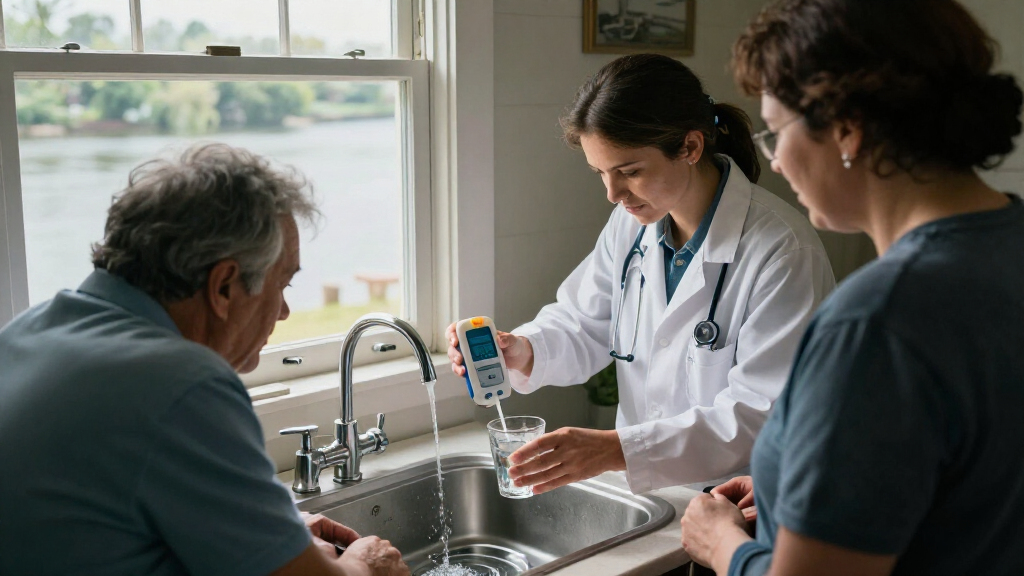
A study of UK Biobank participants found that living nearer to industrial facilities reporting certain pollutants was associated with higher odds of progressive supranuclear palsy (PSP). The observational findings do not establish that water pollution caused the disease, and the researchers cite possible misdiagnosis, confounding and overlapping emissions as limitations.
A study of 221 people diagnosed with progressive supranuclear palsy (PSP) in the UK Biobank found higher odds of the rare neurodegenerative disorder among participants living near industrial facilities reporting certain pollutants. The results, published in Neurology, show an association with proximity, not proof that polluted water caused PSP.
Researchers compared the PSP cases with 2,249 matched controls who had no recorded diagnosis of parkinsonism or dementia. They assessed participants’ baseline residential distance from facilities listed in the European Pollutant Release and Transfer Register, including wastewater treatment plants, chemical plants, intensive aquaculture operations and thermal power stations. PSP diagnoses recorded from 2007 to 2025 were identified through health coding.
The study reported associations for facilities emitting heavy metals (odds ratio 1.38; 95% confidence interval 1.03–1.85), pesticides (1.66; 1.12–2.46), other organic pollutants (1.52; 1.13–2.04) and other inorganic pollutants (1.60; 1.19–2.15). These estimates describe the study’s statistical associations; they do not show that exposure caused an individual’s disease. The researchers also reported that PSP risk declined with greater distance from facilities, and that duration of residence near polluters may have played a role.
In a separate analysis using 2010 facility reports, heavy metals and other organic and inorganic pollutants remained associated with PSP, while chlorinated solvents also met the study’s threshold for statistical significance. The authors said facilities often emitted multiple pollutant types, so findings for individual pollutants should be treated as exploratory. A prior analysis of the cohort did not implicate air pollution, but did not measure water pollution, according to the report.
Why Water Exposure Is Under Study
PSP is a progressive movement disorder that can involve parkinsonism, problems moving the eyes and difficulty with balance. The report says no treatment effectively stops or slows its progression. Identifying potentially modifiable environmental exposures could help guide research into prevention and disease mechanisms, but this study does not establish that reducing exposure would prevent PSP.
Ray Dorsey, a neurologist at Atria Research and Global Health Institute who was not involved in the study, told MedPage Today that environmental toxicants such as metals and pesticides may be relevant to PSP research. He also said the findings suggest exposure through water or ingestion may matter. Those are interpretations of an observational study, not evidence that a particular facility or pollutant caused the cases.
Products Worth Considering

DJI Osmo Pocket 3 Filter Bundle – Vlogging Camera with 1 CMOS Sensor and 4K/120fps

Sony WH-1000XM6 Wireless Noise-Canceling Over-Ear Headphones, Blue, Bundle

Bose QuietComfort True Wireless Earbuds with Active Noise Cancellation, Black
As an affiliate, we earn on qualifying purchases.
How Researchers Compared Exposure
The analysis used the UK Biobank, a prospective cohort, and compared cases with controls matched at a ratio of one case to 10 controls. Both groups had a mean age of 63; about 41% were women and 91% were British. Researchers used 2007, the earliest year of full UK Biobank recruitment, as the index year for facility reporting. There were 305 reporting facilities that year, and the report notes that co-emission, particularly of heavy metals, was common.
Researchers classified reported pollutants as heavy metals, chlorinated solvents, persistent organic pollutants, pesticides, other organic pollutants and other inorganic pollutants. Their distance analysis found lower odds with increasing distance for pesticides, other organic pollutants and other inorganic pollutants. The study examined residential proximity to reporting facilities; it does not directly establish each participant’s actual water source or personal pollutant dose.
“There is also evidence that the length of time people lived near the polluting facilities played a role in their risk of PSP.”
— Charlie Weige Zhao, MD, of Harvard Medical School, in a statement cited by MedPage Today
Limits of the Pollution Findings
The study cannot show that pollution caused PSP. The researchers acknowledged that diagnoses were identified through health coding, so misclassification is possible. Residual confounding may also have affected the results, including factors the analysis did not account for, such as participants’ occupational histories.
Because many facilities released more than one pollutant, the analysis cannot reliably separate the effects of individual substances. The report also does not provide a direct measure of each participant’s exposure through drinking water or ingestion. The size of the study—221 cases—limits how firmly the findings can be interpreted, and it remains unclear whether the associations would appear in other populations.
Further Studies Must Test the Link
The report calls for more research, including laboratory work, to investigate whether specific pollutants or exposure routes contribute to PSP. Follow-up studies could examine exposure histories more directly, account for occupational and other possible confounders, and test whether results hold in populations outside the UK Biobank. The supplied report does not identify a scheduled next study or a planned change in public health guidance.
For now, the findings are a reason to investigate a possible environmental link, not evidence that living near a listed facility will lead to PSP. Researchers have not established an individual risk estimate from these results or shown that any particular intervention would prevent or slow the disorder.
Key Questions
What is progressive supranuclear palsy?
PSP is a rare, progressive neurodegenerative disorder associated with parkinsonism, abnormal eye movements and balance problems. The report says there is currently no treatment that effectively stops or slows its progression.
Did the study prove that polluted water causes PSP?
No. It found statistical associations between PSP diagnoses and proximity to facilities reporting certain pollutants. It did not prove causation or measure each participant’s personal water exposure.
Which pollutants were associated with PSP in the analysis?
The main analysis reported associations for facilities emitting heavy metals, pesticides, other organic pollutants and other inorganic pollutants. A 2010 reporting analysis also found a significant association for chlorinated solvents. The authors cautioned that facilities often emitted multiple pollutants.
What are the main limitations?
The researchers cited possible misdiagnosis from health coding, residual confounding such as occupational exposure, overlapping emissions from facilities and uncertainty about participants’ actual pollutant doses. The findings need further research.
Source: rss