
TL;DR

Get everyday helpers delivered free with Prime
- Fast, free delivery on millions of items
- Prime Video, Amazon Music and more included
- Member-only deals all year
An international team led by Northumbria University developed and tested a five-factor score to estimate three-year dementia risk among older adults in low- and middle-income countries. The researchers say it is intended to support research recruitment, not routine population screening, and call for testing in regions not included in the study.
An international research team led by Northumbria University has developed and tested a five-factor score to estimate dementia risk among older adults in low- and middle-income countries, using information gathered in a conversation rather than blood tests or brain scans. The study, published in the American Journal of Epidemiology, is aimed primarily at helping researchers identify participants for studies and trials—not at serving as a routine screening test.
The model was built and tested using data from more than 11,000 older adults across seven study sites in China, Cuba, the Dominican Republic, Puerto Rico, Venezuela, Mexico and Peru. The researchers report an accuracy score of 0.75, above the 0.70 threshold they describe as generally regarded as clinically useful. That figure reflects the model’s performance in the study; it does not mean that every individual risk estimate is correct.
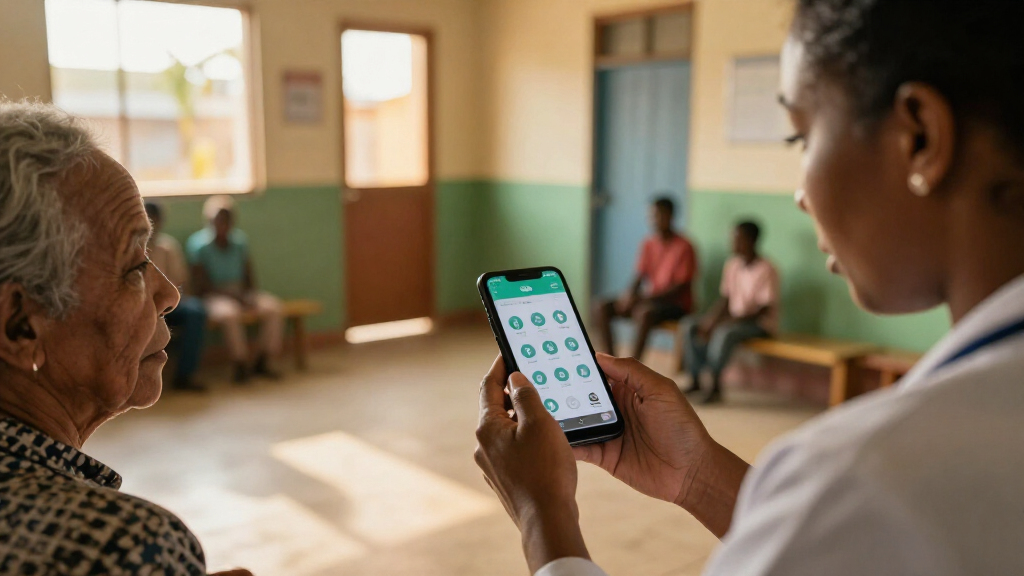
The score uses five factors: age, social engagement, physical activity, high blood pressure and difficulty managing money. Researchers can ask about social connections and everyday activity, while a family member or carer may be asked about a change in the older person’s ability to handle finances. The authors say the assessment does not require specialist equipment.
The total score runs from 0 to 9. In the study’s estimates, a score of 0 corresponded to about a 1% chance of developing dementia within three years, while a score of 9 corresponded to nearly 19%. These are estimates from the model, not a diagnosis or a guarantee of what will happen to an individual. The study received funding from the UK National Institute for Health and Care Research through UK government international development funding, with additional support from Dementia Australia.
A Research Tool for Underrepresented Settings
The work addresses a mismatch between where dementia occurs and where many risk-prediction tools were developed. The source report says around 60% of people living with dementia are in low- and middle-income countries, while existing prediction models were largely developed using data from high-income countries and have transferred poorly to other settings.
A score based on information that can be gathered through conversation could make it easier for research teams in settings with limited access to scans, laboratory tests or specialist services to identify people at elevated risk for follow-up studies. That could support research into prevention and local needs. The score is not presented as a way to confirm dementia, and its results should not be treated as individual medical advice.
Products Worth Considering

Samsung 34-Inch Odyssey G5 Ultra-Wide Curved Gaming Monitor

LG UltraGear 32GX850A-B 32-inch 4K UHD Glossy OLED Gaming Monitor

Samsung Odyssey G4 25-inch FHD Gaming Monitor
As an affiliate, we earn on qualifying purchases.
Why Existing Risk Models Fell Short
Dementia affects more than 57 million people worldwide, according to the source report. As the number of cases grows in lower-income regions, researchers need ways to study risk that reflect those populations and the realities of local health systems.
The research team drew on the 10/66 Dementia Research Group network and data from sites across Latin America, the Caribbean and Asia. The authors say many established prediction tools were designed using high-income-country data, limiting their usefulness elsewhere. Their new score is a research response to that gap, rather than a replacement for clinical assessment.
“This model is a step towards changing that. It is simple, it is built for the settings where it is needed most, and it gives researchers a practical way to find the people who should be the focus of future studies and trials.”
— Dr. Eduwin Pakpahan, Northumbria University’s Applied Statistics and Data Science Research Group
Validation Gaps Across Regions
The study covered seven sites, but it does not establish how well the score will perform in every low- and middle-income country or community. The researchers specifically call for further validation in South Asia, the Middle East and North Africa, and Sub-Saharan Africa, which were not represented in the sites listed in the report.
The reported accuracy score also does not by itself show how the tool would perform in routine health services, or whether using it would improve outcomes for individuals. The source describes the tool as intended for research recruitment, not general-population screening. How it might be adapted for local languages, cultures and health systems remains to be established.
Further Testing Before Wider Use
The research team is calling for studies in additional regions to test whether the score remains useful across different populations and settings. That validation would help researchers understand where the model can be applied and whether its factors and risk estimates need adjustment.
For now, the immediate proposed use is to help research studies and clinical trials identify older adults who may be at higher risk. The source material does not set out a timetable for further validation or plans for routine clinical deployment. Any clinical use would require evidence and assessment beyond the study’s reported performance.
Key Questions
What does the five-factor score assess?
It uses age, social engagement, physical activity, high blood pressure and difficulty managing money to estimate dementia risk over three years. Some information may come from a family member or carer.
Does the score diagnose dementia?
No. The researchers describe it as a risk-estimation tool for research, not a diagnostic test or routine screening tool. A risk score cannot establish whether an individual has dementia.
Where was the model tested?
The study used data from sites in China, Cuba, the Dominican Republic, Puerto Rico, Venezuela, Mexico and Peru. The team says it needs testing in other regions, including South Asia and Sub-Saharan Africa.
How accurate was the model in the study?
The researchers reported an accuracy score of 0.75, above the 0.70 threshold they say is generally regarded as clinically useful. This is a study-level performance measure, not a guarantee that an individual prediction is correct.
Source: news-medical.net