
TL;DR

Get everyday helpers delivered free with Prime
- Fast, free delivery on millions of items
- Prime Video, Amazon Music and more included
- Member-only deals all year
Utah is allowing healthcare startup Nolla Health to test an app that assesses mild-to-moderate acne and recommends topical medication from a list of eight treatments. The one-year pilot is designed to reduce physician involvement in stages, though doctors will review prescriptions at different points; the program’s full operation and outcomes are not yet known.
Utah has launched a one-year pilot allowing healthcare startup Nolla Health to use an AI system to assess patients with mild-to-moderate acne and recommend topical prescriptions. The program will reduce direct physician review in stages, but doctors will still review prescriptions at defined points; it is not an unrestricted AI medical service.
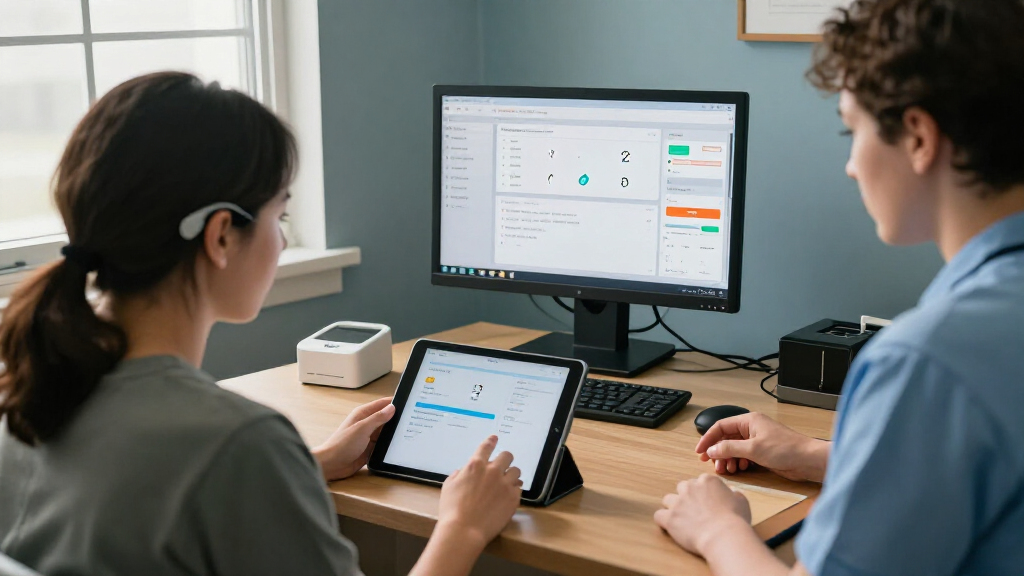
Patients can sign up for Nolla Health’s app, reported to cost $4.99 a month, scan their face and provide medical history and personal information. The system analyzes the skin, estimates oiliness and assigns an acne severity score. It then combines that assessment with the submitted information to select a recommendation from eight approved treatments, according to the report by TechSpot, citing Bloomberg.
The pilot is structured in three phases. The first 100 prescriptions are to be reviewed by doctors before being sent to a pharmacy. For the next 400 patients, the AI will submit prescriptions and a physician will review them retrospectively each week. In the final phase, a doctor is to review at least 10% of prescriptions once a month. The source report says the medications are topical, not pills.
Nolla Health chief executive Luis Wenus said the possible adverse effects of the eight medications are limited to localized skin irritation or dryness. That description is the company’s characterization, not an independent assessment of the pilot’s safety. The report does not provide outcome data or details about how the system handles cases it cannot confidently assess.
A Test of AI Prescribing Boundaries
The pilot moves AI beyond general health information into a clinical decision and prescribing process. Even though it is limited to one common skin condition and topical treatments, the staged approach offers a real-world test of how an automated system performs when physician involvement is reduced.
For patients, the potential appeal is easier access to assessment and treatment without arranging an appointment. The corresponding concern is whether an app can reliably interpret images and medical histories, identify when a patient needs a human clinician, and avoid unsuitable prescriptions. Those questions matter beyond acne if similar programs are proposed for other conditions.
The gradual review plan provides some physician oversight, but the degree of oversight changes over time. The final phase’s monthly review of at least 10% of prescriptions is not the same as a doctor checking every case before medication is issued. The pilot’s results and safeguards will be important in judging whether that model is appropriate.
Products Worth Considering

Logitech MX Mechanical Wireless Illuminated Keyboard, Tactile Quiet, Graphite

Apple iPad Air (4th Generation, 10.9-inch, Wi-Fi, 256GB) – Space Gray

Amazon Kindle Paperwhite (12th Generation, 2024), 16 GB, 7-inch Display, Jade
As an affiliate, we earn on qualifying purchases.
How the Review Phases Work
The program is limited to mild-to-moderate acne and a fixed list of eight treatments. Its staged oversight starts with pre-issuance checks, moves to weekly retrospective review for the next group, and then shifts to monthly sampling. This setup means the system’s role expands as the pilot proceeds, subject to the review arrangements described in the report.
Concerns about AI-generated health information have also arisen in other settings. The source report recalls inaccurate health material in Google AI Overviews and a separate Google feature for crowdsourced health suggestions, which the company later removed or discontinued. It also cites a case in which a man reportedly followed ChatGPT advice about a salt substitute and developed bromism. These examples involved different systems and circumstances; they do not establish how Nolla Health’s prescribing tool performs.
Safety and Performance Still Unreported
The available report does not identify the clinical criteria used to approve the eight treatments, explain how the AI handles incomplete or conflicting patient information, or specify how patients can reach a clinician if their condition worsens. It also does not provide the name of the state agency overseeing the pilot or detail how that oversight will work.
No figures are given for diagnostic accuracy, prescription errors, adverse events, patient outcomes or how often the system refers a user to a human doctor. The pilot’s planned review stages are described, but the source does not establish that the final phase has started or report results from any phase. The claim that this makes Utah the first state to replace a doctor with AI should be treated cautiously: the service is narrow and includes physician review, rather than eliminating doctors from the program altogether.
Pilot Results Will Shape Expansion
The next developments are the rollout through the three review phases and the collection of evidence about how the system performs. The report does not give specific calendar dates for each phase or say when results will be published. Readers should look for information on prescription decisions, clinician overrides, referrals, patient outcomes and safety incidents.
It is also unclear whether Nolla Health intends to expand the service to other conditions, whether Utah will continue the program after its one-year term, or what findings would lead regulators to alter it. Until those details emerge, the confirmed development is a limited acne pilot with physician review built into its staged design—not a general authorization for AI to independently treat patients.
Key Questions
What will Nolla Health’s AI do?
It will analyze a patient’s skin scan and submitted medical information, estimate acne severity and recommend a topical treatment from a list of eight options.
Will a doctor review every prescription?
Not at every stage. Doctors are to review the first 100 prescriptions before submission, then review the next 400 patients’ prescriptions retrospectively each week. In the final phase, a doctor is to review at least 10% of prescriptions monthly.
Which conditions and medications are covered?
The pilot is limited to mild-to-moderate acne. The source report says the AI can recommend from eight approved treatments, all topical rather than pills.
How long will the pilot run?
The source describes the program as a one-year pilot. It does not provide a calendar start date, a schedule for each phase or a decision date for any continuation.
Are the system’s safety results available?
No outcome or safety data are included in the report. Nolla Health’s CEO described the listed medications’ adverse effects as limited to localized irritation or dryness, but the source does not provide an independent assessment or pilot results.
Source: hn