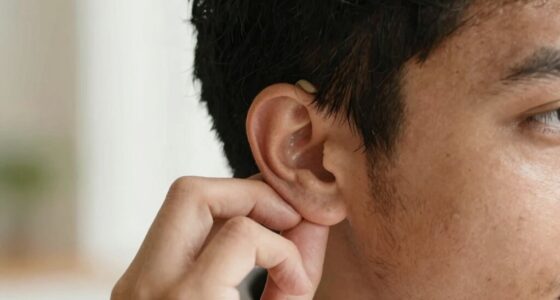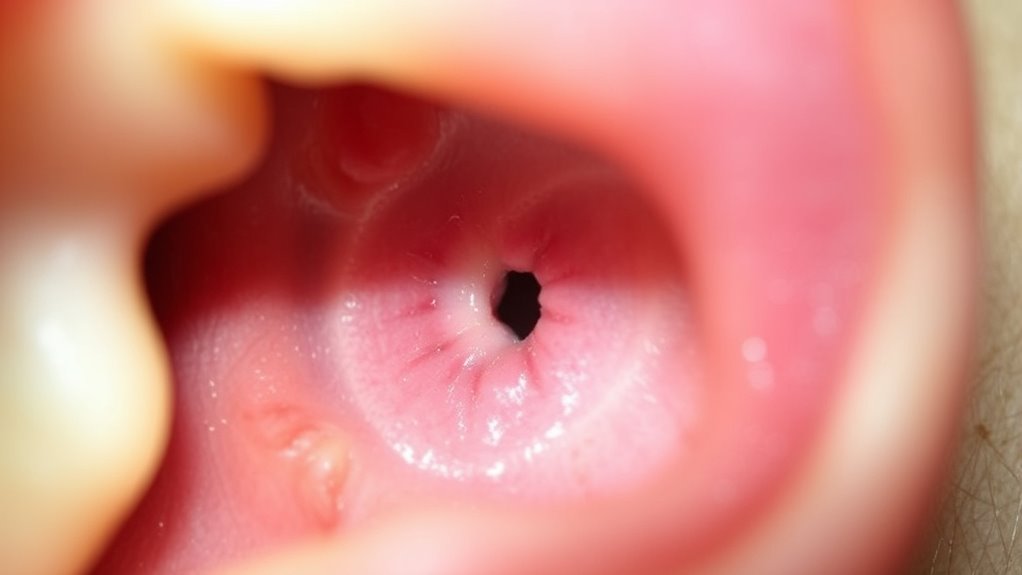

If you have a perforated eardrum, many small tears heal on their own within a few weeks if you keep your ear dry and avoid inserting objects. Your doctor may recommend antibiotic drops to prevent infection during healing. Larger tears might need surgical repair (tympanoplasty). Proper care helps prevent complications and long-term hearing issues. To learn more about effective treatments and how to care for your ear during recovery, keep exploring your options.
Key Takeaways
- Most small perforations heal naturally within a few weeks with proper ear care.
- Keep the ear dry and avoid inserting objects to promote healing and prevent infection.
- Antibiotic ear drops help prevent infection during recovery, especially for larger perforations.
- Severe or persistent perforations may require surgical repair (tympanoplasty).
- Regular follow-up with a healthcare professional ensures proper healing and prevents complications.
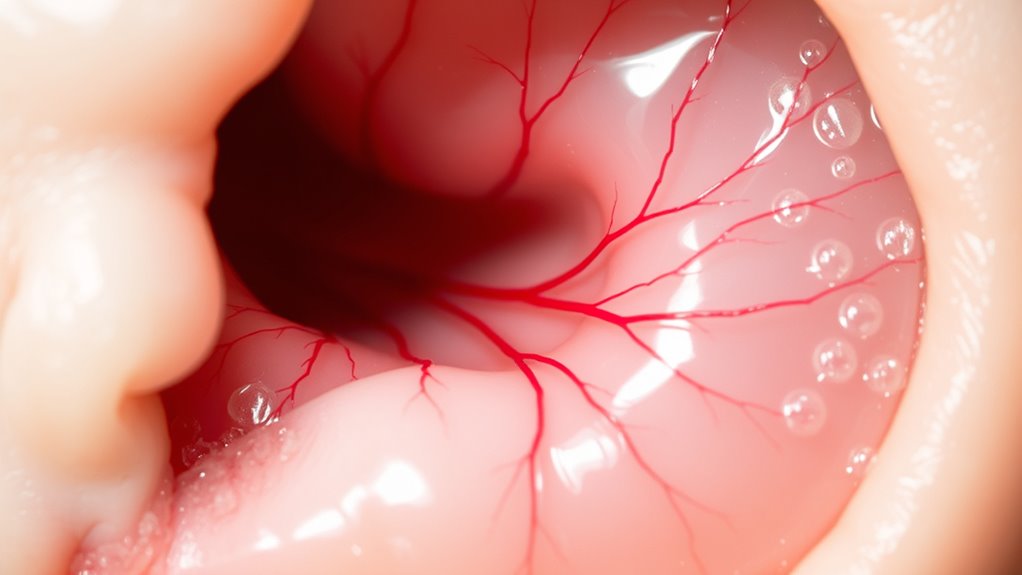
A perforated eardrum occurs when there’s a tear or hole in the thin membrane that separates your ear canal from your middle ear. This membrane, called the tympanic membrane, plays a vital role in hearing and protecting your middle ear from dirt, water, and infection. When it’s perforated, you might experience a sudden sharp ear pain, a feeling of fullness, or even drainage of fluids that may be bloody or pus-filled. Often, a perforated eardrum results from a middle ear infection, especially if that infection causes the eardrum to become inflamed or rupture. Ear infections are common triggers because they create pressure buildup behind the eardrum, which can cause it to tear. As a result, you might notice a temporary hearing loss, which occurs because the perforation disrupts the normal transmission of sound waves to your middle ear. The hearing loss is usually mild and improves as the eardrum heals, but it can be quite unsettling while it lasts.
You should be aware that a perforated eardrum can also make you more vulnerable to further ear infections. When the membrane is torn, bacteria and water can enter the middle ear more easily, prolonging or worsening infections. These infections can, in turn, exacerbate hearing loss and cause additional discomfort. If you suspect you have a perforated eardrum, it’s important to see a healthcare professional promptly. They’ll examine your ear and may use an otoscope to assess the size and location of the tear. In some cases, they might recommend hearing tests to determine the extent of hearing loss and to monitor your recovery.
Most small perforations heal on their own within a few weeks, especially if you keep your ear dry and avoid inserting anything into it. During this healing period, your doctor might suggest using antibiotic drops to prevent infection. Larger or more severe perforations may require surgical intervention, such as a tympanoplasty, where they patch or reconstruct the eardrum. Protecting your ear from water and trauma is key to healing and preventing complications. If you experience persistent pain, significant hearing loss, or drainage that smells foul, seek medical attention immediately. Proper management helps reduce the risk of long-term hearing issues and ensures your ear heals as quickly as possible. Additionally, understanding the importance of high-quality ear protection can help prevent future injuries. Remember, taking care of your ear and following your doctor’s advice is essential to restore hearing and prevent recurrent infections.

Hyland's Earache Drops, Natural Relief of Swimmer's Ear, Cold and Flu, Allergy Symptoms, Ages 4 and up, Day and Night, 0.33 Fl Oz
RELIEF OF EARACHE SYMPTOMS: Temporarily relieves pain or itching from swimmer’s ear, clogged ears, and ear pain or…
As an affiliate, we earn on qualifying purchases.
As an affiliate, we earn on qualifying purchases.
Frequently Asked Questions
Can a Perforated Eardrum Heal on Its Own Without Treatment?
Yes, your perforated eardrum can heal on its own without treatment, especially if the tear is small. However, you should avoid ear infections and swimming, as these can worsen the injury or cause complications. Keep your ear dry, avoid inserting objects, and seek medical advice if you notice pain, discharge, or hearing loss. Proper care helps promote healing and prevents infections that could delay recovery.
Are There Any Natural Remedies to Speed up Healing?
You can try herbal remedies like chamomile or garlic oil to support ear healing, but always consult your doctor first. Follow proper ear care routines by keeping the ear dry and avoiding inserting anything into your ear. These practices may help speed up healing, but they shouldn’t substitute for medical treatment. Prioritize professional advice to ensure safe and effective healing for your perforated eardrum.
How Long Does It Typically Take for a Perforated Eardrum to Heal?
A perforated eardrum heals like a delicate flower opening slowly. Typically, it takes about 6 to 8 weeks to heal completely, but this varies with ear infections and ear pressure levels. During recovery, you might experience some discomfort or hearing changes, but avoiding water and infections helps speed up healing. If symptoms persist or worsen, consult your doctor promptly to prevent complications.
What Activities Should Be Avoided During Recovery?
During recovery, you should avoid swimming to prevent water from entering your ear and delay healing. Also, steer clear of loud noise exposure, as it can worsen your symptoms or damage your ear further. Keep your ear dry and protected, and wear earplugs if you need to be around water or loud environments. Resting and following your doctor’s advice will help your perforated eardrum heal faster.
When Should I See a Doctor for a Perforated Eardrum?
Oh, sure, ignore that ear pain and hearing loss—what could possibly go wrong? You should see a doctor immediately if your ear pain worsens, you notice significant hearing loss, or if there’s continued bleeding or discharge. Don’t wait, because a perforated eardrum can lead to infections or long-term damage. Prompt medical attention guarantees proper healing and prevents complications, so trust your instincts and get checked out ASAP.

Swimming Ear Plugs for Adults,3 Pairs Waterproof Reusable Silicone Swim Earplugs for Swimming Surfing Snorkeling Showering and Water Pool,Beach,Ocean (Adults & Teens 14+)
【Comfortable】Made of super soft silicon, it is comfortable and easy to wear. This lightweight silicone is contoured to…
As an affiliate, we earn on qualifying purchases.
As an affiliate, we earn on qualifying purchases.
Conclusion
A perforated eardrum is like a tiny tear in your inner symphony, but with proper care, it can heal like a gentle sunrise brightening the dark sky. Picture the delicate membrane mending itself, restoring your hearing’s harmony. Don’t ignore the signs—seek treatment, protect your ears, and trust in the healing process. Soon, your soundscape will return to life, vibrant and clear, as if the storm never touched your silent, resilient core.

Makalong 4pcs Ear Piercing Kit, Self Ear Piercing Gun, Easy And Safe Ear Piercing Gun Kit, Disposable Earring Piercing Kit, Piercing Kit, Piercing Gun
【2 Sizes & Styles】4 Disposable Ear Piercing Guns with CZ Studs Includes 2×5mm guns (with 6-prong cubic zirconia…
As an affiliate, we earn on qualifying purchases.
As an affiliate, we earn on qualifying purchases.

Zyrev ZetaLife Otoscope – Ear Scope with Light, Ear Infection Detector, Pocket Size (Black Color)
AT HOME – This compact otoscope is great for home use whether you use it for children or…
As an affiliate, we earn on qualifying purchases.
As an affiliate, we earn on qualifying purchases.