
Single-sided deafness often results from causes like ear infections, trauma, or sudden hearing loss due to nerve damage. To manage it, you may explore a range of care options such as auditory training, devices like CROS hearing aids, or bone conduction implants. These solutions aim to improve sound awareness and localization, though full binaural hearing remains challenging. Understanding these causes and options can help you find the best path forward as you learn more about your condition.
Key Takeaways
- Causes of SSD include nerve damage, ear infections, trauma, acoustic neuroma, and congenital conditions.
- Accurate diagnosis by audiologists guides personalized treatment and management options for SSD.
- Care pathways involve auditory training, assistive devices like CROS aids, or surgical interventions when appropriate.
- Auditory training improves sound localization and environmental awareness despite binaural hearing loss.
- Professional guidance helps select effective interventions, enhancing safety, communication, and quality of life.
Have you ever wondered how losing hearing in just one ear can affect your daily life? When you experience single-sided deafness (SSD), your ability to perceive the world changes in subtle but essential ways. One of the main challenges is sound localization—the skill that helps you determine where sounds are coming from. With only one functioning ear, your brain no longer has the binaural cues it relies on, such as differences in timing and loudness between both ears. As a result, you may find it difficult to identify the direction of a siren, a friend’s voice across the room, or a car approaching from behind. This can lead to safety concerns and increased difficulty in noisy environments where sounds overlap, making it hard to focus or follow conversations.
Understanding the impact of SSD on sound localization highlights the importance of targeted interventions. Auditory training becomes a valuable tool in this scenario. It involves exercises designed to improve your ability to interpret sound cues and compensate for the loss of binaural hearing. Through specialized programs, you can learn to better use monaural cues—such as the intensity and clarity of sounds—helping your brain adapt and improve your spatial awareness. While auditory training may not restore normal sound localization, it can enhance your overall listening skills and reduce the cognitive effort needed to understand sounds in complex environments.
Auditory training improves sound interpretation and spatial awareness in single-sided deafness.
In addition to auditory training, there are technological solutions that can support your hearing. Devices like CROS (Contralateral Routing of Signal) hearing aids or bone conduction implants can reroute sound from your deaf side to your better ear. These tools don’t fully restore binaural hearing but can markedly improve sound awareness and help with localization to some extent. The choice of treatment depends on the underlying cause of your SSD and your lifestyle needs.
Dealing with SSD is not just about managing hearing loss; it’s about regaining confidence in your daily interactions. Seeking professional guidance from audiologists or hearing specialists is essential. They can assess your specific situation, recommend suitable interventions, and guide you through auditory training programs tailored to your needs. Additionally, understanding the causes of SSD can help in choosing the most effective treatment options. With the right care pathway, you can learn to navigate your environment more safely and comfortably, despite the challenges posed by single-sided deafness.

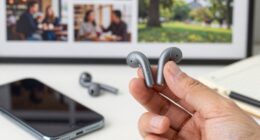
Audien Atom One OTC Hearing Aids – Wireless, Rechargeable, and Comfortable | Clear Sound in a Small, Discreet Design for Seniors & Adults with Hearing Loss
Hear What Matters Most: Hearing isn’t one-size-fits-all. That’s why our adjustable frequency system lets you personalize your sound…
As an affiliate, we earn on qualifying purchases.
As an affiliate, we earn on qualifying purchases.
Frequently Asked Questions
Can Single-Sided Deafness Be Completely Cured?
Single-sided deafness can’t be completely cured, but you can improve your hearing. Surgical options like cochlear implants may help restore some hearing, and hearing aids designed for single-sided deafness can boost your ability to localize sounds and understand speech. While these solutions don’t fully cure the condition, they markedly enhance your quality of life. Consult an audiologist to explore the best options tailored to your needs.
How Does Single-Sided Deafness Affect Balance and Spatial Awareness?
Imagine walking a tightrope blindfolded—that’s what your balance feels like with single-sided deafness. Your equilibrium gets a disruption, making you wobble and sometimes stumble. Spatial perception takes a hit, so judging distances and sounds becomes a guessing game. You might turn your head more often or bump into things, all because your brain struggles to interpret signals from just one ear, affecting your overall sense of space and stability.
Are There Any Natural Remedies for Single-Sided Deafness?
There aren’t proven natural remedies for single-sided deafness, but you might try herbal supplements like ginkgo biloba to improve circulation or make dietary changes that support ear health. Eating foods rich in antioxidants, omega-3 fatty acids, and vitamins can promote overall ear function. However, these approaches don’t substitute medical treatments. Always consult your healthcare provider before trying herbal remedies or significant dietary adjustments to guarantee safety.
What Are the Long-Term Psychological Impacts of Single-Sided Deafness?
You might find that living with single-sided deafness subtly challenges your emotional resilience over time. It can lead to feelings of social isolation, making it harder to connect comfortably with others. This ongoing struggle may influence your mental well-being, causing stress or frustration. Building emotional resilience and seeking support can help you better cope with these long-term impacts, allowing you to maintain a more positive outlook despite the challenges.
Is Single-Sided Deafness Hereditary or Caused by Genetics?
Single-sided deafness can be caused by genetic factors, but it’s not always hereditary. In some cases, hereditary transmission of deafness passes through families, increasing your risk if you have relatives with similar issues. However, many cases result from acquired factors like infections, injury, or exposure to loud noise. You should consult a healthcare professional to determine whether your condition has a genetic component and explore your options for care.
bone conduction implants for SSD
As an affiliate, we earn on qualifying purchases.
As an affiliate, we earn on qualifying purchases.
Conclusion
Guiding single-sided deafness is like steering a ship through stormy waters—you might face rough seas, but with the right care and support, you can find calm harbors. Embrace the pathways available, each one a lighthouse guiding you toward clearer sound and brighter days. Remember, your journey is unique, and with patience and perseverance, you’ll turn the tide, discovering new ways to hear the world’s symphony—even from one side.
Frustrated by Hearing Loss? Five Keys to Communication Success
As an affiliate, we earn on qualifying purchases.
As an affiliate, we earn on qualifying purchases.

Assistive Technology for Visually Impaired and Blind People
As an affiliate, we earn on qualifying purchases.
As an affiliate, we earn on qualifying purchases.