
To diagnose tinnitus, a doctor will take your medical history, asking about loud noise exposure, ear infections, or medication use. They’ll perform hearing tests like pure-tone audiometry to check your hearing ability and identify affected frequencies. A physical exam of your ears helps identify wax buildup or infections. Sometimes, imaging tests like MRI or CT scans are needed if structural problems are suspected. Keep going to discover more about how these tests work and what they reveal.
Key Takeaways
- Medical history is assessed to identify potential causes and rule out other conditions mimicking tinnitus.
- Hearing tests, such as pure-tone audiometry, determine if hearing loss accompanies tinnitus.
- Physical examination checks for earwax, infections, or structural abnormalities relevant to tinnitus.
- Additional diagnostics like MRI or CT scans are used if structural or neurological issues are suspected.
- The diagnostic process includes evaluating tinnitus onset, frequency, and impact on daily life for tailored management.
Tinnitus can be challenging to diagnose because its symptoms vary widely from person to person. When you visit a healthcare professional, they’ll start by gathering a detailed medical history. This helps them understand your overall health, any exposure to loud noises, ear infections, or medications that might contribute to your condition. They’ll ask about when your tinnitus began, how often it occurs, and whether it’s constant or intermittent. Understanding your medical background allows the doctor to identify potential causes and rule out other conditions that may mimic tinnitus, such as earwax buildup or ear infections. Additionally, the use of specialized diagnostic tools, such as hearing assessments, can provide more precise insights into your auditory health.
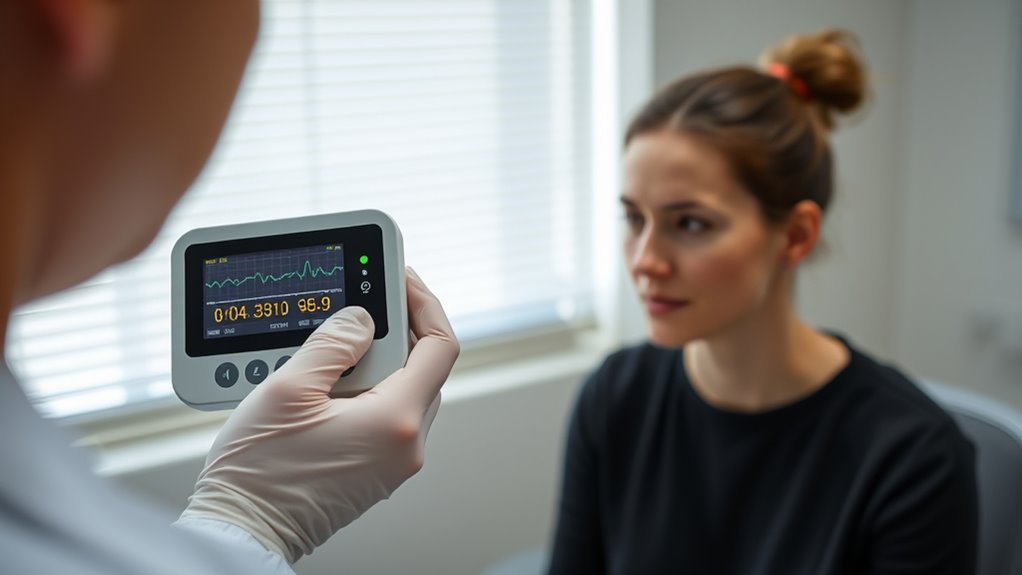
After discussing your medical history, your healthcare provider will likely perform hearing tests. These tests are vital because hearing loss frequently accompanies tinnitus, and identifying any deficits can guide treatment options. You might undergo pure-tone audiometry, where you listen to tones at different pitches and volumes to determine your hearing thresholds. During this test, headphones are placed over your ears, and you’ll indicate when you hear a sound. The results help map out your hearing profile and reveal if specific frequencies are affected. Sometimes, additional tests like speech audiometry or tympanometry are used to evaluate how well your ears and auditory nerves are functioning.
Hearing tests are not just diagnostic tools but also serve as a baseline for monitoring your condition over time. If your hearing loss is confirmed, your healthcare provider can explore treatments that may improve your quality of life, such as hearing aids or sound therapy. They might also recommend further testing if necessary, such as imaging studies like MRI or CT scans, especially if they suspect underlying structural issues or tumors affecting your auditory system.
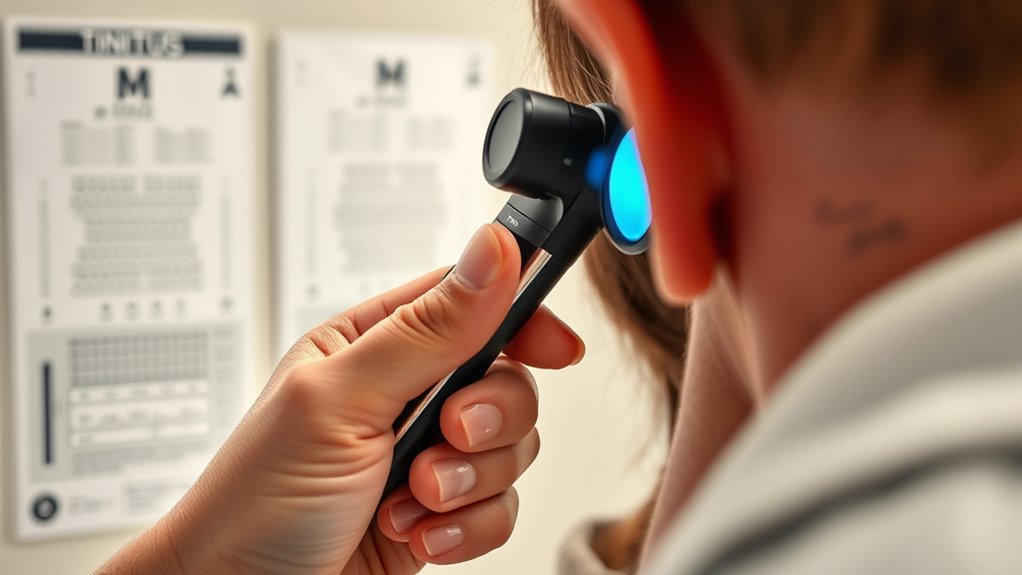
The process of diagnosis isn’t limited to just hearing tests and medical history. Your doctor may also ask about your exposure to loud noises, occupational hazards, and any recent head injuries. Sometimes, they’ll examine your ears physically to look for earwax, infections, or abnormalities. These steps help narrow down potential causes and determine whether your tinnitus stems from an inner ear problem, nerve damage, or other health issues.
Top picks for "tinnitu diagnos"
Open Amazon search results for this keyword.
As an affiliate, we earn on qualifying purchases.
Frequently Asked Questions
Can Tinnitus Be Diagnosed With a Simple Hearing Test?
Yes, tinnitus can be suspected through hearing assessments and audiometry testing. During these tests, you’ll listen to different sounds and tones to evaluate your hearing ability. While these tests help identify hearing loss that might be linked to tinnitus, they don’t directly diagnose tinnitus itself. If your results suggest issues, a healthcare professional can further assess your symptoms to confirm a tinnitus diagnosis and explore treatment options.
Are There Specific Blood Tests for Tinnitus Diagnosis?
There aren’t specific blood tests for diagnosing tinnitus because blood test limitations prevent clear detection of the condition. Researchers are exploring tinnitus biomarkers, but currently, blood tests can’t confirm tinnitus diagnosis. Instead, your doctor relies on your medical history, hearing tests, and physical exams. If you experience persistent ringing, it’s best to see a healthcare professional for an extensive evaluation, as blood tests alone won’t provide a definitive diagnosis.
How Long Does a Typical Tinnitus Diagnosis Take?
Think of your diagnosis as a journey through a quiet forest, where each step reveals more about your condition. Typically, the diagnosis timeline spans from a few days to a couple of weeks, depending on symptom assessment and test results. Your healthcare provider will review your history, listen carefully to your symptoms, and may perform hearing tests. Patience is key, as this process helps guarantee an accurate understanding of your tinnitus.
Is Tinnitus Diagnosis Different for Children and Adults?
Yes, tinnitus diagnosis varies for children and adults. For children, you undergo a pediatric assessment that considers developmental considerations, making the process more tailored to their age and communication skills. Adults typically have a straightforward evaluation focusing on their medical history and symptom description. In both cases, specialists use hearing tests and examinations, but the approach adapts to guarantee accurate diagnosis, especially for younger patients where developmental factors influence assessment techniques.
Can Imaging Tests Detect the Cause of Tinnitus?
Think of imaging tests as a map guiding you through tinnitus localization. While they can’t directly detect the cause of tinnitus, imaging techniques like MRI or CT scans provide detailed pictures of your inner ear and brain structures. These visuals help doctors identify possible issues, such as tumors or nerve damage, that might be contributing to your tinnitus. So, imaging tests are valuable tools in narrowing down the potential sources.
Conclusion
When you understand how tinnitus is diagnosed, you gain clarity, confidence, and control. You recognize the importance of thorough tests, careful listening, and expert evaluation. You see the value in early detection, precise diagnosis, and personalized treatment plans. By staying informed, asking questions, and seeking help, you empower yourself to manage tinnitus effectively. Remember, understanding the process is the first step toward relief, awareness, and a better quality of life.