
Early findings show that virtual reality distraction therapy can considerably reduce your pain and anxiety during medical procedures. By immersing you in calming or engaging environments, VR captures your attention and makes painful experiences feel less intense. It’s especially effective for procedures like wound care, dental work, and IV insertions. As research continues, you’ll discover how this innovative approach is shaping the future of pain management and easing patient discomfort.

Get everyday helpers delivered free with Prime
- Fast, free delivery on millions of items
- Prime Video, Amazon Music and more included
- Member-only deals all year
Key Takeaways
- Early studies show VR distraction therapy effectively reduces pain perception during medical procedures.
- Initial findings indicate significant reductions in patient anxiety when using VR environments.
- Research suggests VR can serve as a complementary tool, decreasing reliance on traditional pain medications.
- Findings highlight VR’s potential to improve patient comfort during burn care, dental work, and IV insertions.
- Ongoing investigations focus on optimizing VR content and technology for enhanced pain and anxiety management.
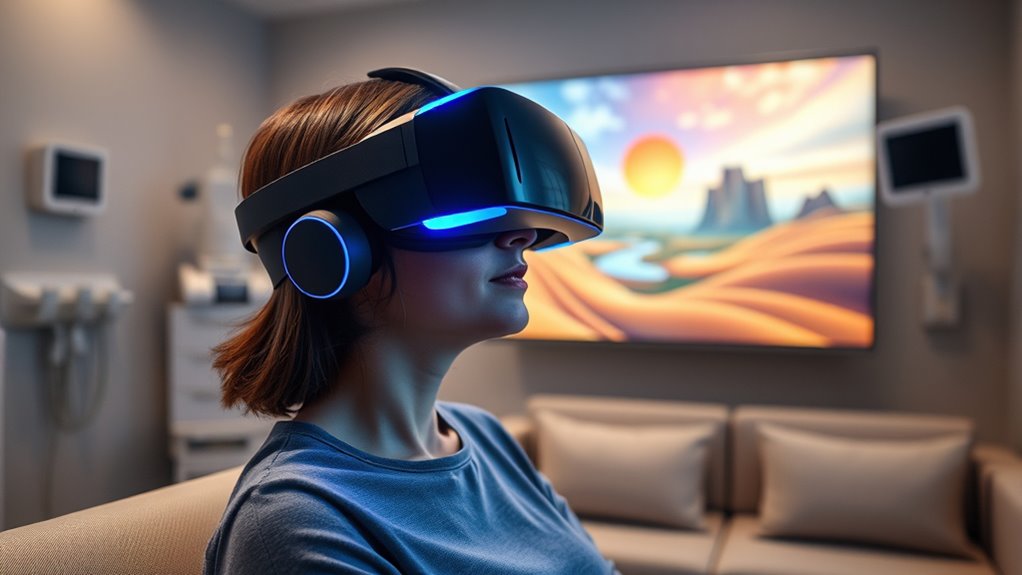
Virtual Reality Distraction Therapy is revolutionizing pain management by immersing patients in engaging virtual environments that divert their attention from discomfort. This innovative approach leverages the immersive qualities of virtual reality (VR) to help individuals cope with pain more effectively. When you’re experiencing a painful procedure or chronic pain, your mind often fixates on the sensation, intensifying your discomfort. VR distraction therapy works by capturing your attention through captivating visuals and interactive experiences, reducing the perception of pain. It’s a promising alternative or supplement to traditional pain management techniques, especially in scenarios where medication alone isn’t enough or where minimizing drug use is desirable.
VR distraction therapy helps manage pain by immersing patients in engaging virtual environments that divert attention from discomfort.
One of the most promising early findings of VR distraction therapy is its ability to substantially reduce anxiety associated with painful medical procedures. Anxiety often exacerbates pain perception, making procedures more uncomfortable and stressful. By immersing you in calming or engaging virtual environments—such as serene landscapes or playful adventures—the therapy helps lower your anxiety levels. This reduction in anxiety not only makes the experience more tolerable but also can lessen the need for sedatives or pain medications. The immersive nature of VR creates a sense of presence that distracts your mind from worries and physical sensations, allowing you to focus on the virtual environment rather than the discomfort.
Research shows that VR distraction therapy can be particularly effective during procedures like burn wound care, dental treatments, or IV insertions. Patients report feeling less pain and anxiety when using VR compared to traditional distraction methods, such as watching TV or listening to music. This is because VR provides a multi-sensory experience that actively engages your visual and auditory senses, making it harder for your brain to process pain signals. As a result, your overall pain perception diminishes, and your anxiety drops, creating a more positive experience.
While early findings are encouraging, it’s important to recognize that VR distraction therapy isn’t a standalone solution for all pain or anxiety issues. It works best as part of an all-encompassing pain management plan tailored to individual needs. Still, its potential to reduce reliance on medications and improve patient comfort is compelling. As research continues, you can expect to see more refined VR environments designed specifically to target pain and anxiety, making this technology an increasingly valuable tool in healthcare. Additionally, advancements in display technology and projector capabilities will likely enhance immersion and effectiveness further. Ultimately, VR distraction therapy offers a promising way to make painful experiences less traumatic and more manageable by engaging your senses and redirecting your focus away from pain.
VR distraction therapy for medical procedures
As an affiliate, we earn on qualifying purchases.
As an affiliate, we earn on qualifying purchases.
Frequently Asked Questions
How Cost-Effective Is Virtual Reality Distraction Therapy?
You might wonder about the cost-effectiveness of virtual reality distraction therapy. Conducting a thorough cost analysis shows it can reduce overall healthcare expenses by decreasing medication use and shortening recovery times. Plus, patient satisfaction tends to be higher when using VR, making it a valuable addition. While initial setup costs are notable, improved outcomes and happier patients make VR therapy a promising, cost-effective option for many healthcare settings.
Are There Any Long-Term Side Effects?
You’re probably wondering about long-term safety and side effects of virtual reality distraction therapy. Currently, research on long-term side effects is limited, so ongoing side effect monitoring is crucial. While most users tolerate the therapy well in the short term, potential issues like eye strain or motion sickness could persist or develop over time. Staying informed and consulting healthcare providers helps guarantee safe, effective use and early detection of any adverse effects.
Can It Be Used for Pediatric Patients?
You can consider using virtual reality distraction therapy for pediatric patients, but keep in mind their unique needs. Pediatric engagement is essential, so the therapy must be tailored to suit child-specific challenges like shorter attention spans and varying developmental stages. By customizing VR experiences, you can improve comfort and effectiveness, ensuring children stay engaged while addressing their individual challenges safely and positively.
How Does VR Compare to Traditional Distraction Methods?
Compared to traditional distraction methods, VR offers a more immersive experience that captures your attention effectively. It reduces the risk of sensory overload by engaging multiple senses simultaneously, which keeps patients more involved. You’ll find VR enhances patient engagement considerably, making procedures less stressful. While traditional methods like toys or music are helpful, VR’s interactive environment often provides a deeper distraction, leading to better comfort and cooperation during treatments.
What Training Is Necessary for Practitioners?
Imagine revealing new healing powers—your training is the key. You’ll need to complete specialized VR training programs to understand the technology and its applications. Practitioner certification guarantees you meet safety and efficacy standards, giving you confidence to guide patients through immersive experiences. By mastering these skills, you’ll transform pain management, making a real difference. Your commitment to proper VR training elevates your practice and empowers those you serve.
Conclusion
As you explore virtual reality distraction therapy, you’ll find it’s like stepping into a different world that eases pain and anxiety. Early findings show promising results, suggesting this technology could become a powerful tool in healthcare. Keep in mind, though, it’s still in its early stages—like a seed just beginning to grow. With continued research, this immersive approach may transform how you manage discomfort, making treatment feel less like a burden and more like an adventure.
Fall Picks
fall essentials
As an affiliate, we earn on qualifying purchases.