
TL;DR

Get everyday helpers delivered free — and shop member deals
- Fast, free delivery on millions of items
- Access to Prime Big Deal Days deals on October 6–7
- Prime Video, Amazon Music and more included
A 2025 study of 567 older adults in rural South Africa found that hearing loss was associated with more than twice the odds of dementia, according to geriatrician Brent Tipping. The study does not prove hearing loss causes dementia or that treating it prevents the condition, but it supports paying attention to sensory health as part of broader care for aging adults.
A study of 567 older adults in rural South Africa found that hearing loss was associated with more than twice the odds of dementia, according to geriatrician Brent Tipping, who co-authored the research. The findings, published in 2025, do not establish that hearing loss causes dementia or that treating it prevents the condition, but they add to reasons clinicians and families may want to address hearing and vision problems as part of older adults’ health care.
The research examined links between hearing, vision and dementia among participants in the Health and Aging in Africa: A Longitudinal Study of an INDEPTH Community in South Africa, known as HAALSI. Participants lived in Agincourt, Mpumalanga. The paper, by Muqi Guo and colleagues, was published in the journal Alzheimer’s & Dementia in 2025.
Tipping, a geriatrician at Wits Donald Gordon Medical Center, said the results point to the relevance of sensory interventions for overall brain health. The study’s reported association is not proof of cause and effect: its findings do not show that hearing loss itself leads to dementia, or that hearing aids or other treatment lower dementia risk. The supplied report also says visual impairment, affecting near and far vision, was associated with elevated risk, but does not give a specific estimate for that association.
Tipping describes dementia prevention as a lifelong effort, rather than a single intervention in old age. The report also lists managing blood pressure, cholesterol, diabetes and weight, staying physically active and addressing excessive alcohol use among factors relevant to health as people age. For patients who are confused or struggling during the day, he reviews sleeping medication to see whether it could be contributing to their difficulties. Those measures do not guarantee prevention, and the report does not claim that any one action can avert dementia.
Why Hearing Checks Belong in Care
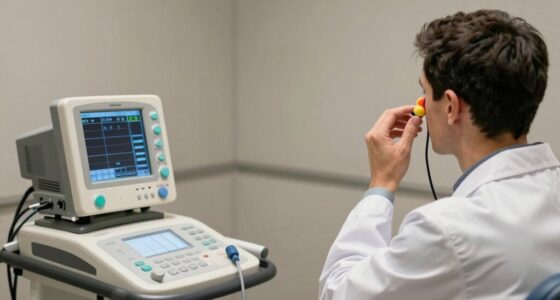
The findings matter because hearing difficulties are a potentially addressable health concern in a broader discussion of dementia risk. Recognizing sensory problems may help people seek assessment and support, while the study’s limits matter just as much: an observed association does not establish that hearing treatment prevents dementia. The report argues for considering hearing and vision alongside other aspects of health, rather than treating them as isolated concerns.
The issue also sits within a wider public-health challenge. The Lancet Commission estimates that addressing 14 modifiable risk factors could prevent or delay around 45% of dementia cases worldwide. That is an estimate across multiple factors, not a finding about hearing loss alone. For individuals and families, the practical implication is to discuss persistent hearing or vision difficulties with a qualified health professional and to consider them alongside other health and daily-function concerns.
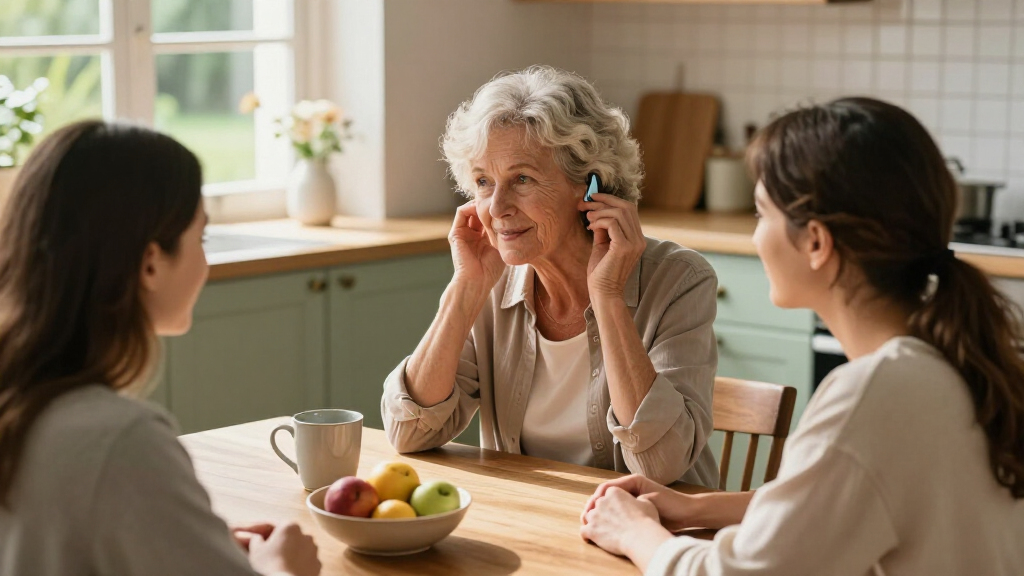
Dementia can affect more than the person diagnosed. As the condition progresses, relatives may take on tasks such as driving, meal preparation and managing medication. Tipping says caregivers also need practical support and rest. Paying attention to health concerns early may form part of a wider care plan, but the supplied reporting does not show that early hearing intervention will prevent that caregiving burden.
As an affiliate, we earn on qualifying purchases.
Study and Prevention Background
The study drew on HAALSI, a longitudinal project involving older adults in Agincourt, Mpumalanga. Its focus on a rural South African population offers evidence from a setting that is not always represented in dementia research. The available report provides the sample size and the study’s broad finding, but not the full methods, participant age range, size of the hearing-loss groups or details needed to assess the strength of each estimate.
Other prevention considerations discussed by Tipping include education and continued learning. The Lancet Commission’s estimate covers a set of 14 modifiable risk factors; the report notes that access to quality education from early childhood also matters for later cognitive decline, raising concerns about educational inequality in South Africa. Tipping said learning can take many forms: “You don’t need to do crosswords or sudoku if you don’t enjoy them. Learning a new skill or pursuing any absorbing interest is good enough.” This is his advice about keeping engaged, not evidence that a specific hobby prevents dementia.
Specialist services are limited in South Africa, according to the report. Wits describes its Division of Geriatric Medicine as the largest training and service-delivery center for the specialty in sub-Saharan Africa. Tipping said there are two funded training positions nationally. A geriatric assessment can take up to two hours, reflecting the need to consider health conditions, daily activities and support at home together.
““The patients have layers of complexity.””
— Brent Tipping
What the Study Cannot Establish
The reported results show an association, not causation. The supplied material does not establish whether hearing loss contributes to dementia, whether dementia or related changes affect hearing, or whether other factors help explain the link. It also does not report whether treating hearing loss changes dementia risk or cognitive outcomes.
Important details are not included in the source summary, including the study’s full methods, the precise measure behind “more than doubles the odds,” and how the researchers accounted for possible confounding factors. That wording describes odds, not a person’s absolute probability of developing dementia. The report gives no specific risk estimate for visual impairment. Readers should not treat the findings as a diagnosis or as a substitute for individualized medical assessment.
Clinical Follow-Up and Research
The study is published, and the supplied report does not identify a scheduled follow-up paper or new trial. The next useful steps are clearer communication of the research methods and further evidence on whether addressing hearing impairment changes dementia outcomes. Clinicians can assess hearing and vision concerns in the course of care, while patients and families can raise persistent difficulties with a qualified professional.
For people already experiencing memory or functional changes, Tipping’s account emphasizes looking at the whole health picture, including medication, sleep, other conditions and support at home. The report also points to the need for more geriatric training and research relevant to South African communities. Whether expanded hearing care can reduce dementia risk remains an open research question.
Key Questions
Does hearing loss cause dementia?
The study found an association between hearing loss and higher dementia odds. It does not establish that hearing loss causes dementia.
Does treating hearing loss prevent dementia?
The report does not show that hearing aids or other hearing treatment prevents dementia. It says sensory interventions may matter for overall brain health, while the effect on dementia risk remains unclear.
What did the South African study examine?
Researchers examined hearing, vision and dementia among 567 older adults in Agincourt, Mpumalanga, as part of the HAALSI study. The findings were published in Alzheimer’s & Dementia in 2025.
What other factors does the report mention?
The report discusses blood pressure, cholesterol, diabetes, weight, physical activity and excessive alcohol use, as well as education and continued learning. These are broader health considerations, not guarantees against dementia.
When should someone seek medical assessment?
People concerned about persistent hearing or vision problems, worsening memory, confusion or difficulty with daily activities can discuss them with a qualified health professional. The report does not offer a diagnosis or replace individual medical advice.
Source: rss
Fall Picks
fall essentials
As an affiliate, we earn on qualifying purchases.