
TL;DR

Get everyday helpers delivered free with Prime
- Fast, free delivery on millions of items
- Prime Video, Amazon Music and more included
- Member-only deals all year
A multicenter study by University of Tsukuba researchers found that 94.7% of 506 Japanese home care patients had two or more chronic conditions, and more than half had four or more. Patients with higher numbers of chronic conditions were more likely to need emergency home visits in the previous month.
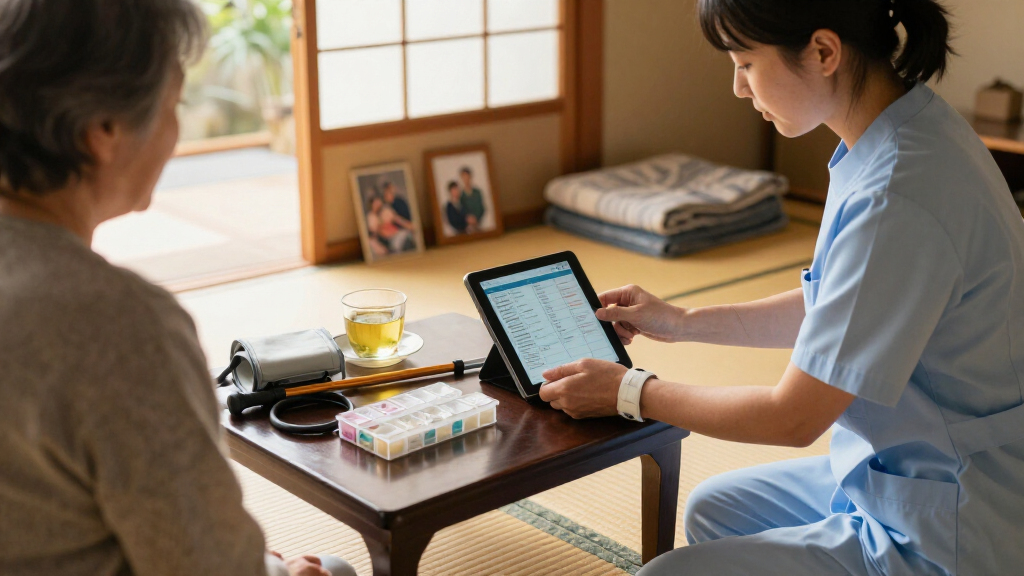
Nearly 95% of Japanese patients receiving physician-led home care are living with multimorbidity — two or more chronic conditions at once — according to a multicenter study by University of Tsukuba researchers published in September 2026 in the Journal of General and Family Medicine. The study of 506 adults in Tokyo and Ibaraki Prefecture also found that patients with more chronic conditions were significantly more likely to require emergency home visits for sudden health changes.
The research team, led by Gen Nakayama and colleagues at the University of Tsukuba, examined medical records of 506 adults receiving home-based medical care from medical facilities in Tokyo and Ibaraki Prefecture. Home-based care in Japan involves physicians regularly visiting older patients who have difficulty traveling to clinics or hospitals. Although multimorbidity has long been considered common in this population, the researchers noted that few studies had previously assessed its prevalence among home care patients.
The study found that 94.7% of patients had multimorbidity, defined in the study as the presence of two or more chronic conditions. More than half of participants — 57.1% — had four or more chronic conditions. Overall, 13.2% of patients required at least one emergency home visit in the previous month, defined as an unscheduled physician visit requested because of a sudden change in the patient’s condition.
When the researchers categorized patients by multimorbidity level, they found that patients with four or five chronic conditions — and especially those with six or more — were significantly more likely to require emergency home visits than patients with two or three conditions. Based on these findings, the authors suggest that a simple count of chronic conditions may help health care professionals identify home care patients at elevated risk of sudden health deterioration who could benefit from more proactive care planning.
Why Chronic Condition Counts Matter for Home Care
The findings matter because Japan has one of the world’s most rapidly aging populations, and home-based medical care is a growing part of its health system. As more older adults receive care at home rather than in hospitals or clinics, clinicians need practical tools to spot patients at risk of sudden deterioration before an emergency occurs.
The study’s central suggestion — that a simple tally of chronic conditions could serve as a risk marker — is potentially useful because it requires no specialized testing or equipment. If further research supports the association, condition counts could inform how care teams prioritize visits, schedule monitoring, and plan interventions for patients with six or more conditions, who faced the highest likelihood of emergency visits.
The results also highlight the sheer scale of multimorbidity in home care: with more than nine in ten patients affected, the authors argue this population cannot be managed through a single-disease lens, reinforcing a broader shift in medicine toward coordinated, patient-centered care for complex cases.
Japan’s Aging Population and Home Care Research Gap
Japan’s population is among the oldest in the world, and growing numbers of older adults receive home-based medical care, in which physicians make regular visits to patients unable to go to clinics or hospitals. Despite this trend, the study authors pointed to a research gap: although multimorbidity has long been recognized as common among home care patients, few studies had measured its prevalence in this specific group.
The University of Tsukuba study addressed that gap with a multicenter design drawing patients from multiple medical facilities across two regions. The findings, published in the Journal of General and Family Medicine in September 2026, link two previously under-examined questions in this population: how widespread multimorbidity is, and whether its severity predicts the need for unscheduled physician visits. The paper is cited as Gen Nakayama et al., with DOI 10.1002/jgf2.70170.
“A simple count of chronic conditions may help health care professionals identify home care patients at increased risk of sudden health deterioration who may benefit from more proactive care planning.”
— University of Tsukuba researchers (study authors)
Limitations of the Multimorbidity Study
Several questions remain open. The study was conducted in Tokyo and Ibaraki Prefecture only, and it is not yet clear whether the findings generalize to home care patients across other regions of Japan or in other countries. The emergency-visit figure — 13.2% of patients in the previous month — reflects a short observation window, and the study did not report on longer-term outcomes or mortality.
The study found an association between higher condition counts and emergency home visits, but association does not establish that additional conditions cause the visits; other factors such as disease severity, medication burden, or caregiver availability may contribute. It is also unclear which specific chronic conditions drove the increased risk, as the reported findings grouped patients by the number of conditions rather than by condition type. The researchers themselves framed their recommendation as a suggestion rather than a confirmed clinical tool.
Potential Uses in Care Planning
The authors propose that condition counting could be incorporated into proactive care planning for home care patients, for example by flagging patients with four or more chronic conditions for closer monitoring or more frequent scheduled visits. Whether Japanese home care providers adopt such an approach is not yet known.
Further research will be needed to test whether the association holds in other regions and populations, whether condition counts improve outcomes when used to guide care, and which combinations of conditions carry the greatest risk. Readers can consult the full study — Gen Nakayama et al., Journal of General and Family Medicine (2026), DOI 10.1002/jgf2.70170 — for methodological details. Patients and families making care decisions should discuss individual circumstances with their health care providers.
Key Questions
What is multimorbidity?
Multimorbidity is defined in this study as the presence of two or more chronic conditions in the same patient. It is common among older adults and complicates care because conditions and treatments can interact.
How common was multimorbidity among the home care patients studied?
The study found 94.7% of the 506 patients had two or more chronic conditions, and 57.1% had four or more, according to medical record data from facilities in Tokyo and Ibaraki Prefecture.
What is an emergency home visit?
In the study, an emergency home visit is an unscheduled physician visit requested because of a sudden change in a patient’s condition. Overall, 13.2% of patients needed at least one such visit in the previous month.
Does having more chronic conditions cause emergency visits?
The study found an association: patients with four or more conditions, especially six or more, were more likely to need emergency home visits than those with two or three. The study does not prove causation, and other factors may also play a role.
Who conducted the research and where was it published?
Researchers at the University of Tsukuba led by Gen Nakayama conducted the multicenter study, published in September 2026 in the Journal of General and Family Medicine (DOI: 10.1002/jgf2.70170).
Source: rss
Halloween Picks
halloween
As an affiliate, we earn on qualifying purchases.