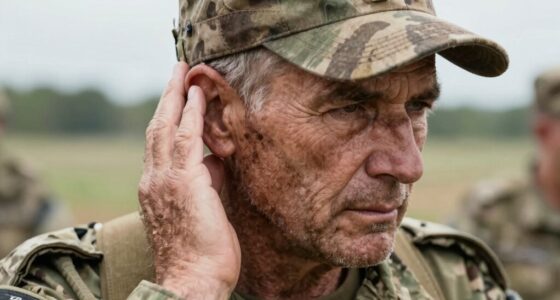
When you face both hearing loss and PTSD, communication becomes a real challenge. You might struggle to catch every word, especially in noisy places, and feel frustrated or misunderstood. Anxiety and emotional turmoil can make conversations even harder, leading you to withdraw socially. These combined issues often cause feelings of isolation and vulnerability. Understanding how these conditions interact can help you find ways to connect better. If you keep exploring, you’ll discover strategies to ease these communication hurdles.

Get everyday helpers delivered free with Prime
- Fast, free delivery on millions of items
- Prime Video, Amazon Music and more included
- Member-only deals all year
Key Takeaways
- Hearing loss reduces clarity in conversations, especially in noisy environments, complicating communication for individuals with PTSD.
- PTSD’s hyper-focus on threats can cause misinterpretation and emotional responses during social interactions.
- Emotional distress from both conditions can lead to frustration, sadness, or anger, impacting communication effectiveness.
- Social withdrawal may occur due to fear of misunderstandings and communication breakdowns.
- Supportive tools and therapy can help mitigate communication barriers and improve emotional resilience.
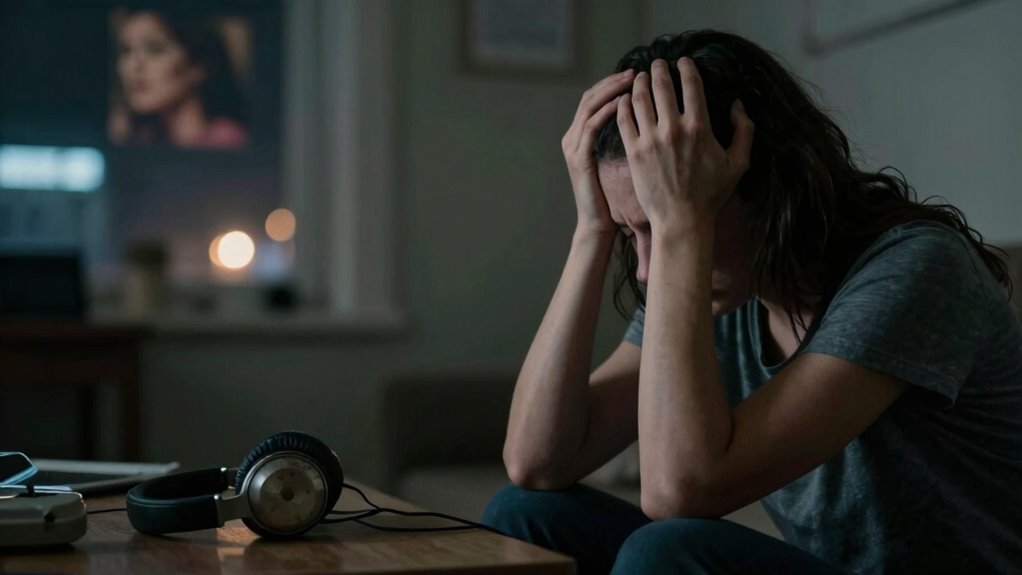
Living with both hearing loss and PTSD can profoundly disrupt your ability to communicate effectively. These intertwined challenges don’t just affect how you hear; they deeply influence how you connect with others and process the world around you. The emotional impact of this combination is often overwhelming. You might feel frustration, sadness, or even anger as everyday conversations become more difficult. Hearing loss can make it hard to catch every word, especially in noisy settings, which leaves you feeling disconnected and misunderstood. When PTSD enters the picture, your mind may become hyper-focused on perceived threats or past traumas, making it harder to stay present during conversations. This emotional turmoil can intensify feelings of vulnerability and anxiety, creating a cycle where communication feels increasingly intimidating. Recognizing the emotional toll of these combined conditions is crucial in finding effective ways to cope. Additionally, the complexity of these issues can sometimes hinder access to appropriate support services that could assist in managing both conditions effectively. Understanding the role of technological aids can also be beneficial in improving communication and reducing frustration.
Social isolation is a common consequence of these dual challenges. You may start avoiding social gatherings because the effort of listening and managing your emotional responses becomes exhausting. The fear of missing out or being misunderstood can lead you to withdraw from friends, family, or colleagues. Over time, this withdrawal deepens your sense of loneliness, reinforcing the belief that others cannot understand what you’re going through. It’s not just about missing words; it’s about feeling alienated from the social fabric that once provided comfort and support. This isolation can also worsen PTSD symptoms, as you lose the social interactions that might have helped you feel less alone. The cycle tightens, making it even harder to reach out or seek help. Support networks play a vital role in breaking this cycle and providing emotional reassurance.
You might notice that your emotional impact manifests in sudden mood swings, irritability, or feelings of helplessness, especially when communication breaks down. The stress of trying to interpret speech while battling your inner fears can be overwhelming, leaving you drained and emotionally fragile. In social situations, you may become hyper-vigilant or overly cautious, fearing misunderstandings or judgment. These worries can make you avoid situations where you might be exposed to unfamiliar voices or unpredictable environments. The combination of hearing loss and PTSD creates a complex web of emotional and social barriers, making it harder for you to maintain relationships or pursue new connections. Recognizing this impact is the first step toward seeking support, whether through therapy, support groups, or assistive devices. Remember, you’re not alone, and understanding these challenges can help you find strategies to cope and reconnect with others.
hearing aids with noise reduction
As an affiliate, we earn on qualifying purchases.
As an affiliate, we earn on qualifying purchases.
Frequently Asked Questions
How Can Therapy Improve Communication for Those With Both Conditions?
Therapy can improve your communication by teaching you therapeutic techniques that address both hearing loss and PTSD. You’ll learn coping strategies to manage emotional resilience, making it easier to express yourself clearly and listen actively. Regular sessions help you develop confidence, reduce anxiety, and improve understanding between you and others. With targeted support, you’ll find it easier to navigate conversations and strengthen relationships despite your challenges.
Are There Specific Assistive Devices Recommended for Combined Hearing Loss and PTSD?
You can benefit from assistive technology like hearing aids with noise reduction, vibrating alert systems, and captioned telephones, which help bridge communication gaps. These devices not only improve hearing but also support emotional coping by reducing frustration and isolation. Investing in tailored assistive devices empowers you to reconnect with others, manage stress better, and regain confidence, ultimately fostering a sense of control and emotional resilience amidst your challenges.
What Role Does Family Support Play in Managing Communication Challenges?
Family support plays a crucial role in managing communication challenges. Your family’s understanding helps you feel more secure and less isolated. Emotional patience from loved ones encourages you to express yourself without fear of judgment. They can learn about your hearing loss and PTSD, adapting their communication styles to meet your needs. By offering consistent support and empathy, your family helps you navigate daily interactions more comfortably and confidently.
Can Medication Affect Communication Difficulties Related to PTSD and Hearing Loss?
Medication can indeed influence communication difficulties linked to PTSD and hearing loss, acting like a double-edged sword. Side effects may include dizziness, fatigue, or blurred speech, making conversations harder. Additionally, some medications help with emotional regulation, easing anxiety that hampers communication. You need to work closely with your healthcare provider to balance medication benefits and side effects, ensuring your treatment supports clearer, more effective communication rather than complicating it further.
How Do Cultural Differences Influence Communication Strategies in These Cases?
Cultural differences profoundly impact your communication strategies by highlighting varying perceptions of hearing loss and PTSD. Practicing cultural sensitivity helps you understand these perspectives, reducing communication barriers. You adapt your approach by respecting cultural norms and language preferences, ensuring clarity and comfort. Recognizing diverse beliefs enables you to tailor your messages effectively, fostering trust and better understanding. This approach empowers you to connect more meaningfully, overcoming obstacles posed by cultural differences in sensitive situations.
Conclusion
Managing communication when dealing with both hearing loss and PTSD can feel overwhelming, but understanding these challenges helps you find better ways to connect. Did you know that nearly 70% of veterans with PTSD also experience some degree of hearing loss? Recognizing this overlap allows you to seek tailored support and improve interactions. Remember, patience and compassionate communication can make a significant difference, helping you build stronger relationships despite these hurdles.
Evergreen bestsellers Picks
bestsellers
As an affiliate, we earn on qualifying purchases.