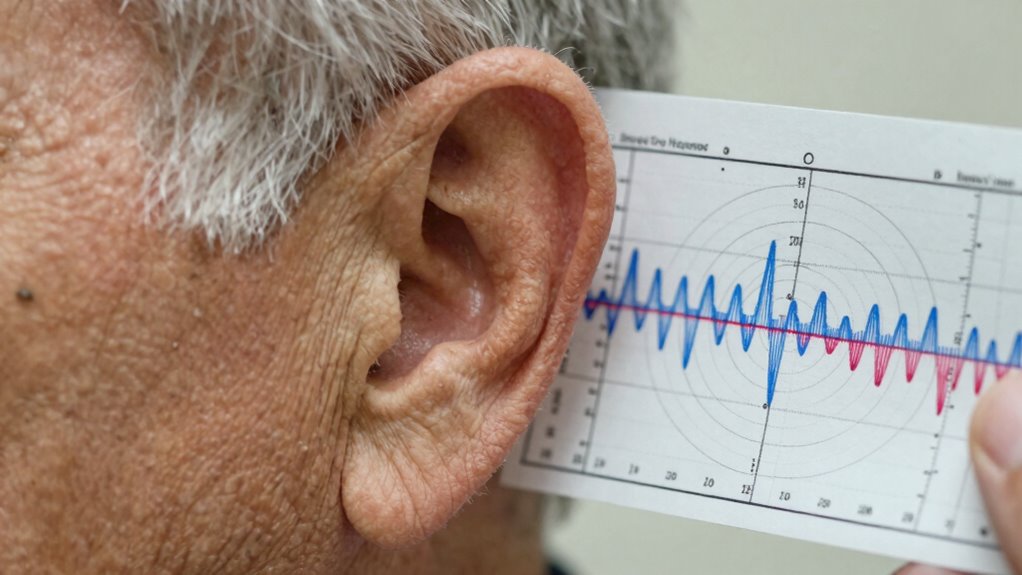

To prove delayed-onset hearing loss for a VA claim, gather detailed military and civilian audiograms showing hearing thresholds over time. Focus on evidence that shows deterioration after service, and include witness statements or personal accounts of hearing difficulties. Obtain a medical opinion linking your hearing loss to service-related noise exposure, supported by relevant research. Building a strong timeline and thorough evidence is key, and if you keep going, you’ll discover more tips to strengthen your case.
Key Takeaways
- Collect and compare military and civilian audiograms showing progressive hearing decline over time.
- Obtain detailed personal statements and witness accounts linking hearing issues to service.
- Secure a medical nexus letter from a qualified professional connecting hearing loss to military noise exposure.
- Highlight evidence that hearing deterioration occurred after discharge to support delayed-onset.
- Use medical literature to explain the gradual development of hearing loss post-exposure.

Proving delayed-onset hearing loss in a VA claim can be challenging because the condition develops gradually and may not be immediately linked to military service. Unlike sudden injuries, hearing loss that appears years later requires you to demonstrate a clear connection between your service and the condition. To do this effectively, you need to gather detailed evidence, starting with your hearing tests and medical records. These documents are essential because they establish your baseline hearing ability during and shortly after your time in service, as well as how your hearing has changed over time.
When reviewing your hearing tests, focus on obtaining records from military exams, especially those conducted during your active duty or reserve service. These tests often contain audiograms that can show your hearing thresholds at specific frequencies. If your military medical records include audiograms taken at different points, compare them to identify any decline in hearing ability. Even if the initial tests show normal hearing, subsequent tests might reveal deterioration that aligns with your claimed onset date. This pattern can support your case, especially if you can demonstrate that the decline occurred after your military service.
Your medical records from civilian providers are equally important. They can provide documentation of your hearing problems, treatments, or consultations related to hearing loss that occurred after your discharge. Be sure to gather records from ENT specialists or audiologists, as they often perform detailed hearing assessments. These assessments can show the progression of your hearing loss over the years and help establish a timeline that links your condition to service-related noise exposure or other factors.
In addition to physical evidence, consider statements from witnesses who observed your hearing difficulties or changes in communication. These statements can add context and support your claim, especially if they relate to your military duties. When submitting your claim, include a detailed personal statement explaining when you first noticed hearing issues, how they have worsened, and the connection you believe exists with your military service.
The VA also considers medical literature and medical opinions. If your case is complex, obtaining a nexus letter from a qualified medical professional can be vital. This letter should explicitly connect your hearing loss to your military service, citing your medical records, hearing tests, and relevant research. Additionally, understanding the gradual development of conditions like hearing loss can strengthen your claim by demonstrating how the impairment may not be immediately apparent after service. Being aware of service-related noise exposure and its effects can further support your case. By carefully compiling and presenting this evidence, you stand a better chance of proving that your delayed-onset hearing loss is service-connected and deserving of VA benefits.

BlaidsX Neuro Hearing Aids, Bluetooth Rechargeable OTC Hearing Aids for Seniors and Adults, Mobile App Hearing Test Audiogram & Noise Cancellation, Dual Mic & 32 DSP Channels | USA-Made
TAKE ADVANTAGE of our SALE to celebrate Blaids coming to Amazon! Blaids Hearing Aids were previously only available…
As an affiliate, we earn on qualifying purchases.
As an affiliate, we earn on qualifying purchases.
Frequently Asked Questions
Can Delayed-Onset Hearing Loss Be Diagnosed Years After Service?
Yes, delayed-onset hearing loss can be diagnosed years after service. You might not notice it immediately if you didn’t use proper hearing protection or were exposed to loud noise regularly. Over time, noise exposure can damage your hearing, leading to a gradual loss that’s only diagnosed later. Keeping records of your noise exposure and hearing tests can help prove the connection to service if you file a VA claim.
What Specific Medical Tests Are Best for Proving Delayed Hearing Loss?
You should prioritize thorough hearing tests and audiometric evaluations to prove delayed hearing loss. These tests measure your hearing thresholds across different frequencies, providing concrete evidence of any decline over time. Audiometric evaluations are especially effective because they document changes in your hearing ability, which can support your VA claim. Make sure your evaluations are detailed and conducted by qualified professionals to strengthen your case.
How Does Age Affect the Va’s Acceptance of Delayed-Onset Hearing Loss Claims?
Like a knight from a bygone era, age influences the VA’s acceptance of delayed-onset hearing loss claims. While hearing protection and noise exposure are essential, the VA recognizes that age-related hearing decline can complicate claims. You must show your hearing loss relates specifically to service, not just aging. Providing thorough medical evidence and documenting noise exposure helps demonstrate that your hearing loss isn’t solely age-related, strengthening your claim.
Are There Any Special Deadlines for Filing Delayed-Onset Hearing Loss Claims?
You generally must file a VA claim within the statute of limitations, which is usually one year from your date of discharge or the date you discover your hearing loss. Keep in mind, military noise exposure can initially cause normal hearing thresholds, but damage may develop over time. To strengthen your claim, document hearing tests showing changes in hearing thresholds and provide medical evidence linking your hearing loss to military noise exposure.
Can Civilian Doctors’ Opinions Support a VA Delayed-Onset Hearing Loss Claim?
Did you know civilian doctors’ opinions can substantially support your VA delayed-onset hearing loss claim? Their expert opinions, combined with detailed medical record documentation, help establish the link between your service and the condition. Civilian medical testimony is often trusted, especially when VA specialists lack records from your initial exposure or symptoms. Make sure to gather complete reports to strengthen your case and demonstrate the connection between your service and hearing loss.

Sleep apnea secondary to PTSD: Nexus letters for Veterans' VA disability claims (Nexus Letters and Disability Claims)
As an affiliate, we earn on qualifying purchases.
As an affiliate, we earn on qualifying purchases.
Conclusion
Proving delayed-onset hearing loss in a VA claim might seem challenging, but with the right evidence, it’s entirely possible. Consider exploring medical records, expert opinions, and documented incidents to support your case. Some believe that hearing damage can silently develop years after exposure, making early evidence essential. Don’t give up—your persistence and thorough documentation could be the key to securing the benefits you deserve. Remember, understanding the process is your best tool for success.
hearing test records for veterans
As an affiliate, we earn on qualifying purchases.
As an affiliate, we earn on qualifying purchases.
BlaidsX Neuro Hearing Aids, Bluetooth Rechargeable OTC Hearing Aids for Seniors and Adults, Mobile App Hearing Test Audiogram & Noise Cancellation, Dual Mic & 32 DSP Channels | USA-Made
TAKE ADVANTAGE of our SALE to celebrate Blaids coming to Amazon! Blaids Hearing Aids were previously only available…
As an affiliate, we earn on qualifying purchases.
As an affiliate, we earn on qualifying purchases.