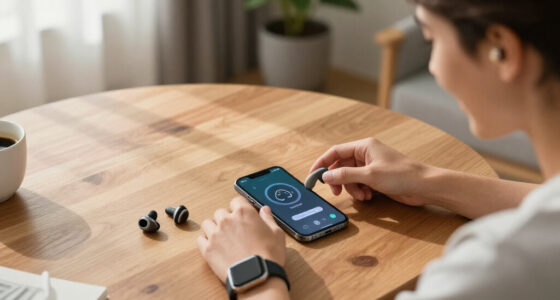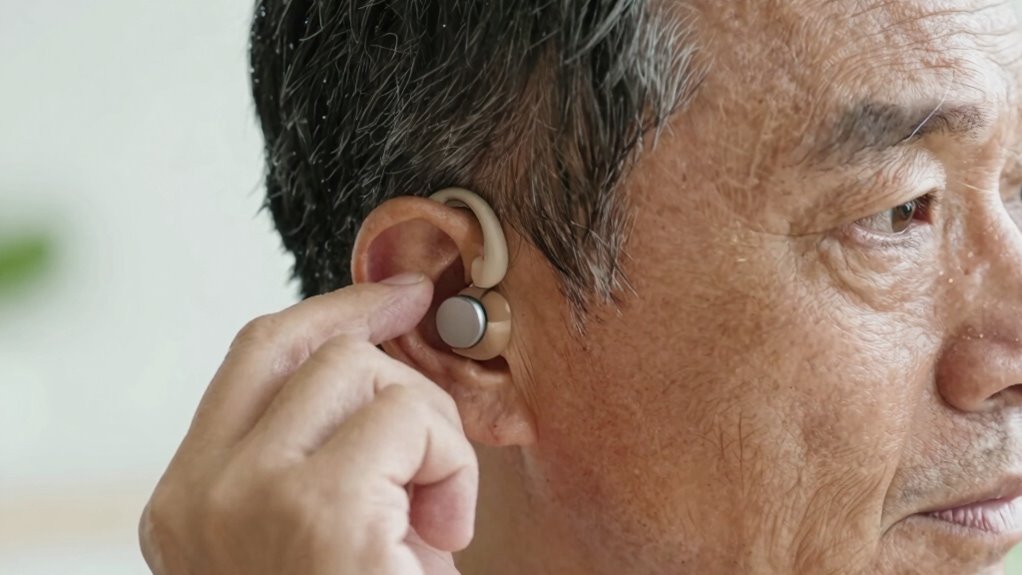
As a new hearing aid user, you might find it hard to adjust to sounds and environments. Common issues include difficulty understanding speech in noisy places and feeling overwhelmed by amplified background sounds. You may need to experiment with different settings or noise reduction features to improve clarity. Managing these challenges can take time, but with some guidance, you’ll get better at controlling your device. Keep exploring how adjustments and new features can help you hear more clearly.

Get everyday helpers delivered free with Prime
- Fast, free delivery on millions of items
- Prime Video, Amazon Music and more included
- Member-only deals all year
Key Takeaways
- Adjustment period needed to get used to amplified sounds and identify common initial challenges.
- Difficulty understanding speech in noisy environments due to background noise interference.
- Overwhelming sensation from amplified ambient sounds during early use.
- Need for device customization and fine-tuning to improve clarity and reduce noise.
- Limited familiarity with features and technology, requiring ongoing education and support.
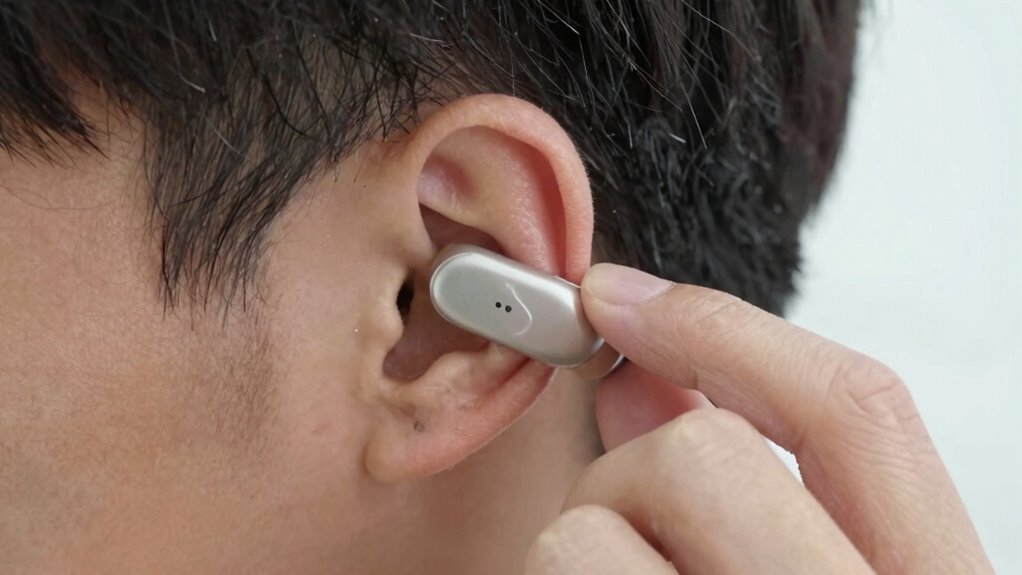
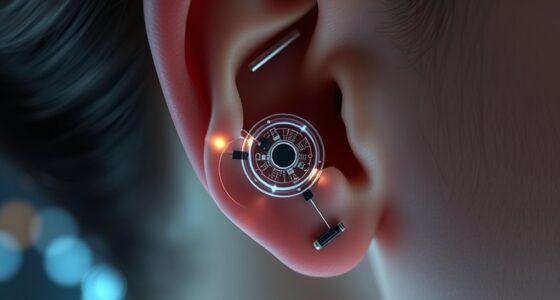
Starting to use a hearing aid can be an adjustment, and many new users encounter common problems as they get used to their devices. One of the most frequent issues you might face is understanding speech in noisy environments. Background noise can make it challenging to focus on conversations, especially when there’s a lot of ambient sound. This happens because your hearing aid amplifies all sounds around you, not just speech, which can be overwhelming at first. To improve clarity, you may need to experiment with different settings or programs on your device. Some hearing aids come with noise reduction features that help filter out background noise, making conversations more manageable. Over time, as you become familiar with your device and its features, managing noisy settings will become easier. Additionally, many hearing aids have noise reduction features that can be customized to better suit different environments, enhancing your overall listening experience. Understanding how sound processing technology works can also help you make the most of these features. Learning about adaptive algorithms can further optimize your hearing aid’s performance in varying acoustic situations. Gaining a better understanding of environmental sound analysis can help you fine-tune your device for different listening situations, and staying informed about latest advancements can contribute to better outcomes.
hearing aid noise reduction settings
As an affiliate, we earn on qualifying purchases.
As an affiliate, we earn on qualifying purchases.
Frequently Asked Questions
How Often Should I Clean My Hearing Aids?
You should clean your hearing aids daily to guarantee peak performance. Regular hearing aid maintenance includes wiping them with a soft cloth and checking for debris. Follow a consistent cleaning schedule, such as every night, to prevent earwax buildup and damage. Use appropriate tools recommended by your audiologist, and avoid harsh cleaners. Proper cleaning helps extend your hearing aid’s lifespan and maintains clear sound quality.
Can I Wear My Hearing Aids While Sleeping?
Wearing your hearing aids while sleeping is like trying to keep a busy bee still—it’s not ideal. For sleep comfort and to prevent noise disruption, it’s best to turn them off before bed. Leaving them in overnight can cause discomfort, trap moisture, and lead to potential damage. Think of your aids as delicate tools needing rest too, so give them a break to guarantee they work smoothly and comfortably every day.
What Should I Do if My Hearing Aids Whistle?
If your hearing aids whistle, it’s likely due to poor fit or earwax buildup. To troubleshoot feedback, first clean your hearing aids and check for wax in your ears. Make certain your hearing aid is properly inserted and fits snugly. Regular hearing aid maintenance, like cleaning and checking for damage, helps prevent whistling. If the problem persists, contact your audiologist for professional troubleshooting and adjustments.
Are There Specific Batteries I Should Use?
You should use the recommended battery types for your hearing aids to guarantee superior performance. Brands often specify zinc-air batteries, which provide reliable power and longer battery longevity. Avoid cheap or incompatible batteries, as they can cause issues. Using the right batteries consistently helps your hearing aids work smoothly, extend battery life, and prevent unnecessary replacements. Always keep spare batteries handy, and follow your device’s guidelines for the best results.
How Do I Connect Hearing Aids to My Phone?
To connect your hearing aids to your phone, first check device compatibility and confirm your hearing aids support Bluetooth connectivity. Turn on Bluetooth on your phone, then enable pairing mode on your hearing aids—usually through a button or app. Open your phone’s Bluetooth settings, find your hearing aids in the list of available devices, and select them to establish a connection. Once paired, your hearing aids should automatically connect whenever Bluetooth is active.
Conclusion
Remember, every new hearing aid user faces some bumps in the road, but these challenges are just stepping stones on your journey to better hearing. With patience and proper guidance, you’ll soon find your way through the maze, like a sailor steering calm waters. Embrace the learning curve, and don’t hesitate to seek help when needed. Before long, your hearing aids will feel like a natural part of you, opening up a world full of sounds waiting to be rediscovered.
Halloween Picks
halloween
As an affiliate, we earn on qualifying purchases.