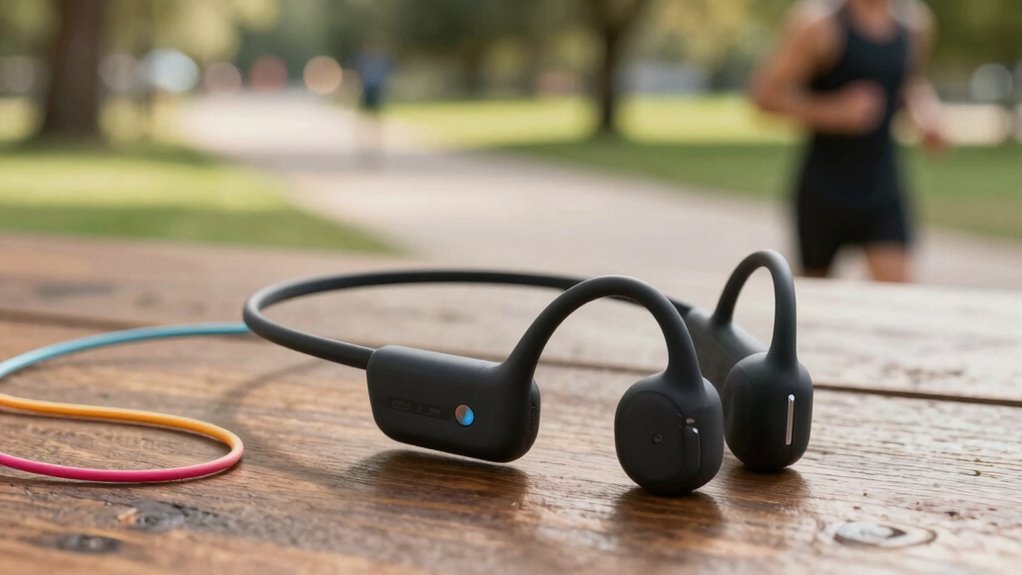
Bone conduction headphones help when you want to stay aware of your surroundings, like during outdoor jogging, cycling, or commuting, since they transmit sound through your skull bones without blocking your ears. However, they aren’t ideal in very noisy environments or for intense activities where a secure fit is needed. They also don’t deliver the rich sound quality of traditional headphones. If you want to understand more about their benefits and limitations, keep going.
Key Takeaways
- They help improve outdoor safety by allowing users to hear ambient sounds while listening to audio.
- Bone conduction headphones are ideal for people with certain hearing losses or ear infections, avoiding ear canal use.
- They don’t block out loud environmental noise well, making them less effective in noisy settings.
- They are less suitable for high-fidelity, immersive listening or vigorous activities requiring secure fit.
- Not recommended for users seeking deep bass, audiophile sound, or participating in intense sports.
How Do Bone Conduction Headphones Work?
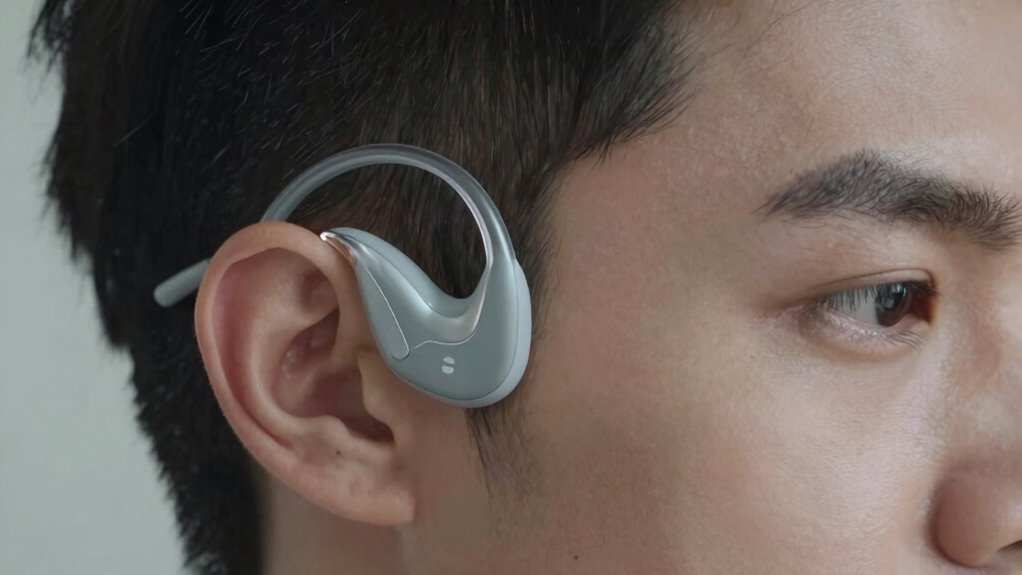
Bone conduction headphones work by transmitting sound vibrations directly to your inner ear through the bones of your skull, bypassing the eardrum. This process relies on sound conduction, where vibrations are transferred through the skull’s bones instead of air-filled ear canals. When you wear these headphones, the transducers rest on your cheekbones or temples, creating vibrations that travel through the bone structure. These vibrations reach your inner ear, specifically the cochlea, allowing you to perceive sound without blocking your ear canal. This method makes bone conduction headphones ideal for those with certain types of hearing loss or for outdoor activities where awareness of surroundings is important. By bypassing the eardrum, they provide an alternative way to experience audio while keeping your ears open to ambient sounds. Ear wax odor can sometimes affect the comfort of wearing headphones, so maintaining ear hygiene is beneficial. Additionally, the sound transmission efficiency can vary depending on individual skull anatomy and the quality of the headphones. The fit and placement of the headphones are crucial for optimal sound quality and comfort during use. Proper sound conduction depends on consistent contact and correct positioning of the transducers against the skull. Understanding how individual skull anatomy impacts vibration transfer can help optimize listening experience.
What Are the Main Benefits of Using Bone Conduction Headphones?
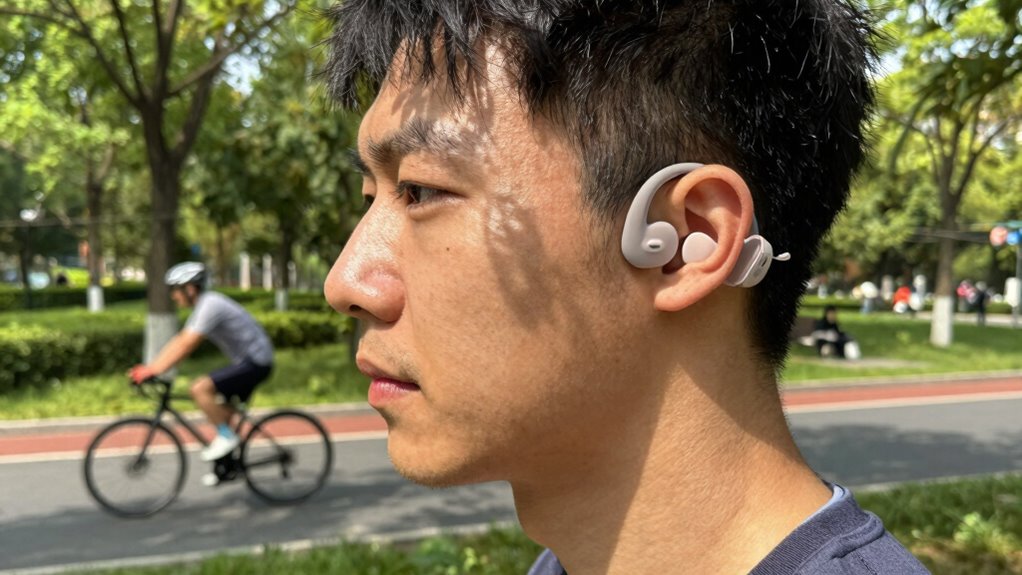
One of the main benefits of using bone conduction headphones is that they allow you to listen to audio without blocking your ears, so you can stay aware of your surroundings. This feature is especially useful for outdoor activities or commuting, where awareness is essential. Additionally, bone conduction technology aligns with current fashion trends, offering a sleek and modern look that appeals to style-conscious users. They also showcase technological innovations, making them a standout accessory that combines function with form. These headphones are lightweight and comfortable, ideal for long wear, and their open-ear design means you don’t have to compromise safety for sound quality. Furthermore, some models incorporate smart features that enable seamless integration with other devices and smart home ecosystems. Improved airflow and comfort contribute to their popularity among users who need prolonged use. The market for specialized audio devices continues to grow, reflecting increasing interest in versatile sound solutions. Moreover, their adaptability to different environments makes them suitable for various activities, from workouts to professional use. The energetic alignment of users with their devices can enhance the overall listening experience by promoting positive energy and focus. Overall, they blend practicality with contemporary style, making them a versatile choice for various lifestyles.
Are Bone Conduction Headphones Good for Staying Aware of Your Surroundings?

Since bone conduction headphones sit outside your ears, they naturally keep you connected to your environment. This design enhances ambient awareness, allowing you to hear surrounding sounds like traffic, conversations, or nature. As a result, they can improve outdoor safety by helping you stay alert to potential hazards while listening to music or taking calls. Unlike traditional headphones that block out sound, bone conduction versions let you maintain a sense of your environment without sacrificing audio quality. This makes them a good choice for activities like running, cycling, or walking in busy areas. However, keep in mind that in very noisy environments, their ability to keep you fully aware might be limited, so always stay cautious when safety is a concern. Additionally, understanding the technological limitations of bone conduction can help set realistic expectations about their effectiveness in different situations. For example, sound transmission may be less clear compared to traditional headphones, especially in noisy conditions. Recognizing the role of human perception in how we interpret sound can further clarify how bone conduction devices perform in various environments.
Do Bone Conduction Headphones Cause Ear Discomfort During Extended Use?
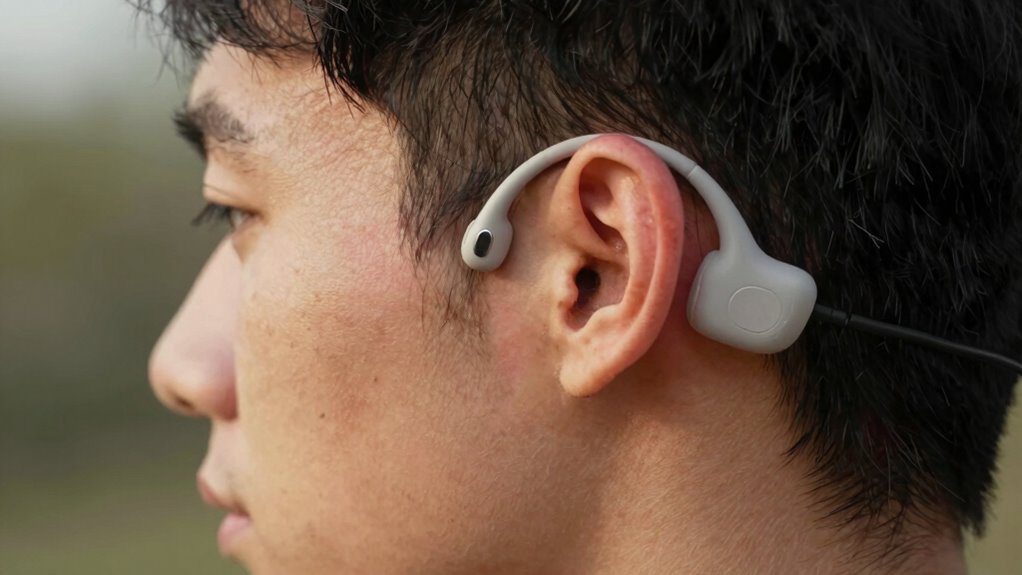
Extended use of bone conduction headphones generally doesn’t cause ear discomfort because they don’t sit inside or tightly around your ears. Instead, they transmit sound through your cheekbones, reducing ear pressure and minimizing discomfort. However, some users may experience slight sensations during prolonged listening sessions. To visualize this, imagine:
| Without Bone Conduction Headphones | With Bone Conduction Headphones |
|---|---|
| Ears enclosed in tight earbuds | No pressure on ear canal |
| Possible ear pressure after hours | Gentle vibration on cheekbone |
| Risk of prolonged discomfort | Reduced ear fatigue |
While most find extended use comfortable, if you notice persistent ear pressure or discomfort, it’s best to take breaks to prevent prolonged discomfort. Being aware of auditory processing challenges can help users better manage their listening habits and avoid discomfort. Additionally, individual differences in ear anatomy may influence comfort levels during extended use. Recognizing listening habits can further help prevent potential discomfort and enhance overall audio experience. Understanding these comfort factors is important for a safe and enjoyable listening experience.
Can You Use Bone Conduction Headphones in Noisy Environments?
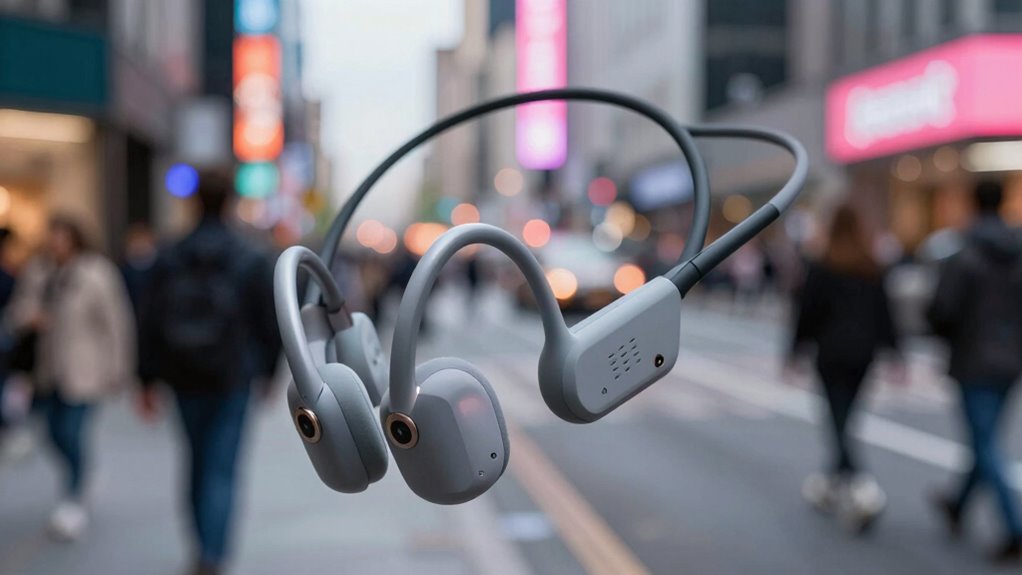
Bone conduction headphones excel at reducing ear fatigue during long periods of use, but their effectiveness in noisy environments depends on the situation. Since they don’t have traditional noise cancellation technology, they’re less effective at blocking out ambient sounds. In loud settings, you may find it difficult to focus on your music or calls because external noise leaks in, limiting your music immersion. However, some models offer passive noise isolation by fitting snugly against your cheekbones, which can help reduce background noise. If you need to stay aware of your surroundings, these headphones are advantageous. But if complete silence is necessary, traditional over-ear noise-canceling headphones might serve you better. Ultimately, their performance in noisy environments varies based on the noise level and headphone design.
Do They Deliver High-Fidelity Audio Quality?
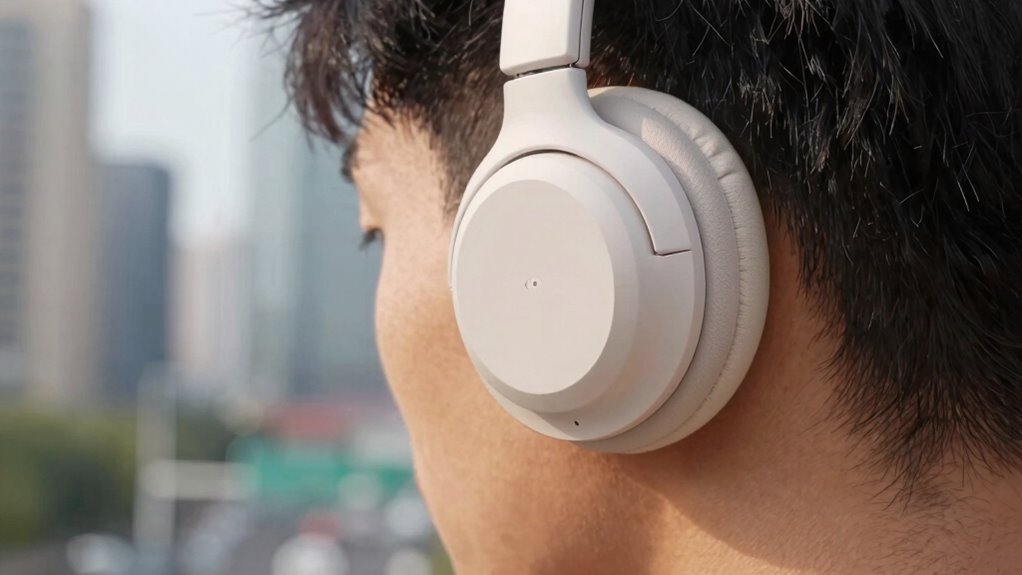
While bone conduction headphones tend to prioritize convenience and situational awareness, they often face challenges in delivering the same high-fidelity audio quality as traditional headphones. Because they transmit sound through vibrations in your bones, the sound quality can feel less immersive and detailed. You might notice a loss of clarity, especially in bass and treble ranges, which affects overall audio fidelity. This is partly due to the limitations of vibration transmission, inherent in bone conduction technology. Additionally, the complexities of auditory perception can influence how sound is experienced through bone conduction, often resulting in a less natural sound experience. These sound transmission challenges mean that music or podcasts may not sound as rich or vibrant. External noise interference can also affect audio clarity, further compromising listening quality. Furthermore, the frequency response of bone conduction devices typically covers a narrower range compared to traditional headphones, which impacts sound richness. If you’re seeking deep, accurate sound reproduction, bone conduction headphones might fall short. They excel at keeping you aware of your environment but usually compromise on the precision and richness of sound quality. So, for critical listening or audiophile-grade audio, traditional headphones often outperform bone conduction options.
How Do Bone Conduction Headphones Compare to Traditional Headphones?
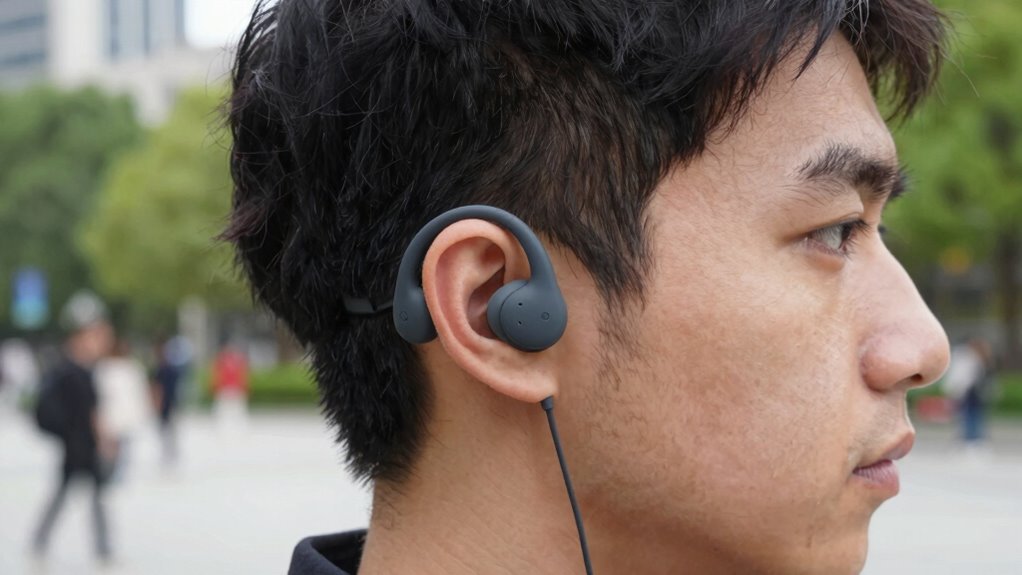
Traditional headphones typically deliver superior sound quality, offering deep bass, clear treble, and rich detail that bone conduction models often can’t match. However, bone conduction headphones excel in situations where awareness of your surroundings matters. They often feature wireless connectivity, making them convenient and freeing you from cords. When it comes to fashion trends, bone conduction headphones are gaining popularity as a stylish, modern accessory that blends function with form. While they don’t deliver the same immersive audio experience, they provide a comfortable, open-ear design ideal for outdoor activities, commuting, or working out. Additionally, sound quality is a key factor to consider when choosing between these options. Understanding the importance of contingency plans can help users make informed decisions about their audio devices in case of technical issues. Ultimately, your choice depends on your priorities: if sound quality is paramount, traditional headphones are the way to go; if convenience and safety matter more, bone conduction offers a compelling alternative.
Who Should Avoid Using Bone Conduction Headphones?
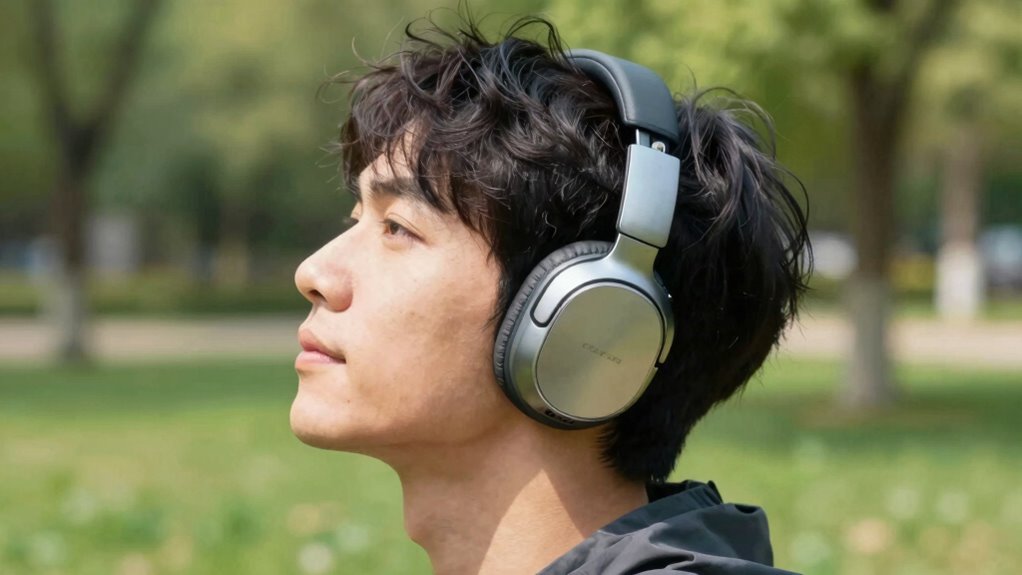
People with certain hearing conditions or ear health issues should avoid using bone conduction headphones, as these devices directly transmit vibrations through the bones of the skull, bypassing the eardrum. If you have conductive hearing loss or ear infections, bone conduction can worsen your condition or cause discomfort. Additionally, audiophile quality sound usually isn’t achievable with these headphones, so if you’re seeking high-fidelity audio, traditional options might suit you better. Bone conduction headphones also aren’t ideal if you prefer a fashion statement, as their design often lacks the sleekness or style of conventional headphones. For some, the vibrations may cause dizziness or headaches, making them unsuitable. Always consult a healthcare professional if you’re unsure whether these headphones are safe for your ear health. Furthermore, user privacy policies and cookie management can impact your browsing experience when researching these devices online. Being aware of the limitations of bone conduction technology can help you make informed choices about whether they are suitable for your needs.
Tips to Maximize Your Bone Conduction Headphone Experience
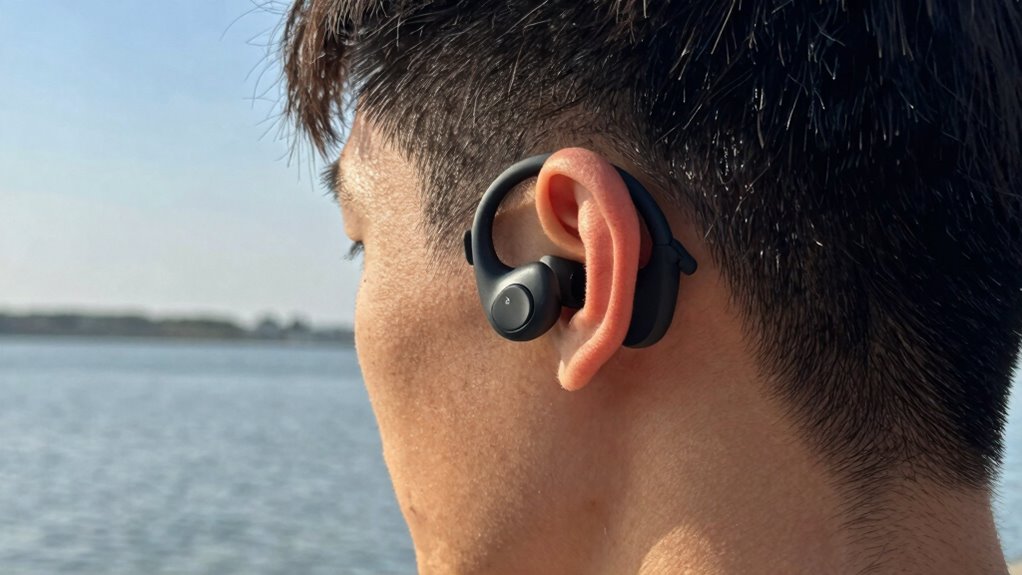
To get the best sound and comfort from your bone conduction headphones, make sure they fit properly and are positioned correctly. Adjust the volume to a safe level so you can enjoy clear audio without risking hearing damage. Also, keep your ears clean to prevent discomfort and maintain ideal performance.
Proper Fit and Placement
Ensuring your bone conduction headphones fit correctly is key to getting the best sound quality and comfort. Proper placement means the transducers sit just in front of your ears, avoiding the ear canal fit, which isn’t necessary with bone conduction technology. Make sure the headband or device is snug but not tight, so it doesn’t create uncomfortable pressure points. If the headphones are too loose, sound may diminish, and they might shift during activity. Conversely, excessive pressure can cause discomfort or soreness. Adjust the position so the transducers sit firmly but comfortably against your cheekbones or temples. Correct placement helps optimize sound delivery and keeps the device stable, allowing you to focus on your activity without distractions or discomfort.
Adjust Volume Settings
Adjusting your volume settings properly can considerably enhance your bone conduction headphone experience. Start by setting the volume at a comfortable level to prevent fatigue and guarantee clarity. Use the device’s sound settings to fine-tune the audio, balancing bass and treble for ideal clarity. Avoid turning the volume up too high, as excessive loudness can cause discomfort or potential hearing damage over time. Instead, make small volume adjustments until you find a sweet spot that allows you to hear your surroundings clearly while enjoying your audio. Many headphones also feature quick-access volume controls, making adjustments simple on the go. Proper volume adjustment assures your listening experience remains safe, enjoyable, and tailored to your environment.
Maintain Ear Hygiene
Maintaining good ear hygiene is essential for maximizing your bone conduction headphone experience. Proper ear canal maintenance prevents buildup of wax and dirt that can interfere with sound quality and comfort. Regularly clean your outer ears with a damp cloth, avoiding inserting anything deep into the ear canal. Follow hygiene practices that keep your ears dry and free from excess moisture, which can cause infections. If you notice discomfort or reduced sound clarity, check for wax buildup and gently clean the area around your ears. Avoid sharing headphones and clean them regularly to prevent bacteria transfer. Keeping your ears clean helps ensure your bone conduction headphones work effectively, reducing the risk of infections and maintaining a clear, comfortable listening experience.
When Should You Consider Other Listening Options?
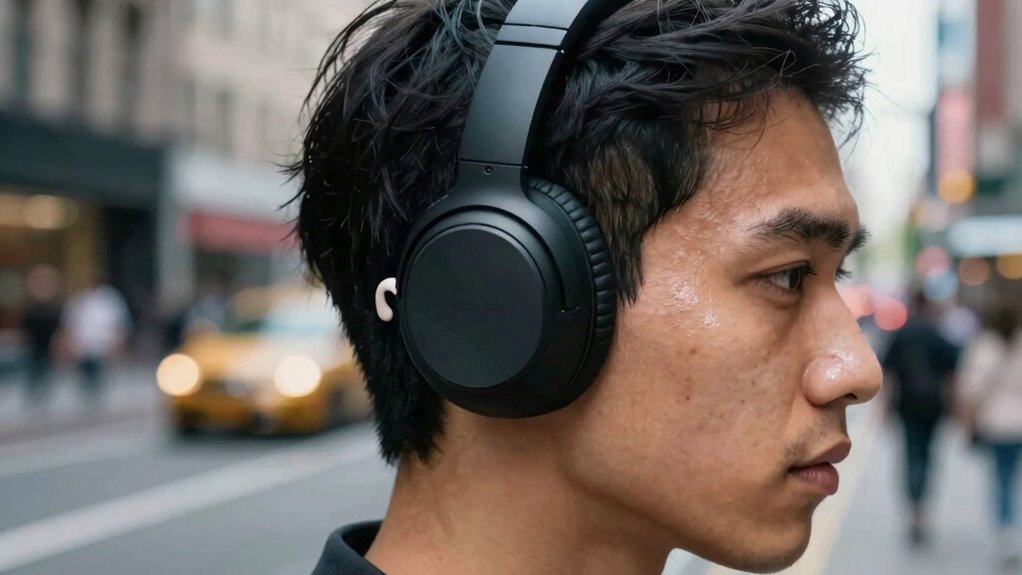
If you have significant hearing loss, bone conduction headphones might not provide enough clarity or volume. During high-impact activities, they may not stay secure or offer adequate noise isolation. In these situations, exploring other listening options can guarantee you get the best audio experience and safety.
Significant Hearing Loss
When your hearing loss becomes significant, relying on bone conduction headphones may no longer be sufficient to protect your hearing health. In this case, assistive technology like specialized hearing aids can provide better sound clarity and amplification tailored to your needs. Bone conduction headphones bypass the outer and middle ear, but with severe loss, they might not deliver enough auditory information. Hearing aids can be customized to amplify sounds directly into your ear canal, improving comprehension and safety. If your hearing impairment is profound, switching to traditional hearing aids or other assistive devices is essential. These options are designed to address more severe loss, ensuring you stay connected and aware of your environment. Always consult an audiologist to determine the best solution for your level of hearing loss.
High-Impact Activities
During high-impact activities like running, cycling, or intense workouts, bone conduction headphones might not provide the stability or safety you need. The vigorous movements can cause them to shift or fall, which disrupts your listening experience. Plus, if you prefer energetic music genres like EDM or rock, you’ll want headphones that stay securely in place so you can focus on your pace. Fashion trends also influence your choice—many opt for sport-specific designs that prioritize durability and comfort over style. For these activities, consider wired earbuds or over-ear options that offer a more secure fit and superior noise isolation. Bone conduction headphones excel in other settings but may fall short during intense movements, risking safety and enjoyment. Choose your gear based on activity demands and your preferred music vibe.
Frequently Asked Questions
Are Bone Conduction Headphones Suitable for Athletes With Hearing Impairments?
Yes, bone conduction headphones can be suitable for athletes with hearing impairments, especially if they’re hearing aid compatible. They allow you to stay aware of your surroundings, improving safety during workouts. However, they might not be ideal for everyone, as some hearing impairments may require traditional hearing aids for best clarity. For athletic performance, they often provide a comfortable, secure fit and good sound quality without blocking your ears.
Can Bone Conduction Headphones Interfere With Medical Implants or Devices?
Bone conduction headphones can cause concerns about medical implant interference and device compatibility. You might worry that electromagnetic signals could disrupt pacemakers or cochlear implants. While many devices are designed for safety, some models may still pose risks. To stay safe, it’s best to consult your healthcare provider before using these headphones. They can help you determine if your device’s design prevents potential interference, ensuring your health and harmony stay secure.
How Do Bone Conduction Headphones Perform With Different Music Genres?
You’ll find that bone conduction headphones perform well across various music genres, but sound quality varies. For genres like classical or jazz, they may lack the depth and richness of traditional headphones, making details less clear. However, for genres like pop or electronic music, you’ll enjoy a good balance of bass and treble. Overall, they’re great for active listening, though audiophiles seeking top sound quality might prefer traditional headphones.
Are There Any Safety Concerns With Long-Term Use of Bone Conduction Headphones?
Long-term safety concerns with bone conduction headphones mainly involve hearing health. If you listen at high volumes for extended periods, you risk potential hearing damage, like any other device. To safeguard your hearing health, keep the volume moderate and take regular breaks. While they’re generally safe, being mindful of usage duration and volume levels helps prevent long-term issues and ensures you enjoy your music without harm.
Can Children Use Bone Conduction Headphones Safely?
You might wonder if children can safely use bone conduction headphones, and the truth is, they generally can if used properly. These devices are often considered safer for pediatric hearing safety because they bypass the eardrum, reducing damage risk. However, it’s essential to monitor volume levels and listening duration to protect childhood auditory health. Always follow manufacturer guidelines and consult an audiologist for personalized advice to guarantee safe use.
Conclusion
Ultimately, bone conduction headphones can be a great choice when you need awareness and comfort, but they’re not perfect for every situation. If you value safety and staying alert, they can serve you well—just remember, “a chain is only as strong as its weakest link.” Consider your needs carefully, and don’t hesitate to explore other options if sound quality or comfort becomes an issue. Choose wisely to enjoy the best listening experience.